An avalanche hit four people in the Spanish Pyrenees on Monday, killing three of them. Jorge Garcia-Dihinx, a well-known figure in Spain’s ski mountaineering community, is among the victims. Garcia-Dihinx wrote a popular blog and gave lectures about avalanche risk management and mountain weather.
The avalanche happened while a group of six skiers made their way up to Pico Tablato, in the Panticosa area of the Spanish Pyrenees, close to the French border. According to preliminary reports by the Guardia Civil rescue patrol, the skiers broke a windslab, and the resulting avalanche hit four of them. The two members who avoided the avalanche immediately called rescue services and descended to help their friends.
A rescue helicopter found the missing skiers quickly, but there was nothing they could do for three of them. The three victims presented injuries “incompatible with life.”
Unusual conditions
Ski mountaineering is a growing, popular sport, and the Pyrenees offers a wide range of options for all kinds of skiers, alpinists, and ice climbers. Conditions in the range are usually best in spring, but people increasingly go as soon as snow covers the mountain.
However, skimo in a country like Spain is characterized by highly variable conditions because of temperature changes throughout the day. Snow can change dramatically in a few meters depending on the altitude, orientation, or orography. This December has seen more snowfall than the last few years, triggering an early ski touring season.
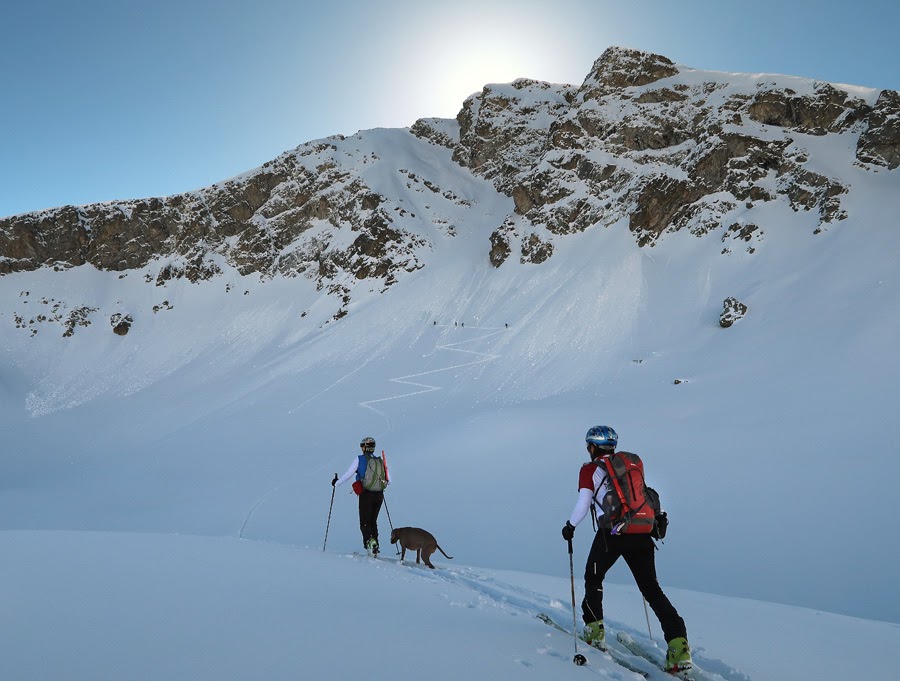
The route to Tablato is straightforward, with mild, wide slopes until the base of the peak. The summit is approached from its northwest flank, up a narrowing, steady ramp. That is where the skiers triggered an avalanche, some 100 meters below the summit.

A skimo route to Tablato peak, with the ascent line in red up the narrowing ramp. Photo: Lumpus
The footage shared by the Guardia Civil rescue corps shows that the avalanche swept the slope down to a flat area with some small frozen lakes at its base.
The deceased skiers are Garci-Dihinx, his partner Natalia Roman, and friend Eneko Arrastua.
Misleading low to mid-risk
On Monday, avalanche bulletins by Spain’s Meteorology Agency showed a level 2 to level 3 risk (on a scale that goes to five) for that area of the Pyrenees. However, that seemingly low/mid-risk is tricky. The bulletin spoke of “limited” risk (2) below 2,100m and “notable” (3) risk above that altitude. The bulletins also noted that the snow cover was formed by several layers and mentioned the high winds and cold temperatures observed in the last few days.
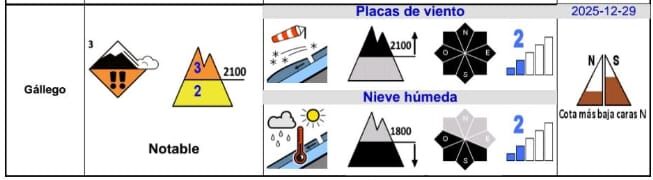
Avalanche forecast for the Gallego River Valley and surrounding peaks, where the avalanche took place. It includes a warning about “placas de viento”: windslabs. Forecast: AEMET
“In the high mountain, the temperatures remain below zero, and there are persistent windslabs on different orientations,” the bulletin said.
It added that the most recent windslabs had appeared on the northwest sides of the peaks, and that they were often difficult to identify at first sight.
“These structures are still fragile and may break at weak overloads, such as with one person crossing, causing medium or even large avalanches, big enough to bury a group of people.”
A local celebrity
News of the avalanche shocked the Spanish ski mountaineering community, both because the Panticosa area is a very popular spot with scenic peaks of varied difficulty, and because one of the deceased climbers was Jorge García-Dihinx, 55, a well-known figure.
Garcia-Dihinx, a local pediatrician and nutritionist, ran the La Meteo Que Viene blog in which he shared meteorological reports, ski mountaineering and trail-running routes, and tips about snow conditions and accident prevention. Garcia-Dihinx has also given lectures around Spain about avalanche risk management and prevention during ski mountaineering trips.
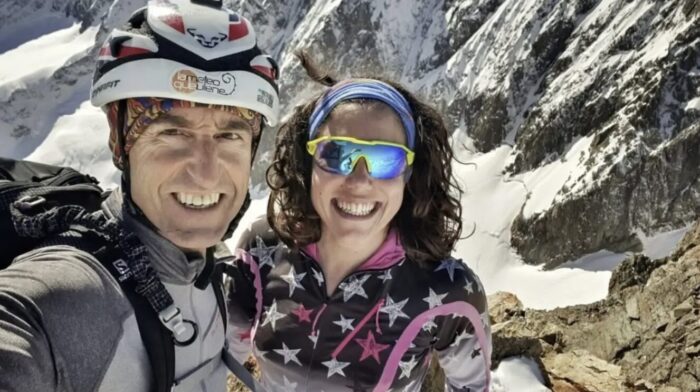
Jorge Garcia-Dihinx and Natalia Roman during a ski-touring day. Photo: Jorge Garcia-Dihinx/ Instagram
Garcia-Dihinx was also an advocate of the ketogenic diet and offered medical advice about various topics in videos posted on social media. He had 382,000 followers on Instagram.
In his last update about conditions in the Pyrenees, posted on Christmas Day, Garcia-Dininx had warned readers about the quickly changing conditions and the need for a more detailed scale of avalanche risk. He was aware of potential windslabs from 2,000m up. He had been ski-touring in the Panticosa area, on a peak near Tablato, on December 24.
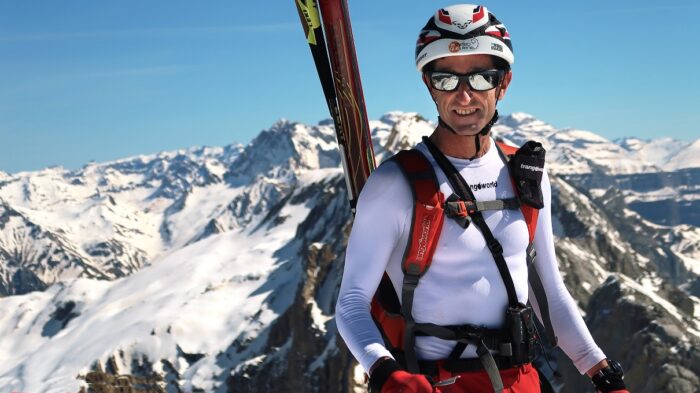
Jorge Garcia-Dihinx. Photo: La Meteo que Viene
Could the risk assessment be improved?
Garcia-Dihinx noted that the current system of avalanche risk assessment is too general, with level 3 notices remaining for days despite changing conditions. He pointed to the Swiss SLF, which subdivides each risk rating (1 to 5) into three, as a better system.
“Since we (in the Pyrenees) lack the resources used to assess the avalanche risk in the Alps, we tend to overestimate the danger…keeping risk level 3 for days and days. But that is a double-edged sword because it can cause experienced skiers to lose trust in the bulletins and perceive level 3 danger as the average for the Pyrenees,” he said.
“These levels from 1 to 5 are generic,” meteorologist and skier Juan Guerra told ExplorersWeb. “However, there are certain places where that level of risk increases due to orographical features, and the Panticosa area is one of them; even more if the wind has formed windslabs.”
Most avalanche-related accidents occur in level 3 conditions. At level 3, skiers understand they must pick their ascent and descent lines carefully, attending to conditions and orography, but the danger is not acute enough to cancel a trip altogether.
In the end, as Gargia-Dihinx said in a recent Instagram post, mountaineers are willing to take risks for the great moments, intense sensations, and the feeling of belonging that the mountains provide.