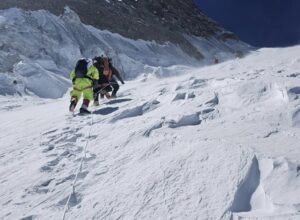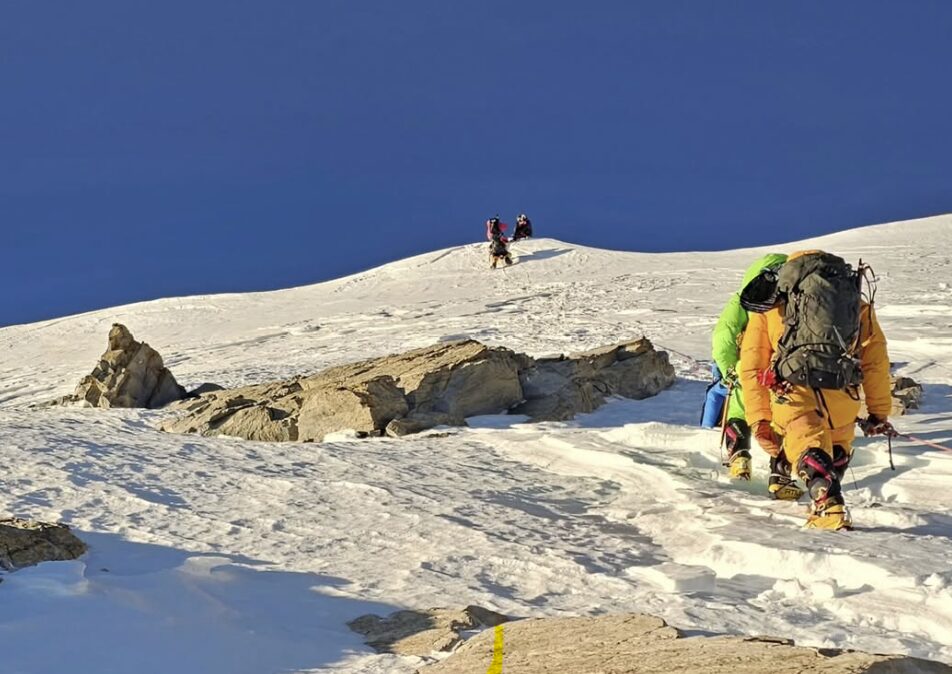
Annapurna saw over 30 summits on Saturday, but there was also drama: a Sherpa climber spent a night in the open above Camp 3, and Israfil Ashurli, one of the climbers who reached the top without supplementary oxygen, got sick on the descent and was airlifted from Camp 3.
Behind the triumphant summit news, the weekend also had some tense moments, close calls, difficult decisions, and errors that narrowly avoided being fatal.
Ashurli evacuated from Camp 3
Israfil Ashurli of Azerbaijan summited without bottled oxygen but required an emergency rescue afterward.
“Before the summit push, Israfil was a little ill, but felt fine,” Mountain.ru reported. “On returning to Camp 3, his condition worsened. He couldn’t eat or drink, and severe dehydration set in, after which the decision was made to call a helicopter.”
Ashurli is currently recovering at the hospital and being treated for two frostbitten fingers, Charles Page told ExplorersWeb.
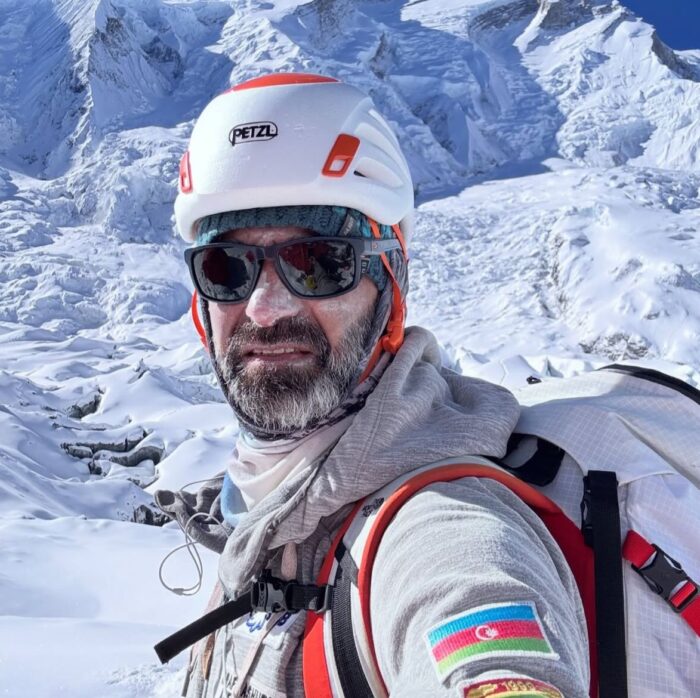
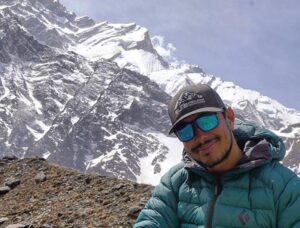
Israfil Ashurli some days ago on Annapurna. Photo: Israfil Ashurli/Instagram
Stranded Sherpa
The new Sherpa-run company, AltiPro Adventures, reported that it put its two clients — Van Khai Nguyen of Vietnam and Manisha Rishi Gaindon of India — on top, guided by owners Mingma Dorchi Sherpa, Lakpa Temba Sherpa, and Karma Gyaljen Sherpa. They also mentioned that a Sherpa from another team had a close call.
“[He] went missing above Camp 3 and had to spend the night on the mountain,” they noted.

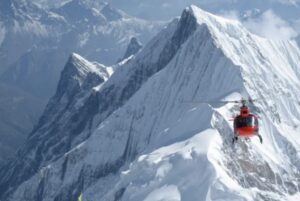
Helicopter long-line rescue operation at Annapurna. Photo: Waldemar Kowalewski
We later learned that the stranded Sherpa went for the summit with a client on Sunday, April 19, one day after the others. There are few details, but according to climbers in Base Camp, the Sherpa became lost at some point on the descent and spent a night out above Camp 3.
While unconfirmed, it seems his client made it safely back to Camp 3. The latest news indicates that the Sherpa had reached Camp 3, radioed Base Camp, and was awaiting an airlift after suffering some frostbite.
Are summits with airlifts valid?
Airlifts from higher camps are common on Annapurna. Some are legitimate medical emergencies like Ashurli’s. In some cases, however, they’re due to descending climbers being tired or reluctant to risk the peak’s most dangerous section again: the avalanche and serac-fall area between Camps 3 and 2.
We raised this issue in a long article after a number of airlifts in the spring of 2023, and also in 2025. It was also a topic for debate after Carlos Soria of Spain summited Manaslu at age 86, but was airlifted from Camp 3 on the descent.
For most records, summits are listed as such as long as the climbers reach the highest point of a mountain, no matter what happens later. Nepal’s Ministry of Tourism will issue a summit certificate. Eberhard Jurgalski of 8000ers.com noted he also considers the summit valid on his lists.
“In my humble opinion, an ascent is valid, even when you are airlifted from higher camps because of health problems or weather,” he told ExplorersWeb at the time. “It also applies to climbers who die on the way down after summiting.”

File image of Taiwan’s Lu Chun Han hanging from a cable during his airlift from Annapurna’s Camp 4 in 2021. Photo: 8000ers.news
Helicopters and risk-taking
The Himalayan Database explains that the summit listings of these evacuees will include an asterisk. “The summiters will get an aviation-assisted note in the database,” explained Billi Bierling of the HDB.
In the end, it comes down to the climbers’ personal assessment whether they consider their climb complete or not, if it didn’t start and end in Base Camp. Still, the current availability of helicopters might prompt summit-bound climbers and their guides to take more risks if rescue is an option in case of trouble.
Before helicopters in the Himalaya, the descent was the most dangerous part of a climb. Climbers had to proceed with that in mind. Often, they turned around without the summit, because they were concerned about getting sick or exhausted on the way down.
Bitter cold
Among the climbers who had planned no-oxygen climbs on Annapurna, four made it: Andreas Frydensberg of Denmark, Israfil Ashurli, and Russians Anton Pugovkin and Vitaly Shipilov.
Meanwhile, Russians Valery Babanov and Yuri Kruglov, and Charles Page of Canada, changed their minds during the climb due to the bitter cold.
“I tried to climb without O2 as planned, but at 7,700m, I couldn’t feel my right foot, even though I was feeling good and strong,” Page told Explorersweb. “I knew the problem was my blood circulation. I had the choice to continue and risk losing my foot, or to put on the oxygen mask from 7,700m, using the safety bottle my Sherpa was carrying for me. I chose the latter option.”
Page managed to reach the summit with just that one bottle and says he is proud of the lucidity he had to make the right call. “Annapurna is no joke,” he said.
Stefi Troguet of Andorra had the same problem, but she chose to turn around rather than use bottled oxygen. Troguet also noted feeling terribly cold — she said she had never been that cold in her life, possibly due to insufficient acclimatization. Troguet has climbed K2, Nanga Parbat, and Manaslu (foresummit) without supplementary oxygen.
Both Page and Troguet reported a windchill of -40ºC, but we don’t know the exact temperatures.
Too fast?
In his latest Instagram post, climber/blogger Carlos Garranzo of Spain offers a theory about why the no-O2 climbers launched their summit push before being properly acclimatized. He suggests that with one more rotation and 15 more days, everyone would have summited without bottled oxygen and made it down safely. So why didn’t they?
Because they can’t, he says. “Climbers don’t control the timing on their expeditions anymore.”
As we mentioned previously on ExplorersWeb, agencies need their Sherpa guides to work on other mountains, especially on Everest. So on early-season 8,000’ers like Annapurna, they launch fast pushes and then dismantle their Base Camps and move on. This forces those wanting to climb without oxygen to take high risks.