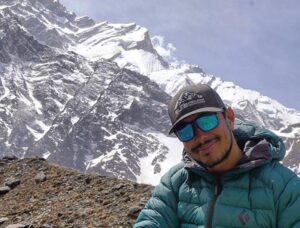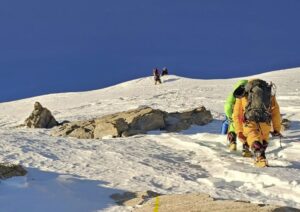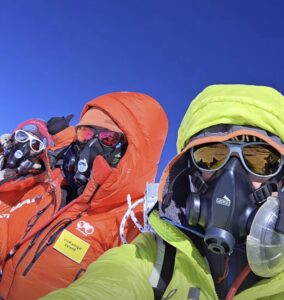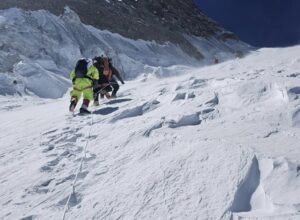
Dawa Nurbu, the Sherpa missing on Annapurna since April 19, has been finally airlifted to the hospital, exhausted and frostbitten. Meanwhile, further no-oxygen climbers note the lack of proper acclimatization at summit push time.
As we posted yesterday, the Annapurna summits were overshadowed by news of a Sherpa guide who left for the summit on April 19 and became lost on the way down. According to reports from other teams, the stranded, frostbitten climber had reached Camp 3 and was awaiting evacuation.
A complicated rescue
In fact, it took more than a helicopter: a Sherpa guide from 8K Expeditions, the company for which the stranded Dawa Nurbu worked, went all the way back up to help his stricken colleague, in what the outfitter describes as a “heroic rescue.”
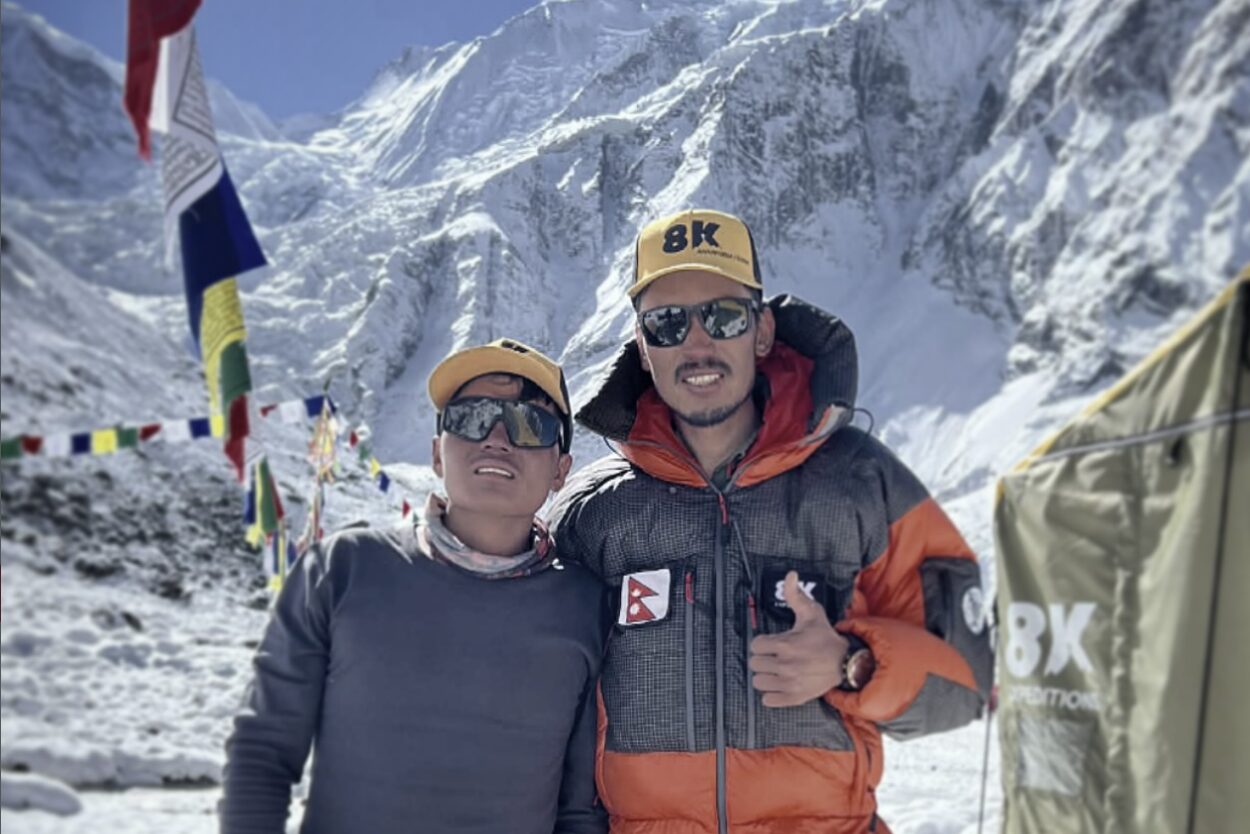
8K Expeditions explained that IFMGA guide Ashok Lama, who was back at Base Camp after summiting with clients on Saturday, “selflessly ascended above Camp 3 to rescue climbing guide, Mr. Dawa, at 7,500m.”
Lost above Camp 4
Dawa Nurbu summited Annapurna at 9 am on April 19 with client Richard Markus from Switzerland, himself a mountain guide, The Tourism Times reported. “Dawa went out of contact from the couloir above Camp 4 during his descent,” Lakpa Sherpa of 8K Expeditions told the outlet.
There was an aerial search, but according to Lakpa Sherpa, the insurance companies refused to authorize a long-line rescue above Camp 3, so they engaged Ashok Lama and airlifted him to Camp 3. From that point, he trekked to where Dawa Nurbu was and helped him back to camp.
From Camp 3, both were airlifted today by Heli Everest pilot Priya Adhikari (a rising star among Nepalese heli rescuers). “He is safe and sound [in the hospital in Pokhara] despite suffering minor frostbites,” Lakpa Sherpa said.
As usual, most climbers on Annapurna used supplementary oxygen, which enables a very short expedition and lets guides move quickly to other peaks. Ashok Lama will go to Makalu next.
Lack of acclimatization
But as we pointed out yesterday, the problem with such a fast expedition comes for those intending to climb without supplementary oxygen. These climbers need more time to acclimatize, spend time at higher camps, and do more rotations. This was not the case on Annapurna, where the climbers did one or at most two rotations.
Israfil Ashurli previously acclimatized on Mera Peak. Still, he was airlifted from Camp 3 after summiting, reportedly due to frostbite. Russians Anton Pugovkin and Vitaly Shipilov, both very strong alpinists, also made it to the top without O2, but even they had to push their limits, according to fellow Russian Yuri Kruglov.
“Pugovkin and Shipilov reached the summit on Saturday evening, exhausted, and then descended to Camp 4,” Kruglov said. “On the following evening, they descended to Base Camp. They climbed without acclimatization or oxygen. They had only spent one night in Camp 3, no higher.”
By comparison, Kruglov, who did use O2, summited at 6:45 am on April 18, and by 1:00 pm, he was back in Camp 3.
Pugovkin did not even manage to take a proper summit picture. He could only shoot a picture of Shipilov on the summit ahead of him (see below). “When I finally reached the top, Shipilov was on his way down, and there was no one there to take it for me,” Pugovkin said.
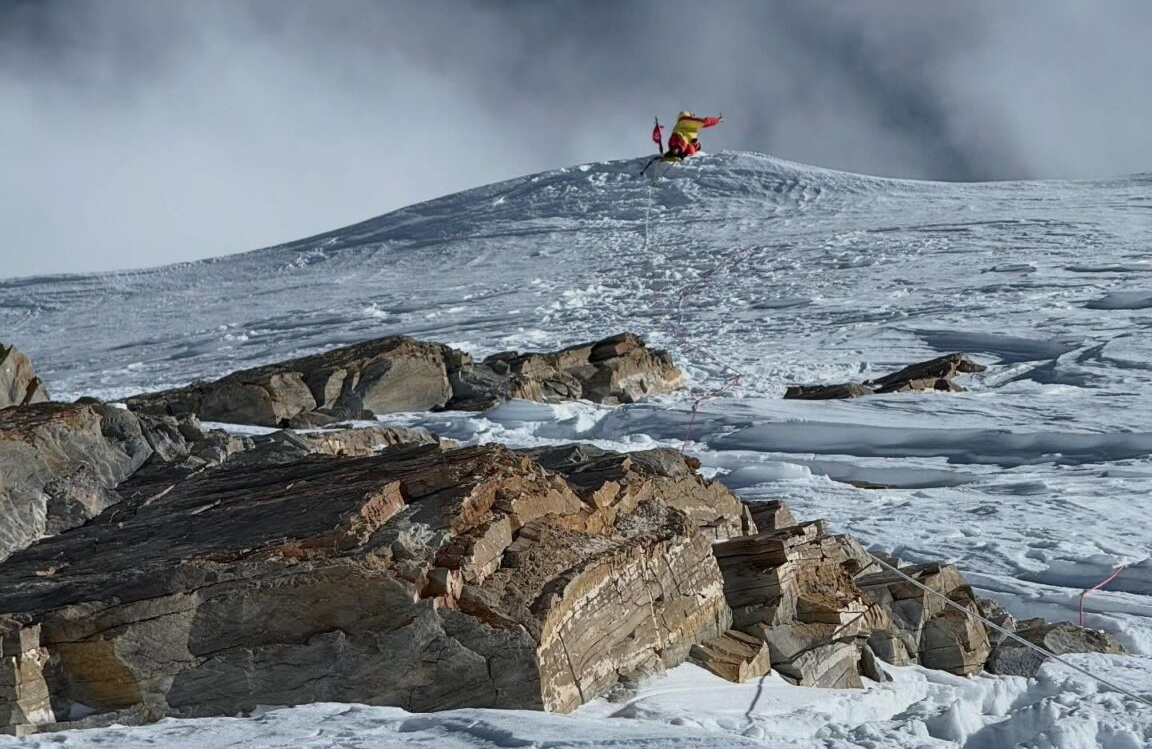
Valery Shipilof on the top of Annapurna, as seen by Anton Pugovkin, who climbed below him. Photo: Anton Pugovkin
Stefi Troguet of Andorra, who turned around at 7,700m rather than using bottled oxygen, had hoped for a second summit chance, but logistics made it impossible.
“I wanted to try again three days later, but all the teams had already summited, and no Sherpa was willing to stay alone with me on this mountain without O2,” she wrote on social media. “Times have changed.”