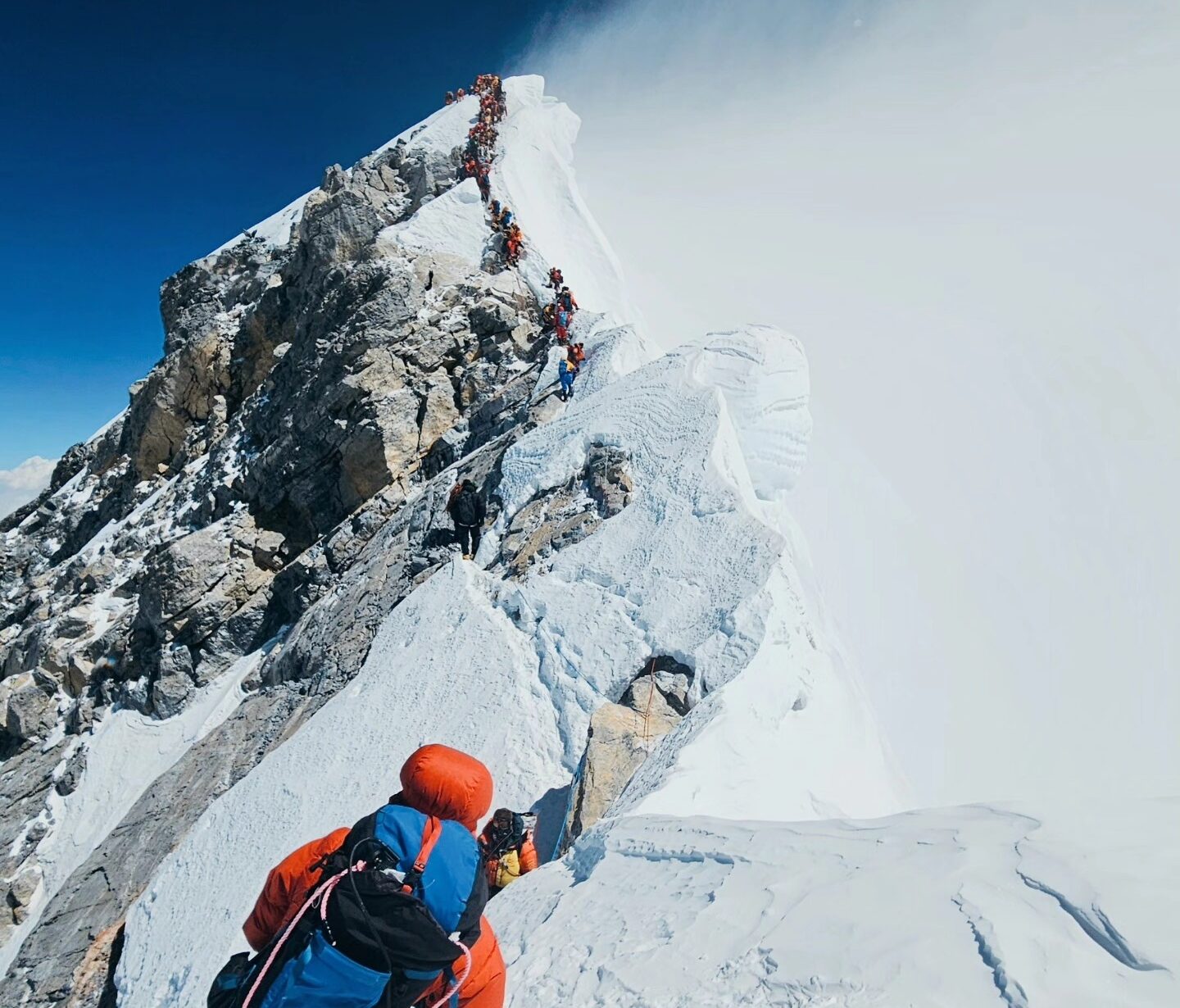
On 15 April last year, 115 Americans had permits to climb peaks above 6,000m in Nepal. The latest update from Nepal’s Department of Tourism on April 15 of this week shows that one year later, that number has dwindled to 71. What happened?
The spring climbing season is currently in full throttle. The early-season 8,000m climbers on Annapurna and Dhaulagiri are on their summit push. Meanwhile, Everest, Lhotse, Makalu, and Kangchenjunga climbers are arriving by the dozens in Kathmandu to start acclimatizing. By now, the year’s trends have started to become apparent.
It’s mainly Americans who are in short supply this year, despite Charles Page’s observation below.
“It seems I am the only Canadian climbing Annapurna, [which] feels so weird,” the Quebec climber told ExplorersWeb before leaving for the summit.
However, the overall number of Canadians on Nepal’s highest peaks has actually increased from 19 in 2025 to 30 this year. On the other hand, the number of U.S. citizens has fallen by nearly 40%.
Differences by nationalities
At this point in the season, the overall numbers, including all countries, are good: The 632 climbers in 2025 have risen to 700 this year.
In 2026, the country with the most climbers is China, with 89. (Last year, the mid-April tally listed 72 Chinese.) Germans have also increased significantly, from 12 last year to 55 this year. The Japanese are up from 15 to 27; the Russians, from 39 to 45; and UK citizens, from 18 to 48.
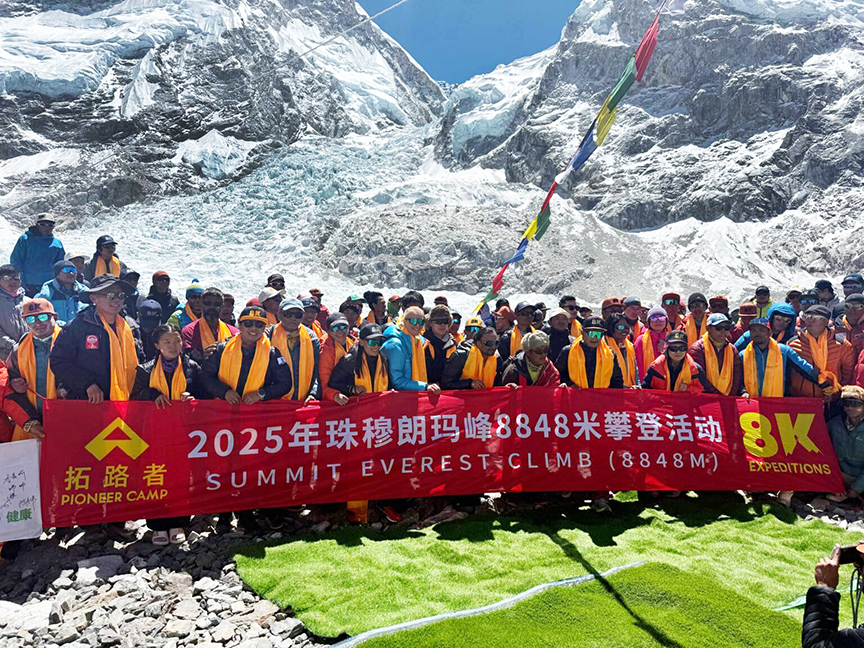
A big Chinese team, outfitted by 8K Expeditions, poses in Everest Base Camp last year. Photo: Pemba Sherpa
However, the U.S. is not the only country sending fewer climbers to Nepal. India’s numbers have dropped from 60 in 2025 to 49 this year; France, from 33 to 16; Brazil, from 19 to 10; Italy, from 11 to 9.
As usual, global geopolitics is at play in Himalayan mountaineering. For obvious reasons, no one wants to refuel in the Middle East these days. (Countries like Dubai and Qatar were previously an aerial hub for flights connecting Europe and America with many Asian countries. In addition, fuel prices have escalated, airlines have restricted or canceled many flights, and fares have skyrocketed.
Nepal is currently quiet, safe, and welcoming for foreigners as usual. Yet some international visitors worry about issues with flights, especially when returning home, since future global crises are unpredictable.
Everest
Everest, as usual, is also affected by general trends but follows some patterns of its own.
If we count only the permits granted for Everest in the first month of the season (from March 15 to April 15), the number of U.S. citizens has almost halved, from 69 to 39. The number of Canadians, however, seems unaffected. On April 15, there were 6 in 2025, and so far this year, there are 10.
The total figures have slightly increased. So far, there are 297 foreign climbers listed for Everest, about 7% more than the 277 from a year ago.
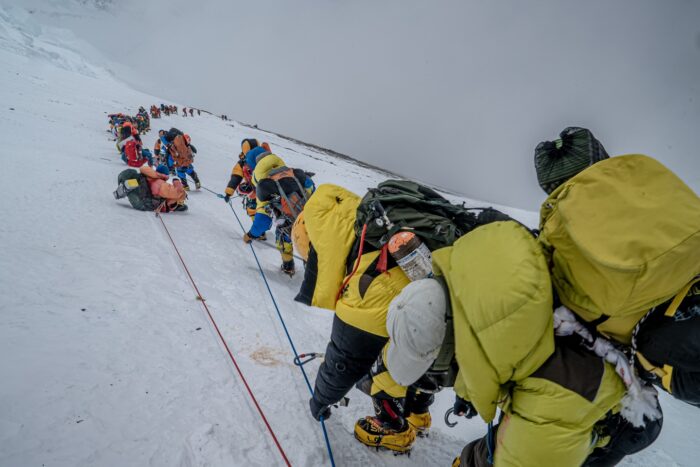
Line of climbers on Everest last year. Photo: Abiral Rai
In the last few years, a notable new trend has been the number of late arrivals to Everest. Two main factors cause this shortage of early birds. First, some climbers climb a lower 8,000’er during the first half of the season. Once they are well acclimatized to altitude, they get their Everest permit. They then climb the mountain in one or two rotations.
The second reason is the increasingly popular express expeditions.
“Everybody is arriving late this year, many are pre-acclimatizing at home and doing the express expedition, which takes one month [in total],” Garrett Madison told ExplorersWeb. “In previous years, express climbers would make up 20-30 percent of the team, but this year it has increased to 50 percent.”
Of Madison’s average team of 12 members, six of them are already trekking up the Khumbu, while the other six — the express ones — only arrive in Nepal at the end of April.