My future mother-in-law’s greatest passion is genealogy. When she took an interest in my ancestry, I warned her it might be underwhelming. Apart from my family’s migration from Madeira to the Caribbean, I don’t know much else. So imagine my surprise when she uncovered a possible family connection to a Portuguese explorer.
In Lisbon, the Monument to the Discoveries marks where the Tagus River ends and the Atlantic begins. Prince Henry the Navigator stands at the head of the multi-figured monument, with centuries worth of explorers, cartographers, scientists, saints, priests, and monarchs behind him.
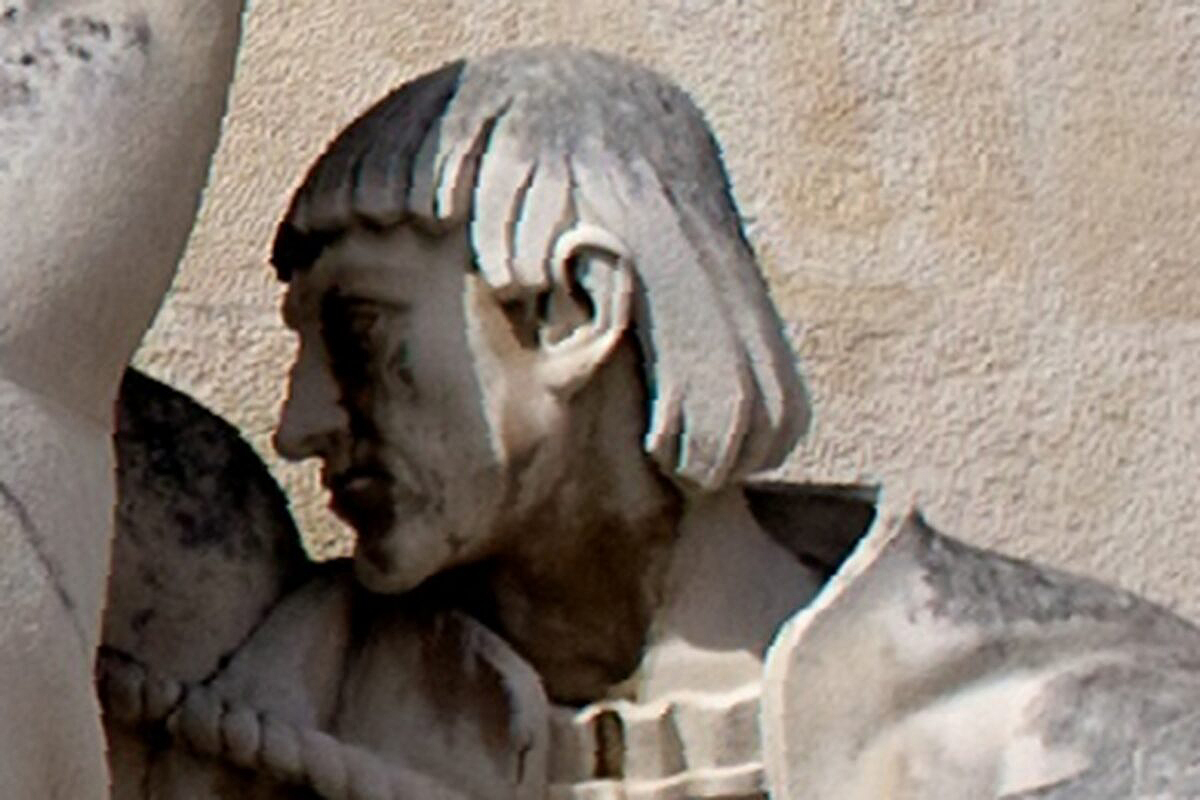
Next to Estevao de Gama and Bartolomeu Dias is a stern-looking man helping them raise a padrão, a standard used by Portuguese explorers when they’ve conquered a land. He’s not that noticeable, and to the uninformed eye, he may even look like an average monk. But that is Antonio De Abreu, who led the first European expedition to Timor and the Spice Islands.
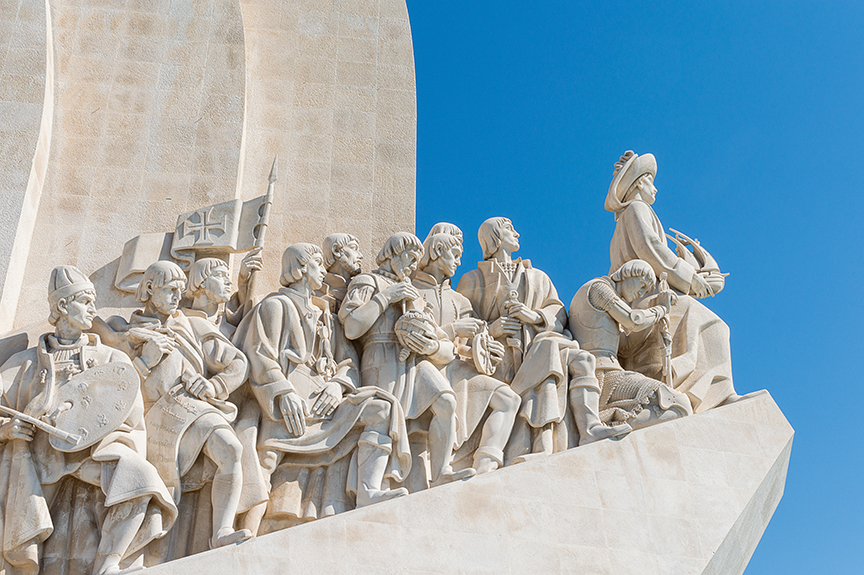
Monument to the Discoveries, Lisbon. Photo Shutterstock
Background
From the 15th to the 16th centuries, the Kingdom of Portugal underwent a series of dramatic changes: an invasion by Morocco, the War of Castilian Succession, and the death of Prince Henry the Navigator. At the same time, Portugal’s exploratory ambitions overseas expanded rapidly.
After establishing their presence in Africa, their eyes turned to Asia to seek out the elusive spice trade route, a secret closely guarded by the Arabs. Bartolomeu Dias rounded the Cape Agulhas in 1488, while Vasco de Gama’s expedition in 1498 further opened up the Cape Route from Europe to the Indian Ocean via South Africa.
All that was left now was to find the lands rumored to contain vast quantities of nutmeg, clove, cinnamon, ginger, turmeric, peppers, mace, and more.
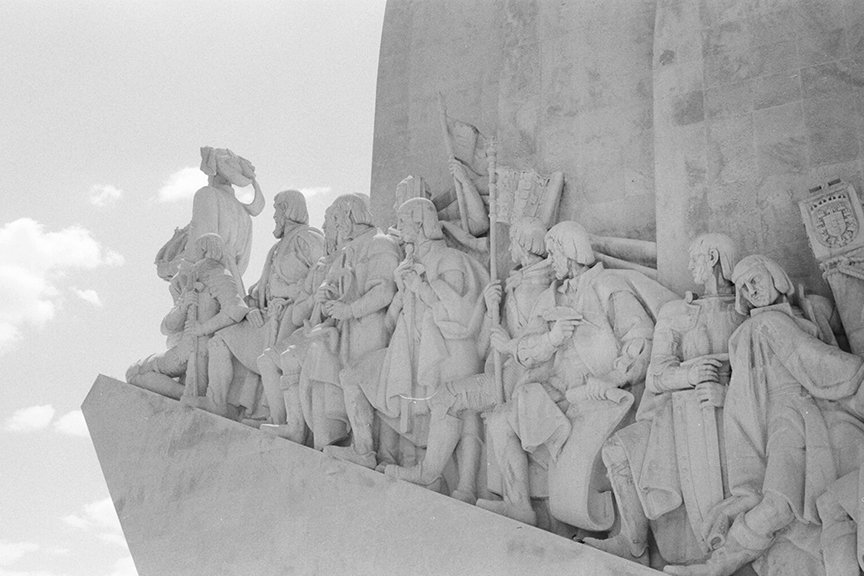
Monument to the Discoveries. (Antonio De Abreu is not visible in either photo.) Photo: G. Harrild/Unsplash
Enter Antonio De Abreu
Antonio De Abreu was born in Madeira, Portugal, in 1480, to Joao Fernandes de Andrade de Arco (supposedly, my 13th great-grandfather) and his wife, Beatriz. De Andrade was a nobleman and military commander who served under Kings Afonso V and John II. He was gifted land on Madeira and became one of its first settlers. He had many siblings. Apart from that, not much is known about Andrade’s personal life. But some surmises are possible.
He likely studied languages, cartography, and sciences as many young noblemen did. Rather than serve in the royal court as his father did, he chose to go overseas to help expand the Portuguese Empire. He became a naval officer and a trusted ally of the conquistador Afonso de Albuquerque. Albuquerque served as viceroy of India and set out to conquer Asian territories of strategic importance to the new trade routes.
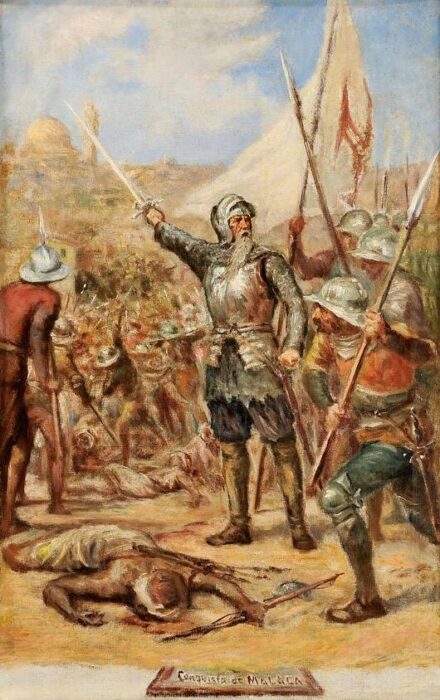
Albuquerque during the Conquest of Malacca. Photo: Ernesto Condeixa
Taking Asia
Albuquerque saw that the Persian Gulf was the key to trade between India and Europe. He, along with Antonio De Abreu, conquered Ormuz Island (now in Iran, and also spelled Hormuz) in 1507.
The two combined again to conquer Malacca (in Malaysia) in 1511, which opened trade with China. During this assault, De Abreu’s valor and determination shone. After briefly pulling back, Albuquerque had his ally lead Portuguese forces on a Chinese junk. They sailed up the city’s river, gaining easy access to the city.
During the fight, De Abreu was shot in the face with a Java arquebus — an early Malaysian rifle — losing teeth, a chunk of flesh, and part of his tongue. He continued to fight, which earned him immense respect from Albuquerque, who had another big task for the naval officer once he recovered.
The Spice Islands
After Malacca was under Portuguese control, Albuquerque wanted to continue expansion. He sent De Abreu and another explorer, Francisco Serrao, with three ships to the Spice Islands.
The Suma Oriental of Tome Pires, which documented the voyage, stated:
The fleet was commanded by Antonio De Abreu, in the ship Santa Catarina, with Luis Botim as pilot; the second in command was Francisco Serrao, in the ship Sabaia, with Goncalo de Oliveira as pilot; the third vessel, a caravel, was commanded by Simao Afonso Bisagudo, with Francisco Rodrigues as pilot. In this armada went 120 Portuguese, 60 slaves ‘to work the pumps’ and two native pilots.
These native Malacca pilots were most likely forced to help them. Tome Pires continues:
Antonio De Abreu and those that went with him set their course toward the north of a small island called Gunong Api (Gumuape), because from its highest point, streams of fire run continuously to the sea, which is a wonderful thing to behold. From there, they went to the islands of Bum (Burro) and Amboina (Damboino), coasted along that [island] called Ceram (Muar Damboino), and…returned to Malacca, having discovered all the sea and land above named…
When De Abreu and his party arrived in the Banda Islands, they stayed for a whole month, but not without stuffing their ships to the brim with nutmeg and mace. It is worth noting that De Abreu worked hard to establish peaceful diplomatic relations with the local rulers to ensure a smooth future trading relationship.
As late as the 19th century, the Banda Islands were the only known place in the world where these spices were found. So, you can imagine how valuable they were and how happy the Portuguese became at such a find. On the way back to their Malaccan base, Francisco’s ship became separated from the others and ran aground near Maluku. Francisco was rescued by a sultan and decided to stay with him as an advisor. He never rejoined De Abreu.
During this same voyage, De Abreu discovered Timor, which was renowned for its many sandalwood trees. The Portuguese ruled until 1975, though they often struggled with the Dutch and internal factions for power. They shared Timor with the Dutch, and East Timor gained independence in 2002.
Conclusion
Author Richard Shenkman pointed out that scholars consider Antonio De Abreu to be the true discoverer of the Pacific “because his voyages to the Spice Islands led to Ferdinand Magellan’s exploration of the Pacific.” Antonio De Abreu might remain a slight footnote in the history books to some. But to others, including myself, he played a greater role in Portuguese history and deserves his due credit.