In the first year of my PhD program, after a particularly bad week, I decided I was going to hike a mountain. Not a real one, with cliffs and glaciers: I was not stupid. I had never willingly gone on a hike in my life, much less one that involved walking upward instead of forward.
But I was not happy. Something needed to change, and since I couldn’t change the outside world, it had to be something in me. I thought a mountain might do the trick. For my first hike, I selected an 18km out-and-back section of the Appalachian Trail that led to the 974m high McAfee Knob. There are other Annapurnas in the lives of men, but mine was more of an Annapurnlet.
My decision to abandon all previous wisdom in my life, which said that fun is something had indoors, in front of a laptop or a book, did not come out of nowhere. For the last six months, I had been tearing through mountaineering literature at an alarming rate. Out of all the eccentric characters who populated Himalayan climbing in the 1980s and 90s, one in particular had grabbed my attention. I, a 23-year-old who had thus far only seen glaciated peaks from airplanes, was totally obsessed with Scott Fischer.
New Jersey to NOLS
Scott Fischer was born in Michigan in 1955 and grew up camping with his family, but nothing more adventurous than that. When he started high school, the Fischers relocated to Basking Ridge, New Jersey, a suburb of New York City.
Basking Ridge is not a notable launchpad for climbing careers. Unlike the horde of climbers who grew up on the West Coast at the same time, roping up each weekend to tackle the Sierras or the Cascades, Scott Fischer spent the first part of his teenage years in complete respectability. He played a Puritan in his school production of The Crucible and was the quarterback on his school football team.
One day, while browsing channels with his father on the TV, he watched a documentary entitled Thirty Days to Survival. The film followed a group of teenagers at the National Outdoor Leadership School as they attempted to cross 180km of backcountry by themselves. Fifteen-year-old Scott Fischer watched, mesmerized. His life was about to change.
‘He’d get people excited’
I first got hooked on mountaineering literature through a New York Times piece about the 1973 Aconcagua expedition that left climbers Janet Johnson and John Cooper dead. The next thing I read after that was Into Thin Air. Fortunately, I then got my hands on Ed Viesturs’s work. He appeared like an angel sent to guide me away from the gripping, distressing world of disaster writing and toward a more balanced interest in mountaineering literature. There, tragedies happened, but triumphs did as well.
It was in the stories of pre-1996 expeditions that I found my own small-scale Thirty Days to Survival. It wasn’t any one story, but rather a constellation of anecdotes about Scott Fischer’s impact.
I knew, of course, who he was — or at least who he was in May of 1996. An ebullient California surfer type, despite being neither Californian nor generally a surfer, he passed away coming down from the summit during the blizzard that killed eight climbers. But as I read other people’s stories from before that tragedy, Fischer’s name always appeared.
“He was always so positive, he’d get people excited,” wrote Ed Viesturs. “If you happened to be in his company, within minutes you’d be as jazzed about life as Scott was.”
Jamling Tenzing Norgay liked him too. “His upbeat attitude and laid-back style were infectious and thoroughly American.”
A friend popping by for dinner
Fischer’s appearances on the world’s harshest mountains began to feel to me, sitting in my house on the comfortable, upscale side of the Appalachians, like a friend popping by for dinner. I started texting my real friends in excitement every time he showed up. I sent them quotes, archival photographs, and play-by-plays of climbs. Most people form parasocial relationships with celebrities online; I had done so with a climber who passed away before I was born.
Throughout all of Fischer’s appearances, his enthusiasm for the outdoors shone through.
“Earnestly, Scott spoke about how he enjoyed his work, how he liked interacting with people and opportunities to take them climbing,” wrote Anatoli Boukreev in his journals. “That way, he combined two of the things he loved in his life.”
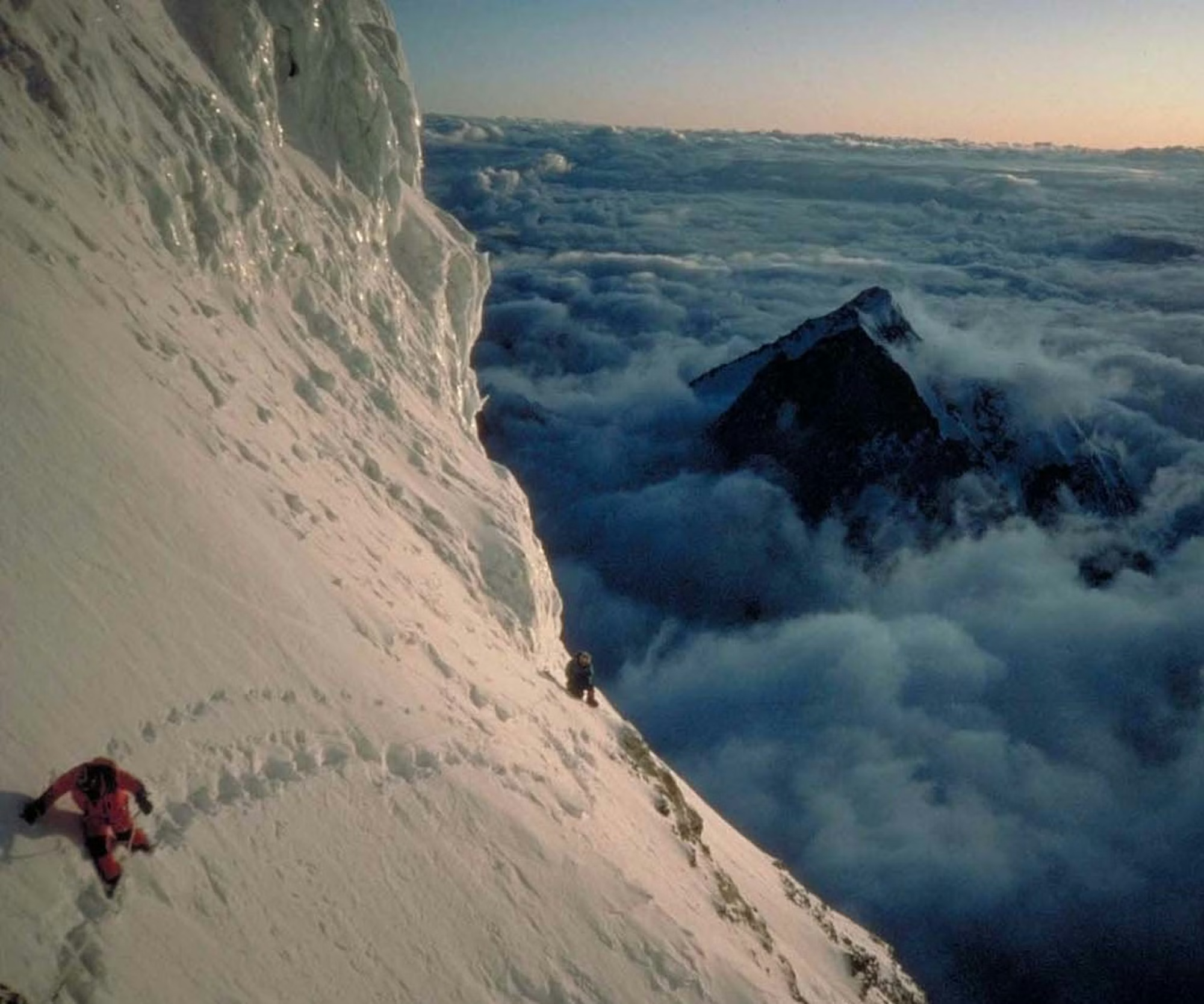
Scott Fischer and Ed Viesturs on K2 in 1992. Photo: Mountain Madness
McAfee Knob
The morning after I decided to hike McAfee Knob, I made myself a sandwich, bought a pack of plastic water bottles, and drove two and a half hours down the spine of the Appalachians to my adventure point. I owned a pair of cheap Quechua hiking boots only because of a work trip to Montreal that January, when my normal shoes had slid on the icy sidewalks. My backpack had no chest or waist straps, so I tied the tightening straps in a knot around my abdomen. I filled it with eight water bottles. Any fewer, I feared, and I might spontaneously keel over from dehydration.
I encountered no one for the first five kilometers through the meandering fields and woods of southern Virginia. Spring had just crept in with the first flutters of birds in the treetops and speckled blooms amid the grass. My heart pounded in my chest, and my back began to hurt immediately, but I stopped only to drink water. The internet had told me that I needed to drink a liter of water for every two miles.
When I joined the Appalachian Trail, I saw other hikers for the first time. Most were thru-hikers who passed me easily, but a few were families blaring music from their speakers. I was happy to see them, but evading the radius of their topical pop hits pushed me to half-run through some sections. My shirt was soon drenched in sweat, and every breath was a gasp. I kept going because I was climbing a mountain, and maybe if I got to the top, then I would feel like everything was alright.
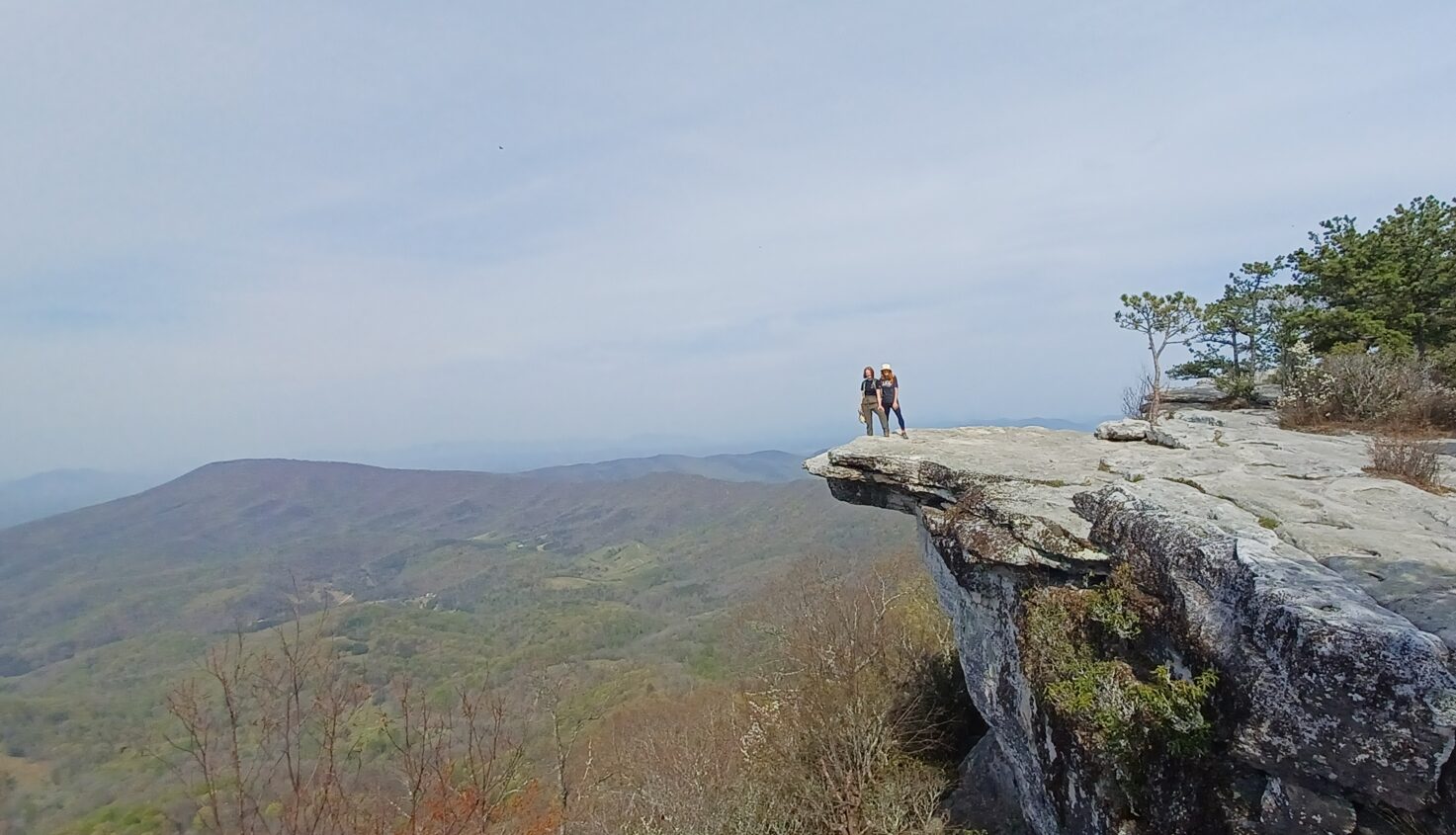
With great lack of foresight regarding the existence of this article, I didn’t pose for the classic McAfee Knob photo until my fourth time up, when I brought my mother along. Photo: Reynier Squillace
First summit selfie
McAfee Knob is the most-photographed section of the AT for a good reason. I emerged from twisted mountain laurel onto a plateau with 270˚ views. Legs shaking, I staggered past the promontory, where excited and much less bedraggled hikers were taking photos, and settled into a rocky nook above a 20-meter drop. It was sandwich time.
It was the best sandwich I have ever had. I felt ridiculously, deliriously happy sitting there, cold rock freezing through my pants, looking out over the bright green of new foliage. The wind was drying the sweat in my hair. I took a selfie and sent it to my friends with the caption, my first summit selfie, thank u scott fischer.
My head was pounding. Maybe the altitude was getting to me? I texted this to my friends, one of whom is an avid climber from the Dolomites. At how many meters or feet are you now, he wrote back.
1000m😔, I sent. And I have a headaaaache.
thats got to be medically impossible, he said.
Maybe I hadn’t drunk enough water.
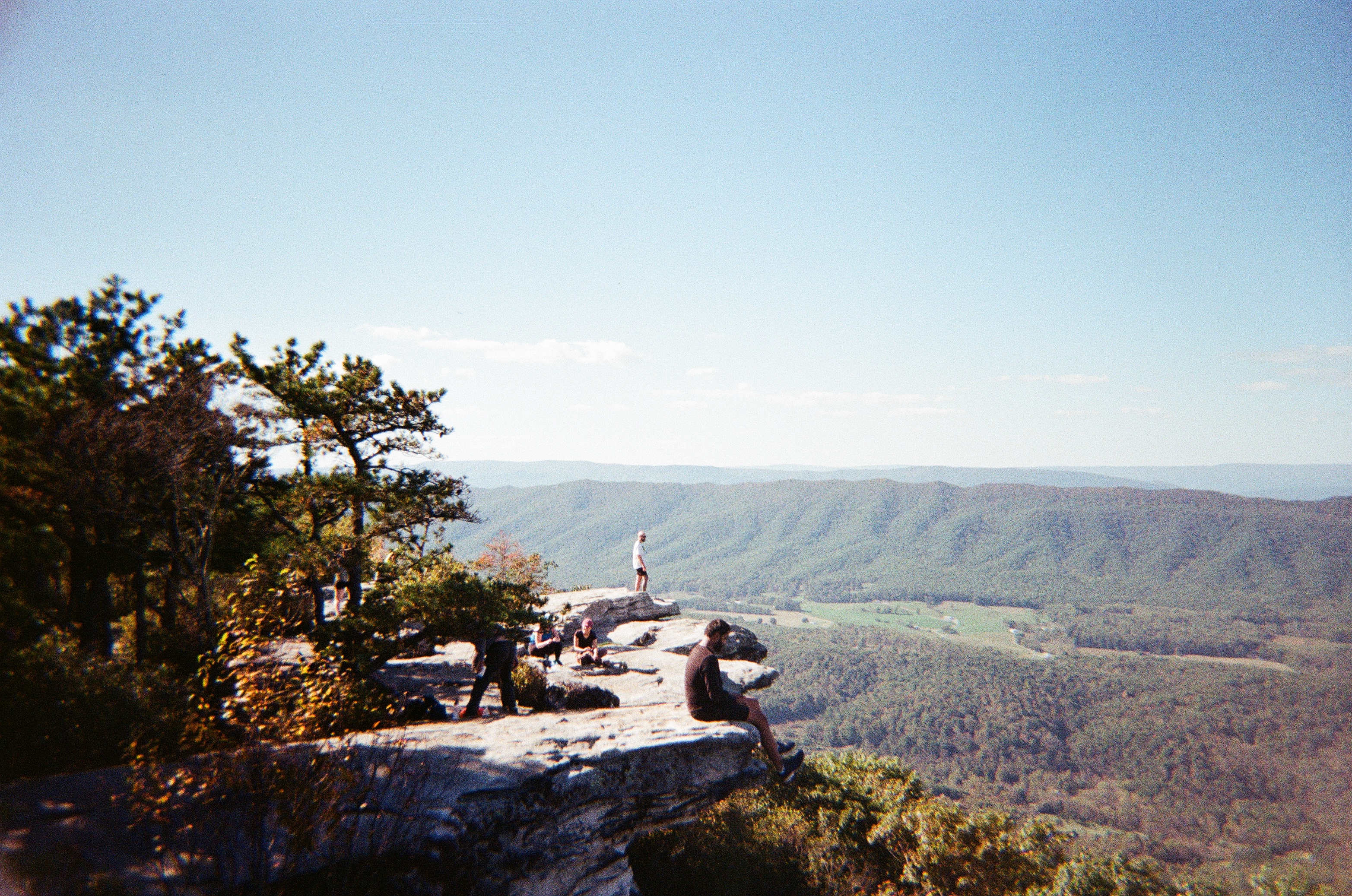
The view at the top of McAfee Knob from my favorite sandwich nook, on one of my many hikes up since the first one. Photo: Reynier Squillace
‘Just get started, and it’s going to happen’
For my 25th birthday, I hiked Mt. Lassen. It’s a simple switchback, much less intense than some of the hikes I’d done the last year and a half in Virginia and North Carolina. But at 3,187m, it was the highest I had ever been. I saw chipmunks. At the top, I ate beef jerky and wandered among the youngest rocks in the state of California.
Thanks to the wonders of vitamin water, I didn’t even have a headache.
In Robert Birkby’s heartwarming, tear-jerking biography of Scott Fischer, he describes his first climb with Fischer. Birkby, a long-distance hiker and trail designer, balked at the more technical sections of Mt. Olympus. “You’re going to do it,” Fischer reassured him. “Just get started, and it’s going to happen.”
I got started, and it happened. Climbing McAfee Knob did change something in me, although not in the way I expected. I didn’t come back from it magically more able to cope with the stress of graduate school or my oftentimes overwhelming social anxiety. But I did find out that hiking through nature as fast as I physically can, which admittedly is not very fast, brings me a joy so powerful it can last for days afterward. I hike multiple times a week now, after work, on the weekend, on vacation. None of it is flashy, but I smile the whole way.
Sometimes I try to explain why my favorite figure in the history of mountaineering is a man who, when compared to the Thomas Jeffersons or Cleopatras of the world, lived a relatively small-scale life. “What did Scott Fischer do?” my history geek friends ask me.
He was really excited to be in the mountains, I tell them. And he was excited about other people being there, too.
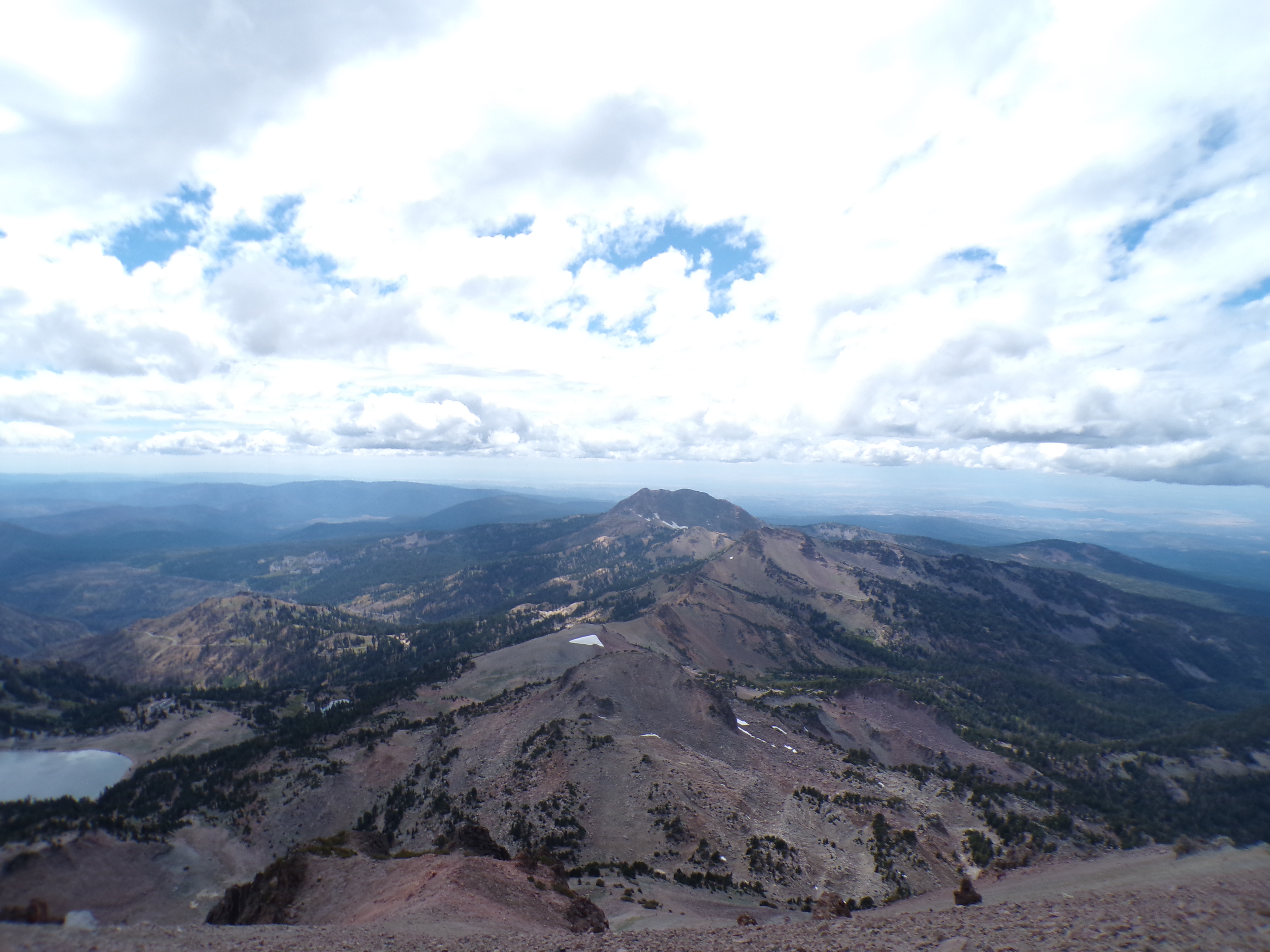
The view from partway up Lassen. Photo: Reynier Squillace