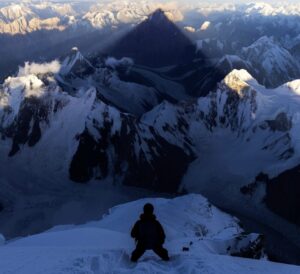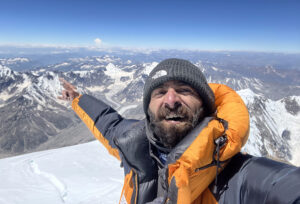
In 1939, an American expedition attempted to make the first ascent of K2. Although some climbers reached high on the mountain, the expedition ended in a disaster and a controversy. It divided the American Alpine Club and generated shifting accusations for more than 50 years.
Today, we examine the debate that swirled around this expedition in the decades that followed.
Led by Fritz Wiessner, the 1939 expedition was the second American effort to climb 8,611m K2, the second-highest peak in the world. Wiessner, known for his technical skill and demanding leadership, led a team of five other Americans: deputy leader Tony Cromwell, Dudley Wolfe, George Sheldon, Chappell Cranmer, and Jack Durrance. The party included nine Sherpas: Pasang Kikuli (sirdar/head Sherpa), Pasang Dawa Lama, Pasang Kitar, Phinsoo, Tse Tendrup, Dawa, Tsering, Sonam, and Pemba Kitar.
The group arrived at Base Camp on May 31, 1939, aiming to ascend K2 via the Abruzzi Route without bottled oxygen.
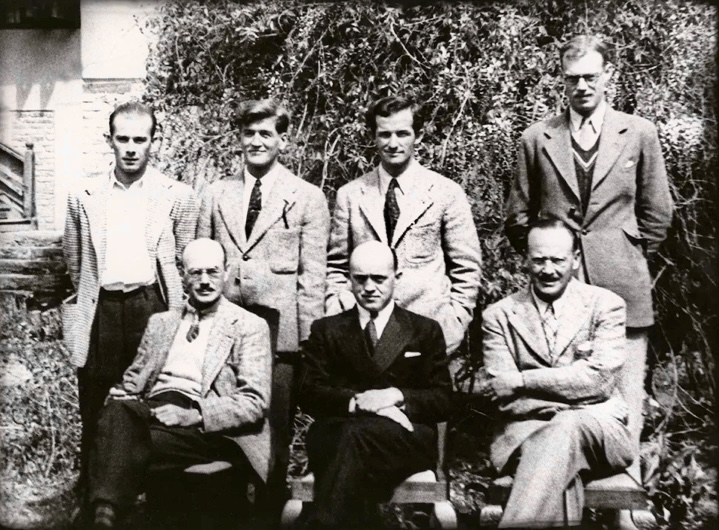
The 1939 American team. Left to right, standing: George Sheldon, Chappell Cranmer, Jack Durrance, and George Trench. Seated: Tony Cromwell, Fritz Wiessner, and Dudley Wolfe. Photo: Jack Durrance Collection/American Alpine Club
The summit attempt
After a complicated ascent, Wiessner and Pasang Dawa reached their highest point of 8,385m on July 19. Wiessner was ready to push through the final stretch, but Pasang Dawa Lama was terrified of being on the summit at night. He refused to move.
During their nighttime retreat to the high camp (Camp 9), Pasang Dawa’s pack (which held both pairs of crampons) slipped off during a rappel. Losing that gear at more than 8,000m meant they could no longer safely navigate the icy sections without slow step-cutting. They reached Camp 9, exhausted, at around 2:30 am on July 20.
They rested there that day due to fatigue and the lack of fresh supplies from below. On July 21, Wiessner and Pasang Dawa made a second summit attempt, this time via a snow couloir to the east of the original buttress.
Without crampons, they had to laboriously cut steps in hard, icy snow. Poor snow conditions and the slow progress prompted them to turn back to Camp 9 early in the afternoon. With supplies now critically low and no realistic prospect of a third attempt, they began their full descent the following day.
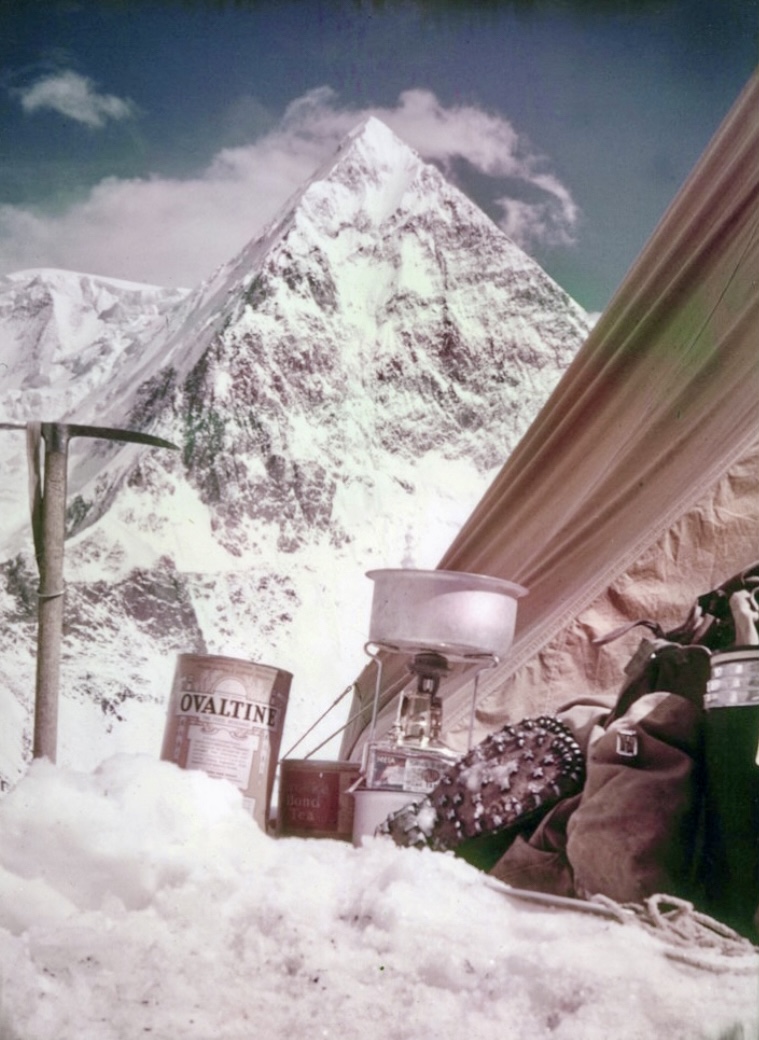
K2, 1939. Photo: Jack Durrance Collection
Wolfe stranded
Wolfe, a wealthy American socialite and adventurer, remained alone in Camp 7 at about 7,529m when Wiessner and Pasang Dawa descended. The real disaster unfolded below them. Durrance, a young climber with little Himalayan experience, was suffering from altitude sickness and had descended. Due to a series of miscommunications, the team in the lower camps concluded that Wiessner, Pasang Dawa, and Wolfe (who was waiting at this high intermediate camp) were dead.
Acting on this assumption, the lower team stripped the intermediate camps of sleeping bags, stoves, and food. When Wiessner and Pasang Dawa finally descended, expecting to find refuge, they found only empty tents. They were forced to continue in a state of extreme exhaustion and dehydration. Wolfe, left stranded at Camp 7, was too weak to move and had been without proper supplies for days.
Sherpas die in heroic rescue attempt
In a desperate rescue attempt, three Sherpas (Pasang Kikuli, Pasang Kitar, and Phinsoo) climbed back up to save him. The Sherpas reached Wolfe, but he reportedly refused to leave, possibly due to altitude-induced delirium. The Sherpas went back up a second time to force the rescue, but a massive storm moved in, and the three Sherpas never returned. These four deaths (Wolfe and the three Sherpas) were the first fatalities in K2’s history.
Wiessner confronted deputy leader Cromwell and Durrance, as well as others managing the lower mountain. He accused them of abandoning Wolfe and, by removing essential gear, effectively endangering the high party. Cromwell countered that the high party had been presumed lost after days without signals and that dismantling the camps was a practical measure before the monsoon. The argument was heated and personal, with Wiessner speaking of legal consequences.
For decades following, Wiessner singled out Durrance as the primary culprit for the camp stripping. The four deaths only intensified the mutual recriminations.
On the long trek back to Srinagar, divisions deepened. Cromwell sent a cable to the American Alpine Club (AAC), assigning primary responsibility for the tragedy to Wiessner. In Srinagar, Cromwell and the British transport officer, Trench, wrote additional critical letters to the AAC.
The consul, who interviewed the party, concluded that the disaster stemmed from a mix of poor team selection, personality conflicts, and cumulative misfortune rather than from any one person’s negligence. That balanced assessment didn’t prevent the story from exploding in the American press.
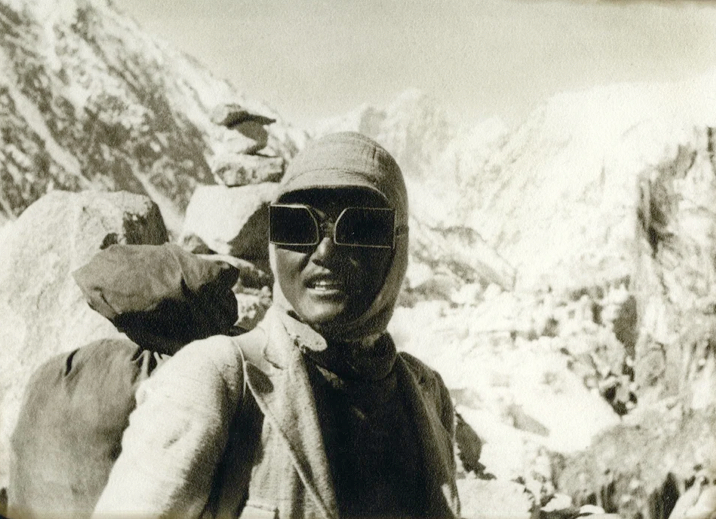
Pasang Kikuli. Photo: Jack Durrance Collection/American Alpine Club
Wiessner initially blamed
When the survivors reached the United States in late 1939, the timing could hardly have been worse. Europe was already at war, and the U.S. would enter within two years. At first, the newspaper coverage largely placed blame on Wiessner, portraying him as a driven leader who had prioritized personal summit ambitions over the safety of Wolfe, an inexperienced amateur.
Some reports subtly highlighted Wiessner’s German birth and naturalized American citizenship, feeding into the pre-war atmosphere of suspicion toward anything associated with Germany.
Wiessner gave an interview to The New York Times in which he remarked that high mountains, like war, inevitably involve casualties. What he said sounded cold, and even more people started to dislike him. Cromwell’s accusations reinforced the narrative that Wiessner had abandoned a teammate. For a time, public opinion seemed settled against the expedition leader.
The AAC report
Fearing a deep rift within its membership, the American Alpine Club (AAC) established an ad hoc committee to review the conflicting accounts. No formal hearings with all parties present were held.
The committee’s published report in 1940 was intentionally non-committal. It essentially stated that the expedition members themselves were in the best position to explain what had occurred, offering no explicit assignment of fault.
Contemporary observers and later historians viewed the document as evasive, a whitewash intended to preserve club unity rather than clarify truth. The backlash was immediate. Both Wiessner and Cromwell resigned from the AAC amid the bitterness. What had started as a national climbing endeavor ended with a lifelong enmity between key figures and a lingering sense that the club had failed to confront uncomfortable realities.
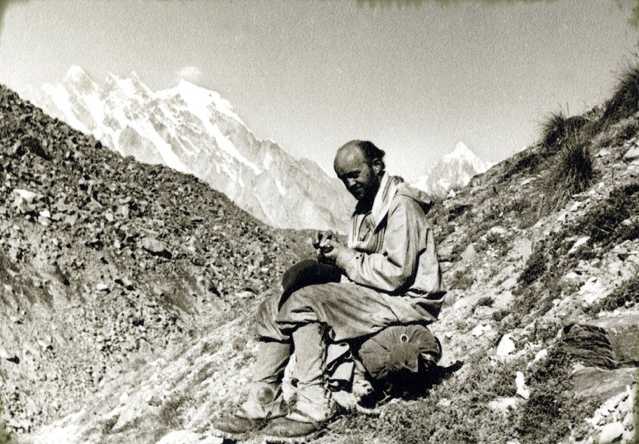
Fritz Wiessner on K2, 1939. Photo: Jack Durrance Collection/American Alpine Club
Wiessner’s 1956 defense
The controversy persisted for years. In 1956, Wiessner published a detailed defence in the journal Appalachia (“The K2 Expedition of 1939”). He presented a crumpled note, apparently in Durrance’s handwriting, that seemed to order the removal of sleeping bags and other gear from the upper camps. For a period, attention turned toward Durrance, who had been part of the lower party and was accused of misinterpreting or exceeding instructions.
The article garnered significant sympathy for Wiessner. Many who had initially criticized him now saw the stripped camps as the decisive factor that had sealed Wolfe’s fate and complicated the Sherpa rescue. The debate evolved from simple abandonment accusations to questions about loyalty and communication breakdowns.
Durrance’s 1989 diary
Durrance had remained mostly silent for decades, declining most requests to discuss the expedition publicly. However, in 1989, he released his complete manuscript expedition diary to researchers Andrew Kauffman and William Putnam, both former AAC executives. The diary provided fresh context.
In it, Durrance stated that he had been seriously ill and physically depleted during the critical period, and had acted on what he understood as Cromwell’s instructions. While Wiessner long believed that the note ordering the camp stripping was in Durrance’s hand, the 1992 analysis by Kauffman and Putnam suggests it was likely written by Cromwell himself, or drafted under his direct direction, as part of the atmosphere of retreat in the lower camps.
At the same time, the diary and related documents underscored Wiessner’s contributions to the problems: his dominant leadership style, his choice to advance with a weakened and under-experienced team, and his decision to leave Wolfe unattended at such an altitude. The picture grew more nuanced. It was no longer a story of one clear villain, but of multiple failures amplified by the mountain’s demands.
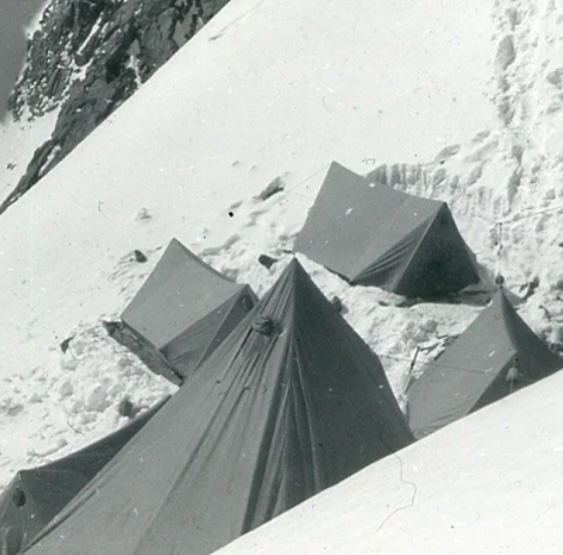
Camp 2 on K2 in 1939. Photo: Eaton Cromwell Collection/American Alpine Club
The 1992 book
The most comprehensive analysis arrived in 1992 with the book K2: The 1939 Tragedy, written by Andrew Kauffman and William Putnam. Initially intended as a biography of Wiessner, the authors encountered inconsistencies and spent years cross-referencing diaries, letters, contemporary reports, and the 1989 Durrance material.
Their book presented the evidence methodically and reached a balanced verdict, suggesting that responsibility was shared. Wiessner was faulted for poor judgment in team assembly, over-dominance, and underestimating the risks of splitting the party. Cromwell was criticized for indecision and for allowing (or directly ordering) the camp stripping.
Durrance had followed perceived orders while struggling with his own exhaustion and limited high-altitude experience. Altitude had eroded everyone’s decision-making, memory, and communication in ways poorly understood at the time.
The work didn’t silence all disagreement. Some felt that it was overly critical of Wiessner, while others felt that it excused him too much. In the end, however, this book remains a careful reconstruction based on primary sources.
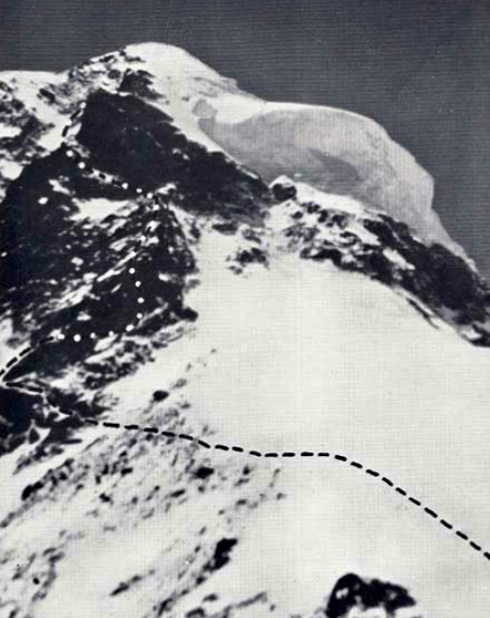
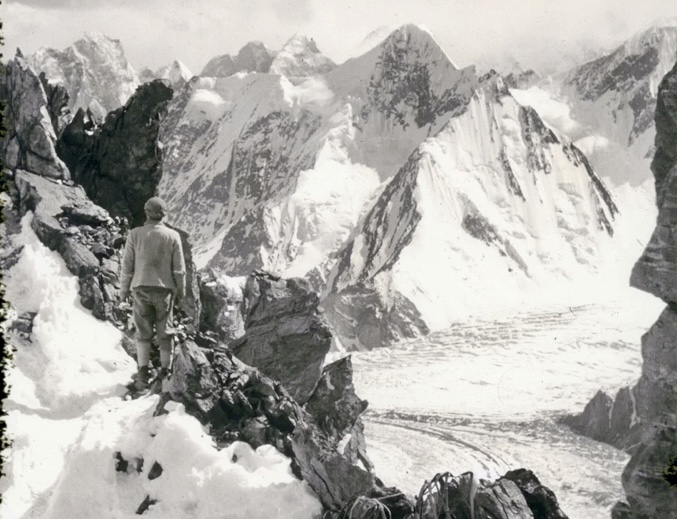
The route on the upper section of K2, marking the highest point reached in 1939. The highest camp was at the extreme left where the track makes an acute angle, according to Wiessner. Photo: Fritz Wiessner
Parts of Wolfe’s skeletal remains were finally discovered in 2002 on the Godwin-Austen Glacier, carried down by the ice over 63 years. (We recommend reading Jennifer Jordan’s The Last Man on the Mountain: The Death of an American Adventurer on K2, which provides the most comprehensive biography of Wolfe.)
The 1939 tragedy remains relevant because it exposed the deep tensions of high-altitude climbing. Today, as mountain disasters flash briefly on a screen only to evaporate quickly as the next digital controversy takes over, the decades-long search for the truth of 1939 serves as a quiet reminder of what we lose when we stop asking difficult questions.
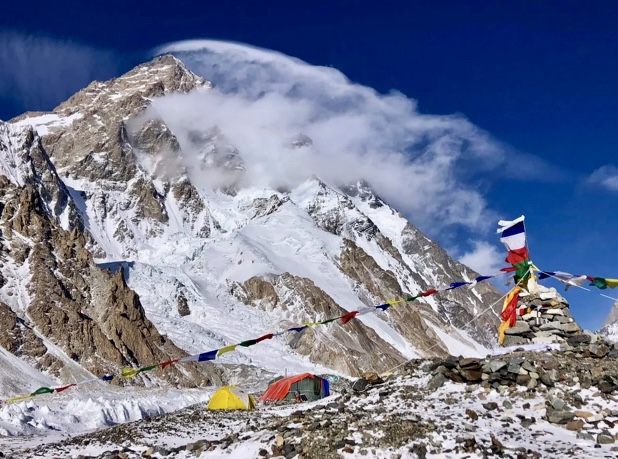
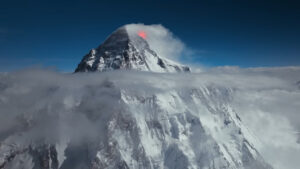
A lenticular cloud over K2 in 2021, indicating high winds. K2 winter expedition 2020-21. Photo: Jon Kedvrowski/jonkedrowski.com