The Central Investigation Bureau (CIB) of the Nepal Police has arrested six individuals linked to three prominent mountain rescue and helicopter companies for allegedly staging false emergency evacuations to claim insurance payouts from overseas policies, according to Everest Chronicle, Onlinekhabar, and The Himalayan Times.
The operation used foreign trekkers and climbers in Nepal’s high-altitude regions, particularly around popular areas like Everest and Annapurna. Operators reportedly fabricated medical emergencies, issued bogus invoices and medical reports, and misrepresented voluntary charter flights as urgent rescues.
In some cases, a single helicopter trip would be billed multiple times under different emergency pretexts, inflating costs dramatically. For instance, a standard Kathmandu-Lukla flight worth roughly $2,500 was claimed for up to $31,000 through repeated false invoicing. Private hospitals were also allegedly involved in providing false documentation to support the claims.

Press briefing at the CIB office on Sunday. Photo: The Himalayan Times
Arrested suspects
The arrested suspects include Jayaram Rimal and Vivek Pandey (also referred to as Bibek Pandey in some reports) from Mountain Rescue Service Pvt Ltd; Rabindra Adhikari and Bibek Raj Thapaliya from Nepal Charter Service Pvt Ltd; and Mukti Pandey and Subhash KC from Everest Experience and Assistance Pvt Ltd, according to Everest Chronicle.
The six individuals were detained on Sunday following court-issued warrants. Authorities say that additional complaints about other fraudulent rescues are still coming in, and the investigation remains active.
They face charges related to crimes against national interest, organized criminal profiteering, and money laundering, with more arrests potentially on the way as the probe continues.
The investigation alleges that Mountain Rescue Service had falsely recorded 171 rescues out of 1,248 operations, securing over $10 million in fraudulent claims. Nepal Charter Service staged 75 fake rescues among 471 total operations, claiming around $8.2 million, while Everest Experience and Assistance carried out 71 suspicious cases out of 601, with payouts totaling $1.15 million.
Altogether, the fraudulent claims total $19.69 million, according to Onlinekhabar.
Central Investigation Bureau chief Manoj KC said that two and a half months of intensive investigation revealed “organized and systematic fraud.” These included multiple insurance claims for the same incident, charter flights passed off as emergencies, and fake medical bills. The case came to light following complaints from international insurance providers and earlier media reports highlighting long-standing concerns in the sector.
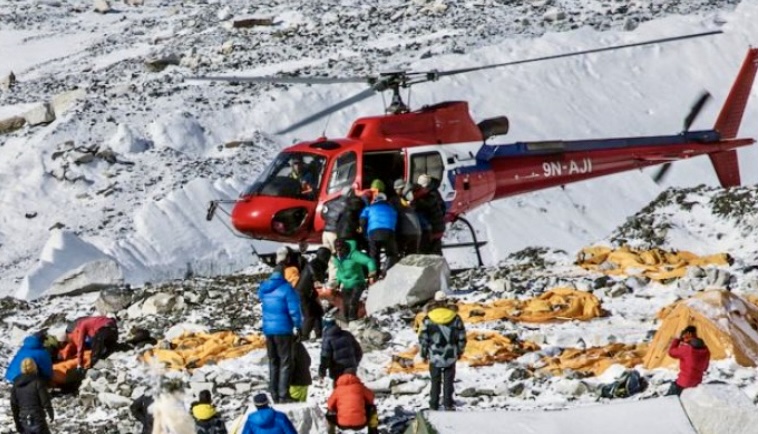
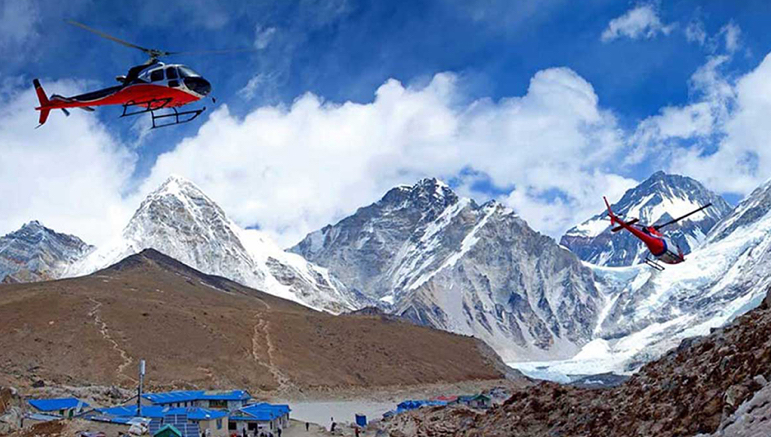
A helicopter rescue on Mt. Everest. Photo: Himalayanhelicopter.com
A decade-long problem
Fake helicopter rescues have plagued Nepal’s adventure tourism sector for years. Reports of fraudulent practices date back to at least 2017, when one travel assistance firm estimated that nearly 35% of rescues were fake, including instances where trekkers were deliberately made ill (e.g. through food contamination) to trigger unnecessary evacuations and earn commissions.
In 2018, a government investigation committee recommended police action and introduced new rescue monitoring guidelines, but the lack of proper documentation from earlier periods made it difficult to pursue older cases effectively. Warnings from insurers as far back as 2018 threatened to halt coverage for Nepal trips unless the problem was addressed. Still, attempts at meaningful reforms often stalled.
The current CIB investigation focuses on activities since 2022, prompted by fresh complaints, along with a formal request from the Ministry of Home Affairs this winter, according to Onlinekhabar.
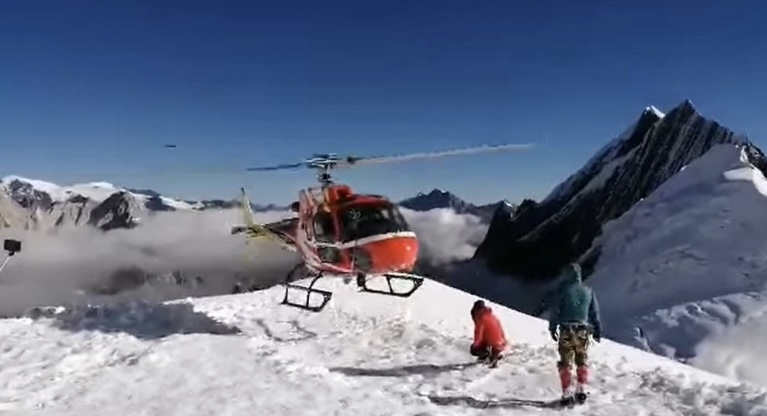
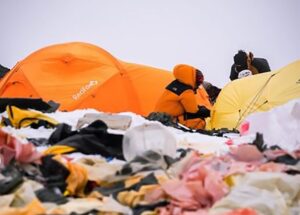
Frame from a video that shows a helicopter taking off from Manaslu’s Camp 1. Photo: Karma Sherpa
The ongoing fraud has damaged Nepal’s reputation as a premier destination for mountaineering and trekking. Some in the industry say that without action, Nepal risks becoming a no-go area for some insurers. Even if insurance continued, lengthy scrutiny before approving genuine rescues could endanger lives.
More complaints continue to pour in, according to the Everest Chronicle.