Peter Hamor has postponed his attempt to climb Mt. Api (7,132m) in western Nepal because he couldn’t find a partner. But in an interview with ExplorersWeb, the Slovakian climber, now 61, says he remains committed to exploratory alpinism and to finding mountains “as they used to be.”
Disappointed with 8,000’ers
Hamor completed his 14×8,000m summits between 1999 and 2017. He only used oxygen on Everest and opened a new variation route on Annapurna on one of his two summits of that mountain. In 2019 and 2021, he attempted to open a new route on the Northwest Ridge of Dhaulagiri with Horia Colibasanu and Mariusz Gane. On the 2021 expedition, they barely survived an avalanche that buried their tent as they slept.

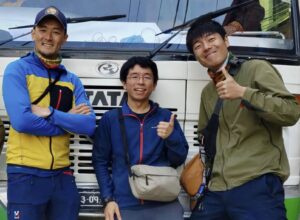
Left to right, Hamor, Gane, and Colibasanu in a high camp on Kanchenjunga in 2022. Photo: Horia Colibasanu
In 2022, he planned a traverse from Kangchenjunga to Yalung Khang, but permit issues limited his climb to Kangchenjunga only. He didn’t like what he saw. He didn’t even recognize the mountain he had climbed with only a few other climbers 10 years earlier.
“Helicopters, hundreds of oxygen bottles, lots of people, kilometers of fixed ropes, maximum comfort and service until the last camp, and experienced guides going with their clients to the top…This new trend, in my opinion, is a step, or rather a leap, backward, and has nothing to do with real climbing,” he says.
Hamor decided he was done with the 8,000’ers and focused instead on lesser but lonelier mountains where there was still room for new routes. Given the results, it was a great decision. In 2023 and 2025, Hamor teamed up with former partners Nives Meroi and Romano Benet to open routes on the Kabru Massif near “crowded” Kangchenjunga.
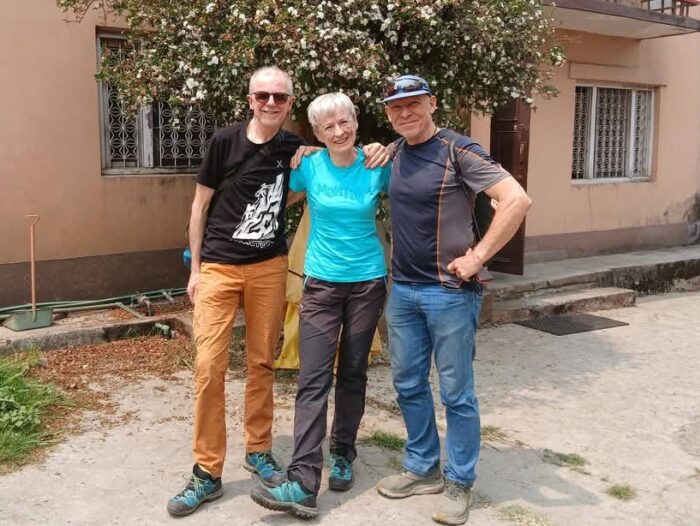
Left to right, Romano Benet, Nives Meroi, and Peter Hamor in Kathmandu. Photo: Romano Benet/Facebook
Partner falls sick
Hamor planned to attempt a new route on Mt. Api (also known as Api Himal) this spring, pairing up with fellow Slovak Tomas Petrik, with whom he had climbed on K2 in 2012 and Dhaulagiri in 2017. Unfortunately, Petrik recently fell ill and was admitted to the hospital. The expedition is now out of the question.
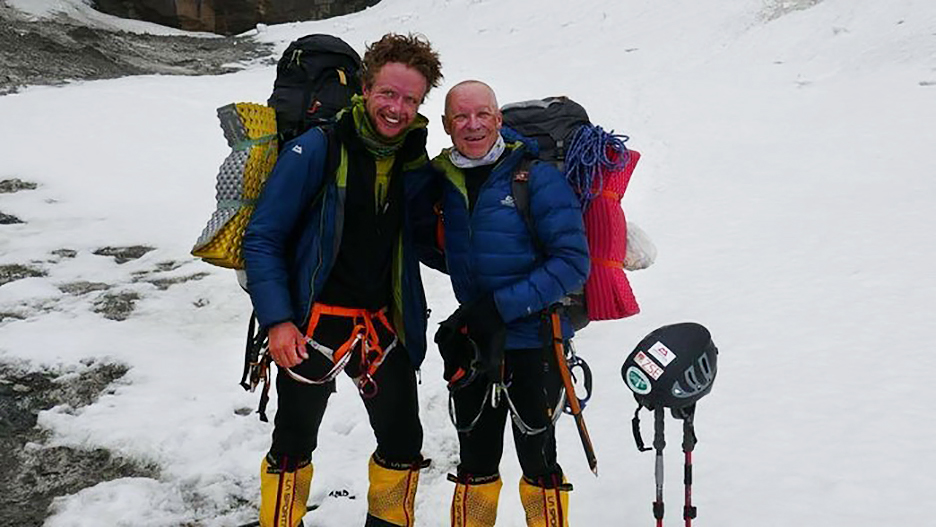
Tomas Petrik and Peter Hamor on Dhaulagiri in 2017. Photo: Peter Hamor/Facebook
“Instead, I will focus more on exploring this area with my wife, take photos, and maybe climb some lower and easier mountains. In other words, I’ll spend a nice vacation,” he added.
Hamor is not even sure if he will attempt Api in the future, but he will definitely return to Western Nepal. “The far west of Nepal is still very little visited by climbers and offers many opportunities for interesting climbs and first ascents.”
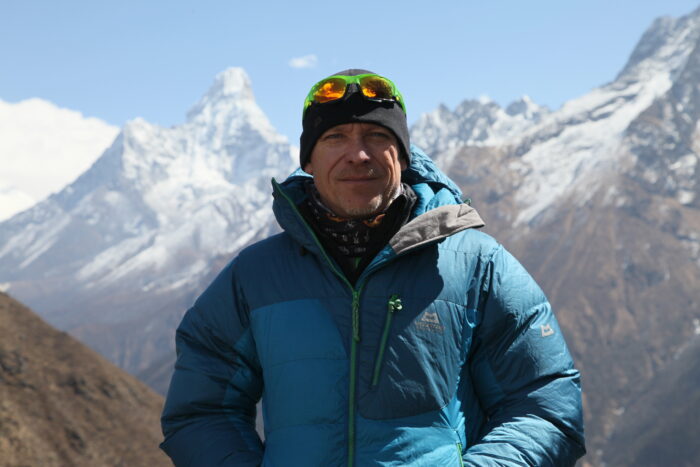
Peter Hamor in front of Ama Dablam. Photo: Maria Hamarova
Hamor said he was attracted to Api and Saipal, the two 7,000’ers of the Gurans Himal, precisely because that area is much less visited than the Kangchenjunga area.
“There are also many lower peaks here, which are also extremely interesting from a mountaineering point of view,” he said. “The area has a huge potential…and the allure of old times. The mountains are still the same as I remember them from the time when I started in the Himalaya.”

The south face of Mt. Api in western Nepal. Photo: Wikipedia
Trekking vs airlifts
“At the start of my Himalayan career, I focused more on 8,000m peaks, because back then, the sporting value of the climb increased with the height of the mountain,” Hamor said. “But everything has changed in the last 20 to 30 years.
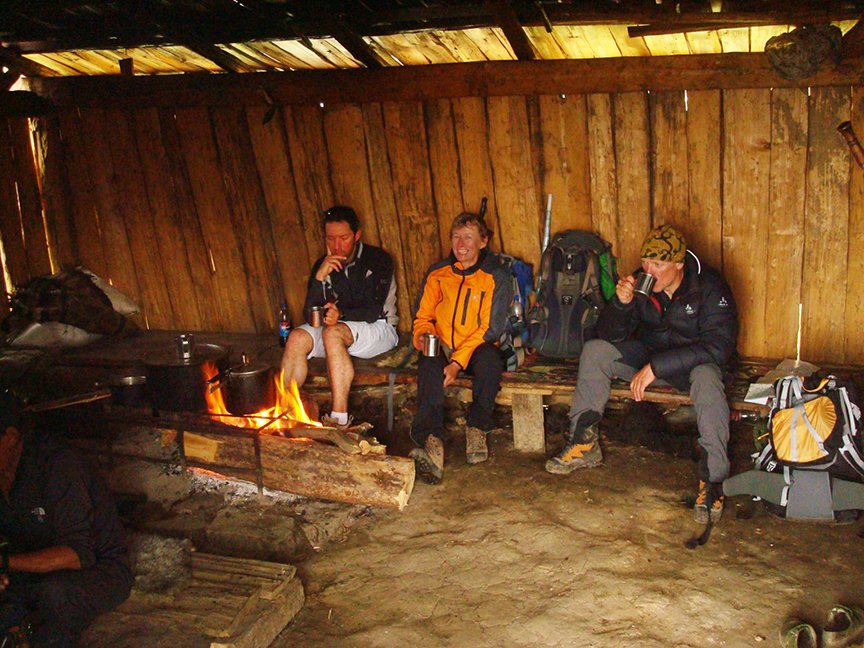
From left, Horia Colibasanu, Nives Meroi, and Peter Hamor during the trek to Kangchenjunga in 2012. Photo: Romano Benet
In his opinion, the changes are not only in the mountains but also throughout the expedition process. “Trekking to base camps was an integral and very interesting part of expeditions for me, not a necessary evil, as it is now,” he said. Today, many climbers simply take a helicopter to base camps, especially to the more remote peaks such as Kangchenjunga.
Exploring part of the allure
“Actually, the approach and the area are important criteria I apply when choosing a mountain to visit, because I cherish the opportunity to get to know new places,” he explained.
“Then, once the climb starts, the most important thing is to be able to climb to the top on my own or in a small team, crossing untouched terrain, and preferably at the head of an alpine-style rope team, not along a beaten track prepared by mountain guides and large support teams, as is common these days.”

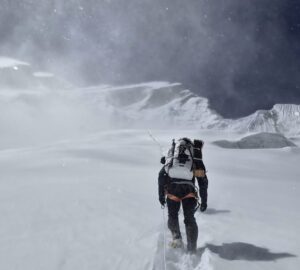
Hamor’s team mounts an icefall on Kabru South. Photo: Nives Meroi/Romano Benet
Hamor wants to climb the mountains he likes, with good friends, on a route he finds appealing, with no external disturbances.
Room for everyone
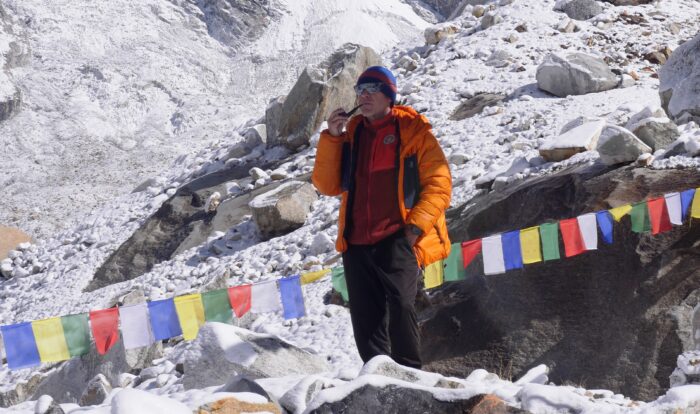
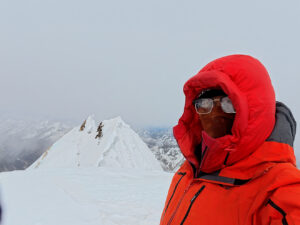
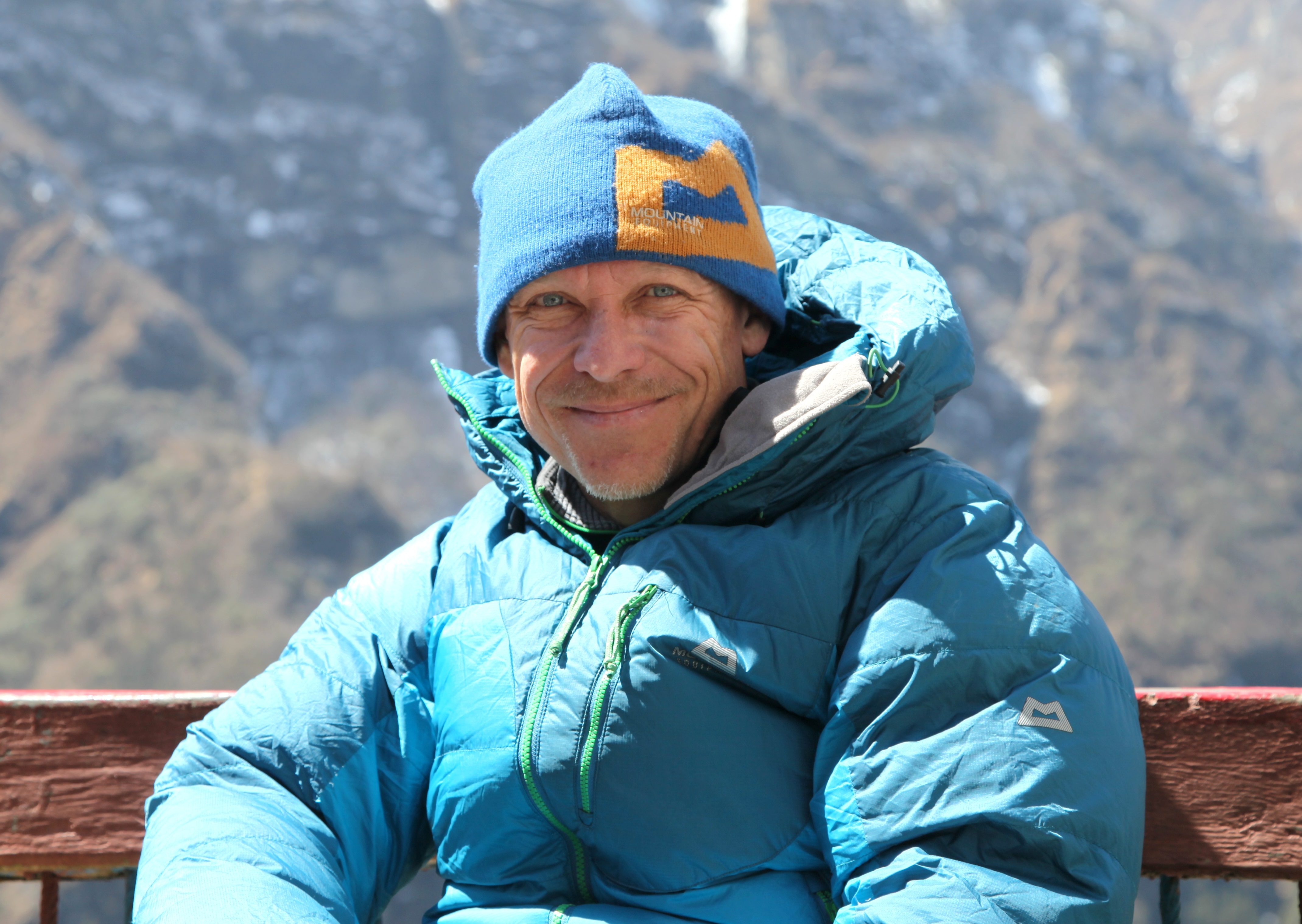
Peter Hamor. Photo: Maria Hamarova
“Times are changing fast everywhere, and the Himalaya are no exception,” said Hamor. “[But] the mountains are still a place where everyone can find space. Some are more attracted to ‘conquering’ peaks, the higher and the more of them the better, with more or less help from guides, support teams, and various technical aids. Others will be more interested in real mountaineering with everything that goes with it.”
Hamor noted that those looking for exploratory climbing now have access to huge amounts of information, which makes the planning and preparation much easier. “I am an optimist and believe that there will be nice new routes to climb in the Himalaya in the future.”
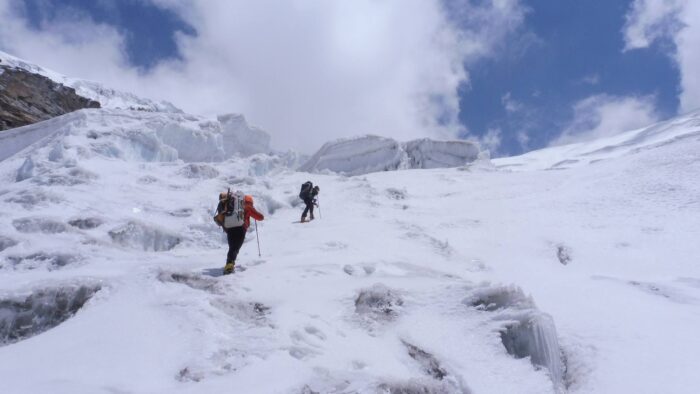
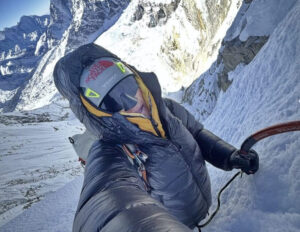
Peter Hamor and Romano Benet on the Kabru Glacier. Photo: Nives Meroi