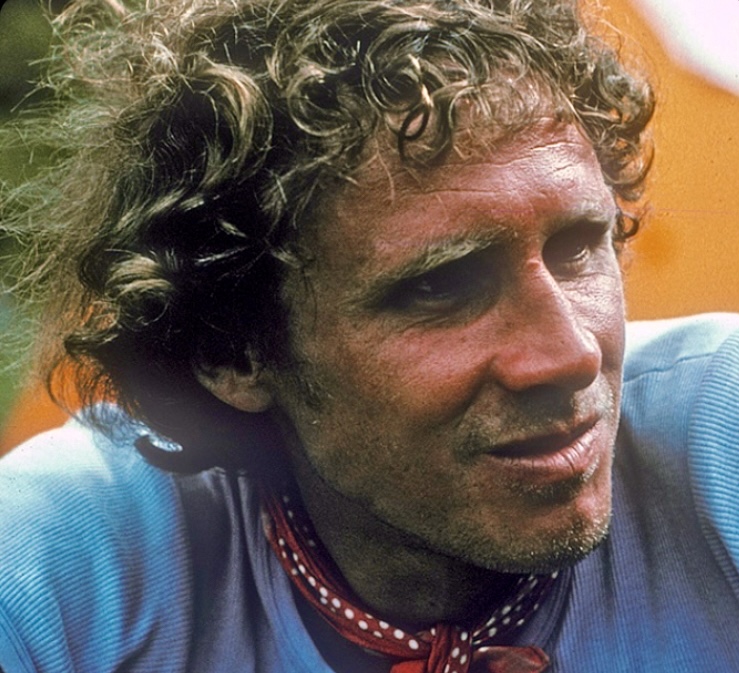
Dougal Haston, one of the most skilled and fearless mountaineers of his time, would have turned 86 today.
Born on April 19, 1940, in Currie, a small village near Edinburgh, Haston was the son of a baker and grew up in modest circumstances. From a young age, he developed a strong passion for the outdoors and began climbing in his mid-teens.
By 1954, when he was 14, he made his first notable ascent on Curved Ridge, one of Scotland’s most famous and popular scrambling routes, in Glencoe. He joined the Junior Mountaineering Club of Scotland and improved his skills on hard routes, often in bad weather, with climbing partners such as Robin Smith. Haston and Smith formed one of the most dynamic and audacious climbing partnerships of the 1960s, bringing the so-called “Scottish style” (climbing in severe, mixed conditions) to an outstanding level.
In 1959, Haston made the first ascent of The Bat, a difficult rock route on Carn Dearg at Ben Nevis. While at Edinburgh University, he continued climbing in Scotland, the Lake District, and the Alps. He grew to prefer winter climbs and mixed routes.
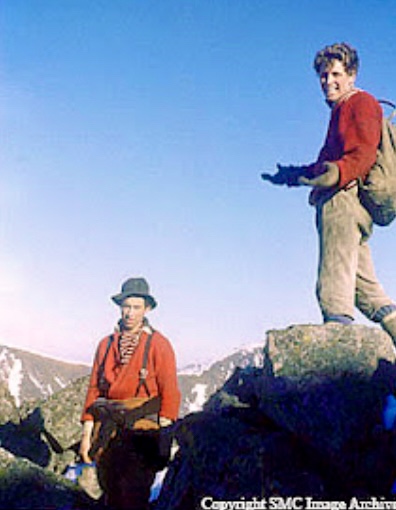
Robin Smith, left, and Dougal Haston. Photo: SMC Image Archive
Car accident and controversy
Haston’s early career was not without problems. In 1965, while helping run a mountaineering school in the Glencoe area, he was involved in a tragic car accident. After drinking at the Clachaig Inn, he drove a van with defective headlights and struck and killed one person while injuring others.
He was sentenced to 60 days in prison. The accident drew widespread criticism from the climbing community and left him with a heavy personal burden. This difficult time made him think deeply about his life. In the end, it helped him look for a fresh start somewhere else.
Move to the Alps
Haston moved to Leysin, Switzerland, in the mid-1960s, where he would spend most of the rest of his life. There, he threw himself into Alpine climbing. From 1967, he served as director of the International School of Mountaineering, taking over after the death of the American badass climber, John Harlin.
In 1966, Haston took part in the first ascent of the Eiger North Face Direttissima. This very demanding climb was done in harsh winter conditions, partly to reduce the risk of rockfall. The team used siege-style tactics with many fixed ropes and several climbers working together.
During the Eiger climb, tragedy struck when Harlin was killed by a breaking fixed rope, one that Harlin had chosen even though Haston had preferred thicker ropes. After the accident, the team continued, and Haston played a major part in the final push to the summit.
On March 25 at 2:30 pm, Haston and four German climbers reached the summit after a final 200m push. A storm hit the mountain after they summited, forcing a grueling descent via the West Flank, completed over two days.
The climbers, some suffering serious frostbite, named the bold new line, on one of the Alps’ most famous and difficult faces, The John Harlin Route.
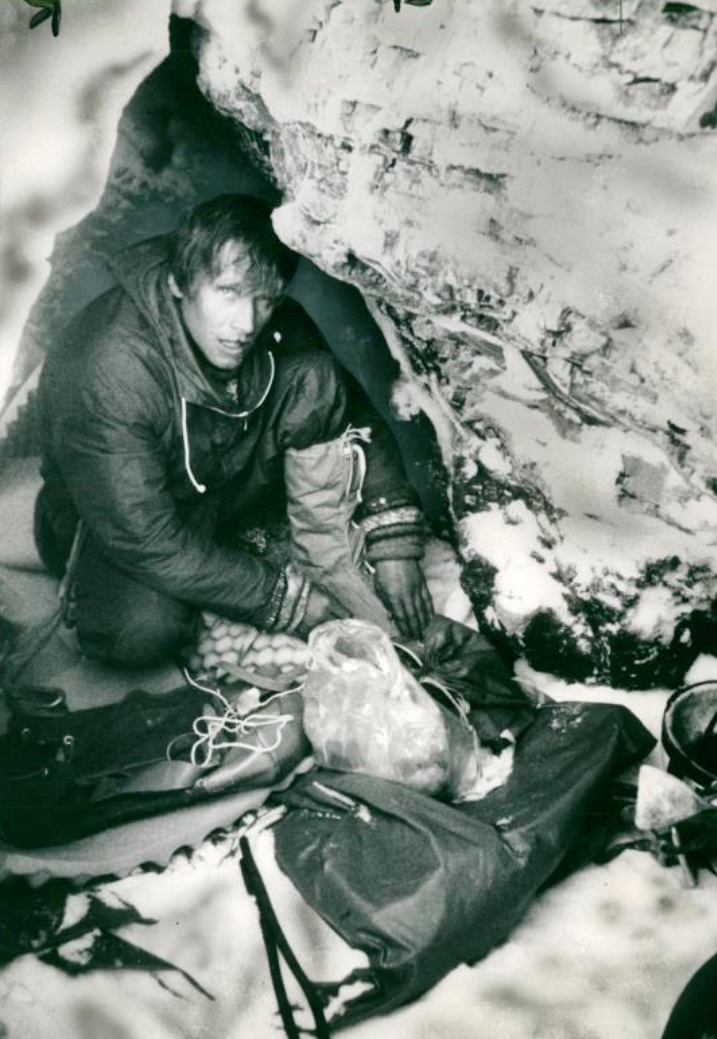
Dougal Haston on the Eiger. Photo: Worthpoint
Annapurna I
In 1970, Haston joined an expedition to 8,091m Annapurna I led by Chris Bonington. Together with Don Whillans, he made the first ascent of the South Face of the mountain.
The ascent involved many fixed ropes, difficult rock sections, and dangerous ice couloirs. On May 27, Haston and Whillans topped out after a long push in poor weather. Haston’s short radio message from high on the mountain was: “Aye, we’ve just climbed Annapurna.”
The climb, done without supplemental oxygen, marked a big step forward in Himalayan bigwall climbing. Sadly, the expedition also suffered a loss when teammate Ian Clough died in an avalanche during the descent.
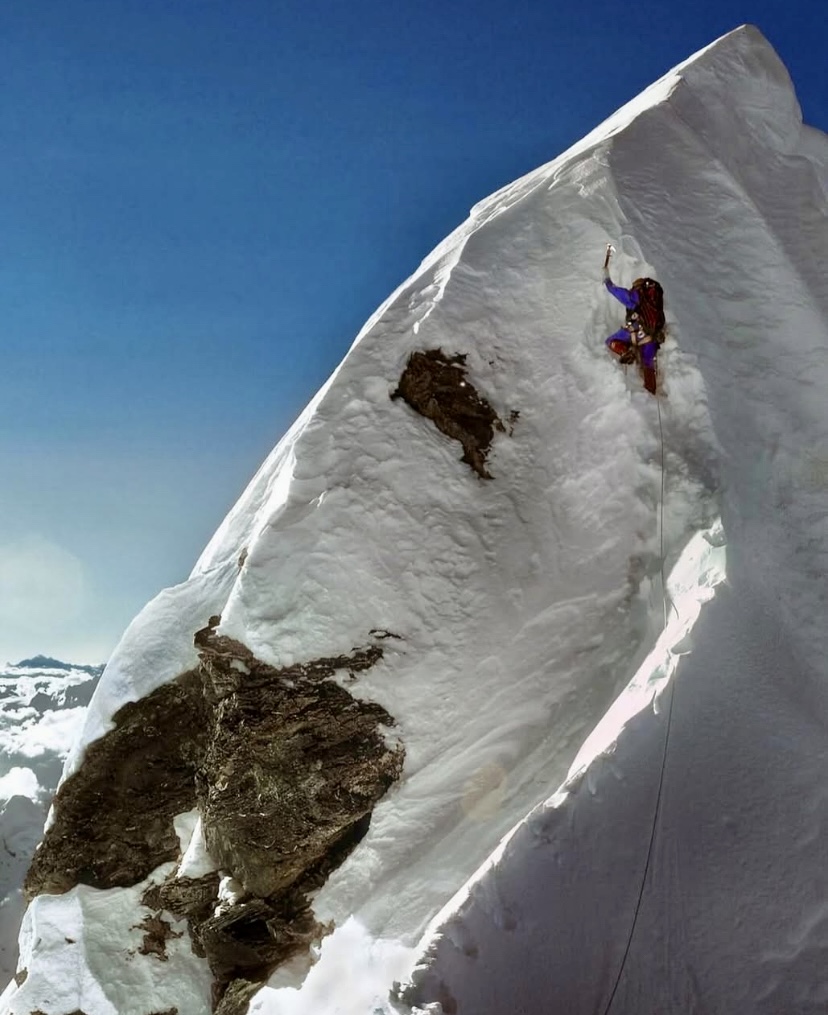
Dougal Haston near the Hillary Step on Everest. Photo: Doug Scott
Everest Southwest Face
Haston also took part in two unsuccessful attempts on the Southwest Face of Everest, in 1971 and 1972.
In the spring of 1971, the international team, led by Norman Dyhrenfurth and Jimmy Roberts, reached the highest point on the Southwest Face at 8,380m in bad weather. (They used supplemental oxygen.) In the autumn of 1972, Chris Bonington led another expedition to Everest’s Southwest Face. Haston was again part of the team, as was Doug Scott, among others. The party finally abandoned the attempt at 8,230m due to high winds.
In 1975, Haston joined another Everest expedition led by Bonington, with the same goal as before: to climb the Southwest Face. On September 24, Haston and Scott reached the summit by this new and demanding route. They summited late in the day, around 6 pm, and had to spend the night without supplemental oxygen or a tent at about 8,750m near the South Summit.
At the time, this was the highest open bivouac anyone had survived. They endured temperatures of -50°C in a small snow hole they had dug by hand. To avoid frostbite, they rubbed each other’s limbs and stayed awake all night. Their safe descent the next day was another remarkable achievement.
On September 26, Pete Boardman and Pertemba Sherpa topped out, too. The whole ascent and descent became an important landmark in modern mountaineering.
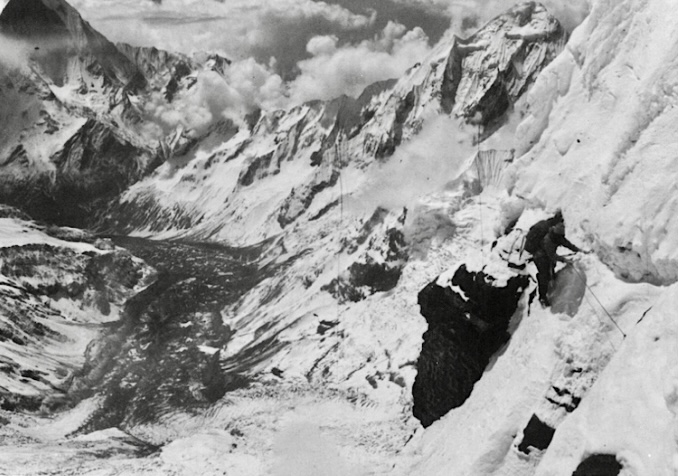
Dougal Haston traverses fixed ropes on the upper ice ridge at 6,705m during the Annapurna South Face expedition. Photo: Tom Frost/American Alpine Jourmal
More outstanding ascents
Other important climbs by Haston included the 1974 first ascent of 6,864m Changabang in the Indian Garhwal Himalaya. He climbed it by a difficult new route in a fairly lightweight style with an Anglo-Indian team.
In 1976, Dougal Haston teamed up again with Doug Scott to complete the first alpine-style ascent of a new route on the South Face of McKinley. During the climb, they faced continuous storms and made self-reliant bivouacs.
Writing
Apart from his climbing record, Haston wrote several books. One of them, In High Places, mused on his early career, his Scottish background, his experiences in the Alps, and his ideas about risk and self-reliance. He also added personal and reflective passages to accounts of the Eiger Direct and other expeditions.
Haston wrote about the psychological side of being stuck in a high-altitude camp during a storm:
Sometimes one finds it difficult to retain a sense of perspective about the ultimate objective. There are days when it seems climbing has never existed and will never exist again. One also finds difficulty in imagining the world outside –- hence, the world is a few square yards. There are no chains, but one seldom goes far from the camp. Perhaps a brief look at the sky to confirm that it is really bad, and a return to the present norm. It could be called infinite boredom. It is, in a sense that one is being forced into a state that one would not normally choose to exist in. But achievement of the end to which this period is a means will make an eventual return to the outside world more enjoyable.
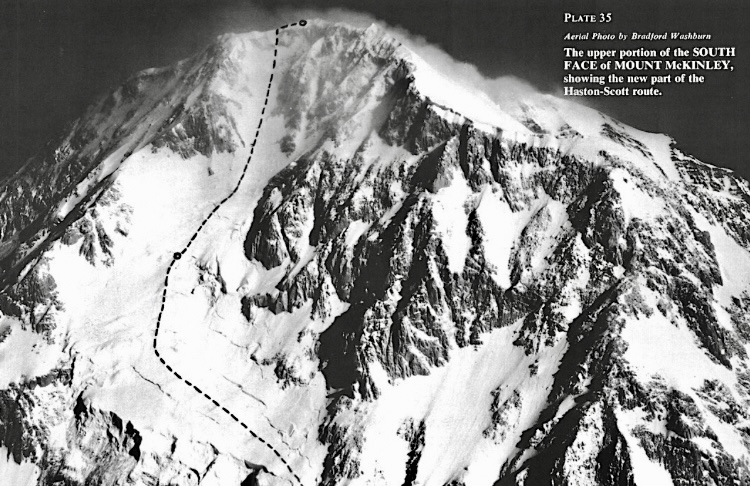
The Haston-Scott route on the south face of McKinley. Photo: Bradford Washburn/Amercian Alpine Journal
Death and legacy
Haston died on January 17, 1977, at the age of 36. While skiing alone on a steep gully slope (part of a run he had long wanted to try) on the northeast face of La Riondaz above Leysin, he was caught in a powder-snow avalanche. The accident happened on terrain that wasn’t considered extreme. Haston had ignored local avalanche warnings after a fresh snowfall. Rescuers later found his body buried under the snow. It appeared that he had been choked by his scarf as the slide carried him down.
People who knew him described Haston as a complex person: He was physically strong and good at high altitude, interested in the idea of risk, but he was also a very disciplined climber. As director of the Leysin climbing school, he influenced many younger mountaineers.
“The mind is aware of only one choice. The will commands, weakened though the body may be,” wrote Haston, the climber they used to call the Mick Jagger of Mountaineering.
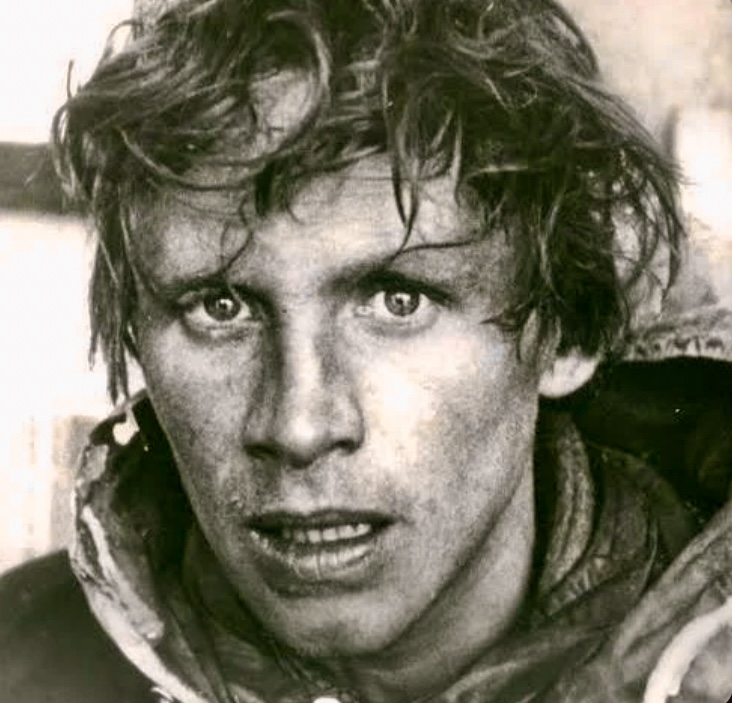
Dougal Haston after the Eiger climb. Photo: Dougal Haston