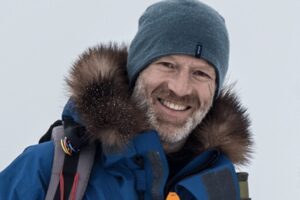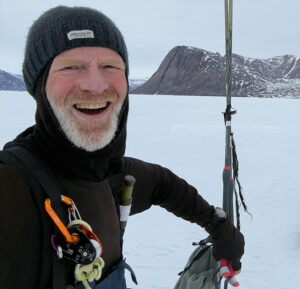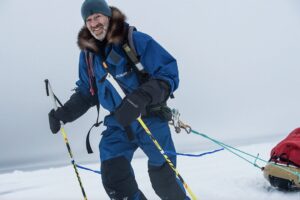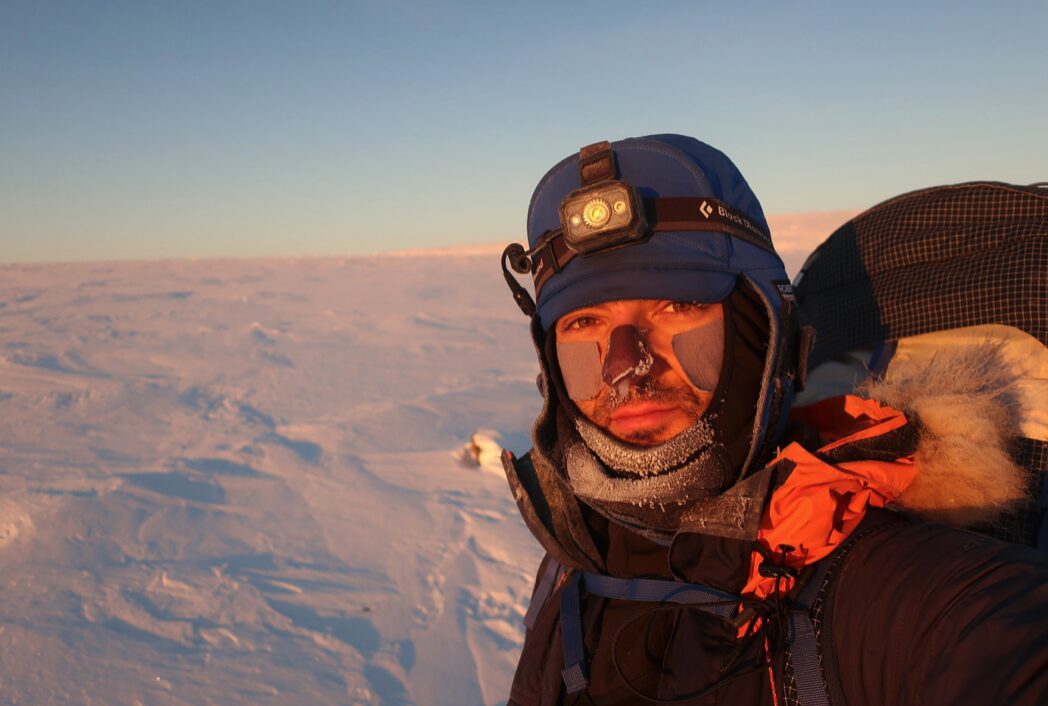
Unless you live in Siberia or the Canadian Arctic, you won’t know cold like Maciej Besta, a Polish computer scientist and adventurer who has spent over a decade doing solo mountaineering and sled expeditions in what he calls “some of the coldest and the most inaccessible mountain ranges and plateaus in the world.”
Besta’s latest expedition this February, the first solo winter climb of Mt. Pobeda (3,003m) in Yakutia, Siberia, reflects his long focus on extreme cold and isolation.
The coldest mountain on the planet?
Pobeda, the highest peak in Siberia, had previously been climbed in winter in 2018 by well-known mountaineers Simone Moro and Tamara Lunger. Moro dubbed it the “coldest climb in history, on the coldest mountain on the planet,” as temperatures of -70˚C have occurred in the region.
On this winter solo, Besta started from the same point as Moro and Lunger. He climbed in a single push, breaking trail in deep, soft snow all the way. “Out of all my solo winter climbs in North Siberia, this was definitely the most challenging,” he told ExplorersWeb.
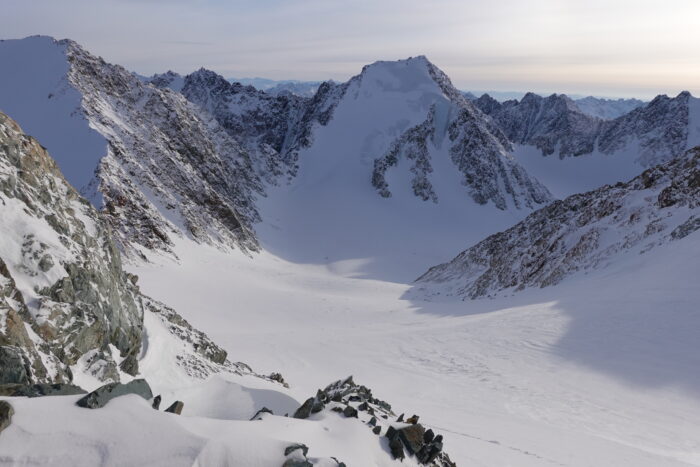
The Chersky range in Siberia. Photo: Maciej Besta
“Others were equally cold, probably even colder, but none of them was even close in terms of technical difficulties and challenging snow conditions,” he added.
Besta reached the start of the route on skis. He then switched to crampons and climbed via the south face, repeating a route up the central couloir climbed by a Russian team in 2018.
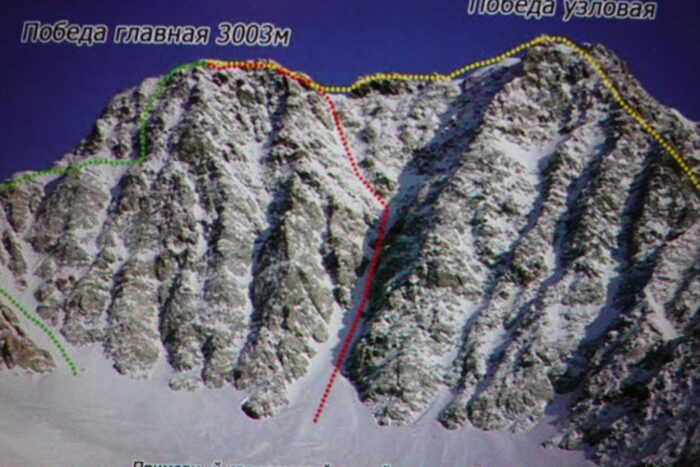
Topo showing Besta’s route in red on the south face of Pobeda.
Summiting in darkness
“I arrived at the ridge around 6 pm because the snow in the couloir was not stable and I had to look extensively for spots where you could actually climb upward,” he explained. “I did some dry tooling when the snow was coming down completely, exposing rocky plates.”
Around that time, the sun set. In a village near Pobeda, temperatures dropped to -58˚C.
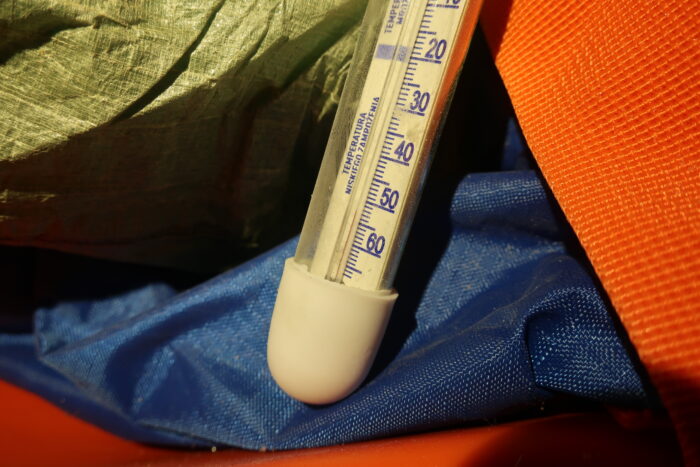
Pobeda lived up to its reputation as one of the coldest peaks on the planet. Photo: Maciej Besta
“The summit was very close, but at the ridge, there was a final rock barrier,” said Besta. “It was already dark, and it was technical to climb around it. The snow was not very stable in general, and I could not find the obvious route reported by the Russians.”
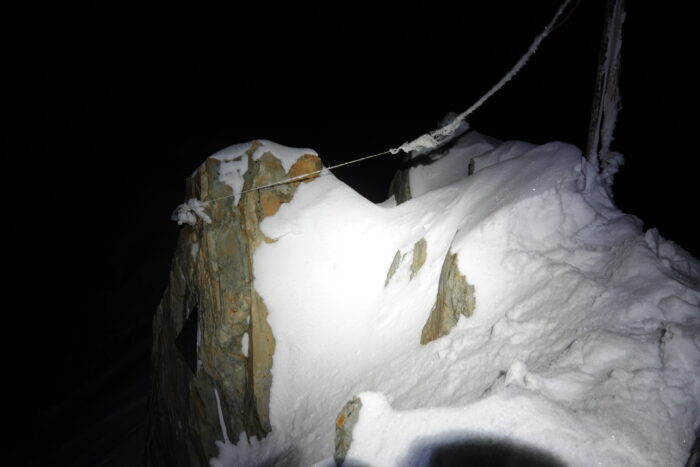
The summit of Pobeda, shrouded in darkness. Photo: Maciej Besta
The Pole spent the next two hours finding the true summit before traversing over the north face on “somewhat reasonable snow.” He was back down and in his tent by 4 am, after a 22-hour push that included the initial approach to the mountain.
The Shackleton Award 2026
This was far from Besta’s first Siberian adventure. In February 2025, he completed a solo winter crossing of the Anabar Plateau, a rarely visited area within the Central Siberian Plateau.
Over roughly 220km, he skied across the plateau’s highest terrain, climbing two previously unnamed summits along the way: the highest point of the plateau at 908m and a second, steeper peak whose elevation he did not record.
Throughout the journey, temperatures plunged between –40˚ and –50˚C. Severe purga — powerful Siberian windstorms — swept the final stretch.
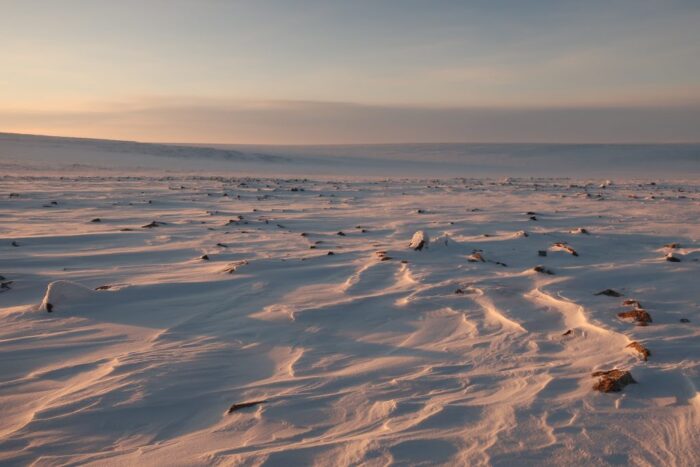
The Anabar Plateau, February 2025. Photo: Maciej Besta
For this expedition, Besta was awarded the 11th Shackleton Award last week at Expedition Finse, an annual polar adventure festival in the Norwegian mountains. The awards committee included polar legend Borge Ousland. Besta, still finishing his current project, was not present for the award.
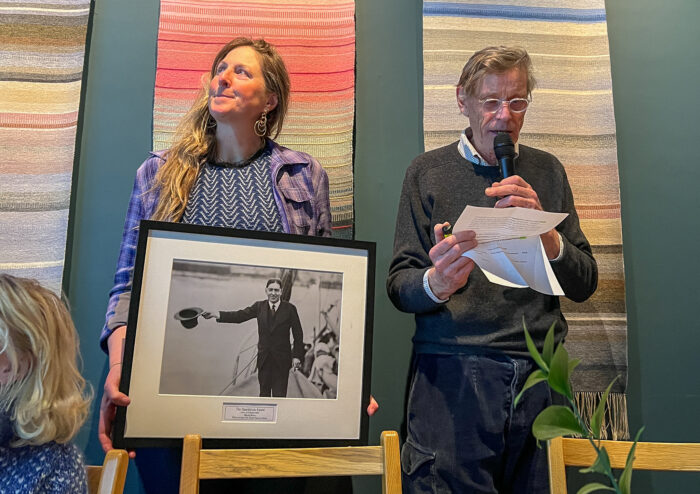
Committee members Hannah McKeand and Bjorn Basberg present the 2026 Shackleton Award. Photo: Ash Routen
The latest ‘Ice Warrior’
Polish adventurers have a long history of attraction to suffering in the cold. Canadian mountain writer Bernadette McDonald penned a highly successful book called Winter 8000, which chronicles the generation of Polish mountaineers who made first winter ascents of seven of the 14 8,000m peaks. McDonald called them the Ice Warriors.
Besta appears to be following in their footsteps. “This guy knows cold,” veteran polar guide Eric Philips remarked on social media recently.
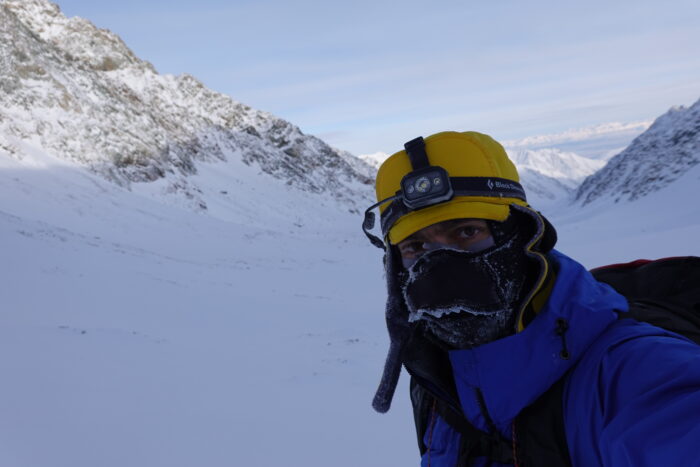
Besta on Pobeda in February 2026. Photo: Maciej Besta
Besta’s Anabar expedition is part of a broader personal initiative he calls the “Mountain Poles of Cold” project, an effort focused on climbing the coldest mountains on Earth during the harshest winter periods.
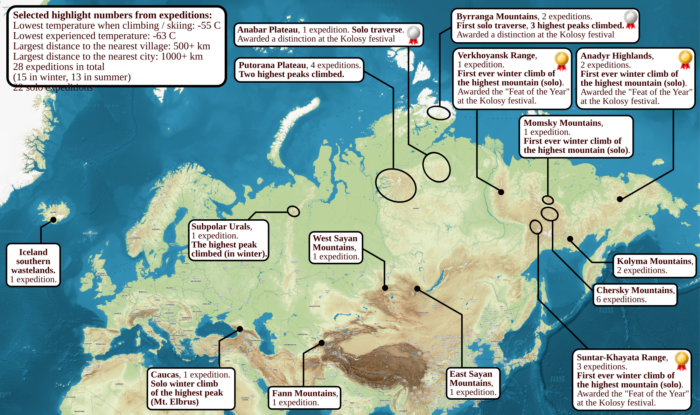
A summary of the key climbing and sled expeditions Besta has completed. Image: Maciej Besta
The Pole of Cold
The Pole’s objectives are guided by two defining criteria: isolation and extreme cold. As he explains, “I’m interested in two things: extreme remoteness, which is distance to the nearest human outposts and the hardness of getting to some massifs, and extreme weather. January-February is usually the period that makes it most interesting for me.”
Within this framework, Besta has targeted the highest summits across some of northeastern Siberia’s most inaccessible ranges, including the Chersky, Verkhoyansk, Suntar-Khayata, Momsky, Anabar, and Anadyr Mountains.
Among these was Mus-Khaya, which he selected for its proximity to Oymyakon, one of the coldest permanently inhabited places on Earth. He also tackled an unnamed high point in the Verkhoyansk Range near the settlement of Verkhoyansk, another “Pole of Cold.”
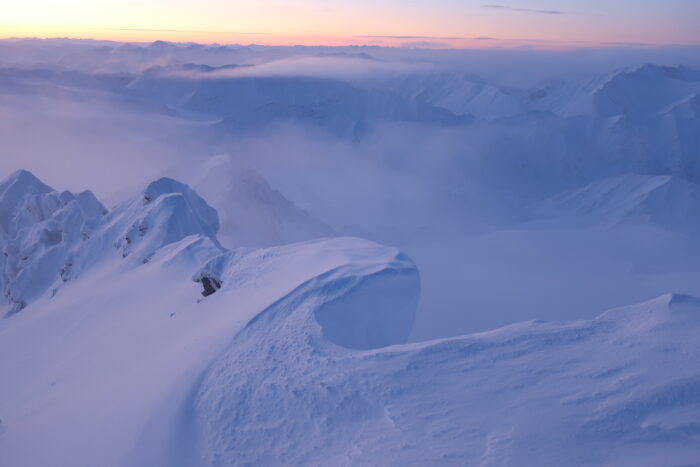
On top of Mus-Khaya in 2020, the highest peak of the Suntar-Khayata mountains. The first winter ascent. Photo: Maciej Besta
Alongside these temperature-focused ascents, Besta has also pursued objectives defined primarily by their isolation, which he describes as his complementary “Mountain Poles of Solitude” project. This includes his 2017 traverse of the Byrranga Mountains on the Taymyr Peninsula and his 2025 crossing of the Anabar Plateau.
Besta has taken care to verify the originality of his winter ascents and solo traverses through Russian expedition archives, mountaineering contacts, and regional sources.
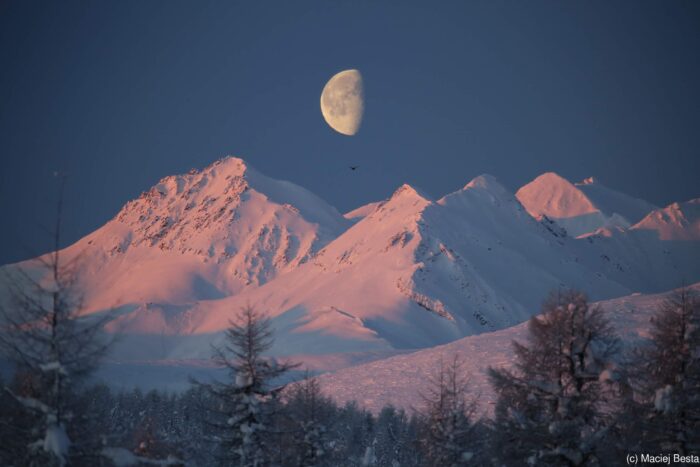
The Chersky Mountains. Photo: Maciej Besta
“Of course, there are more isolated peaks in Antarctica, and some mountains in North Greenland and Canada’s Arctic are also extremely remote,” he says. “But for now, I’ve focused on Asia’s north.”