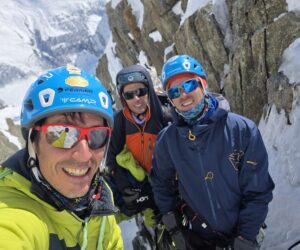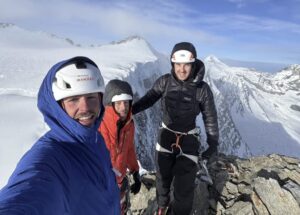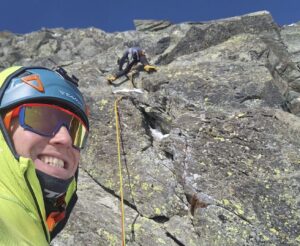
Three high-difficulty winter solos took place last week in the Alps, on some of Europe’s most iconic peaks: the Matterhorn between Switzerland and Italy, the Dolomites’ Cima Grande di Lavaredo, and la Meije, the most impressive peak in France’s Ecrins massif.
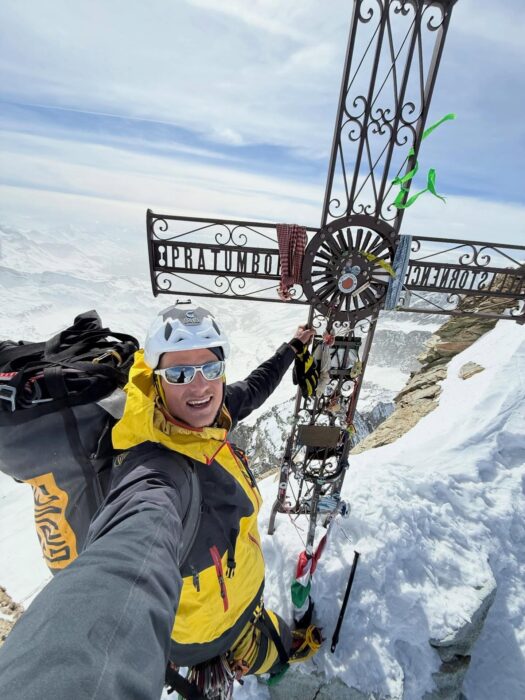
Giuseppe Vidoni takes a selfie by the famous cross on the summit of the Matterhorn. Photo: G. Vidoni
Cold bivouacs and rotten rock
Giuseppe Vidoni of Italy spent three days, from March 4 to 6, on the southern, Italian face of the Matterhorn (known in Italy as Cervino). He soloed a combination of the Padre Pio prega per noi and Echelle Vers le Ciel. A beautiful, direct line up the middle of the south face, it was first climbed by Patrick Gabarrou and Cesare Ravaschietto in 2002. The line presents 1,200 vertical meters and difficulties up to 7b (5.12b) in 40 pitches of rather poor rock.
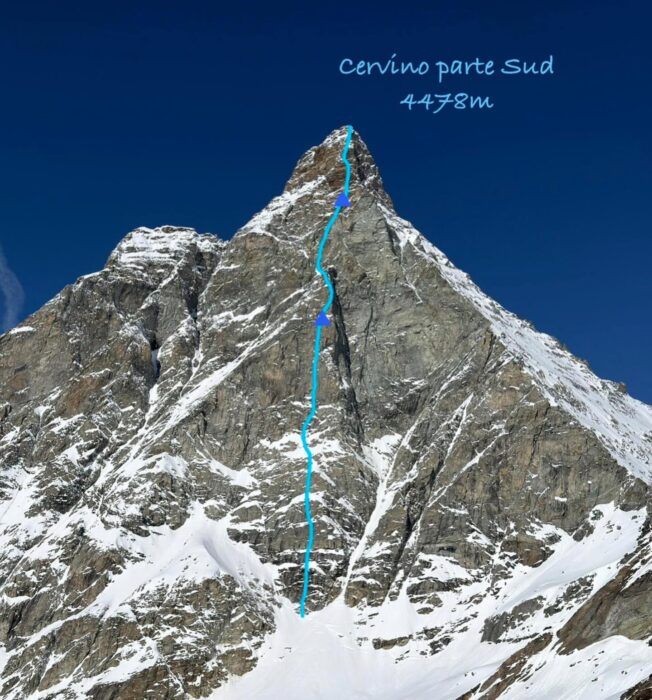
Gabarrou’s original combination route up the middle of the South Face of the Matterhorn. Photo: Giuseppe Vidoni
The winter conditions on the face were an advantage for Vidoni, who admitted he had nice rock for part of the climb and rotten rock for the rest of it. He also endured cold temperatures during those bivy nights.
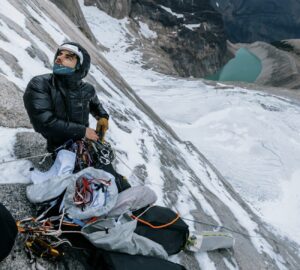
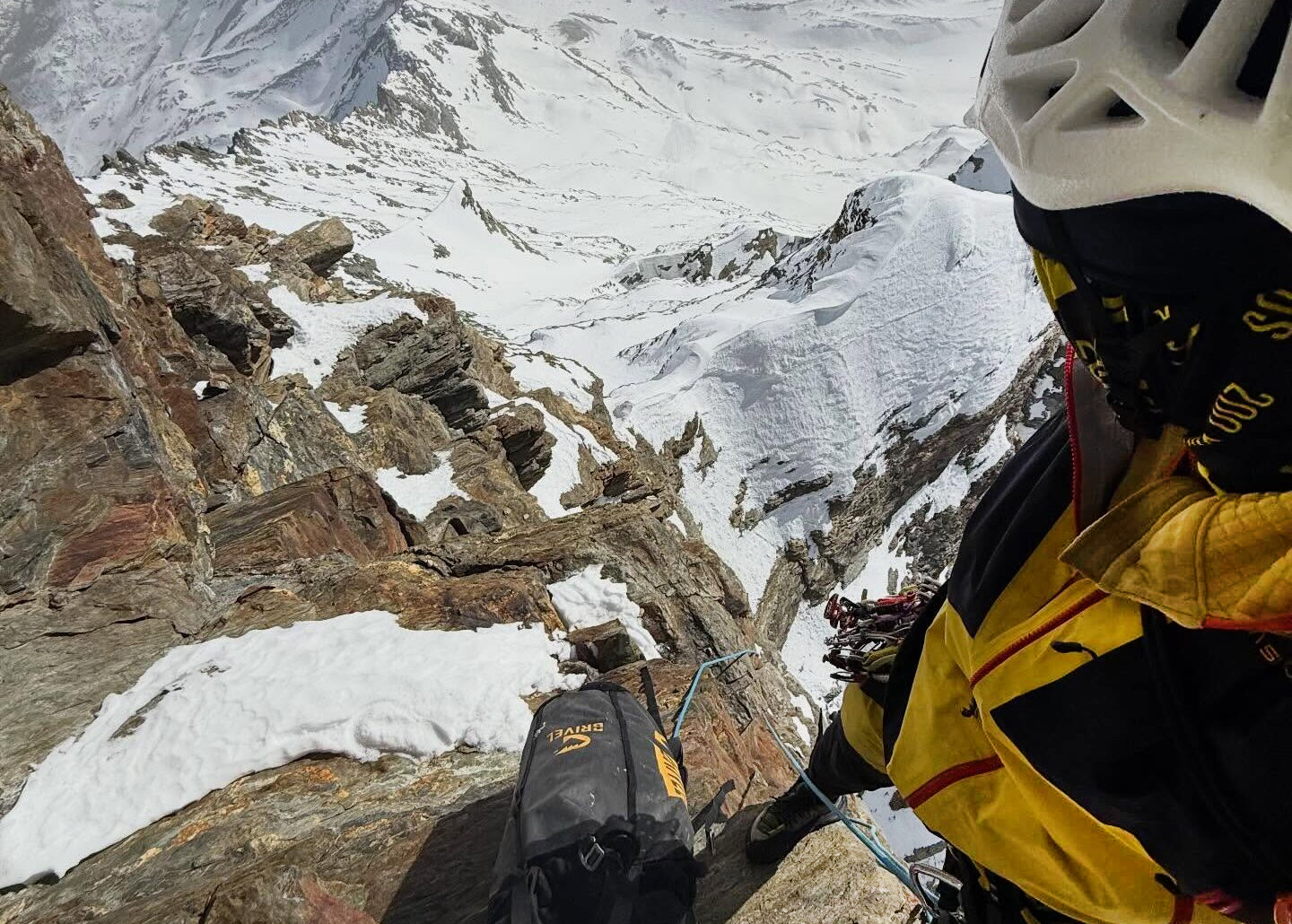
“The first bivy was tough; I had to make do with a small terrace overlooking the void,” Vidoni recalls.
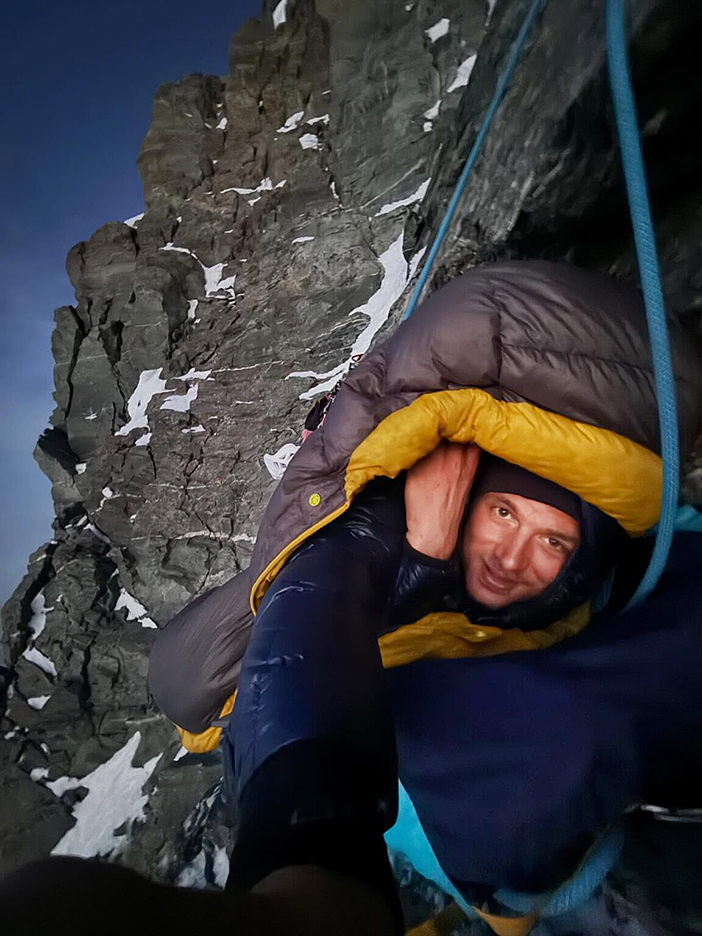
An exposed first bivouac on the south face of Matterhorn in winter. Photo: Giuseppe Vidoni
Giuseppe Vidoni and Francois Cazzanelli made the first ascent of Kimshung, a virgin 6000’er in Nepal’s Langtang, last year.
The ‘Phantom of the Summit’
If Vidoni’s home playground is the Italian Alps, Simon Gietl of South Tyrol is one of the most prolific climbers in the Dolomites. He focuses on solo climbs, traverses, and new routes on rock, ice, and mixed terrain.

Simon Gietl solos the Cima Grande di Lavaredo. Photo: Silvan Metz/Felix Bub
One day after Vidoni started on the South Face of Matterhorn, Gietl set out on his own solo winter climb on one of the most iconic (and most photographed) faces of the Dolomites; the North Face of the Cima Grande di Lavaredo.

The Phantom der Zinne route on the Cima Grande. Photo: Silvan Metz/Felix Bub
Gietl chose one of the hardest of the face: the Phantom der Zinne route, up to 7a+ in difficulty, opened by Christoph Hainz and Kurt Astner in 1995. Before the climb, Gietl deposited his gear at the base of the face and checked out the first pitches.
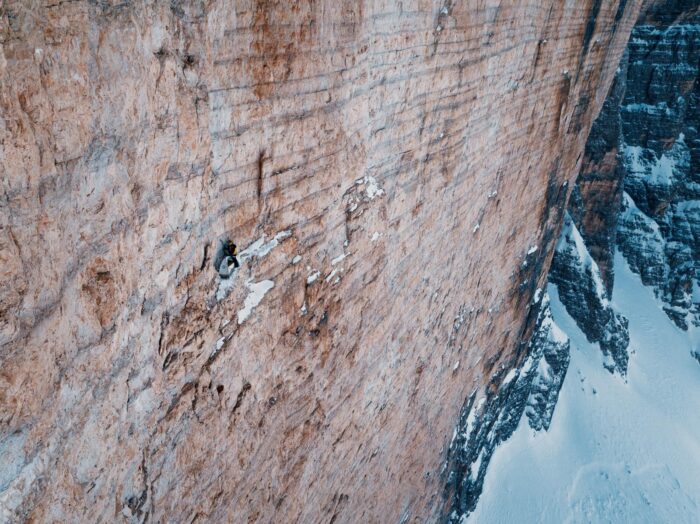
Gietl’s tiny bivy tent in the middle of the face. Photo: Silvan Metz/Felix Bub
His final push started on March 5, with some fresh snow on the face and −5 °C. He climbed until the so-called Hasse/Brandler ledge, halfway to the summit. Here, he spent the night in a tiny tent on the ledge. On the second day, Gietl took on the hardest sections of the line, at times on unstable rock and with snow covering the holds. He used only non-permanent protection and hauled his gear along the entire climb.
On the upper part, Gietl progressed with crampons and ice axes, as conditions remained wintry. He finally reached the summit shortly before 4 pm, thus fulfilling a long-cherished dream, after two previous failed attempts in 2010 with Marc Artesi and a winter solo attempt in 2015.
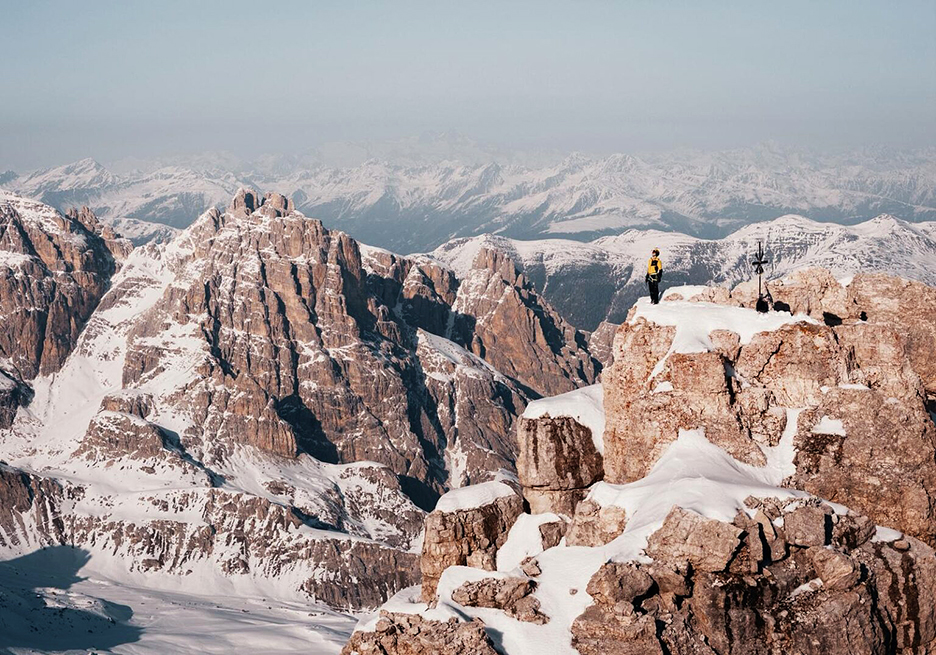
Gietl on the summit of the Cima Grande, with the Dolomites around him. Photo: Silvan Metz/Felix Bub
La Meige
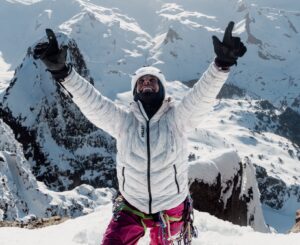
Victor Garcin of France did the third and most recent winter solo on the Directissime des Potes, one of the hardest routes of the 900m North Face of La Meige in the Ecrins Alps. The route is graded as ED+, 7c, A2, and had never been soloed in winter before.
“There are days that mark a life, and these three days spent alone on the North Face of La Meije are among them,” Marcin wrote on social media. Remarkably, he completed the climb from March 2 to 5, on exactly the same days as Vidoni and Gietl.
Garcin spent three days on the huge face and still had to endure a final bivouac on the summit with a wet sleeping bag, 30kph winds, and overcast skies. “But my eyes were filled with stars,” he added.

Route topo. Photo: Quentin Degrenelle
“I was able to experience what I wanted: an intense, pure adventure, without cheating, without friends as a safety net,” Garcin concluded.