This autumn, two young alpinists from the UK and Ireland achieved a remarkable new route on a 6,000’er, Aikache Chhok, in Pakistan’s Karakoram range.
James Price and George Ponsonby connected through the Young Alpinists Group, a mentorship program for emerging climbers. They teamed up after a group trip to Scotland, where members pitched expedition ideas. During the trip, they elected to go with Price’s proposal for a climb in Pakistan.
Price had been dealing with a painful ankle tendon injury and even planned to climb in a ski boot for support. However, the issue eased at base camp. Ponsonby spent the summer as a commercial salmon fisher in Alaska, putting in long hours that built strength but left no time for climbing-specific training. With modest ambitions, they packed food for five days and fuel for seven, arriving without a fixed objective or detailed photos of potential lines.
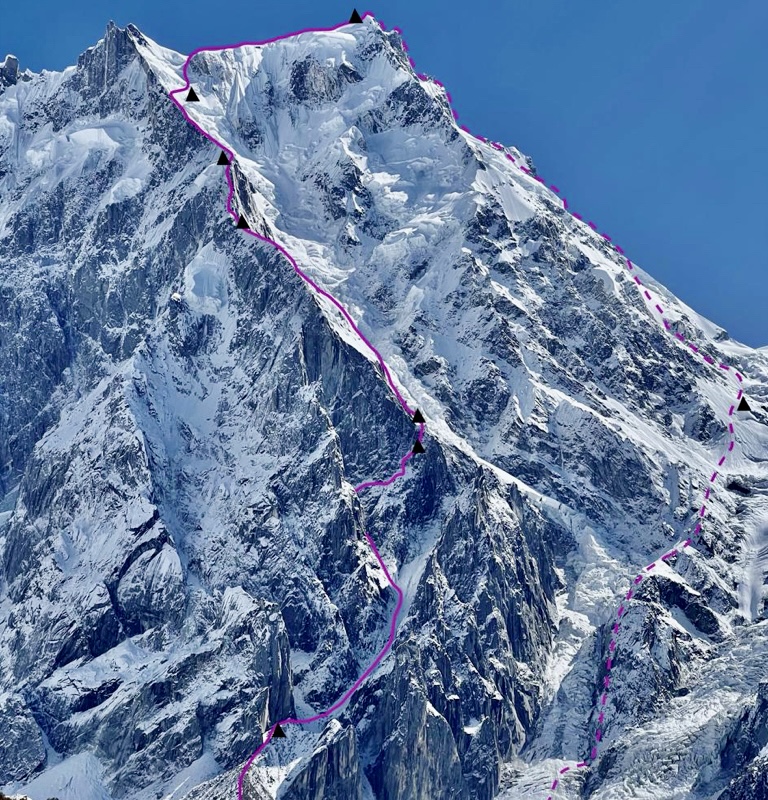
Route topo provided by the expedition team. Photo: Ponsonby/Price
Choosing the line
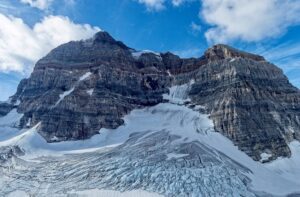
After exploring valleys near the Batura Wall, they settled on a striking ridge on the Northwest Face of Aikache Chhok, a 6,000m+ peak in the Hachindar Massif. An Italian team first climbed the mountain in 1983 from the southeast.
Price and Ponsonby targeted a new 3,000m line from the north. On October 13, they began with good progress: up a main gully, into a side gully, then mixed pitches up to M5/M6, linking snowfields toward the ridge. They ended the day three pitches short, feeling optimistic about their five-day timeline.
Setbacks
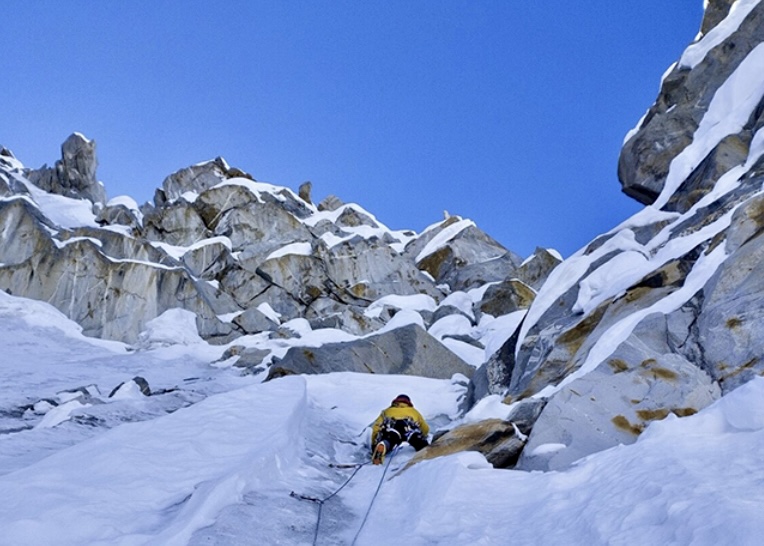
Day two changed everything, with only three pitches gained through aid climbing on loose, overhanging rock around M7/A2+. The cold, shady north face felt reminiscent of famous European walls. They continued up mixed terrain beside the ridge, avoiding sections too technical for alpine boots, and bivouacked under a rock step.
Efforts to traverse ice ramps in order to bypass another rock band led to dead ends, forcing a low-point bivouac. In camp, they tried to make custard, but it turned into an inedible mess. Bummed, this was the closest they came to retreating, but they opted for one more push.
The next day involved relentless ice climbing, eight full rope-length pitches up to AI5 on rock-hard glacial ice, breaking screws and chipping picks, ending in darkness back on the ridge.
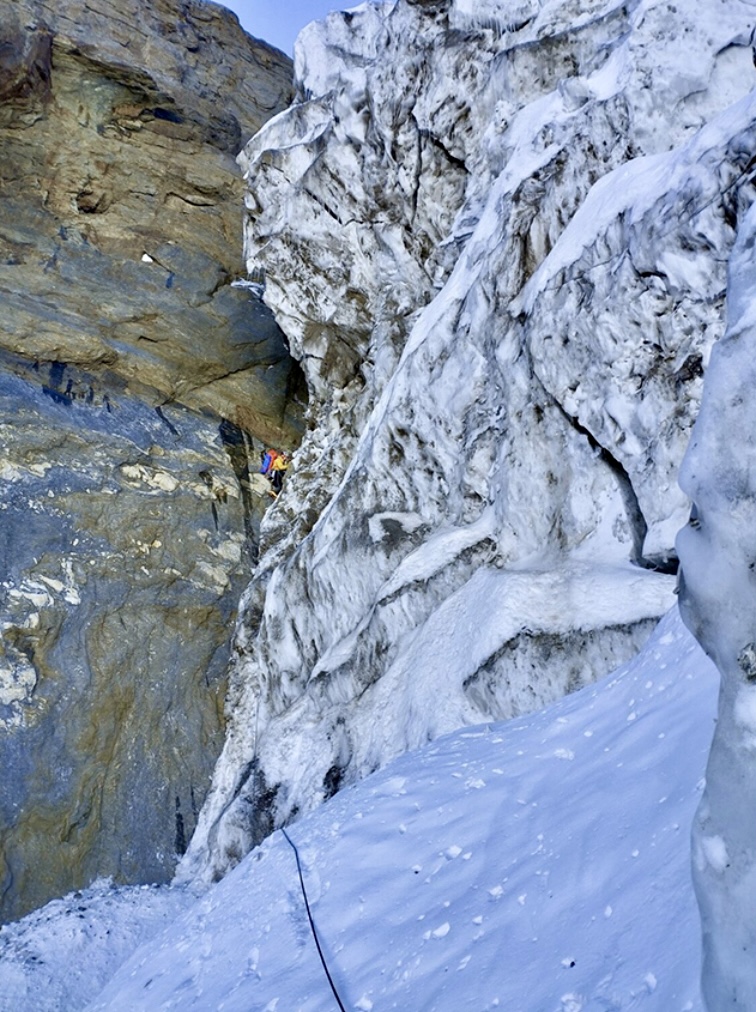
James Price at the overhanging rocky outcrop. Photo: George Ponsonby
Exhaustion deepened on the following days. Facing nearly 1,000m of slabby black ice interspersed with poor rock, they invented the “Karakoram flop”: simul-climbing until calves and toes burned unbearably, then clipping directly to an axe, fully relaxing (even letting the pack pull backward), before placing the next screw. Bivouacs were basic, in crevasses or under overhangs, with food running low and feet battered.
Final push
Day seven brought more simul-climbing on snow, an overhanging ice step, and steep black ice to a ridge between a mini-summit and the main one. Brief sunshine gave way to a whiteout and deep snow, prolonging the summit ridge traverse. The mist cleared just enough to reveal a corniced summit two pitches ahead. Too drained to climb further in poor visibility, they pitched their small tent and shivered through the night, focused on keeping extremities warm.
On day eight, they shared their final energy bar, and clear weather allowed them to breach the cornice and summit. They hurried down without confirming the exact height, though a Garmin read 6,663m one pitch below. (Other sources put the peak’s height at a modest 6,595m.)
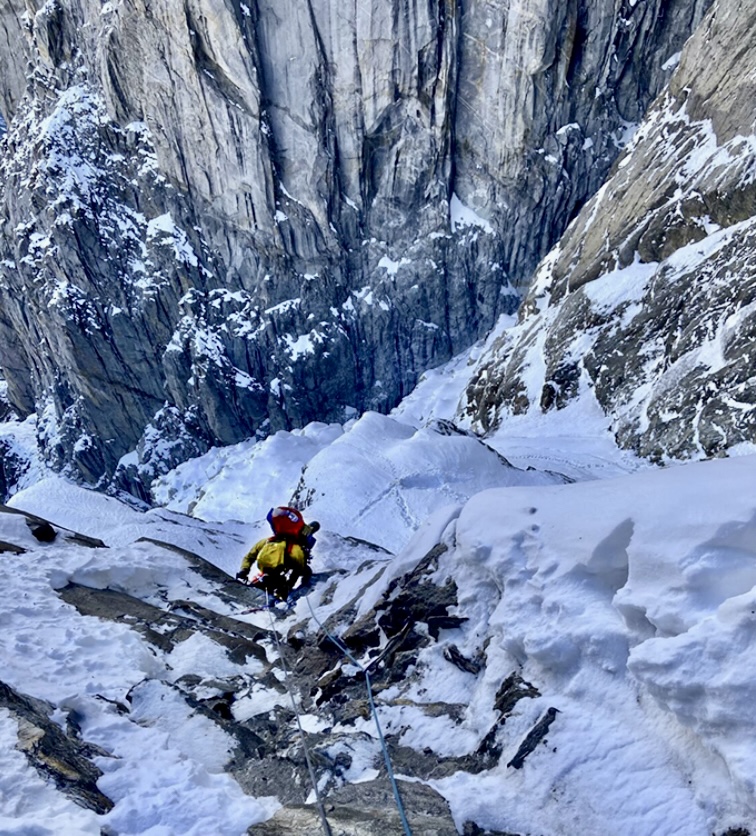
Difficult mixed terrain. Photo: Ponsonby/Price
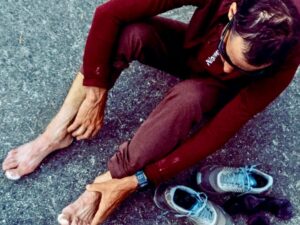
They descended over unseen terrain because persistent clouds had obscured views from Base Camp. It involved rappels off V-threads, complex glacier crossings, passes over seracs, and quick moves under threat. They bivouacked again around 5,000m, comforted by headlamp signals from below, before reaching base camp on October 21. The climb took nine days total, and they finished slimmer, but without frostbite.
Local shepherds and hunters offered them generous hospitality, lending huts, sharing chai, milk, butter, and food, while watching progress through binoculars and flashing lights at night. This support made the massive face feel less isolating.
They named their new route Secrets, Shepherds, Sex, and Serendipity after a humorous screenplay the pair crafted while waiting out bad weather at base camp. They graded the climb M7 AI5 A2+.
It was the second overall ascent of Aikache Chhok.
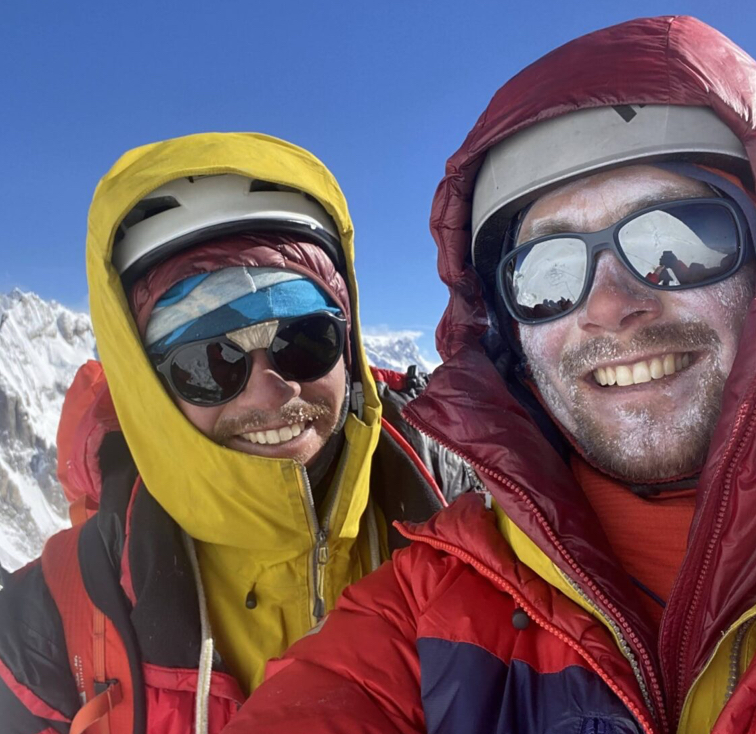
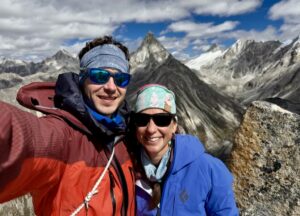
On the summit of Aikache Chhok. Photo: Ponsonby/Price