Once again, geopolitics is affecting the upcoming Asian climbing season, as conflicts in nearby countries have created unpredictable repercussions in others.
Nepal has already reported a decrease in tourism, mainly due to disruptions of flights with stopovers in the Middle East. In Pakistan, in particular, the front is nearby, since the country is in open conflict with neighboring Afghanistan. Religious differences add to the unrest.
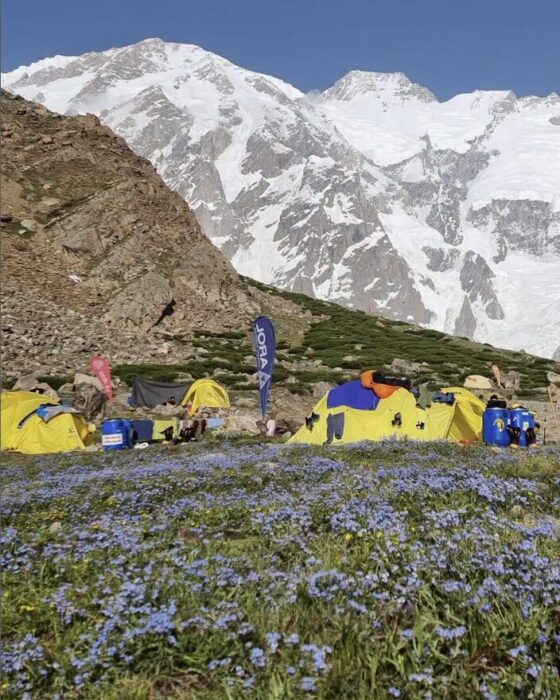
Nanga Parbat’s Base Camp under the Kinshoffer Route, blooming with forget-me-nots. Photo: Allie Pepper
Caught in the middle
Author, documentary director, and expedition leader Sebastian Alvaro of Spain was in Islamabad recently, about to lead a team of four trekkers on the Deosai Plateau traverse when, as he put it, “the world exploded.”
“While we were there, two things happened,” explained Alvaro. “An armed conflict broke out between Pakistan and Afghanistan, and the U.S. attacks killed Ali Khameini, the supreme leader of the Shia, not only in Iran, but in the whole Muslim world.”
The first event had no direct impact on their Pakistan plans. “Although Pakistan and Afghanistan share a 1,600km border, and the Karakoram is just 300km away, hundreds of mountains act as a natural barrier,” he said. “On the contrary, the death of Khameini made the Balti people of Skardu, who are also Shia, rise up at once.”
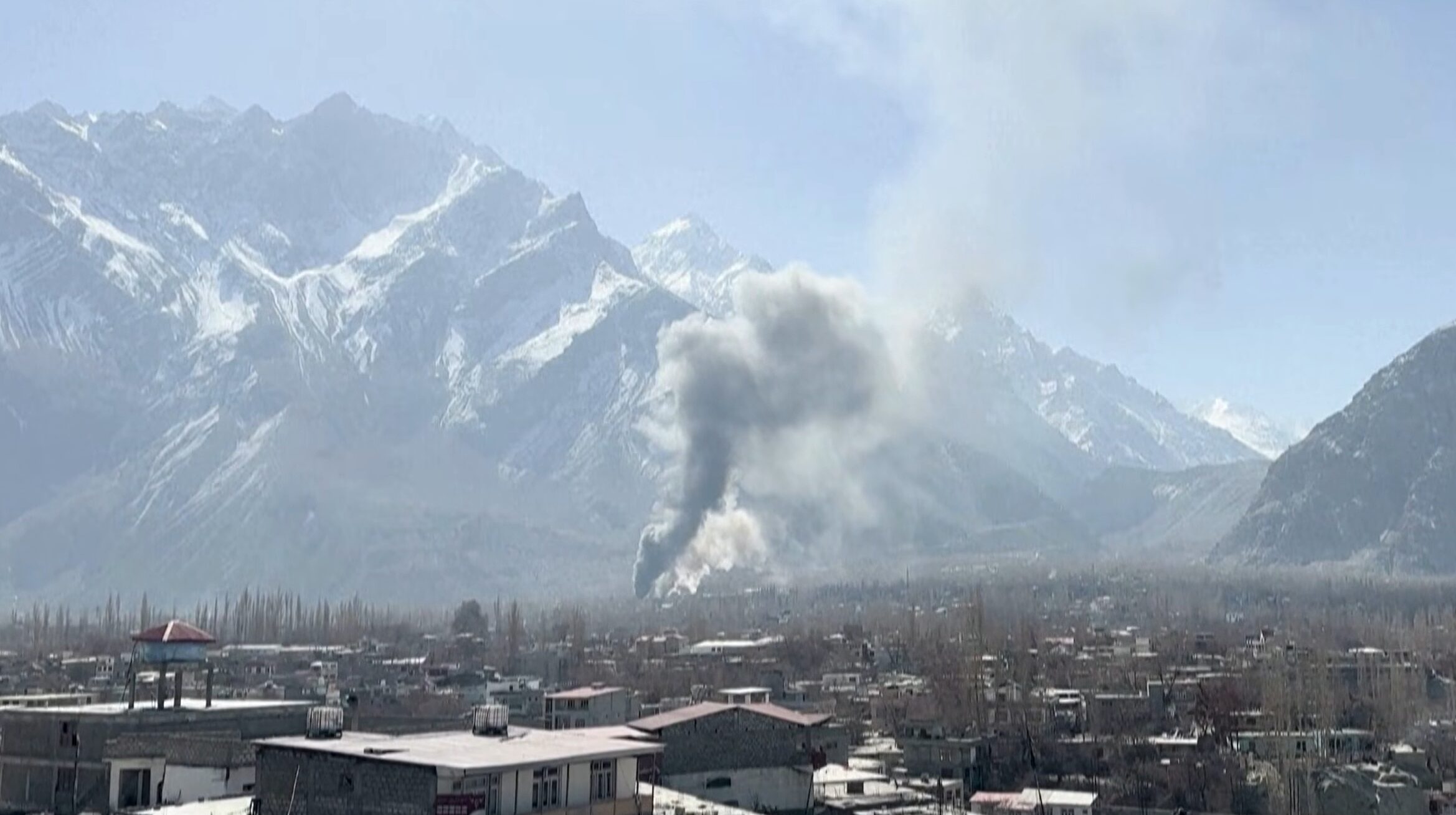
Local Baltis demonstrated in the streets and set ablaze a UN office, the Army Public School, the office of the Aga Khan Foundation, and the Hotel K2, popular with foreign expeditions, according to local news. Some media reported over a dozen dead in confrontations with authorities in Skardu and Gilgit.
Evacuated in the night
Alvaro and his group found themselves caught in the middle. “Authorities said they couldn’t guarantee our safety, and we left in the middle of the night, escorted by armed police,” said Alvaro. “The town was totally silent as there had been a curfew since 3 pm.”
A police officer told Alvaro, “People are very angry, and they don’t know whether you are Americans or not.”
Alvaro’s group and other Spaniards in the area who had different objectives (from climbing Laila Peak to teaching a climbing course to local kids) were escorted to Islamabad between March 7 and March 11. They are now all safely back in Spain.
The army was deployed to the critical areas, and the situation has calmed down since then. Yet, the uncertainty about future events in the Middle East has worried those who plan to trek or climb in Pakistan in the near future. Nanga Parbat expeditions begin in just two months.
“At the moment, Skardu is open to all kinds of tourists, and there are no issues with visiting the region, including expeditions to Nanga Parbat,” Ali Saltoro of Alpine Adventure Guides Pakistan told ExplorersWeb.
Saltoro noted that at least five international expeditions have already applied for Nanga Parbat climbing permits through the tourism department. At least one of them intends to climb the Rupal Face, while others will head for the normal route on the peak’s Diamir side.
Americans still planning to go
Ali Saltoro added that some U.S. climbers have applied for permits to climb K2 and other peaks. One team will even attempt the highly difficult K6, while another hopes to climb Tirich Mir, near the Afghan border.
Ethan Berkeland, August Franzen, and Vitaliy Musiyenko have already confirmed they will attempt a new route on 6,960m Bainthat Brakk II (The Ogre II), in the Karakoram’s Choktoi Glacier area.
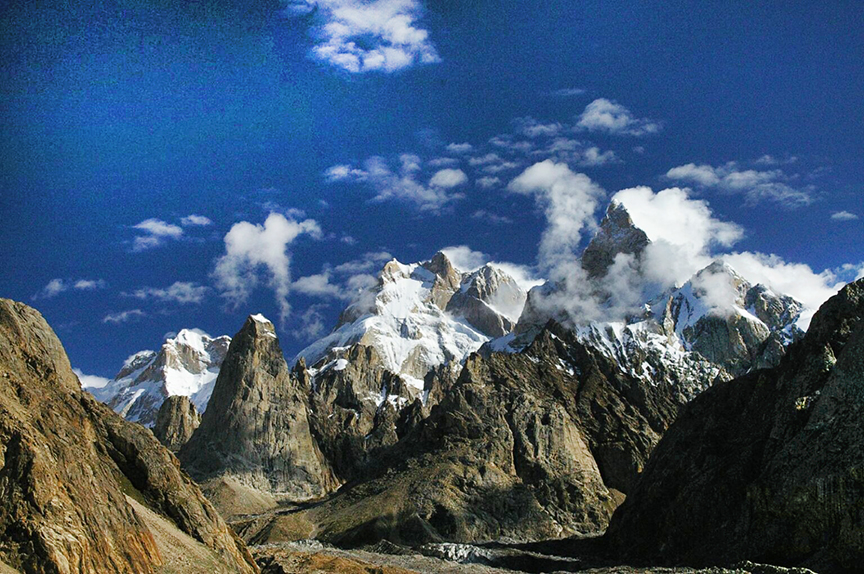
The Ogre massif, with the Ogre I on the right. Photo: Wikipedia
The U.S. State Department has assigned Pakistan a Level 3 warning, suggesting that would-be visitors “reconsider travel…due to armed conflict, terrorism, crime, and kidnapping.”
Some areas of the country are even at Level 4 (the maximum level, meaning “do not travel.” This includes Balochistan and Khyber Pakhtunkhwa provinces, plus the vicinity of the so-called Line of Control marking the border with the disputed region of Jammu and Kashmir.
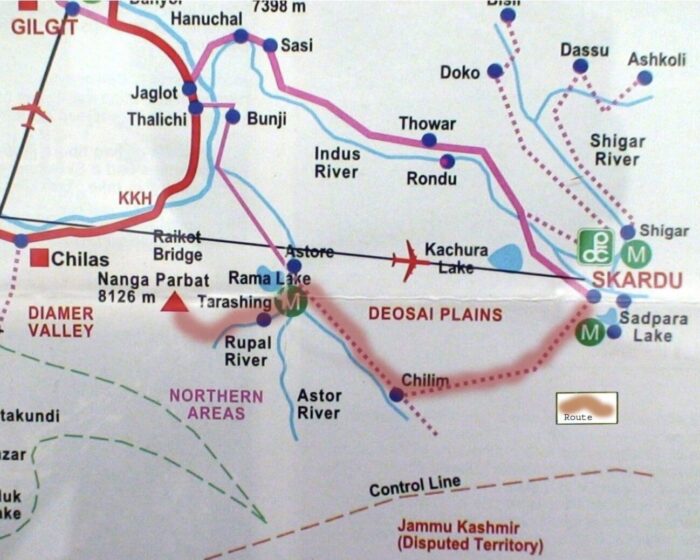
Map of Gilgit and Skardu. Photo: Real World Adventures
On March 3, the State Department ordered non-emergency U.S. government employees and their families from Consulates in Lahore and Karachi to leave Pakistan due to safety risks, according to the U.S. government’s travel advisory. It notes there have been no changes to the status of Embassy personnel in Islamabad.
Hoping for the best
Expedition operators can only hope for a swift end to the ongoing conflicts. “If the situation stabilizes this month, I am confident that many trekking and mountaineering teams will return to Pakistan this summer,” Ali Saltoro said.
However, two trekking teams scheduled to arrive in the first week of April, starting from Karachi to Hunza, have been cancelled.
Sebastian Alvaro has mixed feelings. “We might still be in time to prepare your planned expeditions and treks for the summer,” he said. “[But] is there still time to recover the trust of international travelers with previous plans for Pakistan?”
Skardu is the starting point for Karakoram expeditions, while Nanga Parbat teams usually drive from Gilgit to the green plains known as The Fairy Meadows, one day away from Base Camp. The feeling of safety may change radically from towns to the usually calm mountain areas. However, it will be hard for climbers to forget the terrorist attack on Nanga Parbat Base Camp in 2013, which killed 11 climbers and local staff.