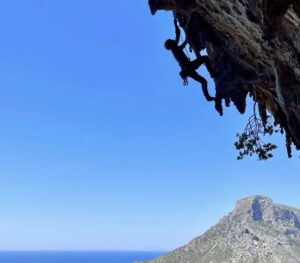
A striking natural formation in a seacliff on Scotland’s remote northern island of Pabbay, The Great Arch offers an iconic, but rare, UK climb. In this short film, Scottish pro climber Robbie Phillips attempts the second-ever free-climb of The Great Arch. Along the way, he explores the history of this celebrated line, and what it’s like to climb in wild, remote Pabbay.
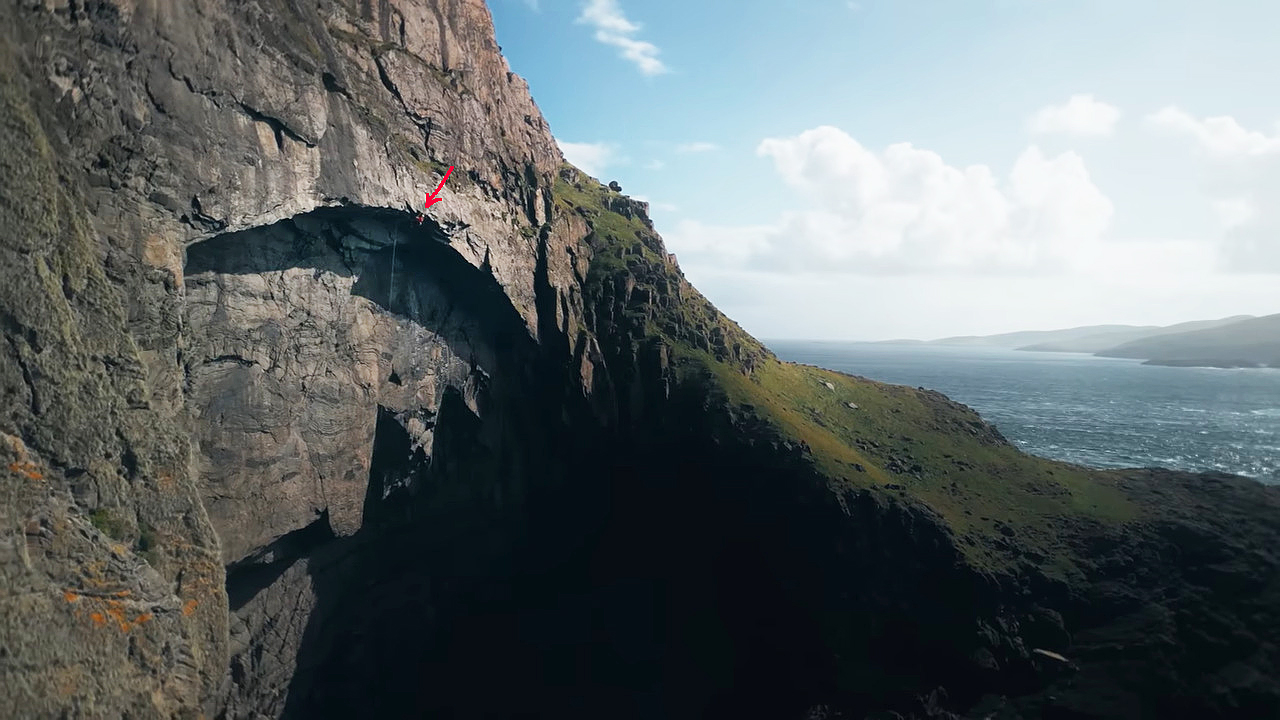
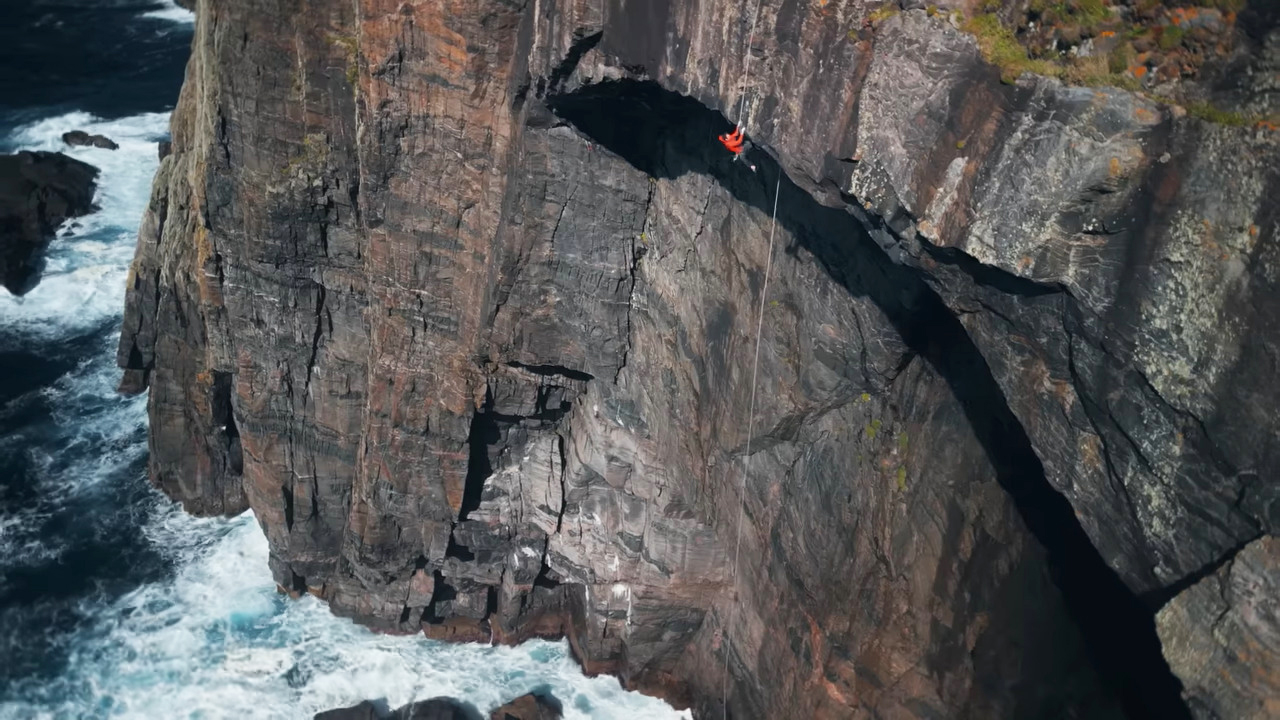
Almost invisible, Phillips is a tiny speck of orange against the massive stone arch. Photo: Screenshot
The Great Arch of Pabbay
At the time of filming, the only successful free ascent of The Great Arch was in 2013. Dave MacLeod‘s eventual success was the culmination of years of effort by Scottish and international climbers. Throughout the film, archival footage and narration guide us through the free climb and earlier explorations.
Before MacLeod, Scotland’s Dave “Cubby” Cuthbertson and American climber Lynn Hill explored the line, trying to work out an ascent. Forced to put the project on pause, they named the line “To be continued.” Somehow, Cubby says with some regret, they never got around to it.
Instead, the first completion went to another climbing duo, Steve McClure and Lucy Kramer. Decades later, in 2010, they bagged a first ascent.
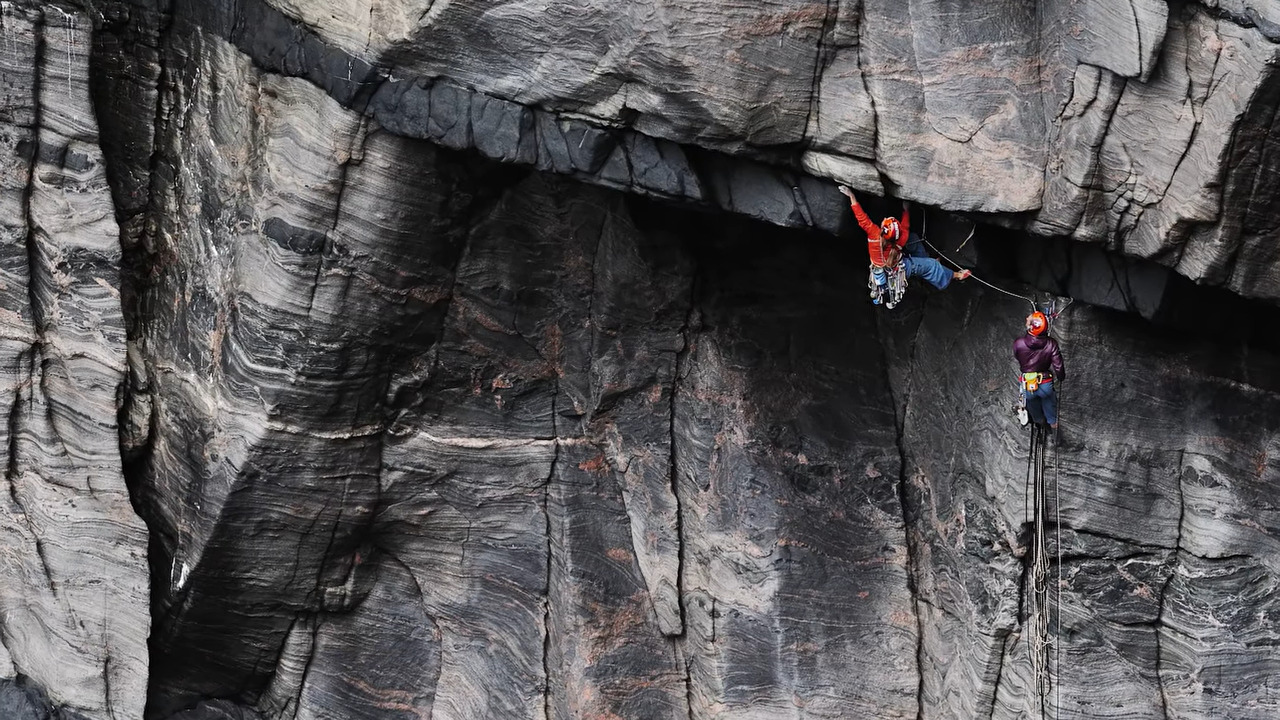
McClure and Kramer on The Great Arch in 2010. Photo: Screenshot
Since McLeod’s 2013 success, no one else has gotten close. Besides the remote location, there is another reason for the lack of successful climbs. What makes the cliff notable is also, as is often the case, what makes it so beastly to climb. The bulk of the arch itself presents a five-meter horizontal roof. There are six pitches, Phillips explains, “all culminating in the final, crux pitch: this beast of an overhang.”
Having the most difficult part of a long climb come at the very end makes it particularly challenging. And of course, the entire climb takes place over a lashing sea and black, jutting rocks.
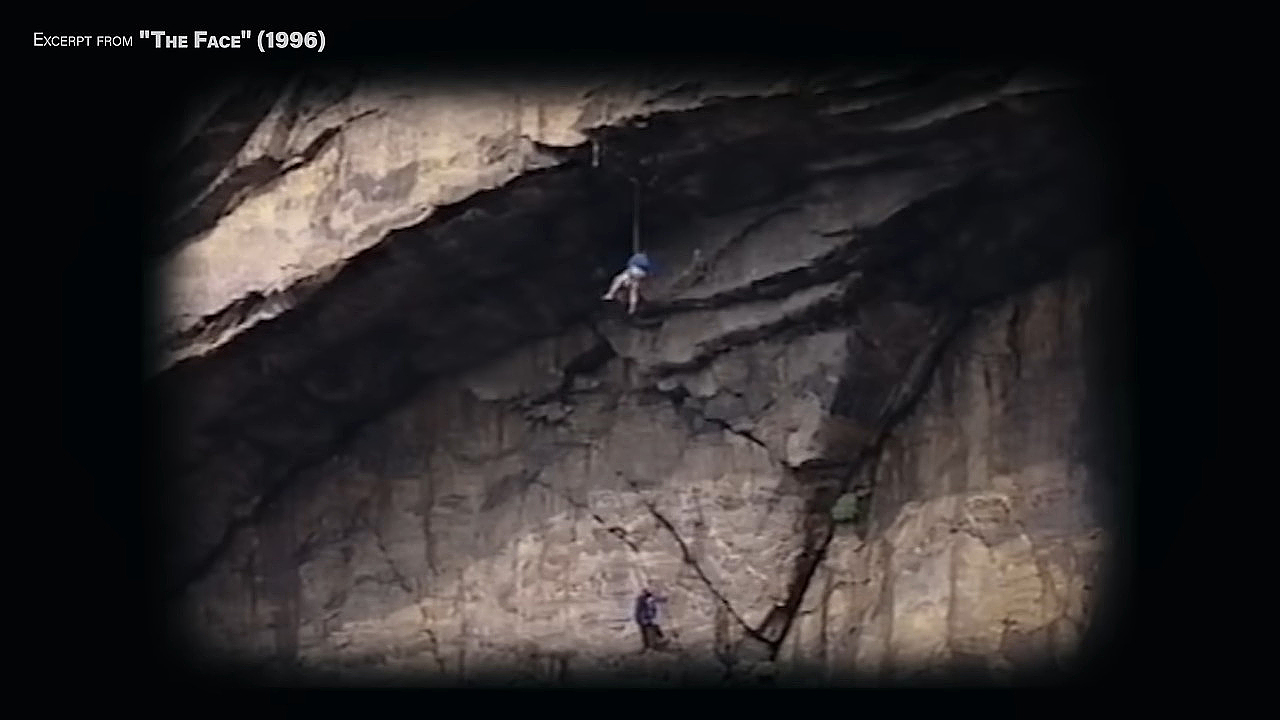
Cuthbertson explores the arch in 1996. Photo: Screenshot
Phillips’ attempt
Phillips brings us along for the investigative stage of his attempt, as he feels his way along the route on fixed ropes. Fellow Scottish climber, Jamie Lowther, tests out the pitches, including the punishing overhang, chalking handholds, and practicing moves.
Phillips’ first attempt begins in early afternoon, with the rocks still shaded and, therefore, slicker. But they’ve arrived late in the season, and limited daylight forced Phillips to choose between starting in the damp or finishing in the dark.
His gambit seems to pay off. Though both he and Lowther note a certain slimy quality to the rocks, by 4 pm he’s several pitches in with another four hours of daylight.
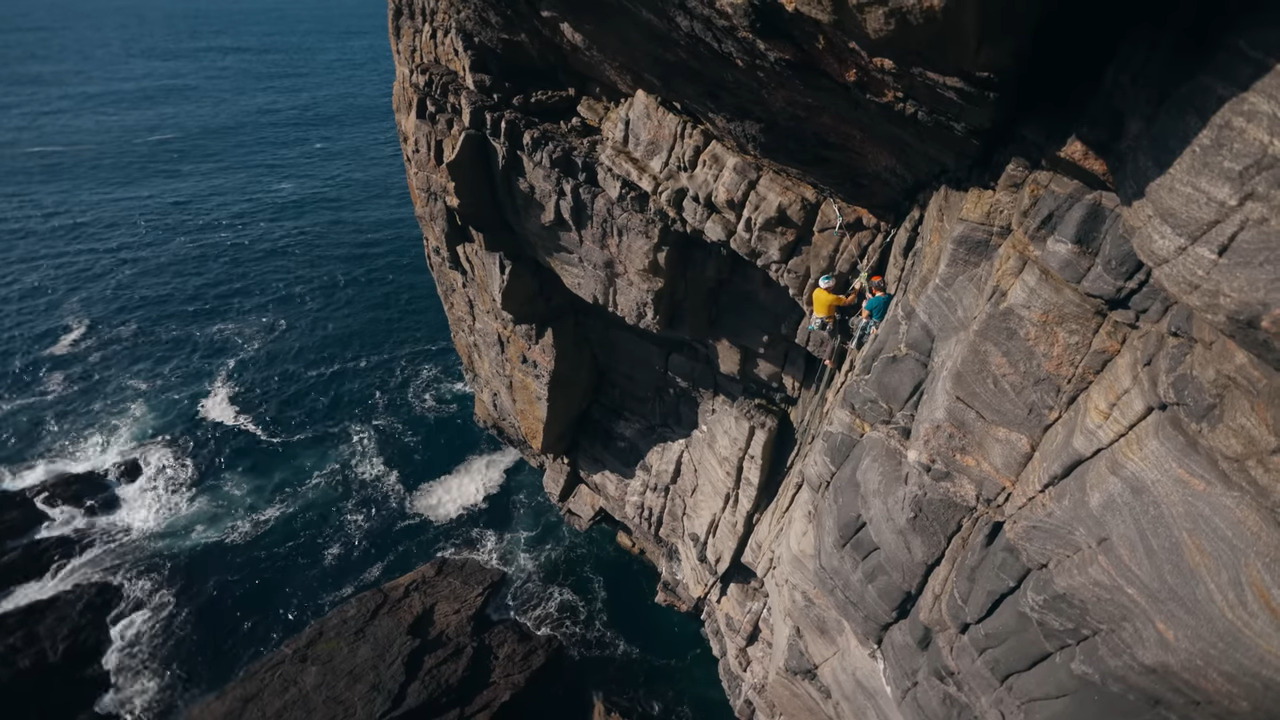
Drone shots, which required special permissions on the protected land, emphasize the sheer mass of the cliff face as tiny neon figures maneuver their way up. Photo: Screenshot.
“I guess I should go for it,” Phillips says, sounding daunted as he finally stares down the last pitch. The moment he gets his hands onto the roof, his fears seem to be realized. The reach is so difficult, and the shade-wetted holds so slimy, that he promptly drops. Swaying on the rope, Phillips takes a brief rest. Then, with the sun setting, it’s time for a final push.
Afterwards, Phillips expresses a kind of dull amazement at how he managed to tackle the damp overhang in this moment. But he does manage it. With a final wordless yell, he pulls himself up and around the lip of the arch, emerging onto the flat cliff above.
As Phillips revels in victory, a present-day Cuthbertson admits how much joy he gets from seeing people repeat and build on his climbs.