Nearly a dozen expeditions started out on the 2025-26 Antarctic season. Some are attempting a speed record, a redemption, or scientific progress. All are battling the weather and the surface conditions as they push deeper into the vast and unforgiving Antarctic.
O’Brady picks up speed
Colin O’Brady is now well past the 80th parallel, heading toward the South Pole as part of his solo continental crossing attempt. His speed has picked up since he was able to ditch the arduous double-carrying. On November 29, he awoke to whiteout conditions and, for the first time, a surface on which he could single-carry.
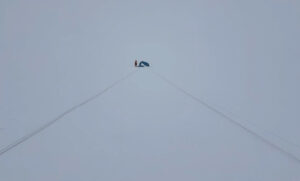
The next day, he saw what he assumed to be an alien spacecraft. Upon further inspection, he found it to be a University of Wisconsin weather station. His extraterrestrial encounter, where he was able to see the weather station from several kilometers away, turned out to be only a brief break from the whiteout. By December 1, it had descended again.
O’Brady had to return briefly to double carrying after a layer of fresh snow made the surface too difficult for a heavy sled. So far, it appears that O’Brady is adhering to his plan to avoid using the South Pole Overland Traverse (SPOT) road, which features navigational flags and filled-in crevasses.
In a recent interview with ExplorersWeb, polar guide Eric Philips noted that the Polar Expeditions Classification Scheme (PECS) that he spearheaded came about as a result of O’Brady’s controversial first expedition, with its unfounded claims of a full crossing. PECS attempts to standardize many aspects of polar travel, such as “crossing” and “circumnavigation,” which until recently were loosely and sometimes deceptively used.
Among its other achievements, PECS seems to have eliminated the superfluous term “unassisted,” which meant nothing, but which adventurers would tack onto “unsupported” because it sounded impressive. We thankfully haven’t heard anyone use “unassisted” in the last several years.
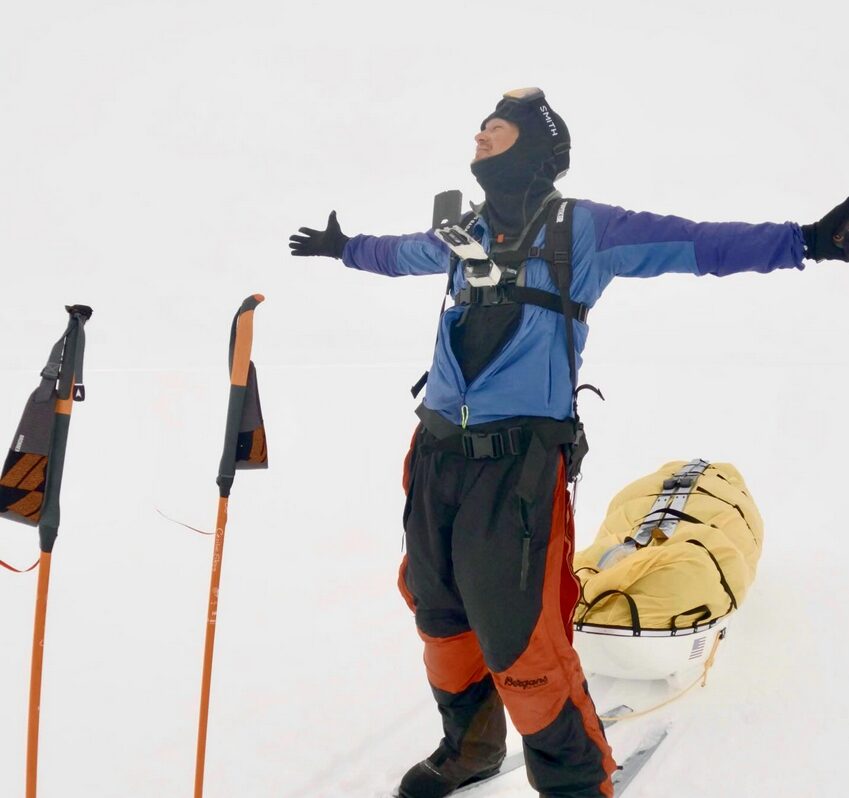
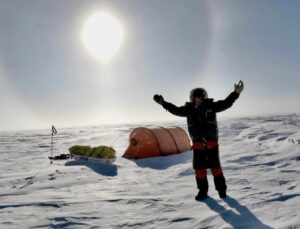
O’Brady on day 16, with very low visibility but a much-improved surface. Photo: Colin O’Brady
Sastrugi and slow going
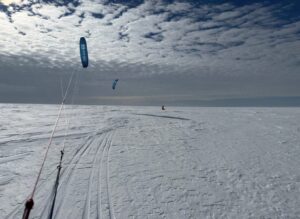
French kiting/glaciology duo Matthieu Tordeur and Dr Heidi Sevestre are forging on at an elevation of 3,283m across what they describe as a “chaotic maze of sastrugi.” They’re currently making for the Southern Pole of Inaccessibility, as part of a planned 4,000km kite-skiing expedition.
This less-celebrated pole — the point on the continent furthest from the edge of the Southern Ocean — is of scientific interest to them because it’s located in one of the coldest parts of Antarctica, and has been the focus of less research than other areas. But it’s still nearly 500km away from Tordeur and Sevestre, who are making slow progress through faint winds. Sevestre is reminding herself that things could be worse by reading Apsley Cherry-Garrard’s Antarctic classic The Worst Journey in the World.
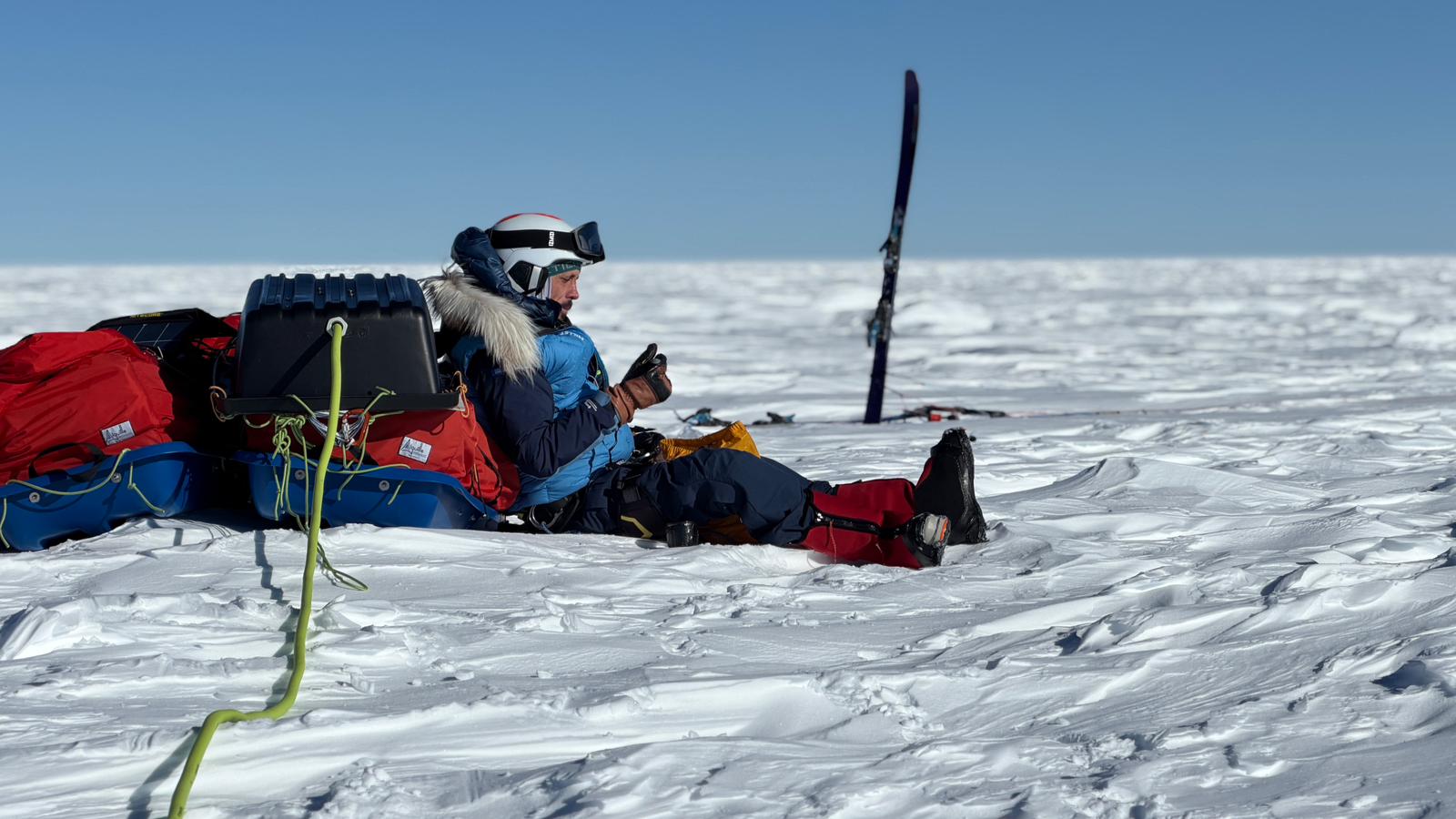
Tordeur with his battered pulka. Sastrugi encounters have flipped it, and him, on multiple occasions. Photo: Under Antarctica
Four from Hercules Inlet
Monet Izabeth is now one week into her attempt to ski to the South Pole alone and unsupported. The first section of her journey is slow going, with the sled at its heaviest. She’s averaging around nine kilometers per day. Colder temperatures over the last few days have hardened the sastrugi, making the skiing more awkward. The first week also brought her friction burns and a broken satellite phone.
Andrea Dorantes, who is attempting the same route, is now approaching the first week mark and has not reported any issues.
The third polar traveler taking the route from Hercules Inlet to the Pole is Tom Hunt, who started his speed record attempt on November 30. He’s chasing Vincent Colliard’s 2024 record of 22 days, 6 hours, and 8 minutes. So far, Hunt is matching Colliard’s pace. But Colliard started off behind the former record. He only made up for his initial slow progress with a dramatic speed increase late in his attempt.
One of Colliard’s advantages was that he lives in northern Norway and is a good cross-country skier. Many Antarctic travelers are fit but lack experience on skis and tend to be shufflers and clompers.
Like Izabeth on the same route, Hunt has been battling sastrugi on and off. Other than a mild issue with hot spots on his feet, however, Hunt hasn’t had any notable issues, and his messages back are chipper.
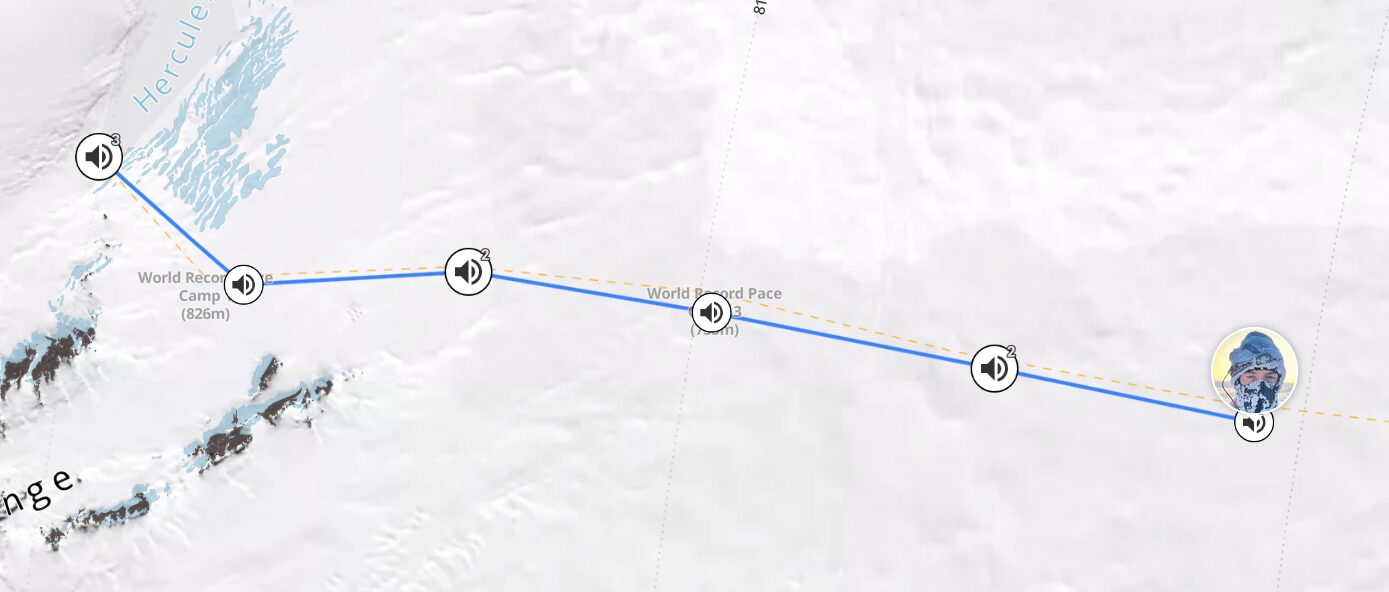
So far, Tom Hunt is matching Colliard’s pace closely. Photo: Tom Hunt
Sebastian Orskaug has covered 493km from Hercules Inlet toward the South Pole so far, with 632 to go. He successfully crossed the 84th parallel on December 3 but has been making slow and difficult progress. The same day, he noted an elevated heart rate and continual soreness. His Starlink is also down. Nevertheless, his motivation meter is still reading as a smiley face.
Other expeditions
Hoddi Tryggvasen of Iceland started out for the South Pole early last month and was making good progress at his last check-in. He is kiting from Novolazarevskaya Station in Queen Maud Land to the South Pole, then on to the Bay of Whales.
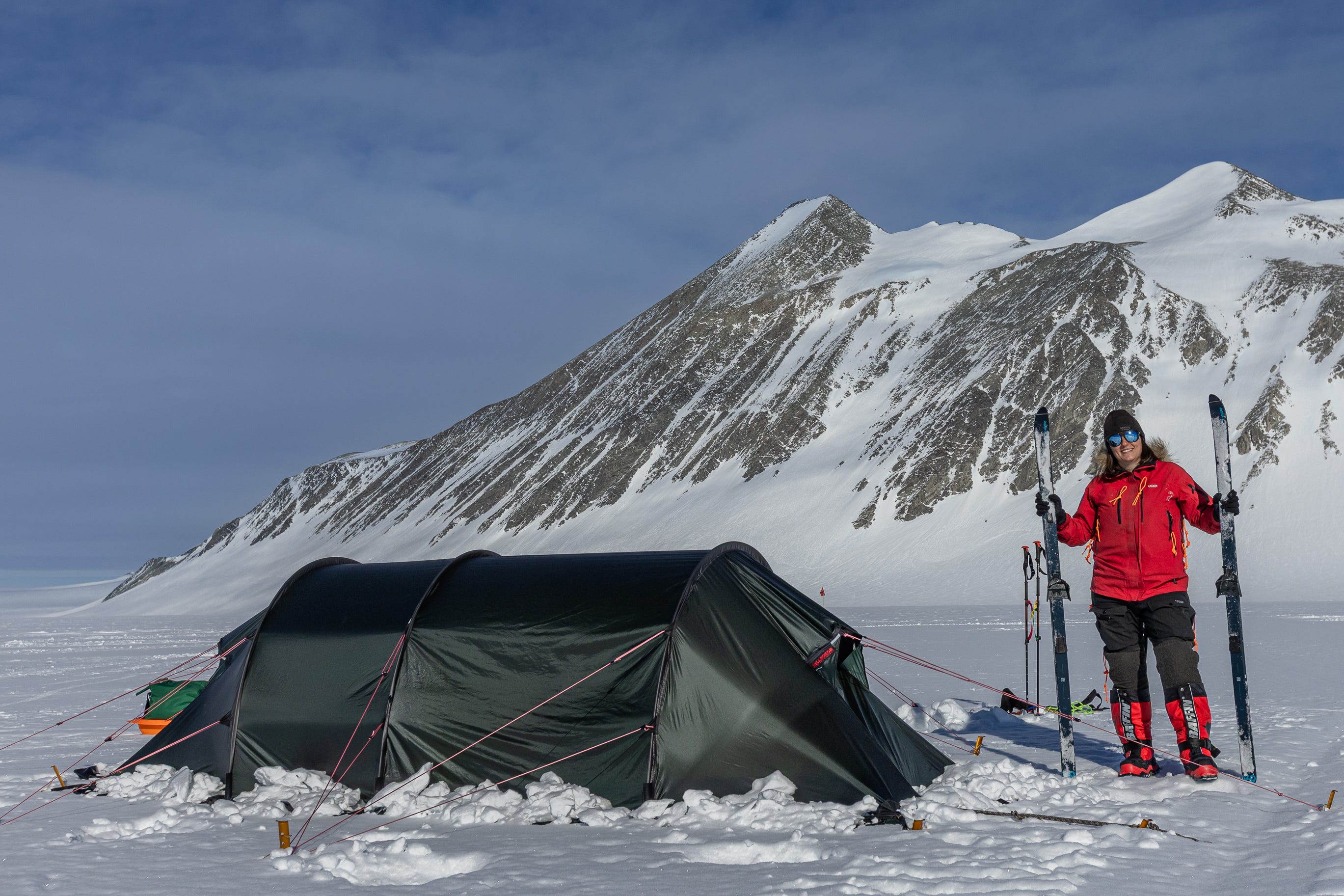
Kathinka and Emma Gyllenhammar are on day 19 from their starting point on Union Glacier. Earlier this week, fierce winds forced them to retreat into their tent, starting late and stopping early. The sun came out on December 1, and they celebrated the start of the Christmas season by singing and lighting an Advent candle. Since then, they’ve crossed the 82nd parallel, and the weather is continuing to cooperate.
British adventurer Ian Hughes is the only one tackling the Messner route this year. After nineteen days out, he’s covered 400km out of the 911km route. Last week, he battled difficult wind conditions for days. This week, the weather has been kinder.