Pedro Odell, Tomas Odell, and Bauti Gregorini have done a rare repetition of the Royal Flush route on Fitz Roy. The three are rising stars in Patagonian climbing and part of a new generation of climbers who grew up amid these granite spires.
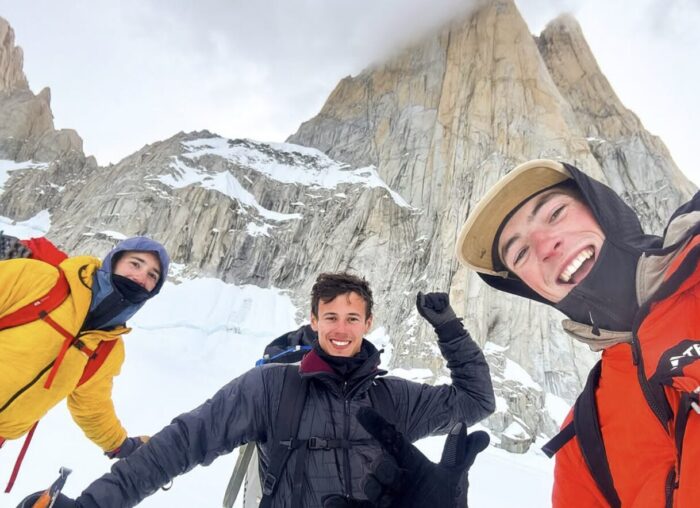
The new generation of Patagonian-born climbers is here. Left to right, Tomas Odell, Pedro Odell, Bauti Gregorini
Royal Flush
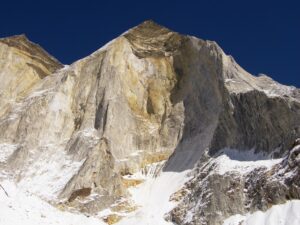
Royal Flush, opened by Kurt Albert, Bernd Arnold, Jorg Gerschel, and Lutz Richte in 1995, goes up the East Face of Fitz Roy, the longest and most vertical face. At most five teams have repeated the 1,250m line.
The first climbers didn’t even reach the summit: Albert was injured by a falling rock, and the team stopped at the point where their new line merged with the El Corazon route, some 350m below the top. Another German team did the first complete ascent three years later. No one has yet freed the route.

A crack system on Royal Flush. Photo: Pedro Odell
The pioneers free-climbed the entire route except for one pitch, which had an estimated difficulty of 5.12c (7c). Tommy Caldwell of the U.S. freed that crux pitch, but couldn’t climb the entire route due to an excess of ice on the wall. Until the route has been completely free-climbed in one go, its difficulty graduation has been set in 7b A0.
“The rest of the route’s 40 pitches can be free-climbed, but in difficult, quite vertical terrain, with difficulties mostly of 6C, 7a,” Pedro Odell explained.
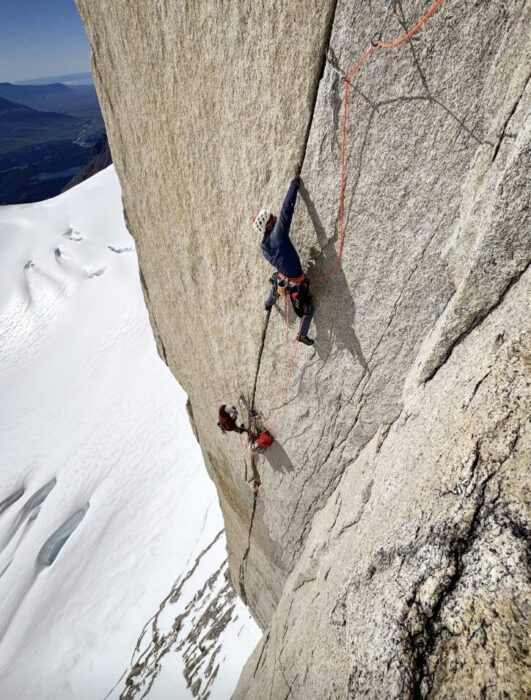
The route climb follows a system of cracks up the East Face of Fitz Roy. Photo: Tomas Odell
Too wet to free climb
Pedro Odell attempted the route with his brother, Tomas, and good friend Bauti Gregorini. They had hoped to free-climb the entire line, but were thwarted by an uncomfortable characteristic of Royal Flush: Except in very cold conditions, water runs down one of the most difficult pitches.
There are bolts at some points of the route, but would-be free climbers just ignore them and use natural protection from the cracks.
“We prioritized being able to summit, but we intended to try a free climb,” Pedro Odell said. “However, upon reaching the 8th pitch, which is a 7A, we saw that water was running down. Later, we dealt with other sections with a lot of running water, including the crux, so we quickly forgot the idea of free-climbing the entire route.”
Here’s a video of the ascent:
Changes after rockslides
The climbers were also aware that rockslides had affected the route. A large slab fell from the upper part of the route last March, changing some features.
“Some climbers attempting Royal Flush saw that the first pitch had crumbled,” said Pedro Odell. “It’s like a big chimney that used to be filled with rocks and featured some cracks that could be climbed. Now everything inside has collapsed, so the chimney is large and hollow.
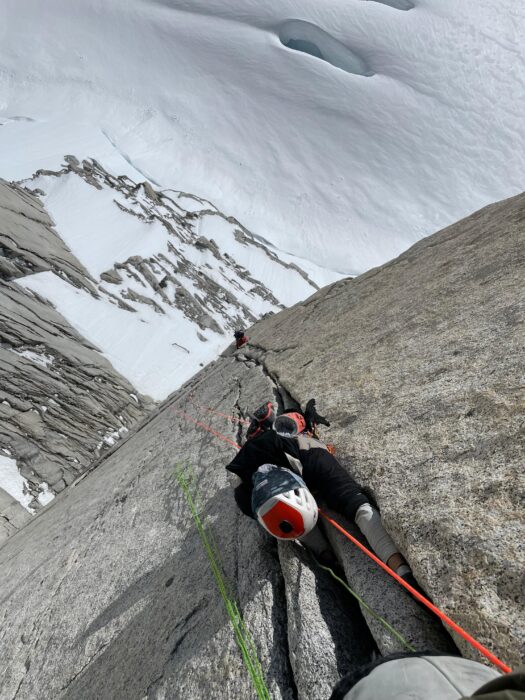
During the climb. Photo: Pedro Odell
“We still managed to climb the chimney quite well,” he added. “We just needed extra caution, as some rocks are still loose, but we were able to free-climb it without major trouble.”
He estimates the chimney at around 6C. On the rest of the pitches, Royal Flush featured excellent-quality granite.
A rare chance
“As with all other routes on the East Face of Fitz Roy, you need several days of good weather…[and] also the right conditions, as small variations affect the climb a great deal,” he said. “In our case, perhaps conditions were not the best due to the excess of running water, but, on the other hand, the upper side of the route was dry and clean. Too much ice has turned other teams around.”
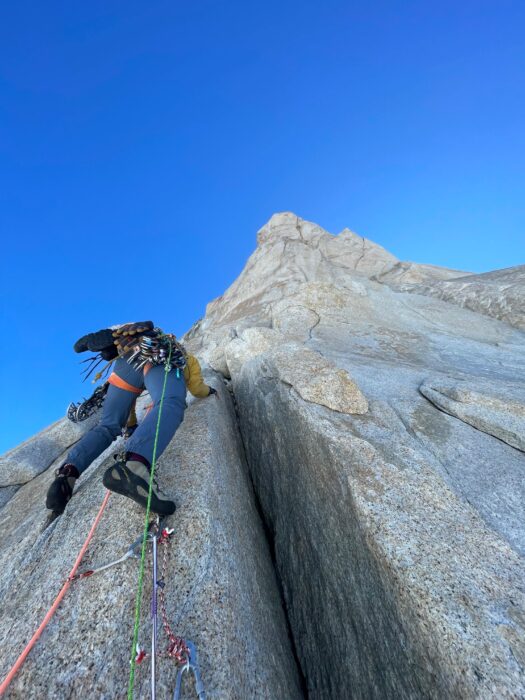
Climbing Royal Flush on Fitz Roy. Photo: Pedro Odell
“A perfect weather window came at the right time, when the three of us were available,” Odell said. “We had been dreaming for years of a chance to climb this route together.”
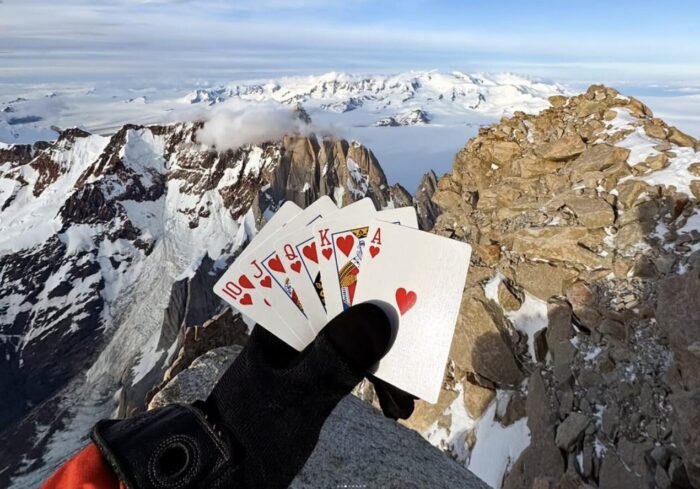
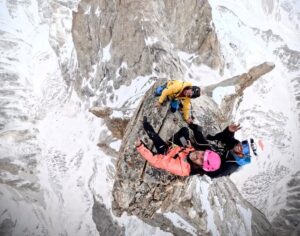
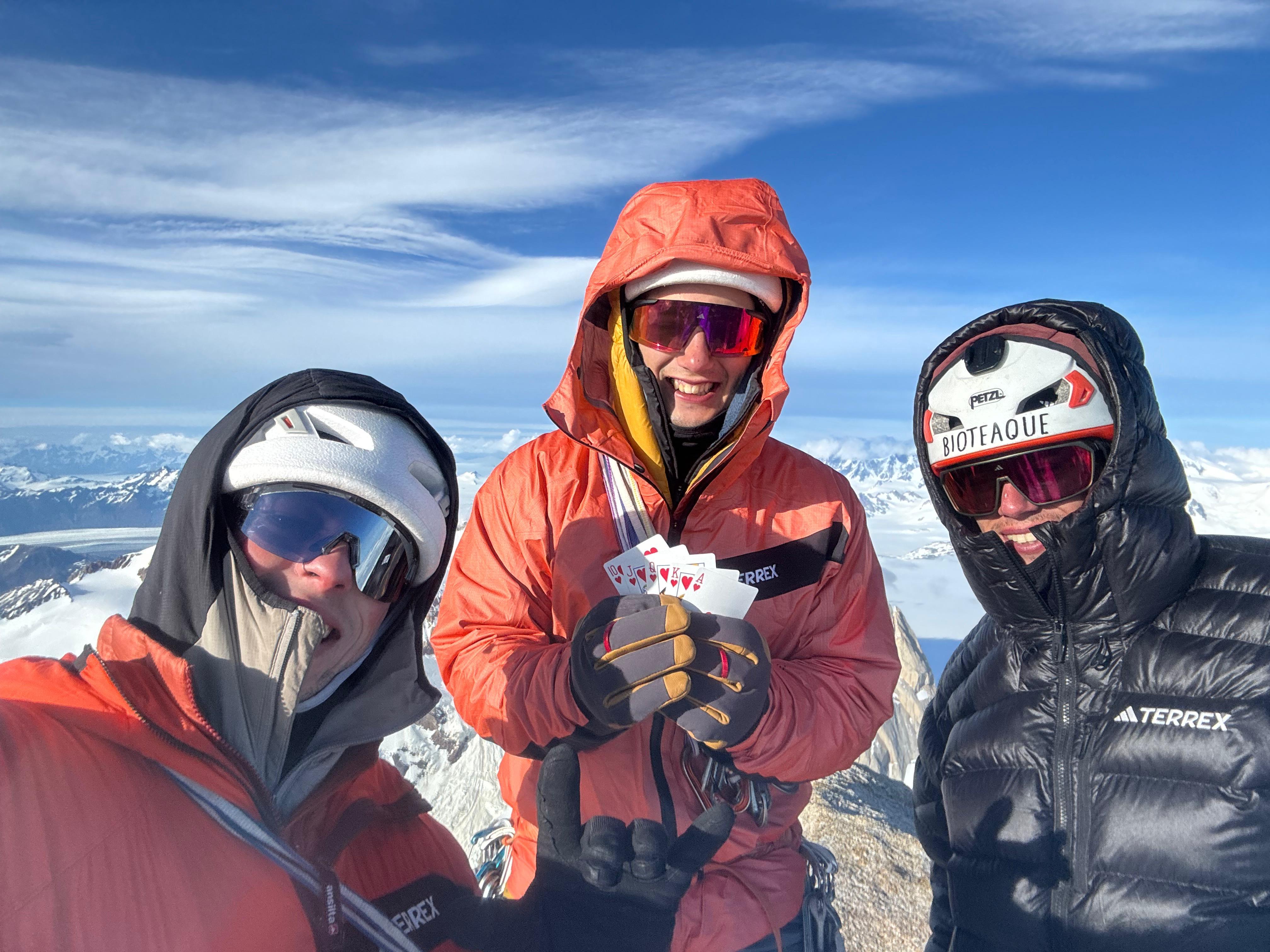
A royal flush on the summit of Fitz Roy. Photo: Bauti Gregorini
Pedro Odell mentioned that the weather has been remarkably good in November, allowing many teams to climb long routes right after arriving in El Chalten.
“I’ve spent so many nights dreaming of this route, so many hours chatting about it,” Gregorini said.
The East side of Fitz Roy is a special place for him, not just because of its technical challenges but also because it’s the side that looks toward his hometown.
Children of Chalten
Pedro, 22, and Tomas Odell, 20, are the first-generation Patagonian climbers native to El Chaltén, which was only founded in 1985. The granite spires that are the ultimate challenge for highly skilled climbers were their backyard.
Pedro climbed Aguja Guillaumet, in the Fitz Roy massif, at the age of 13 with his father, Max Odell, a U.S.-born ski legend. At around 17, he began to climb with his younger brother Tomas, then 15.
In 2022, Pedro Odell opened a new route, El Zorro y la Rosa (5.11c C1; 600m) on the South Face of Aguja St. Exupery, with Horacio Gratton and Esteban Degregori. Soon, he was partnering with visiting climbers, including Colin Haley and Thomas Huber. In November 2022, Pedro and Tomas Odell climbed Fitz Roy’s Supercanaleta; in March 2023, Cerro Torre.
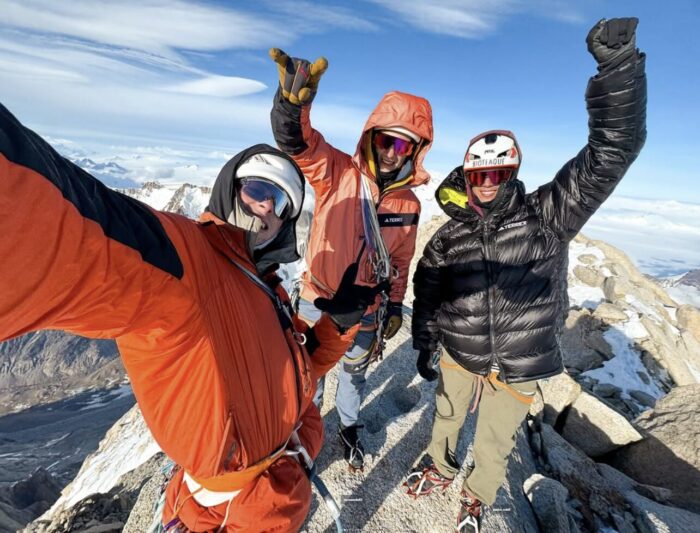
Left to right, Bauti Gregorini, Thomas Odell, and Pedro Odell on the summit of Fitz Roy
Bauti, the third climber, also comes from Patagonia and lives in El Chalten.
“Climbing here is what most motivates us, ” Pedro said.
They also work as guides in the area. They experienced a different kind of mountaineering in Peru’s Cordillera Blanca two years ago, when they climbed the difficult Italian route up 5,830m Tailluraju and did some rock climbing in Europe. But it’s hard to leave the most beautiful mountains in the world, especially in the peak summer season.