Last weekend, around 1,800 other registrants and I attended a three-day virtual event celebrating the history and science of the polar regions. Called Terror Camp, it uniquely blends academia and internet fan culture.
In 2023, polar humanities professor Hester Blum agreed to speak at the event. She was shocked to find that the audience of old men she had expected was actually much younger and more diverse. Amazed by the passion of the attendees and the unusual format, she later told Atlas Obscura that this “could save the humanities.”
Since 2023, Terror Camp has only grown, with more attending in 2025 than in any other year. But what is, I’m sure you’re asking, an “online polar fan conference”? Could an extremely online mid-20s history aficionado explain it to me succinctly? Yes, I can.
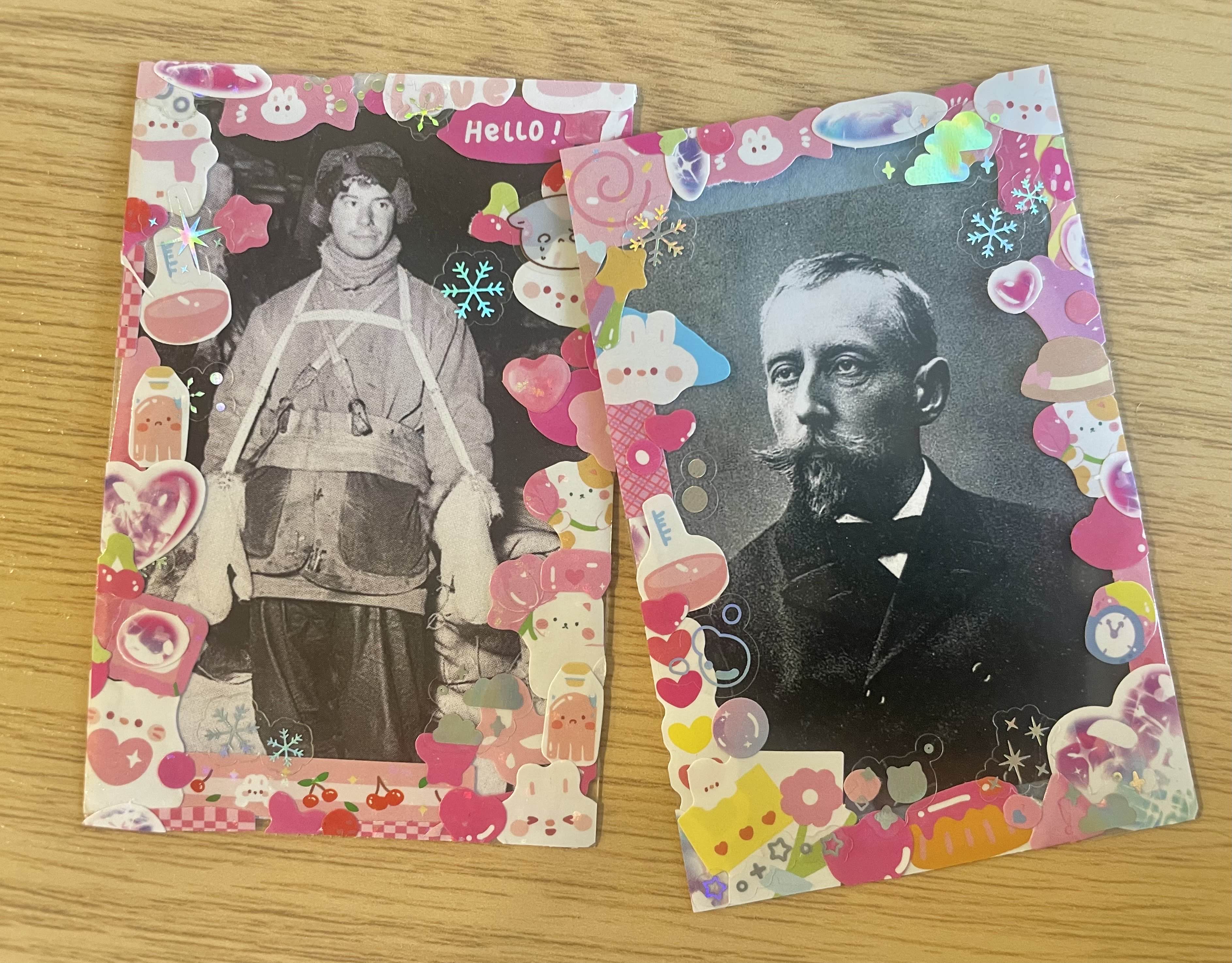
Semi-ironic polar explorer-themed photo cards, owned by an anonymous Terror Camp attendee. Photo: Author
A short introduction to Terror Camp
In 2018, AMC released The Terror, a television show based on a (opinion: much worse) Dan Simmons book by the same name. The show is a retelling of the Franklin expedition with supernatural elements. It was not a massive mainstream success. But it did make a splash with 20-somethings on Tumblr, a semi-defunct blogging website.
There only being so much to discuss about a 10-episode miniseries, fans soon expanded to the historical Franklin expedition, and then into polar history in general. Soon, a whole community of socially conscious young people with English degrees was blogging rapturously about Roald Amundsen.
The first Terror Camp took place in 2021, spearheaded by organizer Allegra Rosenberg. What started as a Zoom meetup for a TV show quickly grew. By 2022, TC was two days long and included talks on Douglas Mawson, climate change, and Franklin search narratives in Victorian periodicals. Half a decade on, Terror Camp has ballooned in scope, length, and attendance.
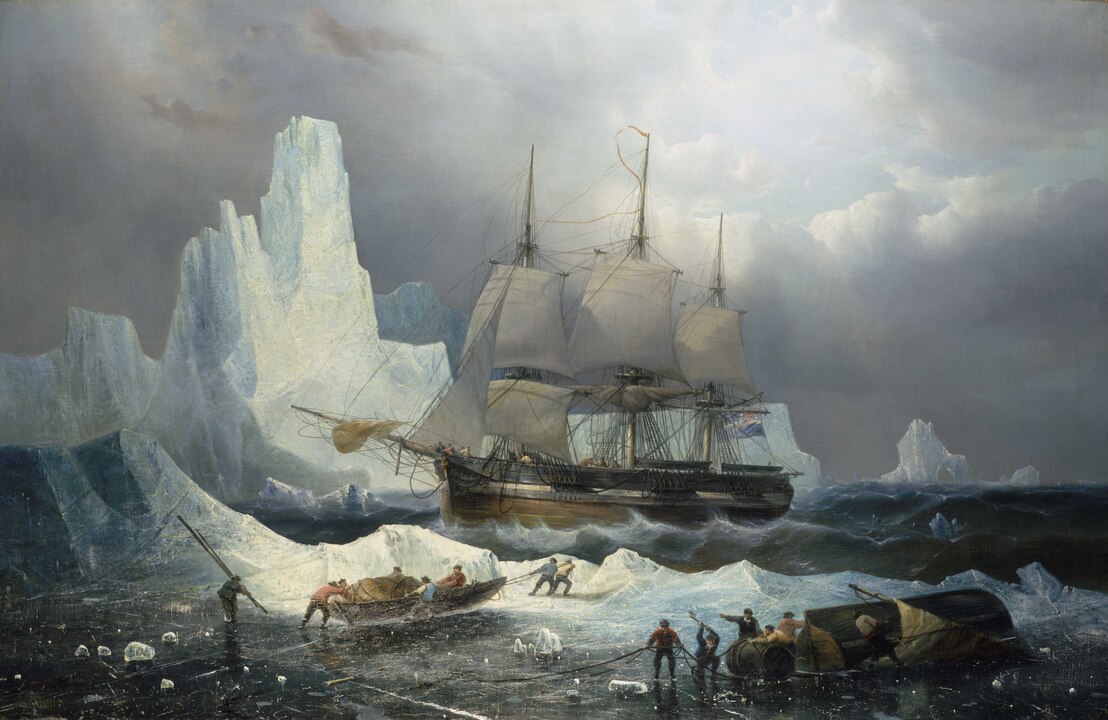
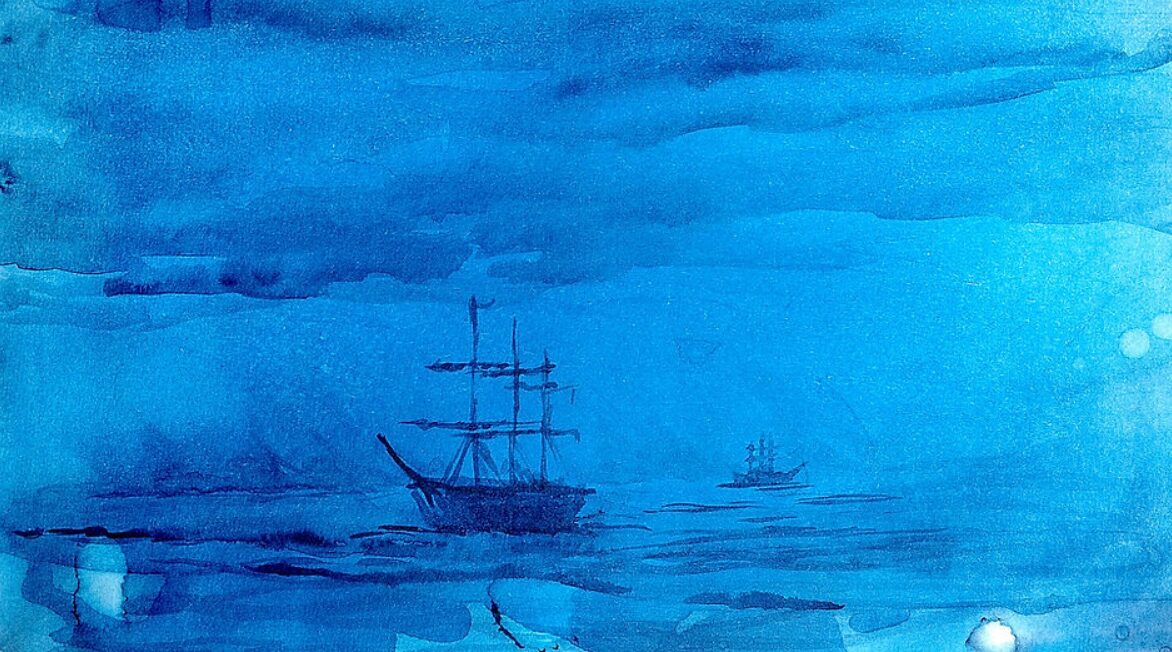
Tragically, John Franklin and his men all died without knowing that they would one day inspire a cult classic TV miniseries. Photo: HMS Erebus in the Ice, Greenwich Maritime Museum
Terror Camp 2025
The core of Terror Camp is a series of themed panels streamed live, with each day finishing on a keynote. At an Artists’ Alley, independent artists sold polar-centric art prints, stickers, quilts, books, and playing cards.
Colorful slideshows by passionate fan-academics explained the 16th-century Barentsz expedition, the importance of Antarctic benthic organisms, how much the British government spent looking for Sir John Franklin, and more.
Interstitial displayed between panels. Photo: Screenshot/Terror Camp graphics
I won’t list every talk. They were all interesting and presented by a range of experts with clear passion, and you can see the full program yourself on the website. But reading the program will not convey the experience of being in a live chat with hundreds of excited peers, delivering the text chat version of a standing ovation (spamming the clapping hands emoji) in reaction to a biomedical researcher explaining the symptoms of scurvy.
If you will forgive me a moment of earnestness, seeing the unabashed enthusiasm and unpretentious intellectual curiosity of the crowd was really incredible.
There’s nothing out there like Terror Camp
I can think of few other events where the curator of Roald Amundsen’s house would be received like a rock star by a Royal Opera of Versailles’ worth of passionate fans. His name is Anders Bache, by the way, and his talk was fantastic. He showed us Amundsen’s teeth, hair, and umbilical cord.
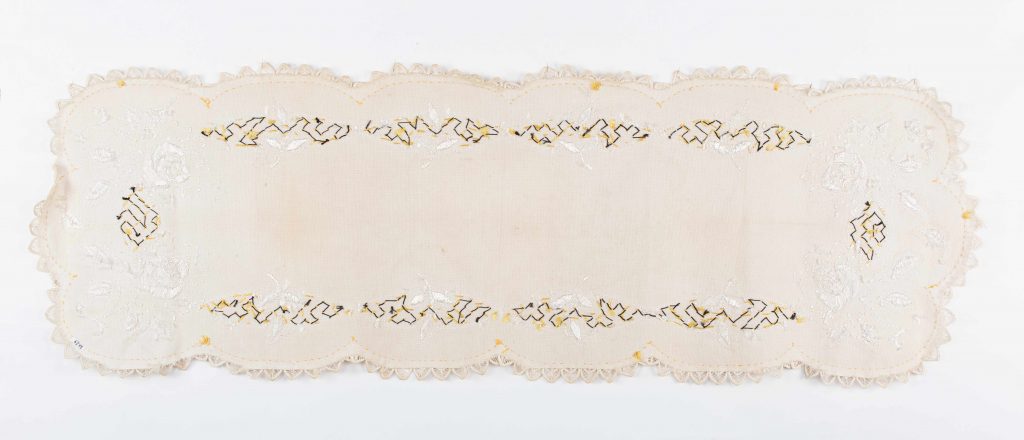
Anders also discussed this tablecloth given to Amundsen by fellow explorer Frederick Cook. For reasons I can’t get into here, this tablecloth is basically the Shroud of Turin for Terror Campers. Photo: Follo museum, MiA
Another personal highlight of the program was a talk on queerness in historical naval adventure fiction. Seth Stein LeJacq, a history professor specializing in gender and sexuality in the age of sail, explained that the research he was presenting was intended for the Maryland Naval Academy’s history symposium. His invitation was rescinded due to the U.S. Government’s pushback against the general concept of diversity.
The Defense Department may not have liked LeJacq’s research, but the attendees of Terror Camp certainly did. Terror Camp also provided an enthusiastic welcome to research on the repatriation of indigenous artifacts, studying climate change through polar ice cores, and the rampant abuse of Inuit women by 19th-century Arctic explorers.
I’ve never been in a space that so seamlessly blended academic scrutiny with fun and the open enthusiasm of fan culture. Watching guest actors from the original Terror show fail to answer Arctic trivia was as much part of the conference as the Senior Curator at the National Maritime Museum outlining careers in polar humanities, or a translator discussing an Inuktitut novel.
There is nothing out there quite like Terror Camp.