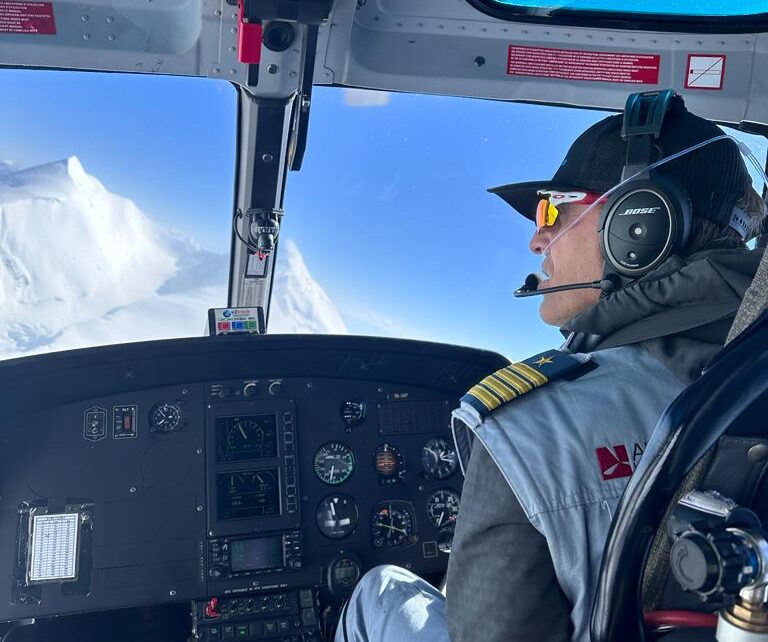
Simone Moro is back in Italy, recovering from the heart attack he suffered in Nepal while preparing to climb Manaslu in winter. He is currently planning a return to climbing. And the entrepreneurial Moro wants to expand his helicopter flying by setting up aerial rescue companies in Pakistan and Patagonia.
Moro spent Christmas in Italy, but not with his family. He had to remain in the hospital for tests to confirm the preliminary diagnosis by Nepalese doctors.
Good medical news
Moro was finally released by the end of the year, with some good news.
“Doctors say my heart didn’t suffer too much despite being without assistance for 24 hours since I suffered the [heart attack] and was airlifted to a hospital in Kathmandu,” he told ExplorersWeb. “Specialists said I can return to doing what I was doing before, including climbing 8,000’ers.”
Moro will have a stress test done next week. Beyond that, he is taking it easy. Before leaving the hospital, however, he talked with some media about the possible cause of his health problems and his future plans.
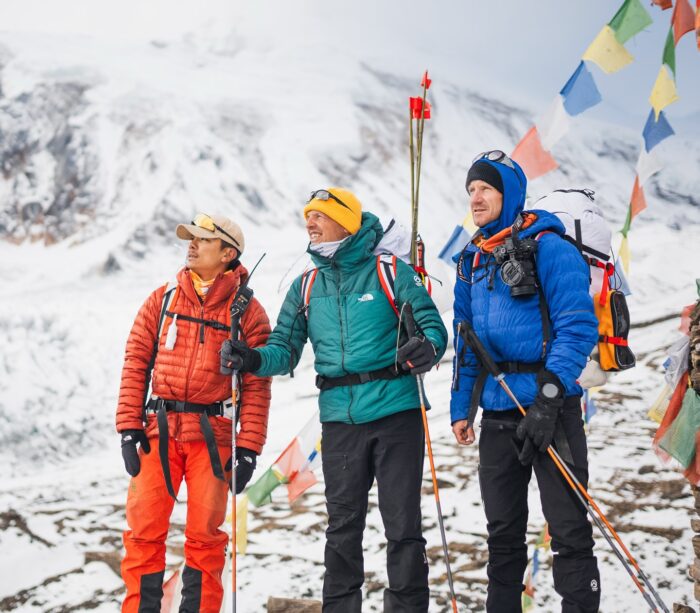
Left to right, Nima Rinji Sherpa, Simone Moro, and Oswald Pereira at Manaslu Base Camp during the 2024 attempt. Photo: Nima Rinji Sherpa
Dehydration and too much altitude
After consulting with the medical teams in Nepal and Italy, Moro concludes that the heart problem was caused by dehydration, an “unforgivable” mistake that he says would have cost him his life if the attack had happened on the summit of Mera Peak rather than back in base camp.
“I didn’t drink enough, I got dehydrated and, as blood thickens with altitude, the risk of developing a blood clot is very real,” he told La Repubblica.
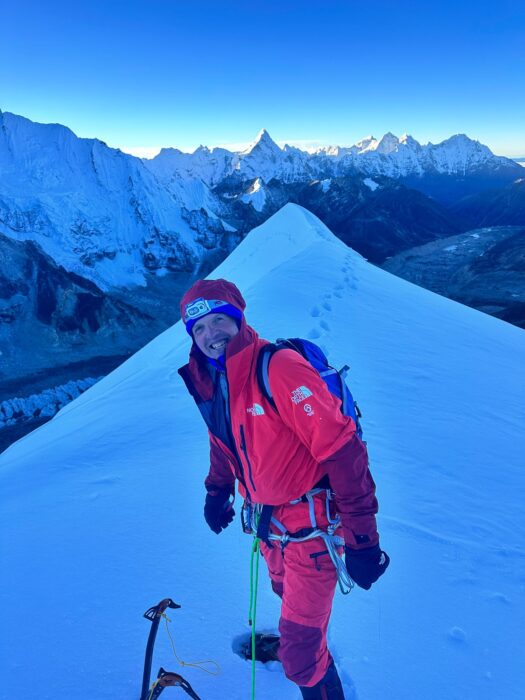
File image of Simone Moro acclimatizing in Nepal. Photo: Facebook
Moro says the afternoon after he returned from the summit, he felt a severe, sudden pain in his chest and left arm. He knew instantly that something was wrong and called for help, but due to the weather, helicopters could not fly until the following morning. He had to deal with the pain through the evening and the night.
Back to Manaslu next winter
In the hospital in Kathmandu, Moro underwent surgery to unblock his coronary artery.
“I do not know since when or why my arteries were in that state,” he said. “It could be a result of too many expeditions at high altitude.” According to Infobae, Moro noted that his hematocrit levels are abnormally high, above 60%.
“Winter Manaslu has just been postponed, not cancelled,” he insisted to La Repubblica. “Next year, I’ll try again.”
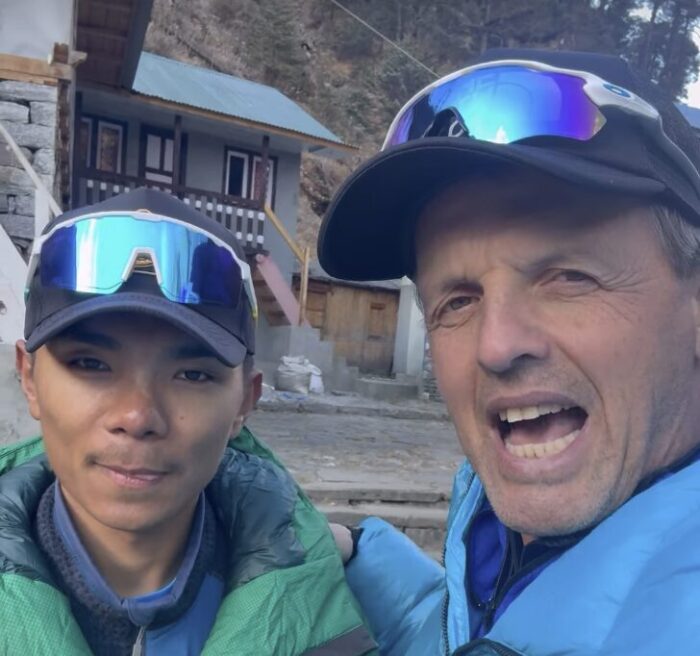
Nima Rinji Sherpa and Simone Moro before climbing Mera Peak to prepare for Manaslu. Photo: Simone Moro
Karakoram heli rescue project
Moro also spoke about a long-term project of his. In the next few months, he wants to start a private aerial rescue service in Pakistan, he told El Pais. Moro operates a helicopter company in Italy with seven helicopters, conducting high-altitude flights and rescues for Nepalese companies during the climbing seasons, including flights at altitudes of around 7,000m on Everest, Manaslu, and Annapurna.
A similar service in Pakistan would be game-changing because, unlike Nepal, helicopter flights in Pakistan’s mountains are restricted. Only the Pakistan military is allowed to operate helicopters there. During rescues, helicopters fly in pairs for security reasons, and they only take off with permission from military authorities.
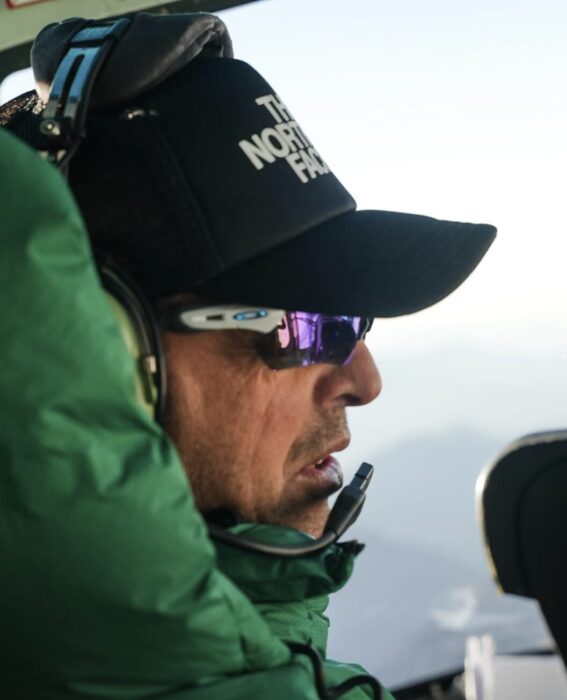
Simone Moro pilots a helicopter. Photo: Simone Moro/Instagram
Already bought two helicopters
Moro has partnered with retired brigadier and well-known rescue pilot Rashid Ullah. He was one of the pilots who performed the first long-line rescue in Pakistan, when they airlifted Tomaz Humar of Slovenia from Nanga Parbat. Moro said they have already bought two helicopters and are waiting for authorization by Pakistani authorities to operate in the country.
Sources in Pakistan confirmed the project to ExplorersWeb, but cautiously note that this initiative is still in the planning stage.
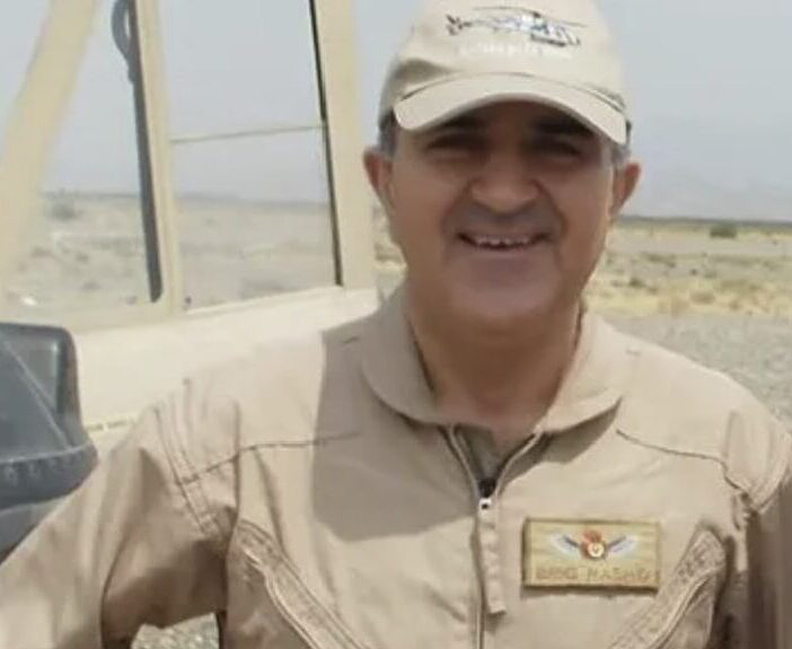
Brigadier Rashid Ullah. Photo: Pamir Times
Patagonia next?
He hopes to start operating in Pakistan this year. A little down the road, he is planning to enter another mountain market that currently lacks an air rescue service: Patagonia. Moro told El País he is working with an Argentine partner to start a company that will operate in the Fitz Roy and Cerro Torre massifs out of a base in El Calafate.