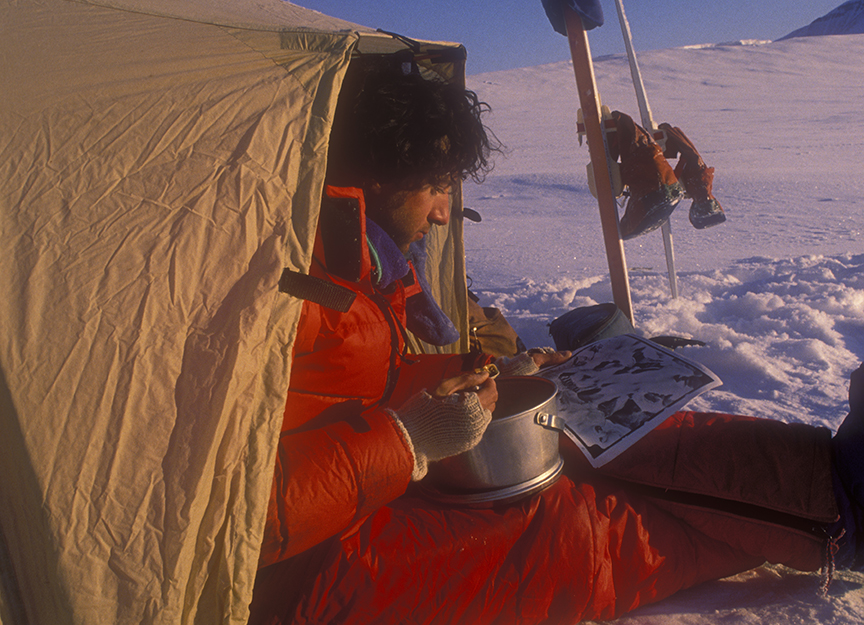
I owe this little gear innovation to polar explorer Will Steger. When he did the expedition that first made him famous, the 1986 unsupported dogsled journey to the North Pole, he and his team used custom-knitted wool wristlets. I learned about them from one of his teammates on that expedition, Richard Weber.
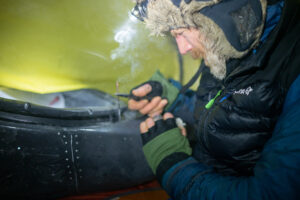
You can buy commercial wristlets, but they don’t work as well. They’re too thick and cover too much of the hand and fingers, so it’s hard to wear close-fitting gloves over them. Homemade wristlets fit under anything. They bridge the gap between the glove and the sleeve of your undershirt and add about half a layer of warmth. Sometimes, they’re enough to let you work barehanded when you need dexterity — for example, when you’re in the tent at night, sewing a ripped harness strap.
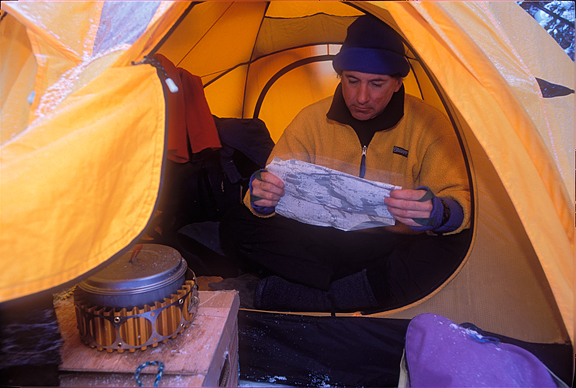
Wristlets never need to be taken off. Photo: Jerry Kobalenko
While I used the knitted wristlets for several years, they had drawbacks. The knitted loops for the thumb, index, and baby fingers stretched and eventually tore. They needed to be replaced every expedition or so. The wool also shrank significantly in time, exposing the bare wrist.
In the end, a much better solution was to buy some bolts of fleece (or parasitize an old fleece jacket you don’t wear anymore) and sew wristlets from that material. They last forever, don’t shrink or tear, and you can even make a couple of different pairs of wristlets — 300-weight fleece for severe winter use and 100-weight fleece for Arctic spring or all-around winter use. You can sew the 100-weight ones snugly enough that you don’t need finger loops.
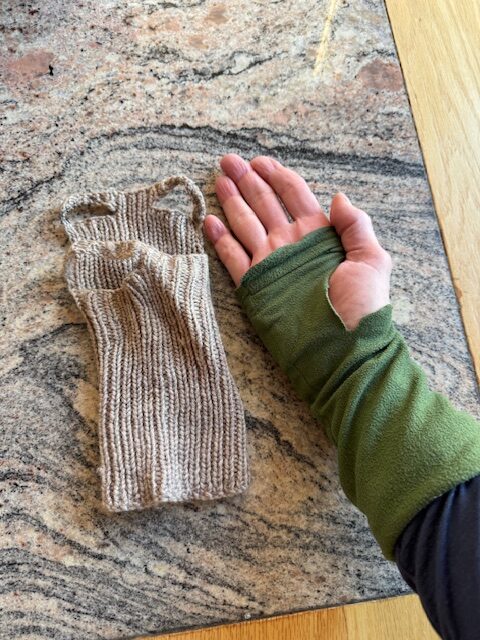
The loops on knitted wristlets, left, eventually tear. Fleece wristlets are much more durable. Photo: Jerry Kobalenko
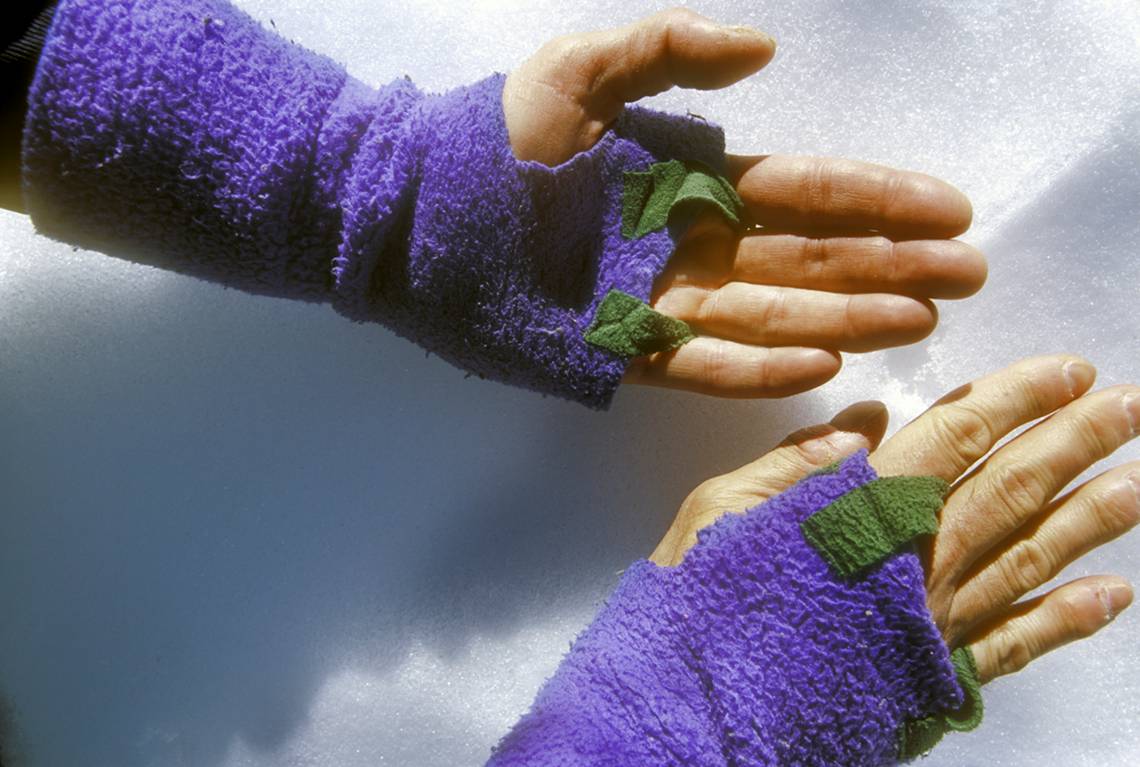
These 300-weight fleece wristlets are ideal for the coldest expeditions. Photo: Jerry Kobalenko