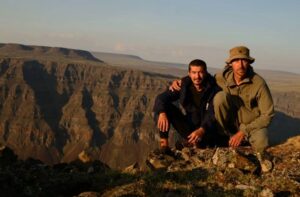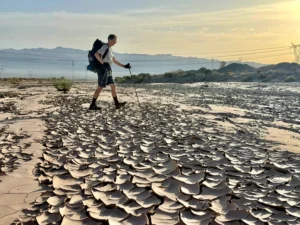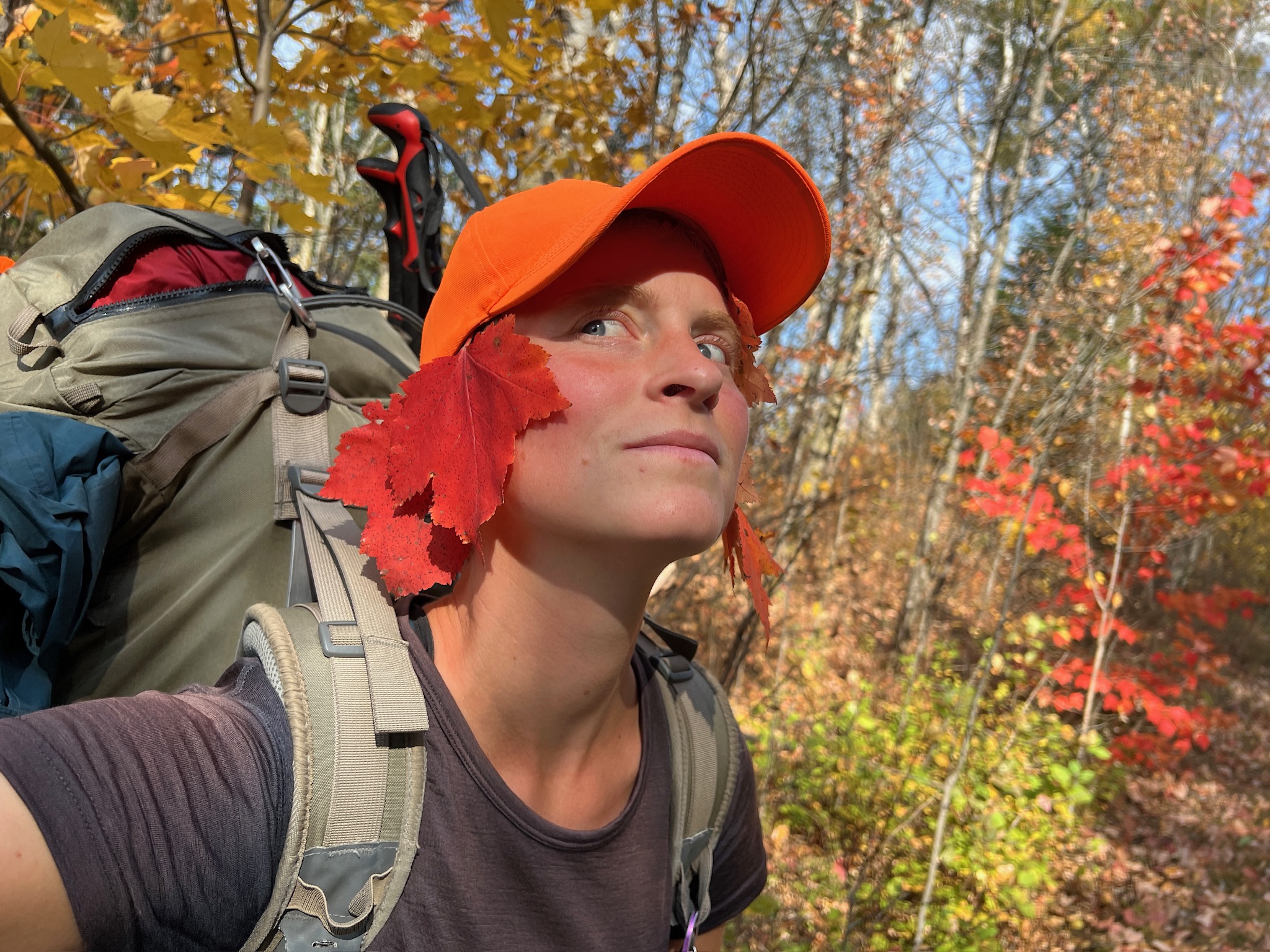
German long-distance traveler Katharina Kneip, 35, is currently recovering from a fractured ankle sustained during the Canadian leg of her multi-year journey around the Northern Hemisphere by wind, foot, and ski.
ExplorersWeb last reported on Kneip last October when she was near the New Brunswick–Quebec border and readying to continue west to Ottawa via hiking and cycling trails.
Onward to Quebec
Kneip left the border town of Edmundston, New Brunswick, in early October and initially hiked the Trans Canada Trail toward Quebec City. The German artist-turned-adventurer reached the Quebec capital on October 16, then continued hiking southwest along the St. Lawrence River.
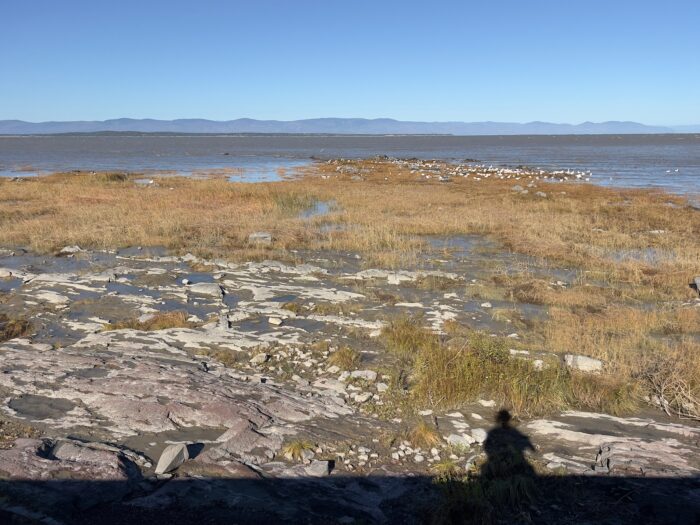
The St Lawrence River. Photo: Katharina Kneip
“The river is so wide, and there are whales swimming up even to Quebec and further. It was really incredible to experience this,” Kneip told ExplorersWeb.
“I followed little roads between fields. But very often I was just on a bicycle lane or basically on the road. So it was not very adventurous, but really interesting culturally,” she added.
She spent her nights either in her tent or in accommodation from welcoming strangers. She reached the next major city, Montreal, on October 30.
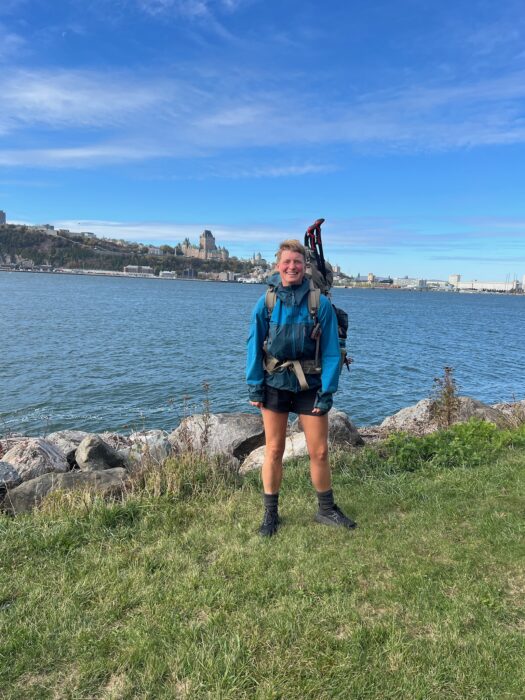
Kneip with Quebec City in the background. Photo: Katharina Kneip
Switching to winter travel
Again, Kneip followed the obvious navigational handrail of the Ottawa River as she trekked toward Ottawa. The weather had worsened by the time she walked into a snowy Ottawa on November 11.
Kneip spent over a month in Almonte, a town outside the city, preparing to switch into winter travel mode, skiing with a sled in tow instead of backpacking.
The German adventurer left Almonte on December 29 in brisk -20˚C temperatures, hoping to ski to Winnipeg, some 2,000km away, by late April or early May.
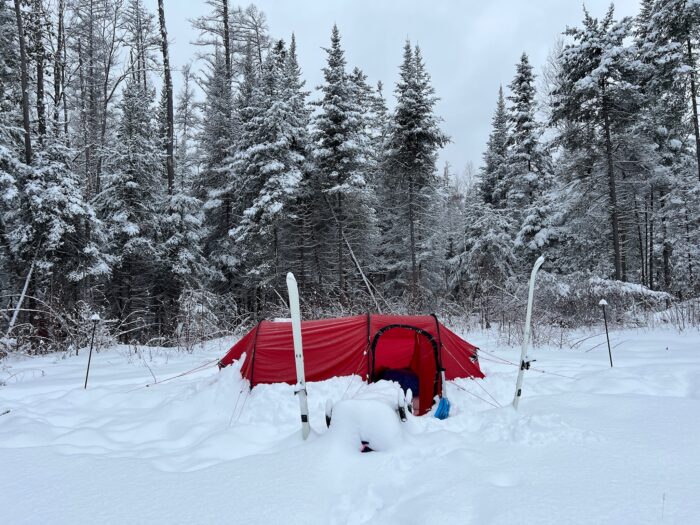
Snow is deep and powdery in wooded areas because it is not compacted down by wind. Photo: Katharina Kneip
Kneip set out on a mixture of snowmobile tracks and pathless terrain through woodland. However, after only a short period, she had to contend with one of the many equipment issues that winter travelers can face.
“After maybe 150 kilometers, I realized that the binding on my ski boot just around where the toes are, basically broke. I could still ski, but the boot wasn’t waterproof anymore.”
Kneip rigged a solution with cable ties and tape and skied into the next town, where she could glue the boot.
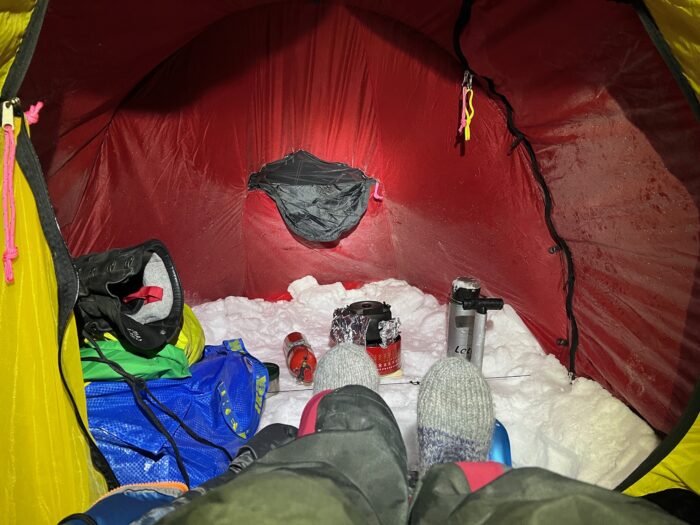
Tent life in subzero temperatures. Photo: Katharina Kneip
Switch to snowshoes
By January 16, Kneip had left the small town of Deep River on the banks of the Ottawa River and trekked a further 150km east, with temperatures dropping to -25˚C in the evenings. At this point, Kneip had switched to snowshoes and a backpack because her ski binding was continuing to deteriorate.
A few days later, when hiking along a small country road, Kneip slipped and injured her ankle. “It hurt, but it was still like, ‘if I just continue a bit, maybe it will just go away’,” Kneipp said.
“But after a few more kilometers, I realized it didn’t. I felt how the foot was starting to swell in my boot.”
She wasn’t far from North Bay, where she stayed with some locals before hitching back to Deep River to get an X-ray at the hospital there.
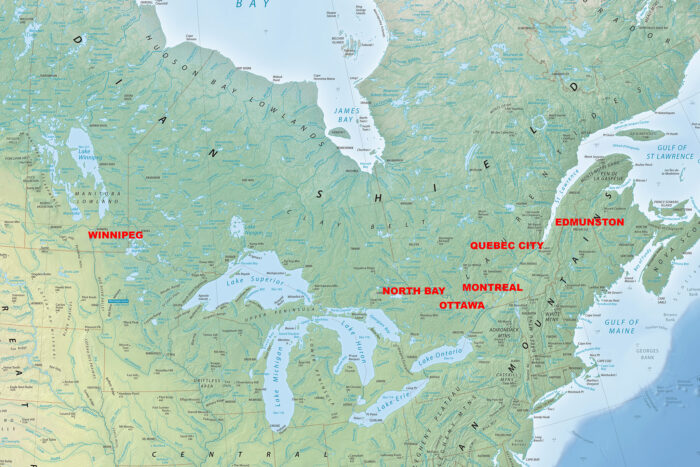
The road ahead
Kneip is currently recuperating for another two to three weeks before she can begin to hike again. The injury has delayed her journey to Winnipeg by over a month.
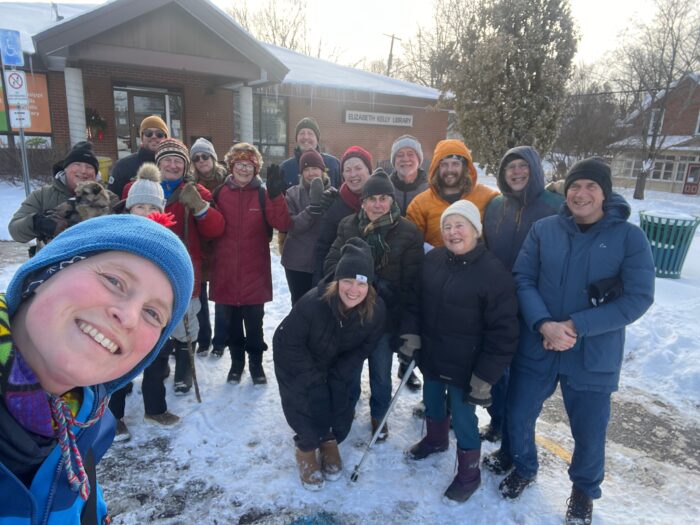
Kneip and some friends en route. Photo: Katharina Kneip
“In the summer, my plan is to be in the Prairies,” said Kneip. “There, I will be able to cover much bigger distances.”
She aims to hit Vancouver at the end of the year and then trek onward to Alaska to end the North American leg of her round-the-world tour.