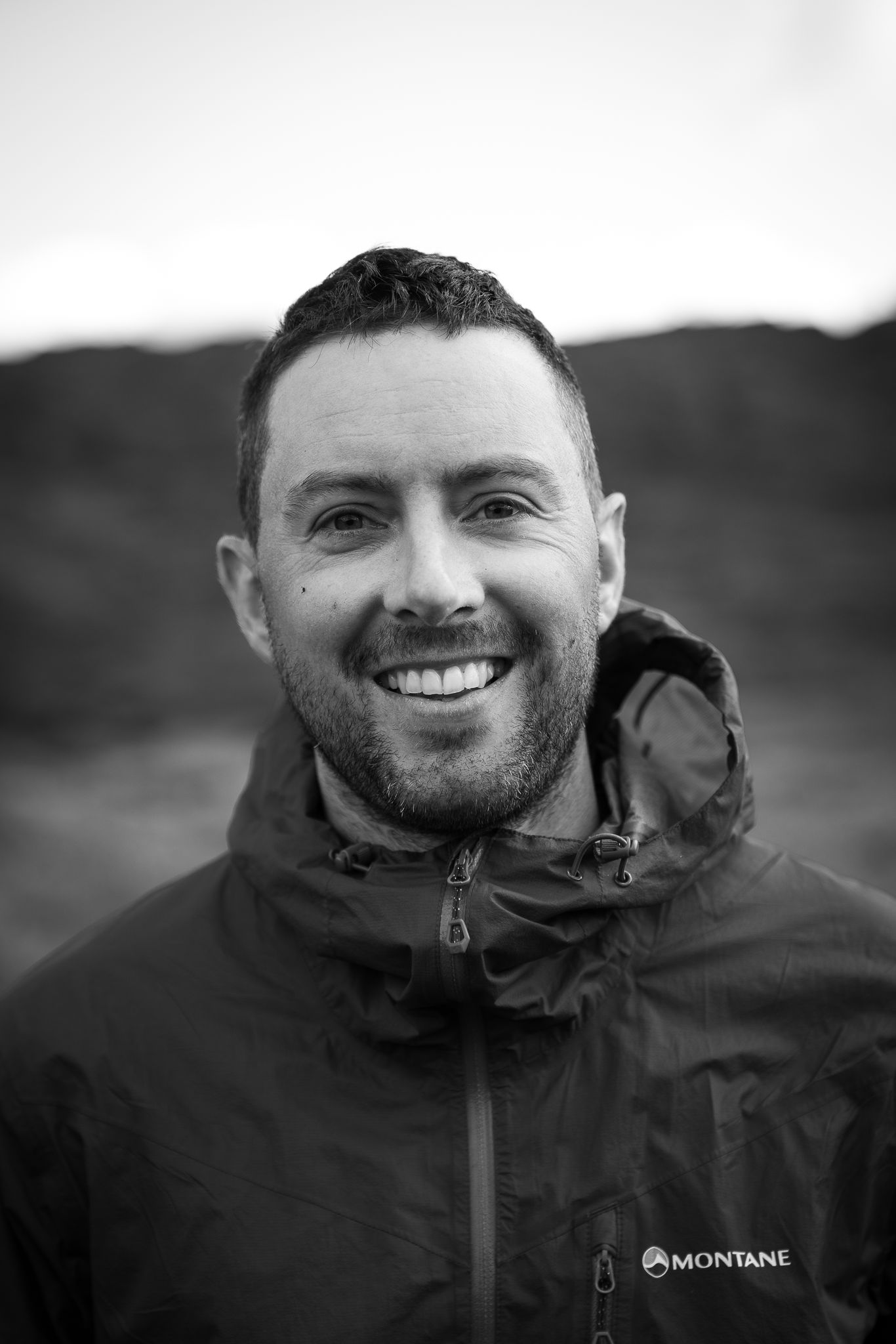
Swiss adventurer Loic Cappellin, 26, has completed his human-powered journey from Scandinavia to French Guiana.
He set off in early 2025, skiing across northern Sweden and Norway, before cycling 7,000km through Europe to the Mediterranean. After crossing to Morocco, he trekked and rode across the desert to the Atlantic, arriving in early October.
Cappellin then sailed across the Atlantic, reaching French Guiana in December. Following a month of preparations, Cappellin completed his journey with a 10-day foot-and-packraft trek through the Amazon rainforest.
A local warning
When he arrived at his starting point in the village of Saul, locals urged Cappellin to reconsider heading alone into the rainforest. They warned him of the challenges ahead. The Swiss adventurer listened but remained resolute. On February 3, he set off alone, following a trail into the forest.
The first day went well. He covered 18km before dense vegetation slowed him to a stop at the edge of a swamp. Rather than push through the flooded terrain, he adjusted his plan. On day two, he climbed into higher, more rugged hills, aiming to intercept a waterway he hoped would accelerate his progress.
“By the end of the third day, I reached Crique Couy — the waterway I planned to navigate in order to eventually join the Approuague River,” he told ExplorersWeb.
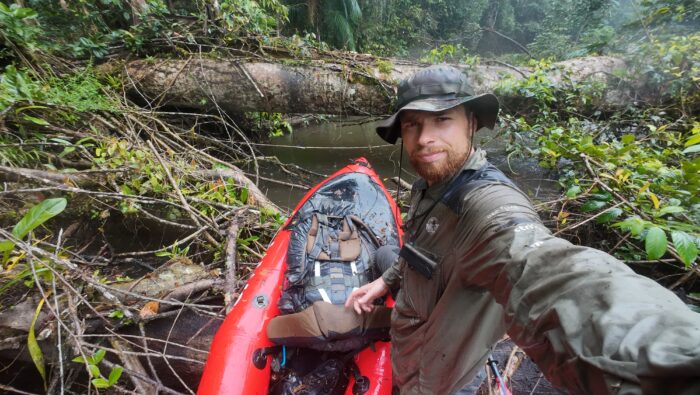
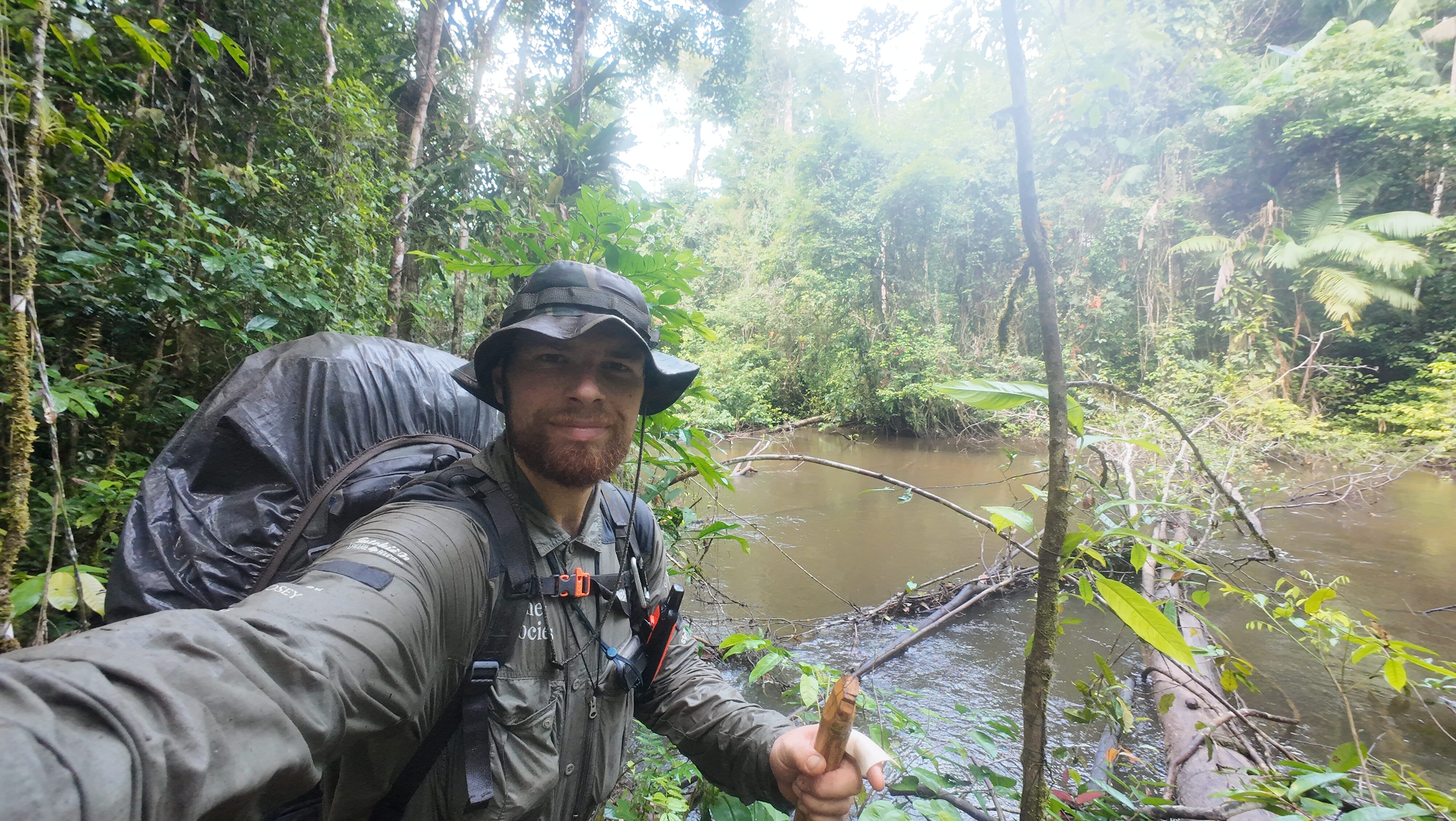
Cappellin often found the waterways clogged with fallen trees. Photo: Loic Cappellin
“On foot, I could manage around nine kilometers in nine hours. With the packraft, if the river was clear, I could cover up to 35km per day — an invaluable time gain.”
But the river did not unfold as expected.
“When I first reached Crique Couy, I was surprised to see what appeared to be a navigable river. Based on satellite images, I had expected to launch about eight kilometers further downstream. On the morning of day four, I decided to try anyway. The result: 700 meters in one hour. Clearly not viable.”
Forced to adapt, he pressed on by foot for another day and a half until he reached a broader stretch of water.
“Even there, the river was clogged with fallen trees. I constantly had to exit the raft to carry both boat and gear over trunks before getting back in.”
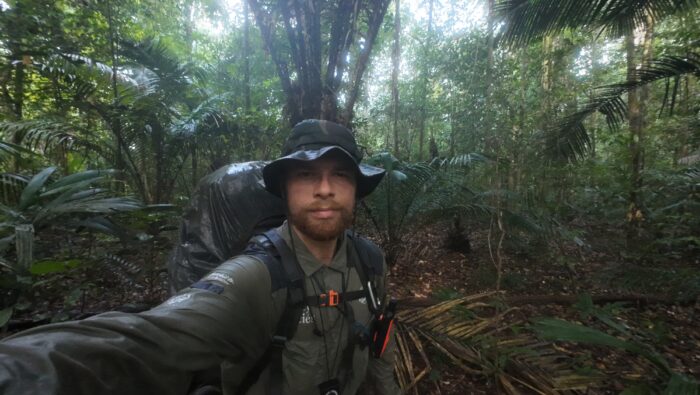
Photo: Loic Cappellin
A torn packraft
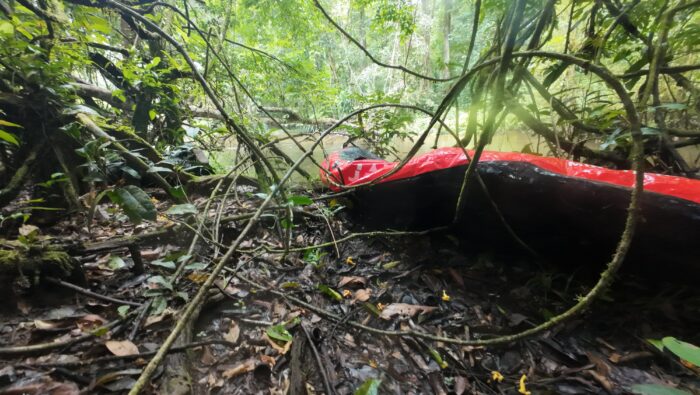
Photo: Loic Cappellin
By day five, the river had begun to improve, with longer stretches of navigable water appearing between obstacles. Then his raft tore on a submerged branch.
“I carried full repair equipment, but I had never performed such a repair before,” he explained. “I made a temporary fix to finish the day, planning a proper repair in the evening. Emotionally, it was intense. I was still 140km from the finish line and didn’t know whether I would be able to repair the raft durably.”
Soon after, he entered a canyon section with multiple rapids requiring portages through the forest. During one of them, after his temporary repair failed again, he sprained his ankle.
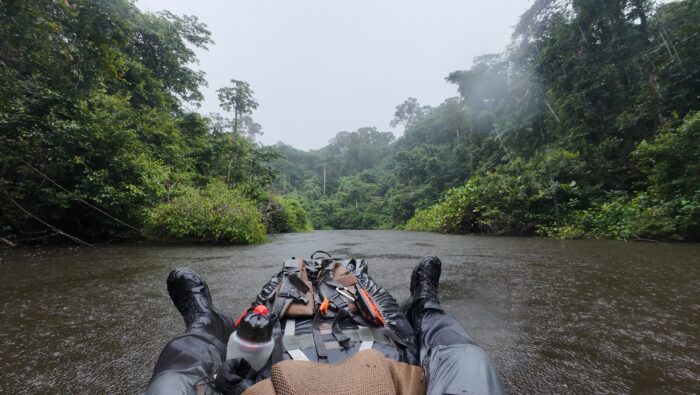
Photo: Loic Cappellin
He stopped to make a full repair and waited 24 hours for the glue to cure.
“It was a forced pause, but also an opportunity to rest my ankle. That day was peaceful and reminded me that the forest is not as hostile as it is often portrayed.”
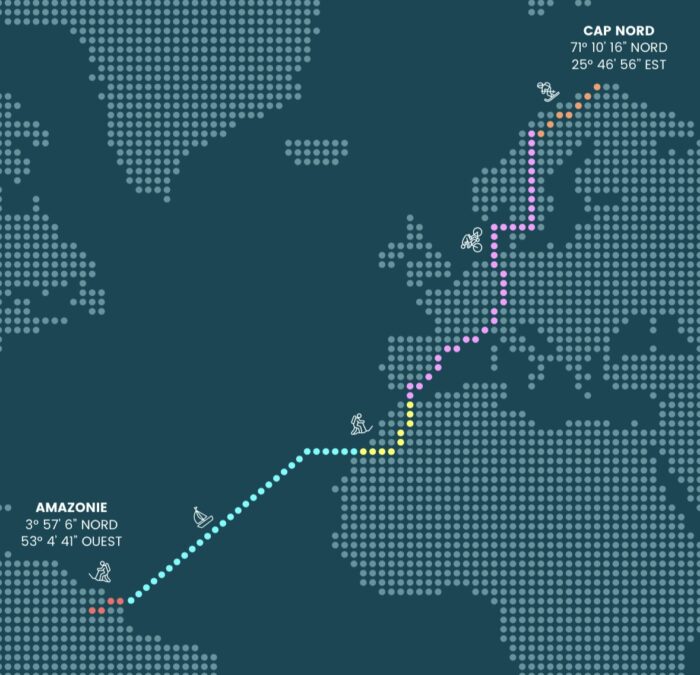
Capelin’s overall route. Image: Loic Cappelin
Pushing on to the end
After resuming, the Swiss adventurer portaged around more than 10 rapids in succession, some marked on his map, others not. Each required leaving the river and moving through the forest on his still-sensitive ankle.
“The repair seemed solid, thankfully, because what followed felt more like canyoning than packrafting,” he said.
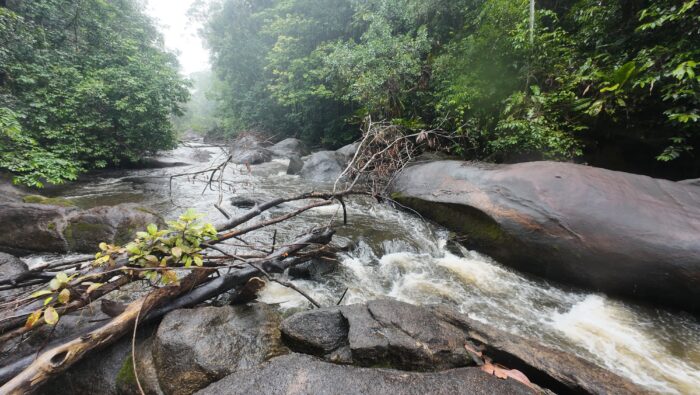
Photo: Loic Cappellin
Cappellin later reached the wider Approuague River, where progress increased significantly. After covering around 12km per day on Crique Couy, he managed 45km one day and 57 km the next on the Approuague.
Two and a half days after leaving Crique Couy, on February 12, he passed a final Foreign Legion checkpoint and completed the last kilometers upstream to the large commune of Regina, where he ended his Arctic-to-Amazon journey.
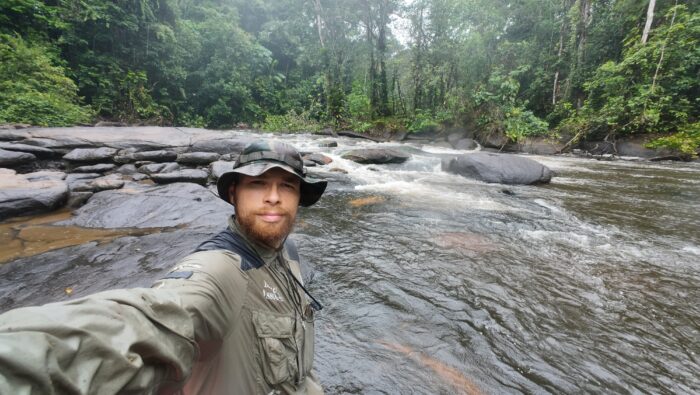
Photo: Loic Cappellin
“It’s a strange feeling how quickly events unfolded in the end,” Cappellin said. “But I’m grateful — everything could have turned differently, and I’m glad it all ended well.”