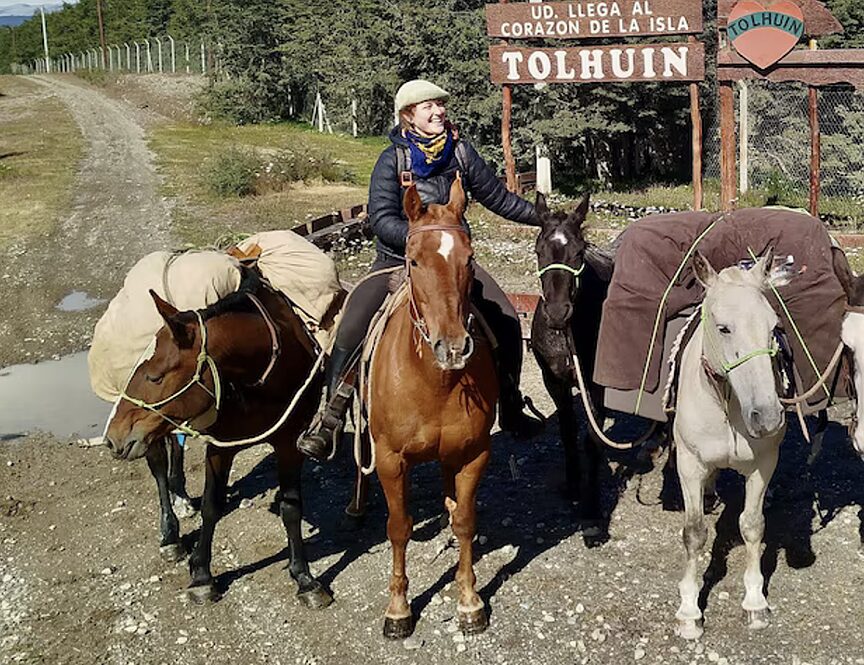
Canadian Olivia Cazes, 30, is a year into a mammoth horseback journey from Ushuaia, in southern Argentina, to Prudhoe Bay, Alaska, following the length of the Pan-American Highway. The journey began in February 2025 with Australian rider Ben Hann. The two met while working on a ranch in Alberta, Canada.
Hann had to leave the journey last October due to a health issue. Cazes then returned to Canada to upgrade her equipment and then headed back to Argentina this past January to pick up where she left off.
Balancing the expedition with her studies, Cazes is somehow completing a master’s thesis while on the road. As of early April, she has traveled around 2,850km, maintaining a daily pace of 20 to 25km. Cazes estimates the journey could take another five years.
The Pan-American Highway
Cazes is following the Pan-American Highway, a network of roads stretching 30,000km from Argentina to Alaska. The roads pass through multiple countries and a wide range of environments, from Patagonian plains and the Andes to tropical regions and, eventually, the Arctic. Most of her videos show her on a dirt track, presumably paralleling the paved highway.
Progress is dictated by the needs of the horses, terrain, and access to water and grazing. It’s important to break the route into manageable stages between settlements. The highway is not entirely continuous, with the Darien Gap in Central America forming a roadless section that will presumably require a detour.
Cazes will also have to contend with border and customs processes, not just for herself, but for the horses she is traveling with. “The horses couldn’t set foot in Chile because they are Argentinian, and importation wasn’t an option. We needed to either transport them in a trailer or swap them for Chilean horses for about 200km,” Cazes said in an interview last year.
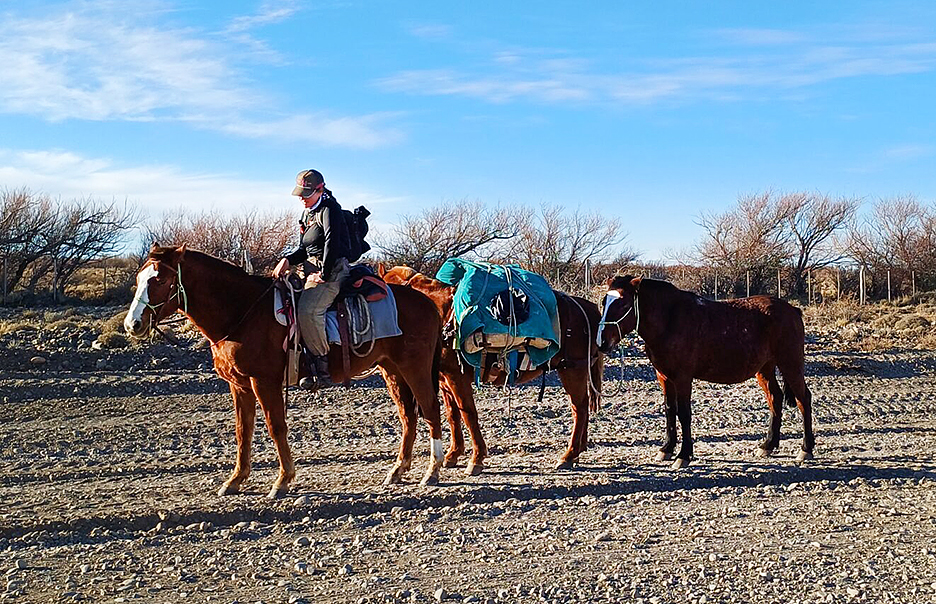
Cazes with her horses in June 2025. Photo: Olivia Cazes
“We found a trailer, got it certified by SENASA (the office responsible for food and agricultural matters in Argentina), and then a vet vaccinated the horses and issued each of them a “sanitary booklet” — their own little passport, stamped by SENASA. After a few days of paperwork with customs and border control to inform both countries about our upcoming trip, we were ready to go,” she added.
Life on horseback
The pace of travel is set by the condition and needs of the horses. She begins each day with routine checks for injuries or sores, followed by packing equipment and rationing food and water. Carrying capacity is limited, so feed for the horses comes first, and Cazes chose her supplies for their light weight.
Once on the move, she spends a long day riding, while looking ahead for the next reliable water source or suitable place to camp.
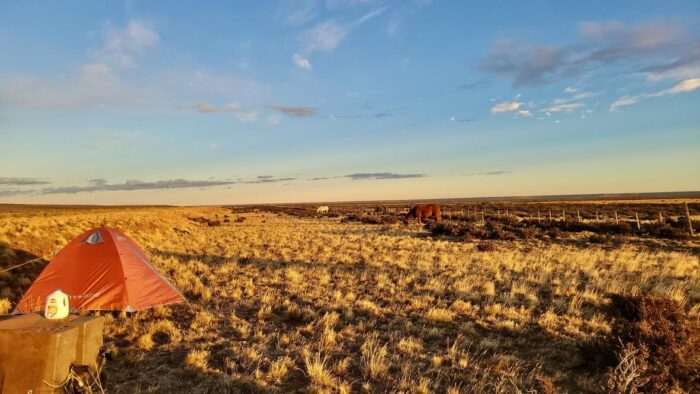
Photo: Olivia Cazes
“We try to prioritize the immediate needs of the horses while keeping the bigger picture of the trip in mind,” Cazes said in an interview last year. “We now break down the organization into small ‘steps’ between cities and villages.
“These steps can be as short as 100km or as long as 300km, depending on where we are. We have a general idea of the itinerary and study maps for access points, water sources, food, and ideal camping spots.”
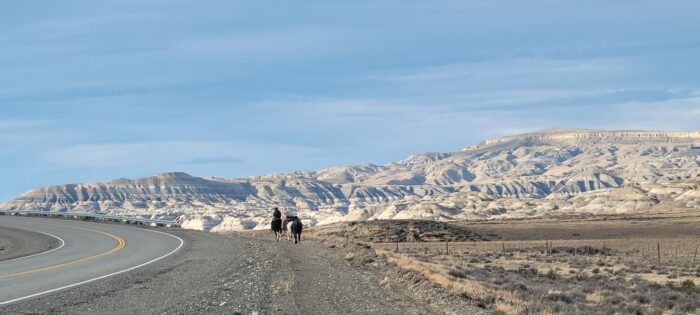
Photo: Olivia Cazes
A journey of stages
Cavez does not update regularly on social media, but on March 14, she reported from a mountain region in southern Argentina. From there, she aimed to reach the city of Neuquén, 400km away in western Argentina.
Her journey north won’t be unbroken. Cazes is funding the expedition herself and plans to pause at times to work. After leaving Patagonia this year, she plans to spend part of the northern summer in Kyrgyzstan working as a horseback guide, leading trips to visit nomadic communities, before returning to South America to continue her long journey north.
According to the Long Riders’ Guild, very few riders have covered the entire route on horseback. Those who have done so include Filipe Masetti Leite, who completed the journey in 2020 after eight years, as well as Louis Bruhnke and Vladimir Fissenko, who rode it together over five years, finishing in 1993.