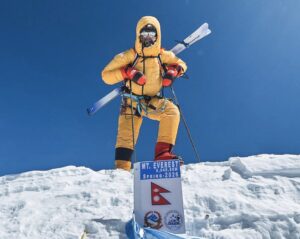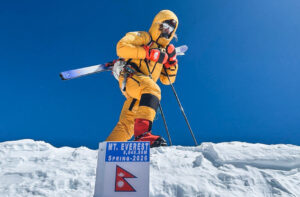
A phone conversation with Bartek Ziemski the morning after he climbed without oxygen or ropes to the top of the fourth-highest peak on Earth, followed by a complete ski descent, went more or less like this:
Interviewer: Hey, thank you for taking the time to talk. You must be so tired!
Ziemski: Nah, it was easy! I skied down, you know.
Interviewer: Well, yeah…but you skied from the top of Lhotse without O2...
Ziemski: Exactly, it was all downhill 🙂
No tracks, good skiing
The 31-year-old Polish skier explained he had planned to climb Lhotse before anyone else this season, to have the snow conditions he needed for a safe ski descent.
“Originally, the plan was to go right after the Sherpas fixed the ropes but before any other climber, but the logistics on the mountain worked differently,” he said. “Obviously, the focus was on Everest, and the Sherpas didn’t want to fix the ropes on Lhotse at the same time. [That] would have taken more manpower, and no one wanted to provide it.
“But overall, I think it was actually a good outcome, because the final couloir before the summit was quite narrow. If it had had ropes and a trail, it would have been quite tricky to ski down.”
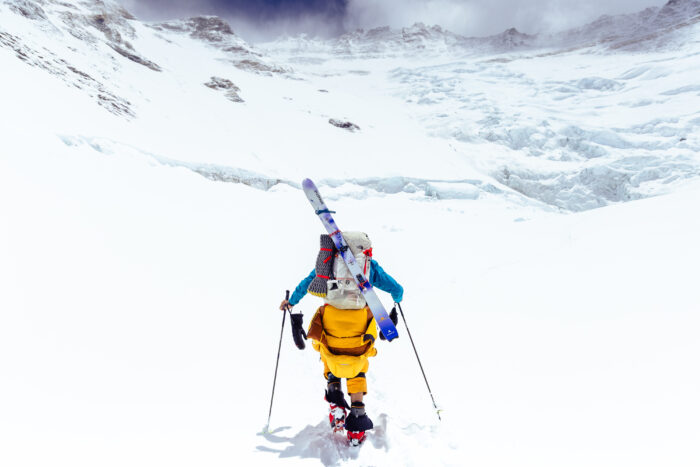
Bartek Ziemski on his way to Camp 3 during the summit push. Photo: Jan Polacec
So Ziemski became the first to summit Lhotse this season and did the upper section self-supported. When the time came for a summit attempt, he climbed to Camp 3 and stopped there for the night. The following morning, he moved his tent and gear to Camp 4. Then, after a brief rest, he set off toward the summit at around 1 am. The route from that point is different from Everest (see the photo below) and had been untouched since last year.
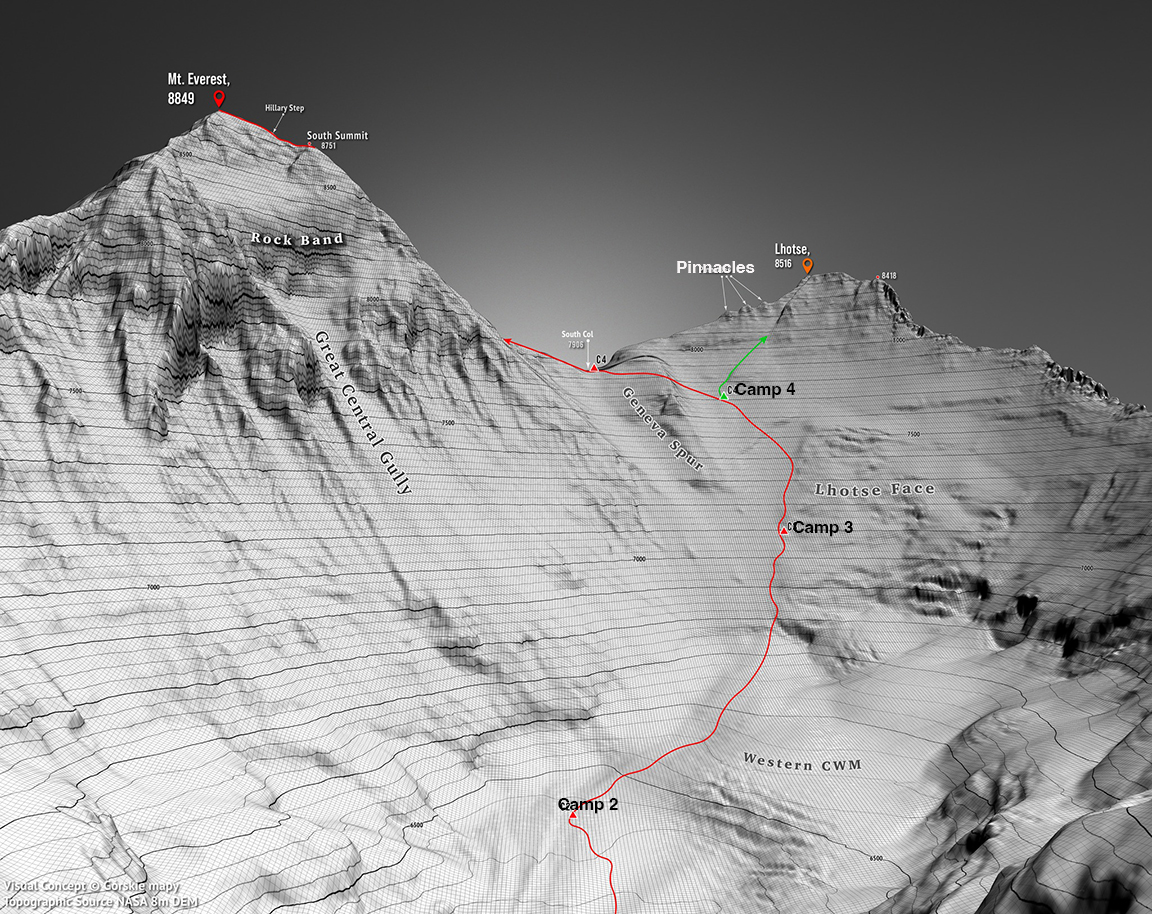
Normal routes on Everest and Lhotse by Gorskie Mapy
Navigating in the dark on the way to the summit ridge was not a problem. “The normal routes on the 8,000’ers are all tracked,” he explained. “I always get the GPX files and follow them.”
Ziemski’s description of weather and snow conditions was, as usual, understated. “The uphill was not too bad,” he recalled. “Half of it was hard snow, which is nice to walk on, and no ice. The second half required a bit of trail-breaking, but was not too bad either.”
Never alone on the Everest massif
Unlike on previous expeditions, when Oswaldo Pereira filmed Ziemski’s ascents and descents, this time he was completely on his own in both directions between Camp 4 and the summit of Lhotse. Yet Ziemski feels that the sense of adventure was still incomplete.
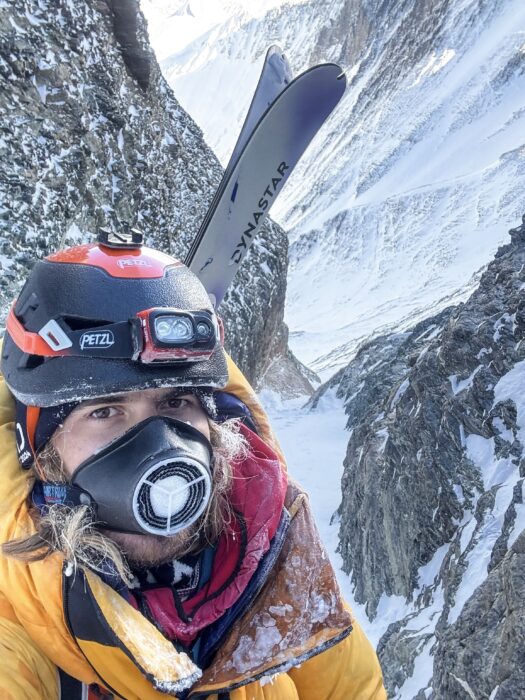
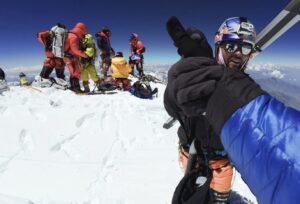
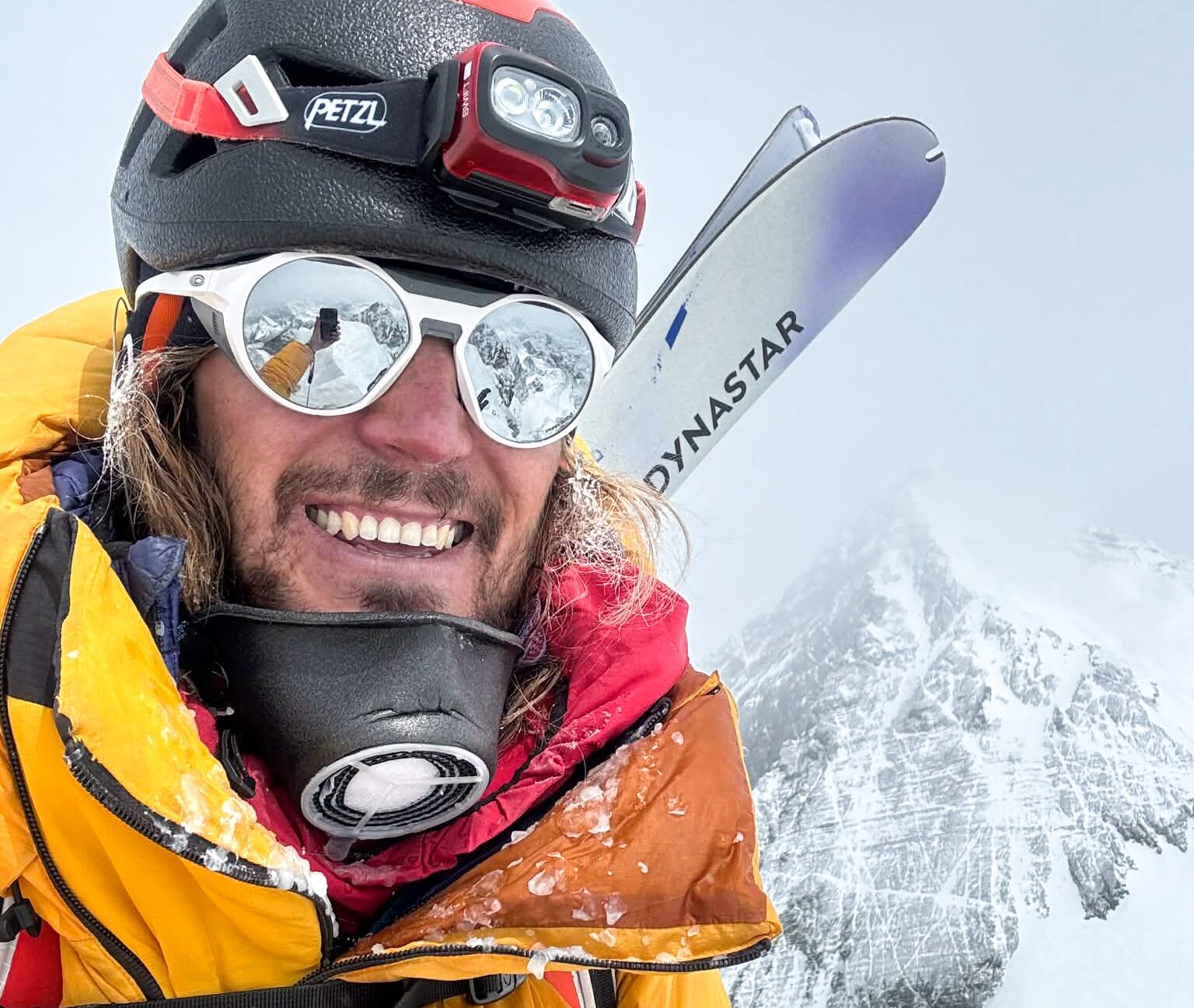
Bartek Ziemski takes a selfie while in the Lhotse couloir on his way to the summit. Photo: Bartek Ziemski
“I was on my own on the upper part, yes, but in fact, you can never say you’re alone on Everest, least of all in the peak season,” he argued. “There were, like, hundreds, or ok, maybe not hundreds, but a lot of Sherpas following the normal route to the South Col, supplying stuff for commercial clients. I could see their headlamps.”
Pure climbing experience missing
“I missed the pure climbing experience I had, for instance, on Kangchenjunga with Oswaldo Pereira, or on Gasherbrum II, where I was literally alone on the mountain,” Ziemski explained. “You don’t feel the remoteness of a lonely Himalayan peak. In a sense, it destroys the experience. But it is what it is, and otherwise I was fine, and at least, there were no ropes. I hate ropes when I’m skiing.”
The summit experience lasted just a few minutes.
“It was 12:14 pm when I took the first picture, but I didn’t stop long; I don’t enjoy being on a summit (although I do enjoy looking back at the entire experience). I just changed to skis and left,” he said.
Down to Camp 2
“The first meters were on snow, but soon I encountered a short section that, contrary to what I expected, was bare rock,” Ziemski recalled. “However, it was easy terrain, so I just downclimbed it with the skis on, without unclipping the bindings or using a rope. Then the couloir was covered in snow.”
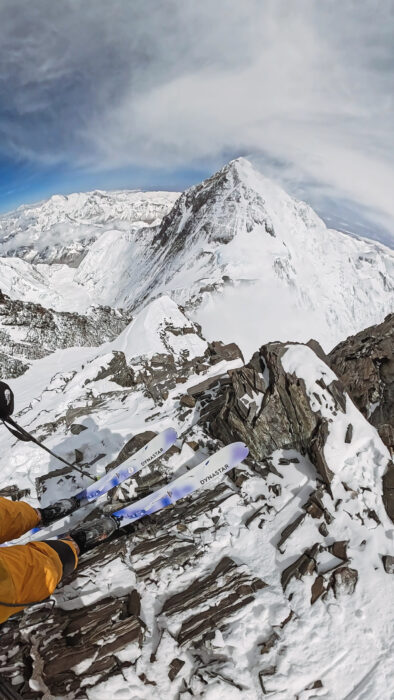
The five-meter section on rock near the summit of Lhotse. Photo: Bartek Ziemski
Ziemski had previously checked the state of the Lhotse couloir with a friend’s drone. At the time, it was not completely snow-covered. “Luckily, we had quite heavy snowfalls in recent days, and it filled up,” he said. Still, the snow patch was quite narrow as the images show.
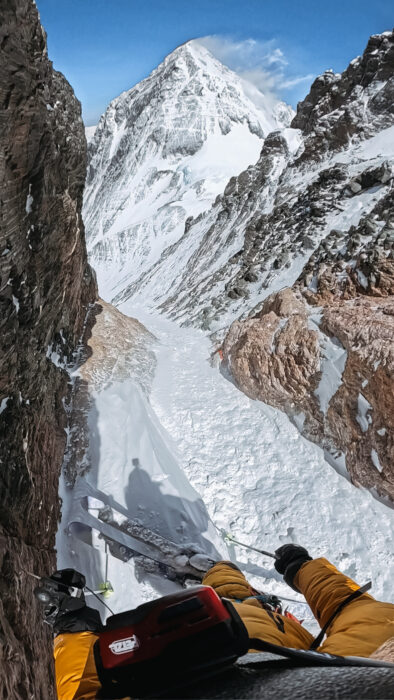
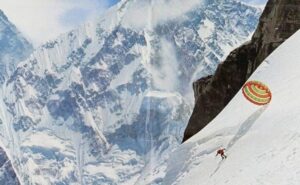
Ziemski threads his way down the Lhotse couloir. Photo: Bartek Ziemski
Otherwise, Ziemski had good overall snow conditions — mostly hard snow, with no ice and no significant avalanche risk on the Lhotse Face.
The skier stopped at each camp to retrieve his gear and carry everything back down. “I barely stopped until I reached Camp 2, where I took a longer break, because it was so hot,” he said. “I didn’t dare to venture into the Icefall in such high temperatures.”
Icefall in whiteout
Less than two hours later, however, the weather changed radically: “A whiteout suddenly wrapped the place in crazy thick fog, and it immediately got super cold, so I waited another, I don’t know, 45 minutes in this whiteout and then I resumed the descent,” Ziemski recalls.
It was not too late when he resumed skiing, and so he completed the descent in daylight. However, there was nothing to see in the whiteout.
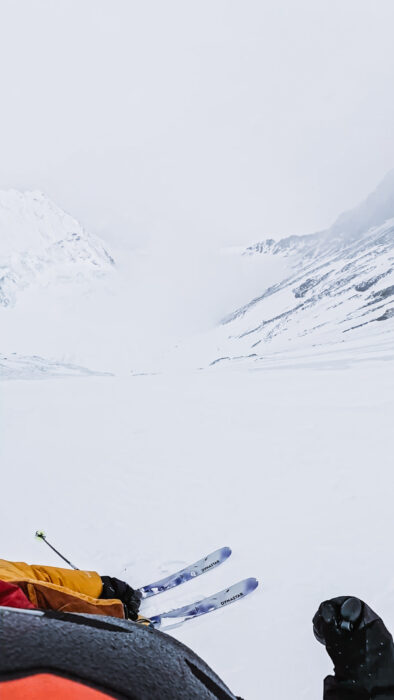
Skiing down the Lhotse Face in poor visibility. He shot this photo during an acclimatization round, before the final push, when conditions were similar. Photo: Bartek Ziemski
How did he manage to find a ski route across the Khumbu Icefall in such poor visibility? Did he just follow the ropes on the way down, or have someone with a drone guide him, as Andrzej Bargiel did some months ago on his own Everest ski descent?
It turned out Ziemski’s strategy was just old-fashioned exploration. “I know the Icefall very well, after the many, many hours I spent there this season,” he said. “I had skied there a few times already, so I knew my ski line and its location very well.”
Alternative ski route
Ziemski told ExplorersWeb that he had ventured up and down the Icefall alone several times since reaching Base Camp. No wonder Ziemski was so keen to help find an alternative route to Camp 1 with a group of Nepalese climbers when an unstable serac stopped the Icefall Doctors.
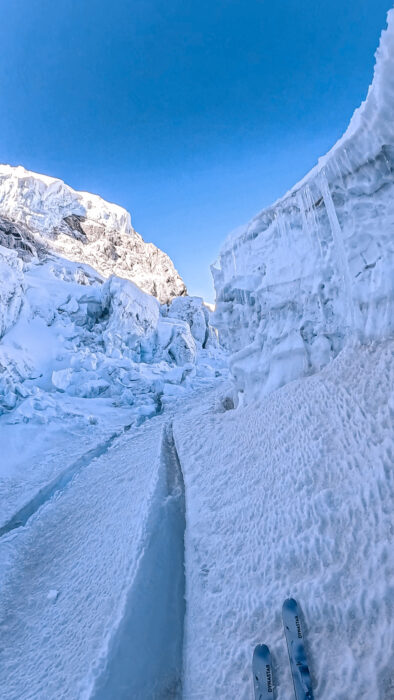
Skiing the Khumbu Icefall during a previous scouting trip. Photo: Bartek Ziemski
“I had also skied in the fog already, so the lack of visibility was fine for me,” he added.
For half its length, Ziemski’s ski line through the Icefall followed a different path than the climbers and porters who use it every day.
“The upper part of it, looking from the top, is similar to the trail for climbers on foot, with some [detours] to avoid ladders,” Ziemski said. “On the bottom half, however, I followed a completely different route and skied a series of snowfields right below the rocky wall on the right side of the Icefall.”
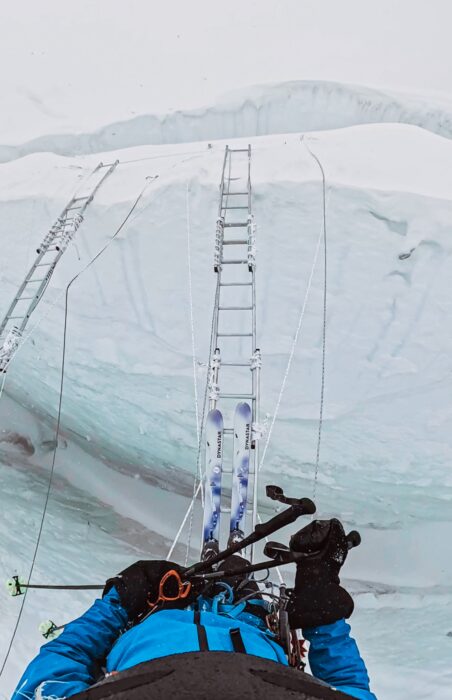
Ziemski couldn’t avoid every ladder in the Khumbu Icefall. Photo: Bartek Ziemski
Everest next?
Considering that Sherpas opened the route to the summit of Everest yesterday, we had to ask Ziemski if he had considered skiing Everest too.
“I have a permit for Everest, but I’m still not sure what I will do because it’s so crowded,” he replied. “The season is shorter than expected, so we’ll see. If I can somehow make a good plan for it, then I might try.”
The only complete ski descent of Everest without oxygen has been done by fellow Pole Andrzej Bargiel in the fall of 2025. Bargiel’s was an impressive feat, but he had a large support team both up and down the mountain, and the help of drones to find a way across the Khumbu Icefall.
As for Lhotse, Jim Morrison and Hilaree Nelson of the U.S. skied from the summit in 2018 but stopped at Camp 2, skipping the Icefall. They also used supplementary oxygen. Ziemski has completed the first-ever ski descent of Lhotse without bottled oxygen.