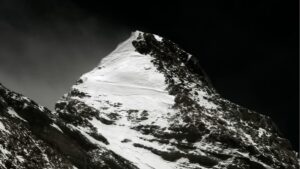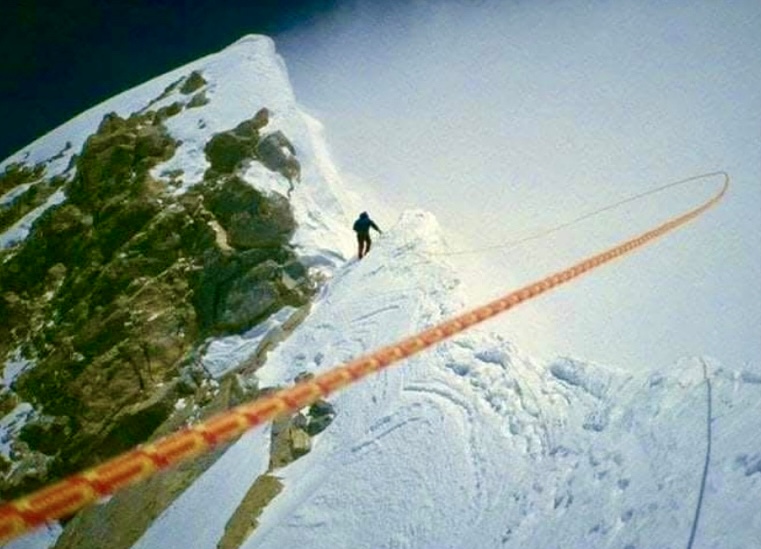
Thirty years ago, on the night of May 10-11, 1996, a big storm on Everest trapped dozens of climbers above 8,000m, leaving eight dead in less than 24 hours. The season ended with 12 fatalities. While it wasn’t the deadliest year in Everest’s mountaineering history, it was a turning point for the commercial expedition industry.
Three decades later, the question remains whether the industry has truly improved safety or if it has simply built the infrastructure to allow more people to face the same risks. Much has been written about this event, but to understand how things got to that point, we have to look back.
The commercial era on Everest didn’t start in 1996, but it definitely matured then. It really began in the mid-1980s after Dick Bass, a 55-year-old businessman from Texas who was not a serious climber, reached the summit in 1985. In the early 1990s, guides like Rob Hall and Gary Ball started Adventure Consultants. They professionalized the service. That meant that the client just had to be in shape and pay, while the company handled all the logistics. By 1996, competition between companies was really high, and the pressure to succeed was already affecting people’s judgment.
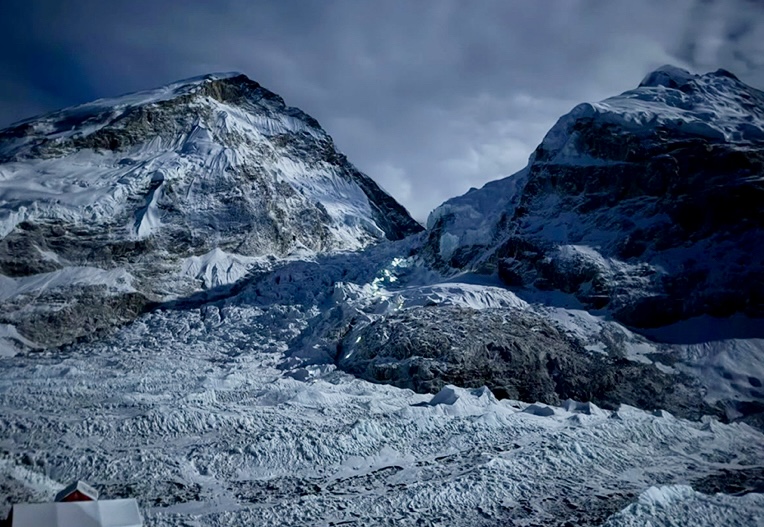
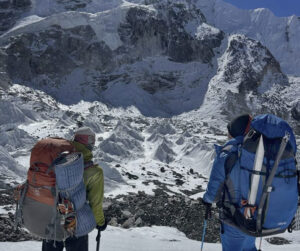
Climbers head past the Khumbu Icefall toward Camps 1 and 2. Photo: Chhang Dawa Sherpa
The affected teams
That May, most groups chose the South Col-Southeast Ridge route on the Nepalese side of Everest. Among them were Adventure Consultants, led by New Zealander Rob Hall; Mountain Madness, led by American Scott Fischer; and a Taiwanese national expedition led by Gau Ming-Ho. On Hall’s team, the guides were Mike Groom and Andy Harris, and one of the clients was U.S. journalist Jon Krakauer. In Fischer’s group, the guides were renowned climber Anatoli Boukreev, and Neal Beidleman.
Despite all this talent, the lack of coordination between the teams would be a problem.
Summit fever
The mix of elite guides and clients with different levels of experience created a difficult situation. That day, simple issues like not fixing ropes on time at the Balcony and the Hillary Step caused a chain reaction of delays. Climbers bunched up, waiting their turn as their oxygen ran low. Everyone was supposed to turn around by 2 pm to return to the high camp before dark, but many ignored this rule. After spending so much money and being so close to the top, summit fever set in, and common sense was ignored.
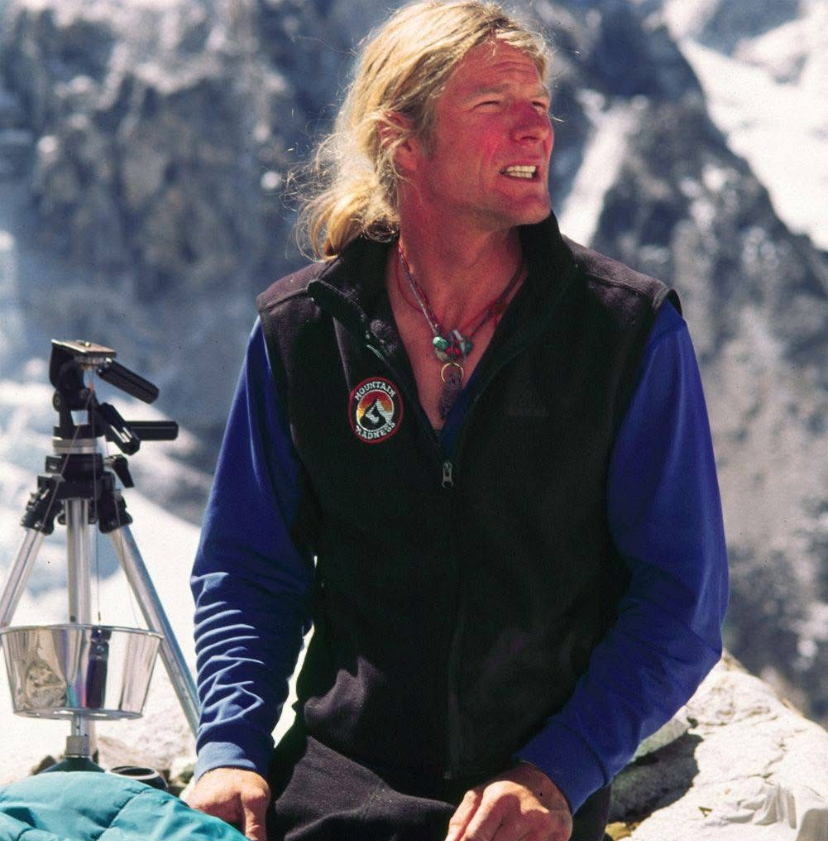
Scott Fischer. Photo: Scott Fischer archives
The storm
The weather had been unusually stable during the morning, but it started to change shortly after noon. By 3 pm, clouds began to cover the upper slopes of Everest. However, the real storm didn’t hit until 5 pm. What started as light snow quickly turned into a total whiteout with hurricane-force winds of over 100kph. Temperatures dropped instantly. At that point, many climbers were still on the summit or moving slowly above the Hillary Step. Visibility vanished, burying the fixed ropes and erasing the path back to Camp 4. The wind was so loud that people couldn’t hear their teammates shouting from just a few meters away.
As the storm hit, there were climbers all over the upper part of the mountain. On the South Col, a group of 11 people became lost in the whiteout. They were only 300m from Camp 4 (high camp), but they couldn’t find the tents in the wind and zero visibility. Most were eventually rescued by Boukreev (who didn’t use supplemental oxygen), but Yasuko Namba died of exhaustion and cold just outside the camp.
Higher up, the situation was even worse. Guide Harris disappeared while trying to bring oxygen to those trapped near the summit. Doug Hansen, a client on Hall’s team, also died during the night while descending. Fischer, the leader of Mountain Madness, collapsed from exhaustion and altitude sickness (his body was found later by other climbers). Hall, trapped near the summit, knew he couldn’t get down and that rescuers couldn’t reach him. He spent his final minutes talking through his radio to his wife, who was pregnant in New Zealand.
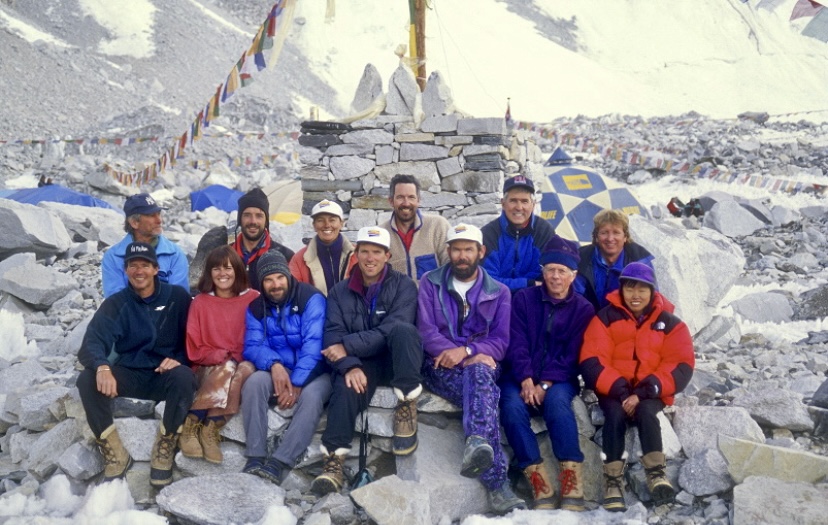
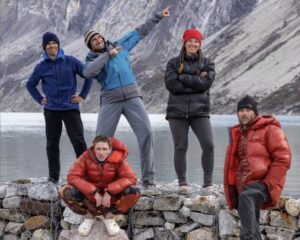
The Adventure Consultants team in 1996. Photo: Adventure Consultants
Tragedy also hit the North Side
While the drama unfolded on the Nepalese side of Everest, the storm was just as bad on the Tibetan side. An Indian Indo-Tibetan Border Police expedition led by Mohinder Singh on the North Col–Northeast Ridge route was caught by the storm on the ridge during their summit attempt. Three climbers (Tsewang Smanla, Dorje Morup, and Tsewang Paljor) reported reaching the summit in zero visibility, though it’s believed they stopped short. On the way down, the darkness and the blizzard trapped them, and the three died while trying to descend.
Unlike the South Side, where there were desperate rescue attempts, the story on the North Side was much colder and lonelier. There were no major media reports for them at the time.
Controversies
On both sides of the 1996 Everest disaster, the incident sparked lasting controversies.
Back then, there were no GoPros on helmets, no drones, and satellite phones had no reliable internet access. The reconstruction of what happened was based on the memories of survivors who were exhausted and suffering from hypoxia. This led to books that contradicted each other. Krakauer wrote one version, and Boukreev wrote another. Because there was no real visual record (no “black box” of what happened in the Death Zone) the truth largely became a matter of who wrote better.
The lack of high-altitude cameramen to capture the raw reality allowed the story to break into different versions and debates that lasted for decades. In his book Into Thin Air, Krakauer criticized Boukreev for summiting early without supplemental oxygen and descending alone to Camp 4 while clients were still high or caught in the blizzard. Krakauer called it poor guiding that left less experienced climbers vulnerable.
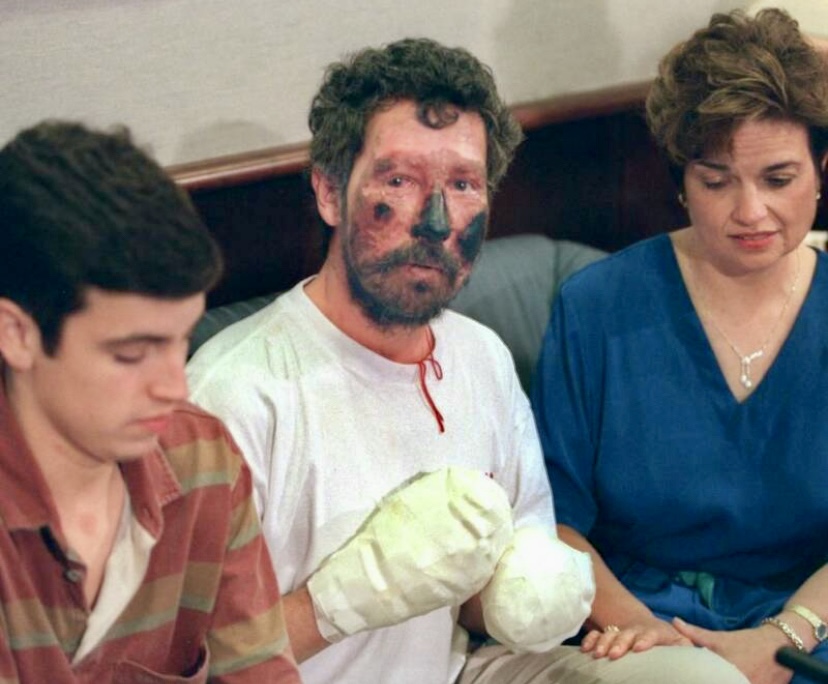
One of the survivors, Beck Weathers, with severe frostbite. Photo: allthatsinteresting
Boukreev responds
Boukreev responded in The Climb that his descent was pre-approved by Fischer to conserve energy for rescues. He later made three solo trips into the storm, saving several lives, and defended climbing without oxygen as his proven method. Krakauer praised the rescues as heroic but argued Boukreev’s style was better suited to elite climbing than commercial guiding. Survivor views were mixed. Rescued clients strongly supported Boukreev’s bravery, while fellow guides like Beidleman questioned his oxygen choice and team support.
While Boukreev risked his life on the South Side, the situation on the North Side was different. On May 11, 1996, a Japanese team climbing toward the summit passed the Indian climbers, who were still alive but suffering from severe frostbite. The Japanese decided not to stop and continued to the summit. This act started one of the biggest ethical debates in Everest’s history: Is reaching the summit worth more than a human life? One of the fallen climbers, Paljor, became known as Green Boots. For decades, his body remained on the route as a landmark.
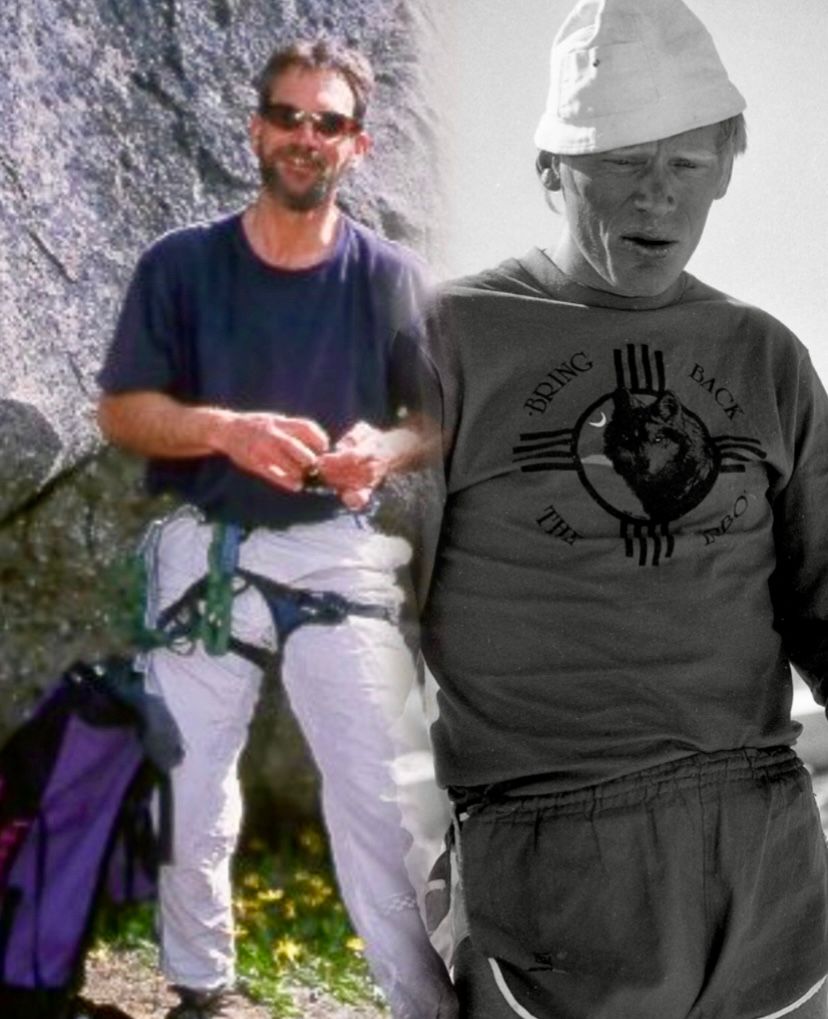
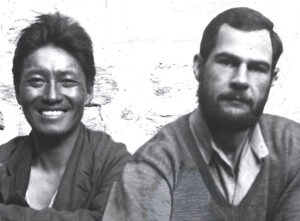
Jon Krakauer, left, and Anatoli Boukreev. Photos: Jerry Kobalenko; Wikipedia
Thirty years later
Since 1996, the role of Sherpas has changed completely. Back then, they were mostly seen as porters, but today they are responsible for everyone’s safety on the mountain. Without their work fixing ropes and carrying hundreds of oxygen bottles, commercial climbing on Everest simply wouldn’t exist. This shift has put a huge amount of pressure on them. They take the risk of crossing the Khumbu Icefall dozens of times per season, so the client only has to do it twice.
In 2014, an avalanche in this area killed 16 Sherpas. This year, we have seen again how unstable ice blocks can threaten to stop the entire season. Technology can’t stop a thousand-ton serac that decides to fall just as a group of humans is passing through. Crossing the Icefall is still an act of blind faith, and the mountain can kill you before you even start the real climb.
Risk persists
Today, fixed ropes form a continuous line from Camp 4 to the summit. Oxygen is managed like an industrial system, and weather forecasts can predict wind changes down to the minute. However, this extra safety has created a new problem. In 1996, 30 people trying for the summit on the same day caused a disaster, while today, we see 300 people lined up on the ridge. We have moved from adventure to mass logistics. Success depends less on the climber and more on the system supporting them. The modern client isn’t just buying a mountain experience; they’re also buying risk management and summit access. However, the risk is still there.
The 2023 season had 18 deaths, the highest number on record. The problem wasn’t a storm, but a lack of experience and management failures. Low-cost agencies took clients who were not physically or technically prepared. With over 400 permits issued per season, it is impossible to supervise everyone. Everest is so crowded now that agencies can’t always guarantee an experienced guide for every client during critical moments. Quantity has replaced quality.
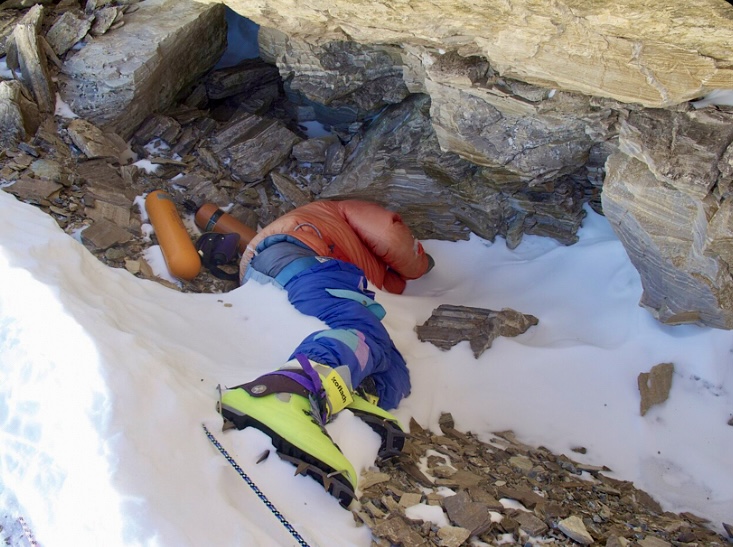
The remains of Tsewang Paljor, who became known as Green Boots. Photo: Wikipedia
The shift in accountability
Another major change is how we treat these tragedies. In 1996, every life lost led to a deep analysis of what went wrong. Today, deaths often feel like an operating cost. A brief report is published on a specialized website, and the world moves on within a week. Tragedy has been normalized, and seeing photos of climbers passing by a body has become a common sight on social media. We have turned victims into statistics, often ignoring the families waiting for them at home. There is less interest in investigating failures and more focus on the next successful season and breaking permit records.
The media myth
Even though Everest has seen much deadlier years (like the 2015 earthquake or the 2023 season), the 1996 disaster still receives the most attention. It was the first time a tragedy was reported almost in real-time through early blogs and radio dispatches, and the books and movie that followed turned it into a part of popular culture. Ironically, this media coverage didn’t slow down the crowds; it only fueled the myth. The 1996 season made Everest more famous, but not necessarily more respected.
Thirty years after Rob Hall’s last radio call, the wind on the South Col remains the same. The summit is still only the halfway point, a reality that the 1996 fatalities proved at a very high price. Everest has not been tamed; it has simply been built up with more infrastructure. It’s easy to forget that every step in the Death Zone is still a solitary act.
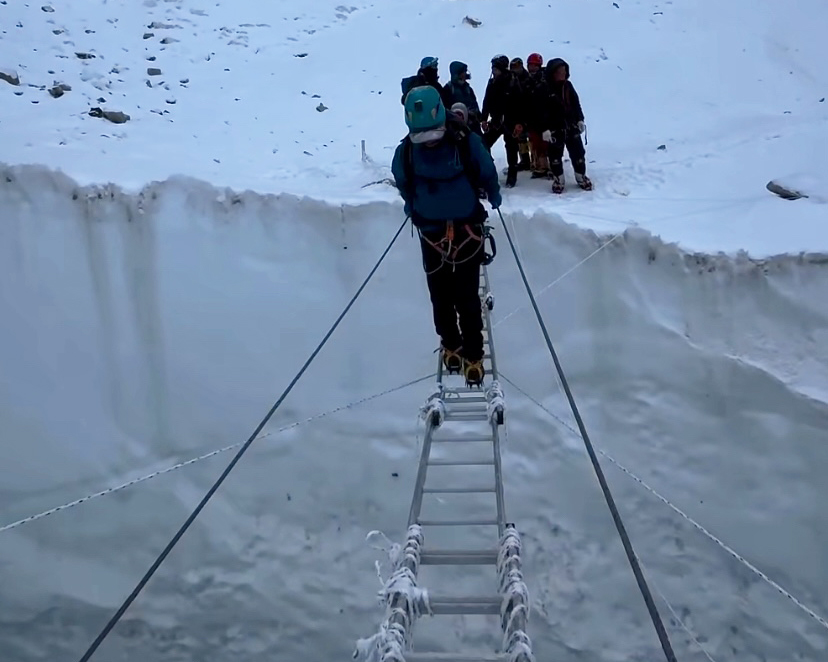
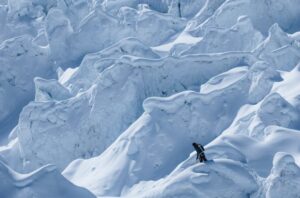
Crossing a crevasse in the Khumbu Icefall a few days ago. Frame of a video by Furte Sherpa