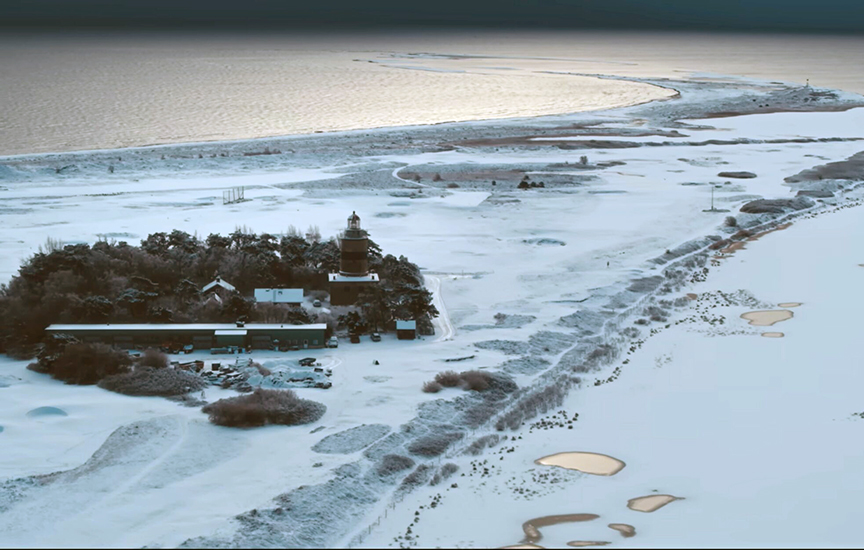
The Last Observers named in this documentary title are a married couple in Sweden, lighthouse keepers and lone holdouts against the tide of automation. For decades, Karin and Lennart Mikkelsen have dutifully recorded the weather, conducted field research, and maintained the station.
The sheer quantity of data they’ve painstakingly gathered is staggering. Karin runs us through a list: temperature, air pressure, visibility, wave height, wind direction and speed, and the height, type, and distribution of clouds.
Over her career, she estimates that she has taken over 100,000 weather observations. One of them, she later reveals, was conducted while she was in active labor with one of their four children, but she insisted on completing their duties before heading to the hospital. In fact, that very child, Maja Mikkelsen, now an adult, is the film’s director.
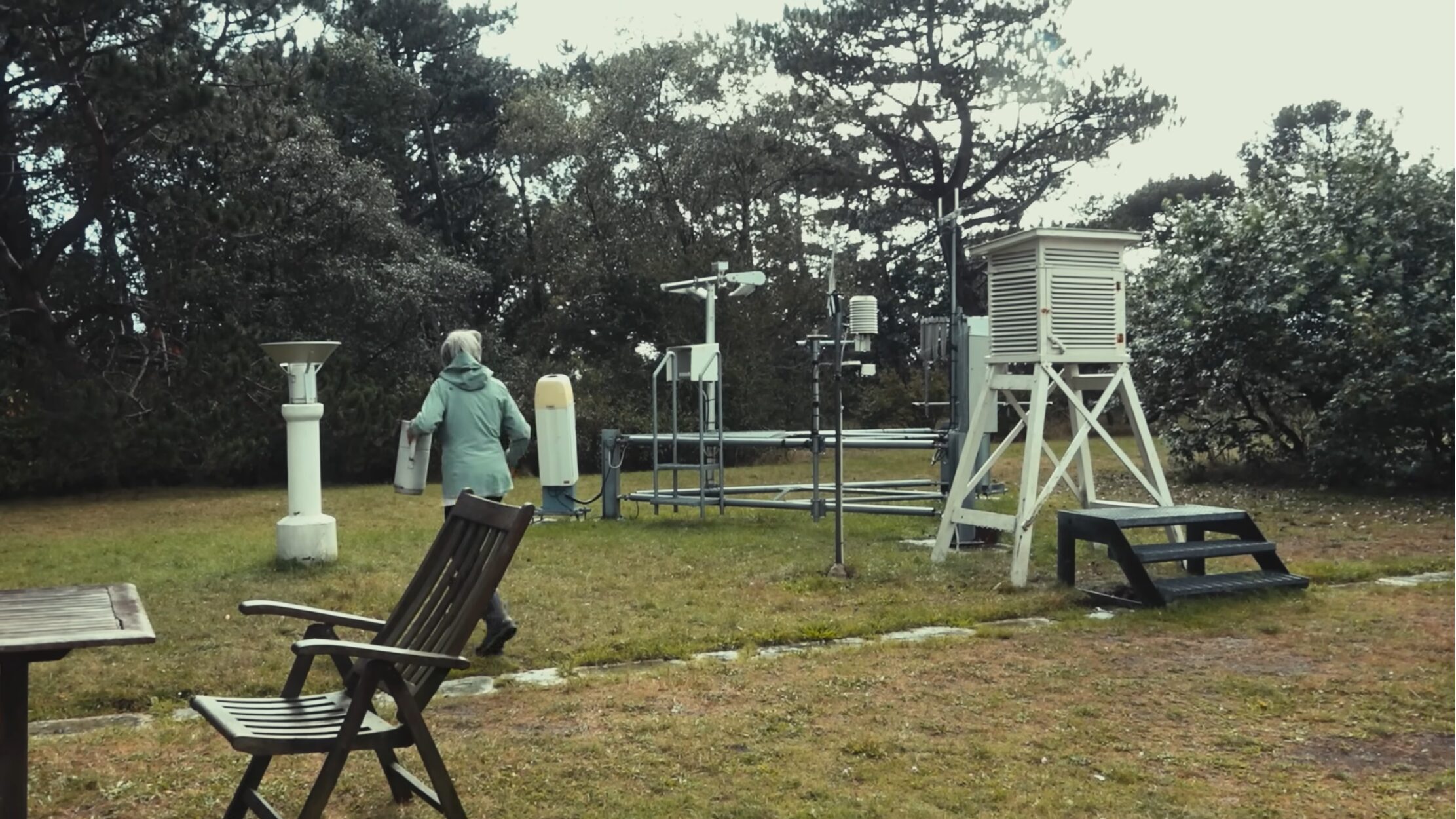
Karin conducts an observation as wet clumps of snow fall around the station. Photo: Screenshot
The final manned station
It used to be, if not exactly common, at least not unique. Theirs was one of 250 manual weather stations in Sweden when they first started. Some are still running as automatic stations, but this is the only one which is still manned.
Karin, for her part, seems satisfied, even as automation approaches. “Our pay has been lousy, but we’ve had an amazing life.”
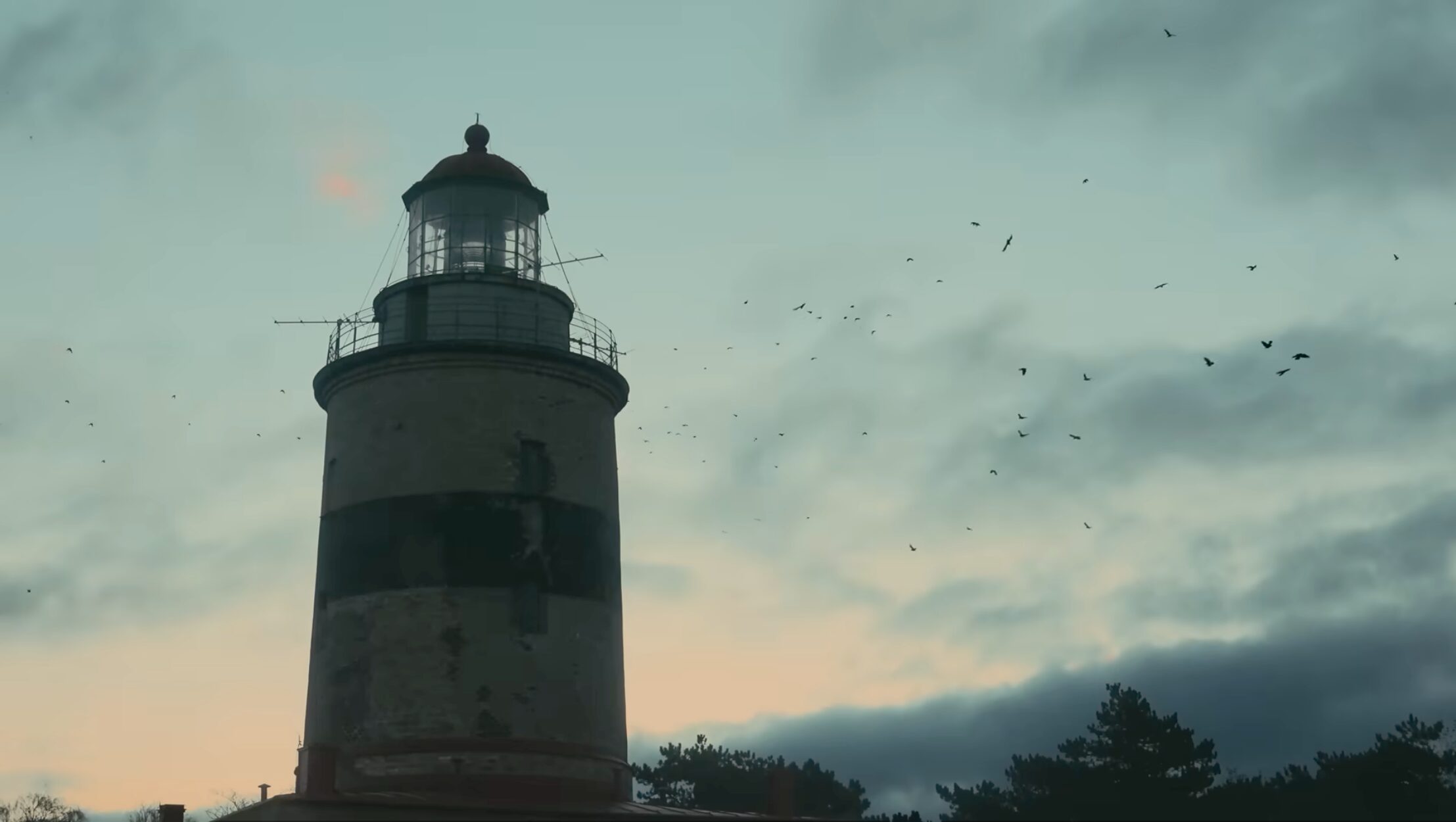
“We really can’t complain,” Karin says, as dawn emerges from behind the lighthouse. Photo: Screenshot
The rhythm of the seasons plays out through the camera. We see them go out in snow, in slush, in whipping wind, and in summer greenery.
Lennart introduces us to the various birds that they still catch and ring for environmental data. The furious blue tits, patient siskins, and his favorite, the boreal owls. They’re frequently shot as pests, he says mournfully, by people who don’t take the time to understand the important role they play. If there is a parallel to be drawn here, he gracefully does not comment.
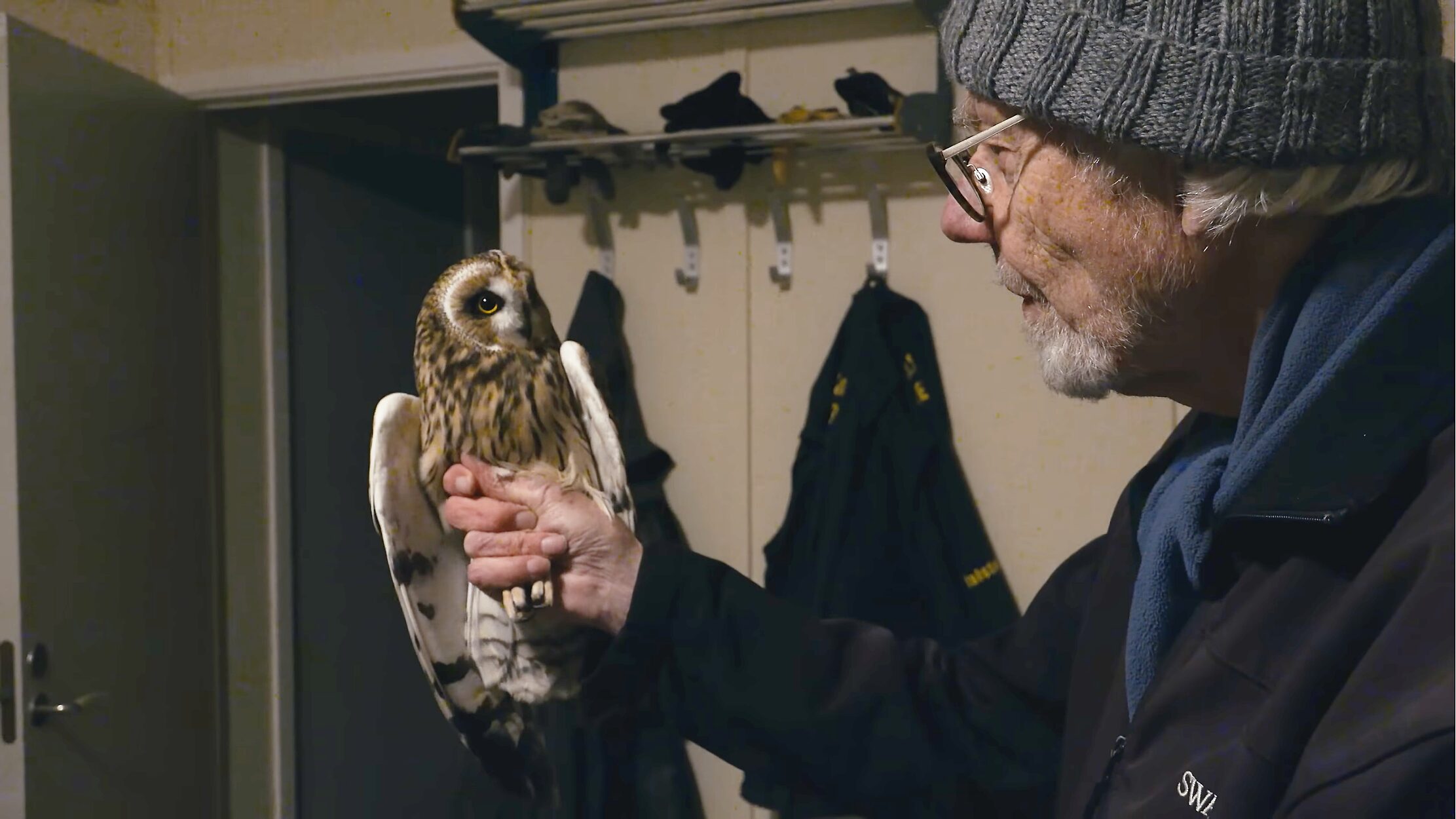
Lennart holding an offended-looking boreal owl, which he will ring, record and release. Photo: Screenshot
When the pair discusses the oncoming change, they aren’t only speaking about the end of their own professions. The migratory birds, their records show, are arriving earlier in spring. The temperatures are different, the clouds are different, there are more droughts and more floods. As their work comes to an end, the data they’ve been gathering is becoming increasingly important for understanding our rapidly changing climate.
“We’ve had a damn good life,” the pair agree, embracing. On September 30, 2023, with the sky still dark, Karin goes out and takes their last observation.