A storm caught a group of seven climbers from Bosnia as they descended from the summit of 5,642m Mt. Elbrus in Russia. Five of them have died.
The group summited Elbrus, Europe’s highest peak and one of the Seven Summits, on the morning of Saturday, July 25, in good weather. However, conditions quickly worsened in the afternoon. Apparently, the team strayed from the route and got lost in the whiteout.

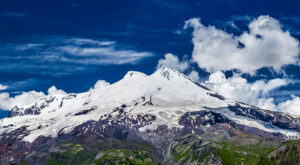
Elbrus’ twin summits as seen from the high huts in September 2021. Photo: Madison Mountaineering
A spokesperson for the climbers’ mountain club told ExplorersWeb that only the expedition leader, Haris Adilovic, was able to get down and ask for help. Adilovic told the rescuers that two members of the group had fallen ill above 5,000m and perished, according to an official report by the local prosecutor.
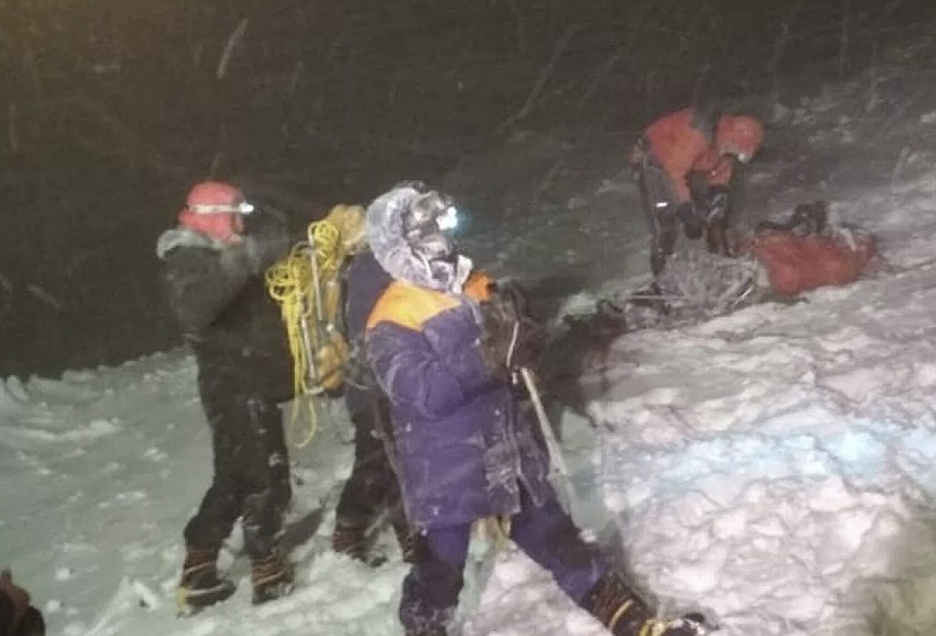
Rescuers were dispatched to the upper sections of Elbrus in the blizzard. High winds, low visibility, and snow squalls hampered the search. Another member of the team, Kemal Vidimlic, went down as far as his strength allowed before stopping, exhausted. His efforts paid off: He went down enough to be found alive and rescued by searchers.
See a video on the rescue here:
Bodies found
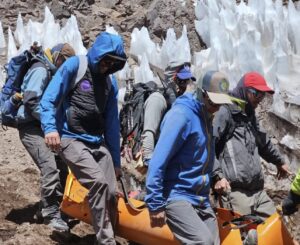
The searchers then found two bodies at 5,350m, near the Elbrus Saddle, The Moscow Times reported. The same source states the patrol has located three more bodies, but was unable to evacuate them due to bad weather. The rest of the group was evacuated to Azau, the usual starting point for Elbrus expeditions. The town is located at 2,350m on the south side of the mountain.
The reportedly deceased climbers are Dr. Meliha Causevic, Alma and Denis Okanovic, and a second couple, Almir Krivdic and Nermin Talam.

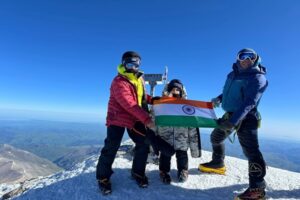
File image of the seven Bosnian climbers. Five perished. Photo: Toni Frankovic
Often underestimated
Mt. Elbrus, located in Russia but close to the Georgian Border, is the highest peak of the Caucasus range and also of continental Europe. Therefore, it is the European stage of the so-called Seven Summits challenge, consisting of reaching the top of the highest peaks in Europe (Elbrus), Asia (Everest), Africa (Kilimanjaro), North America (McKinley), South America (Aconcagua), and Oceania (Carstenz Pyramid). Hence its popularity.
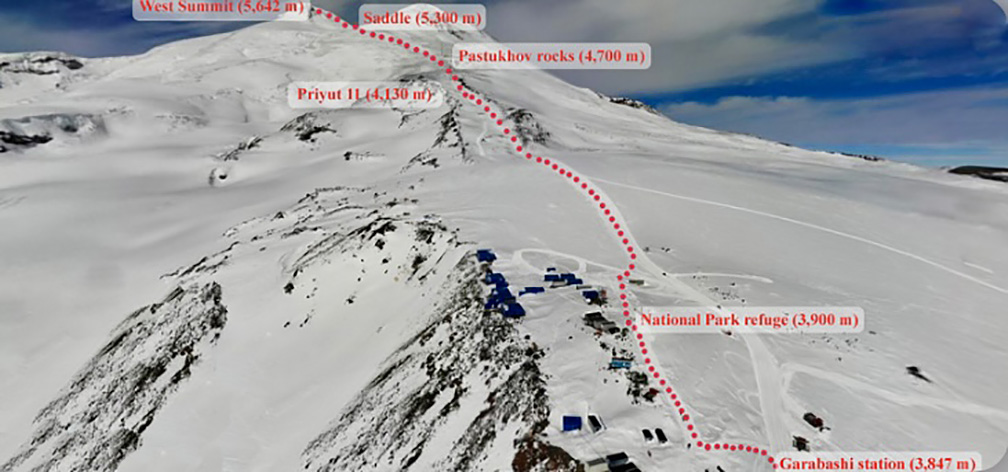
Topo of the normal route on Elbrus. Photo: justgorussia.co.uk
For climbers, Elbrus offers a straightforward ascent with no technical difficulties. A significant part of the trip can be covered by a snowcat, which makes the way shorter but also riskier if the climbers lack proper acclimatization. Cases of Acute Mountain Sickness are frequent.
The mountain often has high winds, sudden changes of weather, and bitterly cold temperatures, even in summer. Its mild slopes turn into a trap for climbers if caught in a blizzard with whiteout conditions, as it is easy to stray from the route and get lost with no geographical references around.
Overall, Elbrus registers between 15 and 30 deaths every year. Another climber died on the mountain on July 8, and local rescue services reported another climber fell to his death a week ago. This is, however, one of the biggest tragedies in the mountain, after a similar incident in 2021, when five other climbers died in a similar blizzard.