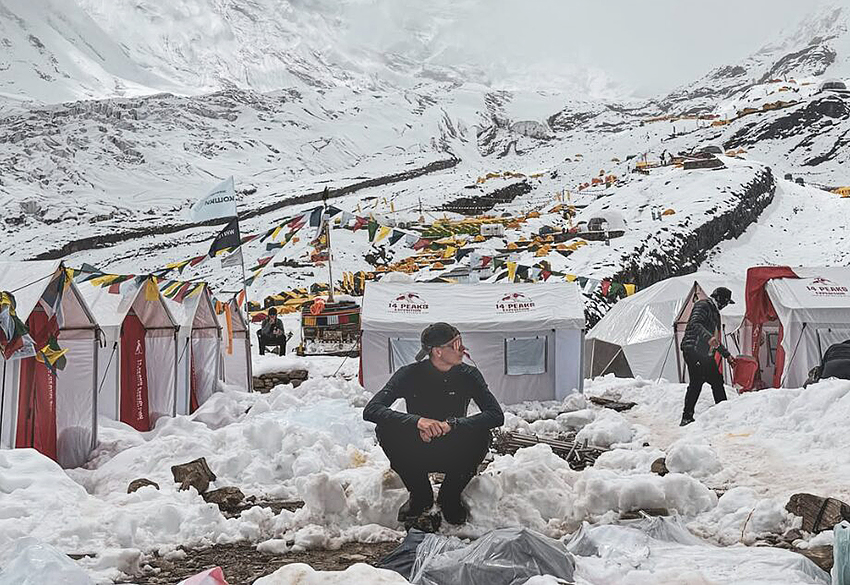
The storm from the Bay of Bengal has reached Nepal and will continue to slam the country for the next four or five days. Still, a handful of climbers stoically wait in the Base Camps of Manaslu and Dhaulagiri for conditions to improve. Others have retreated to lower altitudes but are not yet willing to call off their expeditions.
Denis Aleksenko and Artem Tsensevitsky of Russia, along with their small Manaslu team, have no intention of leaving Base Camp at all.
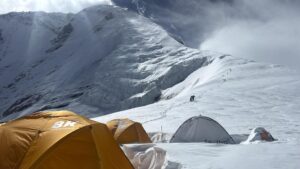
“Absolutely everyone has retrieved their high-altitude camps, fearing they will be destroyed by the coming snowfall,” Aleksenko wrote today. “Base Camp has been 90% dismantled and only a few scattered tents belonging to staff and steadfast climbers remain.
“We’ve stepped back from the general panic. We’re resting in Base Camp and keeping an eye on the weather. There is a 99% chance that the commercial climbing season on Manaslu is over. But that 1% chance keeps playing on our minds.”
Down but not out
U.S.-Australia-based Climbing the 7 Summits brought its whole team back to town, but they are not yet heading home. “Our priorities are safety and success, in that order,” they wrote in social media. “We will make any final calls on our season once we have seen what actually [happens].”
Earlier today, they told ExplorersWeb that climbers, guides, and staff all relocated to either Samagaon or Kathmandu. “From that position of safety, we remain committed to giving our climbers every opportunity to summit, should one arise,” they said.
Pemberton quoted company founder Mike Hamill, who has spent 30 years guiding in the Himalaya. Hamill has been on more than 30 expeditions to 8,000m peaks.
“In that time, he has seen teams cancel prematurely based on assumptions, while teams that were conservative and patient but stayed the course were later rewarded with safe conditions,” Pemberton explained. “He has also seen large storms forecast that then tracked away. This one may not, given its size, but no one knows for sure what the future holds.”
Logistic challenges
Elite Exped was the only Nepal-based outfitter that considered waiting for the storm to pass before concluding their season. Yesterday, they still held out some hope and remained in Base Camp.
However, they have reconsidered and called off the expedition, according to their social media today. They cite heavy snowfall that would result in murderously hard trail breaking and other difficult conditions, plus a high risk of avalanches. They added that such conditions would make “it difficult to even consider the possibility of fixing new ropes.”
Their conclusion emphasizes that even when the weather settles and conditions improve, the mountain would require a lot of work before a large number of guided clients could proceed to the summit. With ropes buried and higher camps dismantled, it may not be worth it from an outfitter’s point of view. However, there might still be some summit chances for smaller numbers of clients with skilled guides, as long as they climb in a lighter style.
Dhaulagiri
Paul Clarke of Australia and Xenia Santha of Hungary remain at 8K Expeditions’ Base Camp with two other climbers from another outfitter. A skeleton base camp crew is also there.
“We had about 20cm [of snow overnight], and it’s still snowing,” Clarke told ExplorersWeb. “Everyone here is focused on preparing for the coming storm.”
The climbers say they will have a clearer idea of what may be possible once the weather clears and they can assess its impact on the mountain.
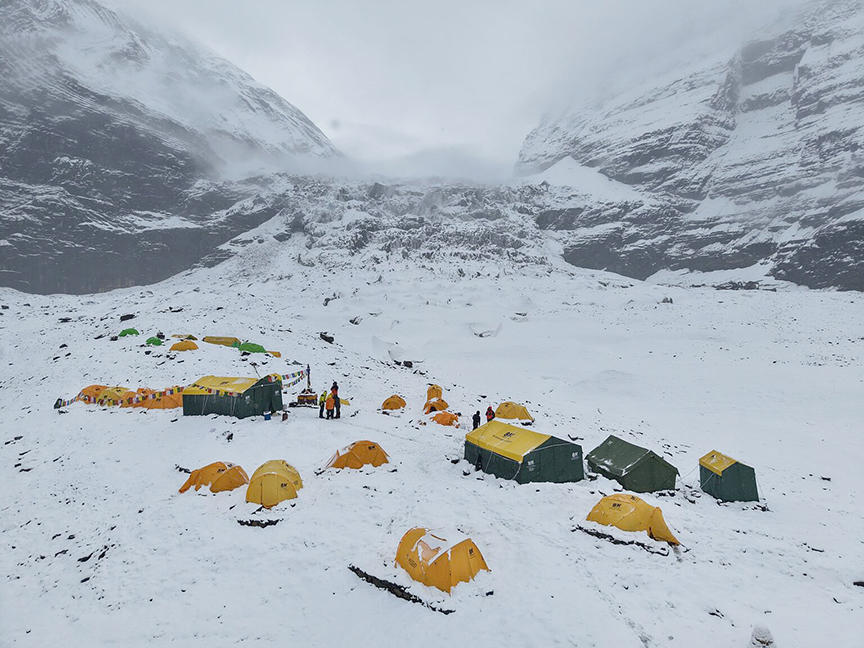
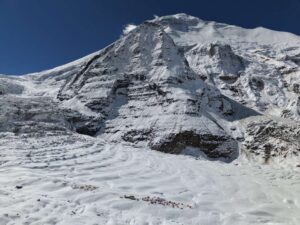
Dhaulagiri Base Camp today. Photo: Paul Clarke
Weather warnings
It’s already raining in Kathmandu and elsewhere in Nepal. Forecasts show brief, high-intensity late-monsoon downpours, according to Nepalnews. The whole country is on alert, especially after the recent catastrophic floods that killed 1,452, according to yesterday’s ever-changing official tally. The main fears are floods and landslides. However, the media has stopped referring to the storm as a cyclone and calls it “heavy rainfall” instead.
All the mountain areas in the country are under red alert.
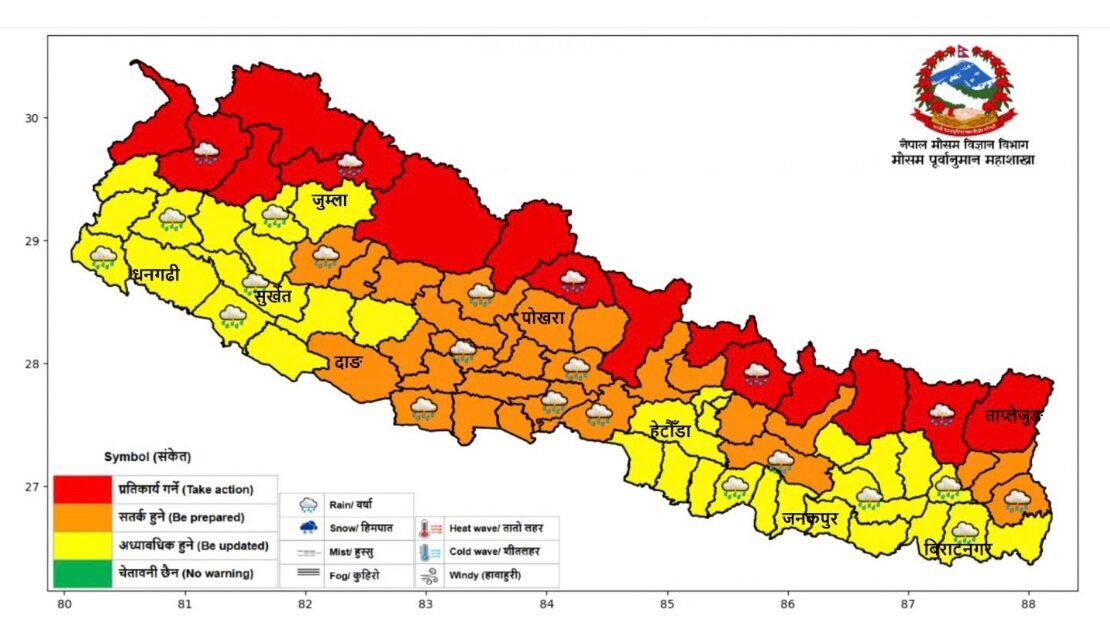
Weather alert chart issued by Nepal’s Department of Hydrology and Meteorology today.
“The Expedition Operators’ Association Nepal (EOAN) has issued an urgent notice regarding the current and forecast weather conditions across Nepal’s mountain regions,” Nga Tenjin Sherpa of Summit Force wrote. “Forecasts indicate the possibility of heavy rainfall in lower regions, [and] snowfall and strong winds in the Himalayan areas. Expedition operators, climbers, guides, and mountain workers are requested to take necessary precautions.”
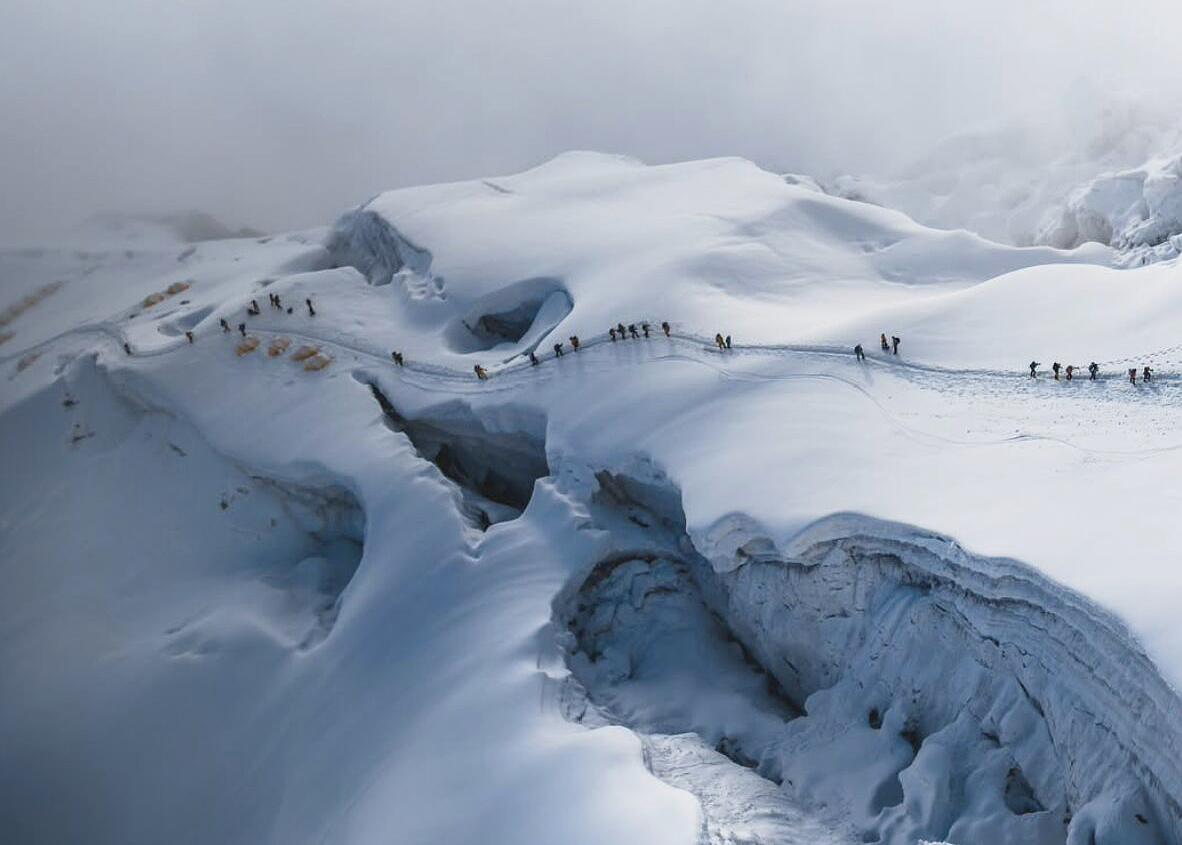
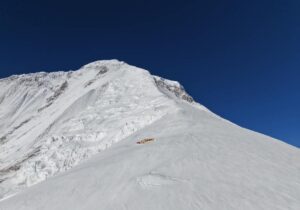
Climbers on Manaslu head down to Camp 1. Photo: Summit Force
Warning for both trekkers and climbers
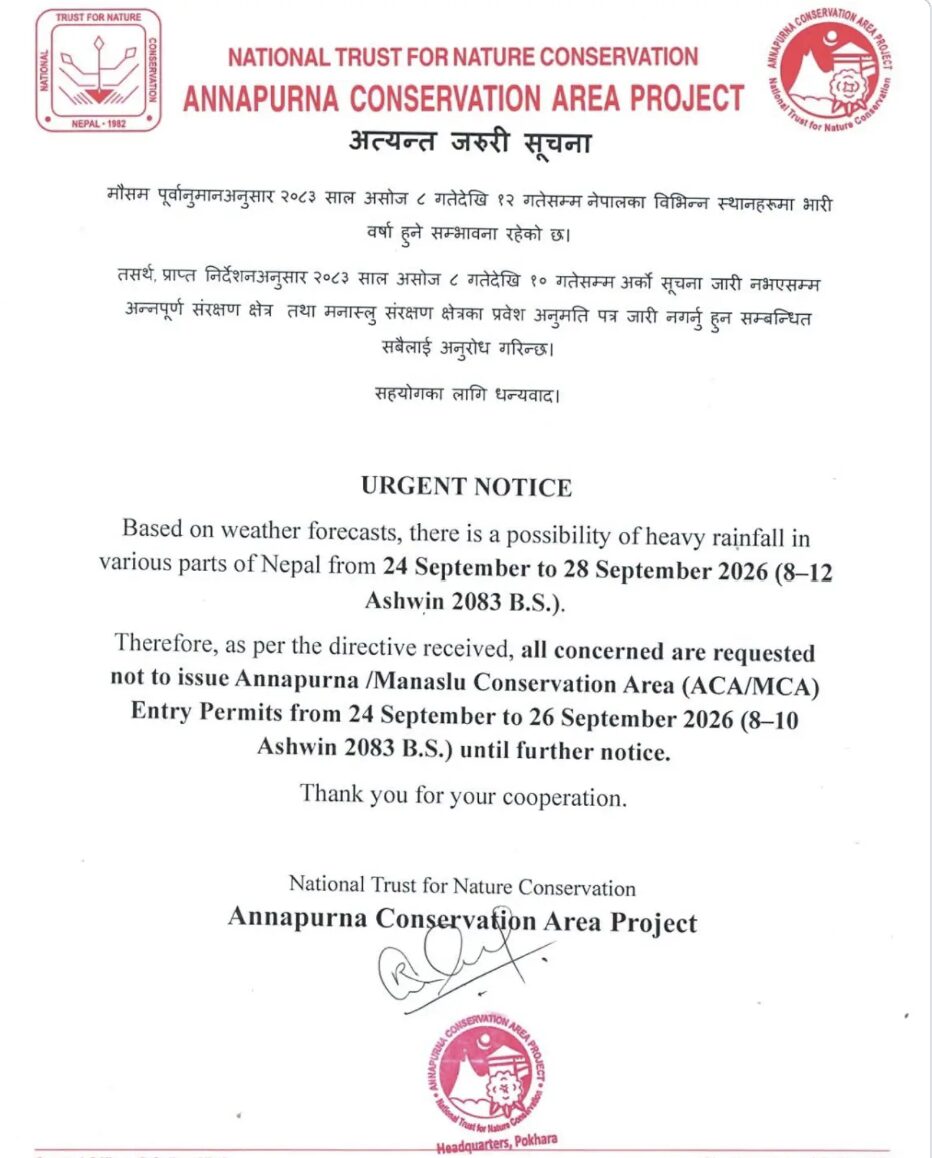
Closure announcement for the Annapurna region.
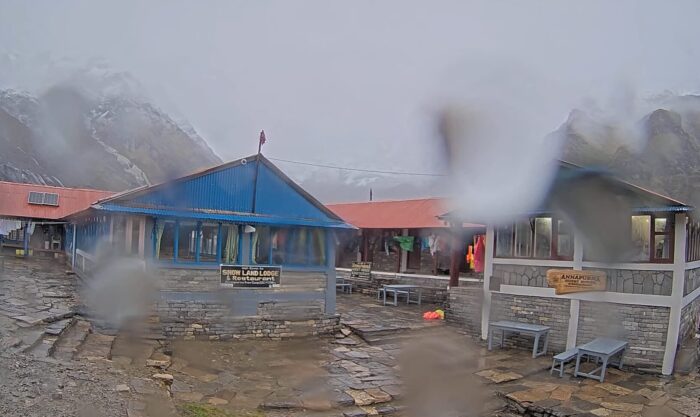
Heavy rain today at the visitors’ Annapurna Base Camp (which is lower than the actual climbers’ Base Camp). Photo: Nepal Webcam Live
Helicopters possibly grounded
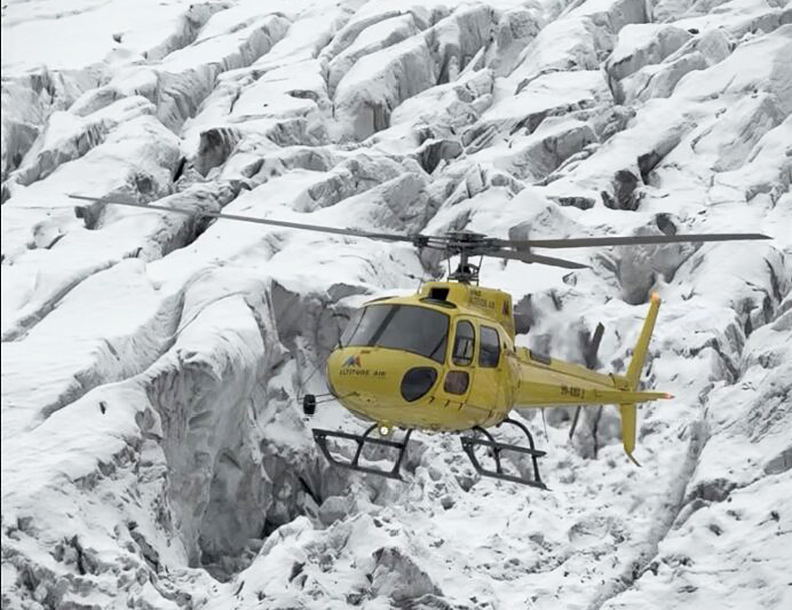
A helicopter leaves Manaslu Base Camp on Tuesday. Photo: Roberto Morales