After the Pakistani team climbed what they said was a new variation route on Broad Peak last week, several in the mountaineering community familiar with the mountain suggested that it might coincide with the line that Carlos Carsolio of Mexico soloed in 1994. To clarify, we asked the climbers directly.
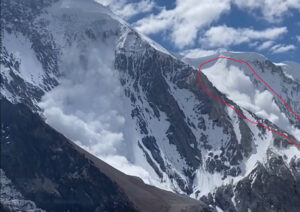
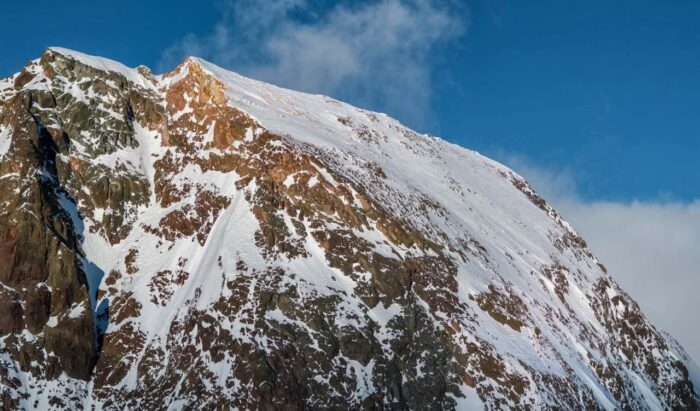
Karakorum Expeditions leader Mirza Ali of Shimshal says that his team fixed the ropes to the top of Broad Peak via this variation route on the west side of the summit area. It was safer and faster, he explained. Indeed, it crosses the headwall and leads directly to Broad Peak’s Rocky Summit, a secondary point close to the main summit. In particular, it avoids the long trip along the summit ridge.
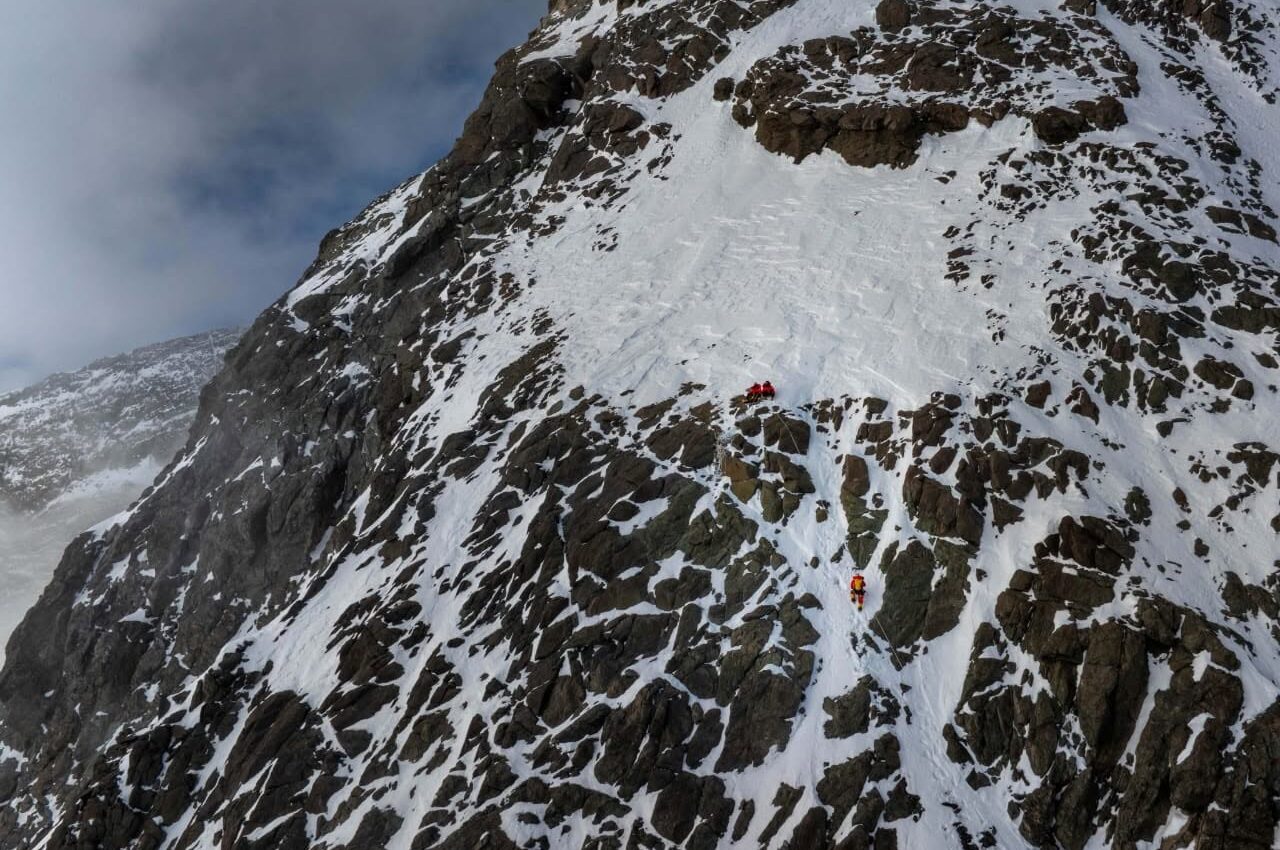
The Pakistani team on Broad Peak last week. Photo: Mingma G
Difficult vs easier
Mirza and his fellow Pakistanis from Shimshal are not the first to come up with such an idea. Past expeditions have tried different lines across the headwall on mixed terrain. When Carlos Carsolio soloed Broad Peak in 1994, he also chose a direct line toward the summit, avoiding the long detour across the Broad Peak Col and the ridge (the normal route).
However, Carsolio, the fourth climber in history to complete the 14 8,000’ers, describes a highly difficult line, the apex of his climbing career. The 2026 Pakistani expedition, however, was on oxygen and fixing ropes as they went, hoping to establish a new route for future expeditions. Logically, they were not looking for extreme difficulty.
In 2013, an Iranian team also climbed on that part of Broad Peak. They chose a different route to the right.
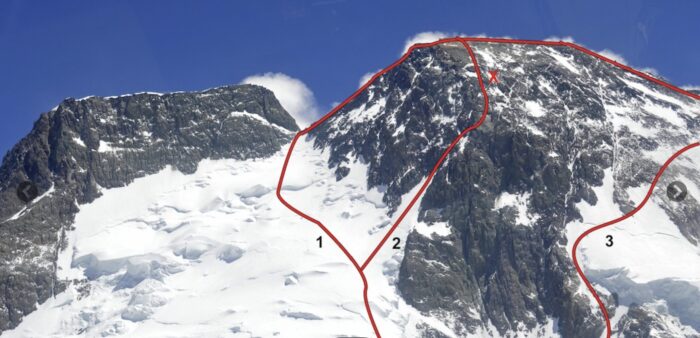
Routes on Broad Peak’s summit area. 1. Normal route; 2. Carlos Carsolio’s 1994 solo route. 3. Iranian 2013 route
Carsolio’s take
“After the ice ramp, my route veers left and then goes up the center of the face [headwall] directly to the false summit at just over 8,000m,” Carsolio told ExplorersWeb’s KrisAnnapurna. “From that point, I walked to the main summit via the normal route. The headwall is steep and extremely difficult. It gets harder the higher you go.”
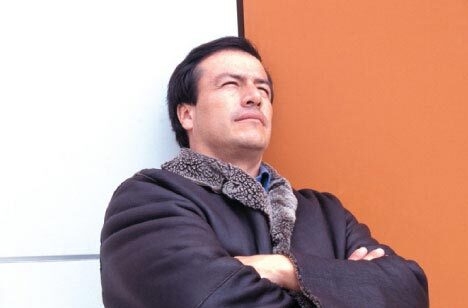
Carlos Carsolio. Photo: Carsolio Empresarial
The Mexican believes no one has ever repeated his route.
“In 2015, Mariano Galvan of Argentina repeated the lower section but avoided the headwall. Instead, he climbed further to the right and reached the ridge about halfway between the false summit and the main summit.”
Carsolio thinks the Pakistani team has actually repeated the 2013 Iranian route. “That route goes much further to the right than Galvan’s route, on much easier terrain.
“The difference in difficulty between those routes and mine is enormous. It was the hardest climb I’ve ever done,” Carsolio concluded.
The 2013 Iranian Expedition
The Iranian team also intended to climb the normal route up to Camp 3 at 7,000m, and then traverse right, climbing new ground on the West Face.
“Based on experience gathered during two previous expeditions [in 2009 and 2011], we decided that climbing this top section in alpine-style would not only be possible, but also faster and probably safer,” expedition leader Ramin Shojaei reported in the American Alpine Journal.
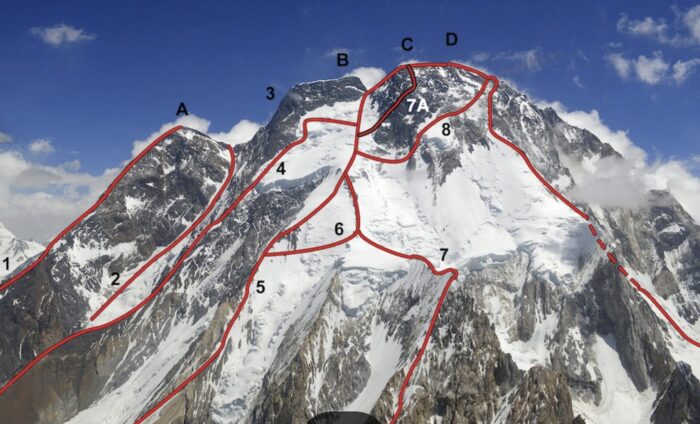
Broad Peak summit area and its routes, compiled by the Iranian 2013 team for the American Alpine Journal. (A) Broad Peak North. (B) Broad Peak Central. (C) Broad Peak Rocky Summit. (D) Broad Peak. (1) West-northwest ridge, first climbed in 1984 by Kukuczka and Kurtyka to start their traverse of the three main summits via the skyline ridge (3). (2) West Couloir, first ascended in 2010 by Iñurrategi, Vallejo, and Zabalza, who first climbed Broad Peak North, then traversed the skyline toward Broad Peak. (4) West-northwest ridge (2008). (5) Normal route, as climbed today (first ascent unknown, though climbed to nearly 7,000m in 1954). (6) Original line (1957). (7) West-southwest spur (1994, repeated by Iranians in 2009). (8) Iranian route (2013). (9) Southwest face and south ridge (2005). Photo: Ramin Sohaei
Three members of the Iranian team reached the summit via a variation route from Camp 3 across the SW face. From the summit, they intended to descend toward the normal route. They climbed very slowly, and after reaching the top, they apparently got lost and took a wrong route. Several climbers in Base Camp looked for them for days, but they were never found.
Karakorum Expeditions’ take
“We do not know which route Mr. Carsolio exactly used, as we neither found any trace of his route nor followed his footsteps,” a spokesperson for Karakorum Expeditions wrote to ExplorersWeb. “Our team started on the West Face and continued via the Southwest Face.” The company noted that it is hard to identify a climbing line on such a big face.
They cited Juan Toro and David Klein of Hungary, who turned around short of the summit, as witnesses of their ascent. Mingma G of Imagine Nepal flew a drone, and the footage shows the climbers on their way up the face.
“We respect every climber who completes a solo ascent or opens a new route,” they concluded. “However, it is not appropriate to attribute an entire mountain face to a single individual.”
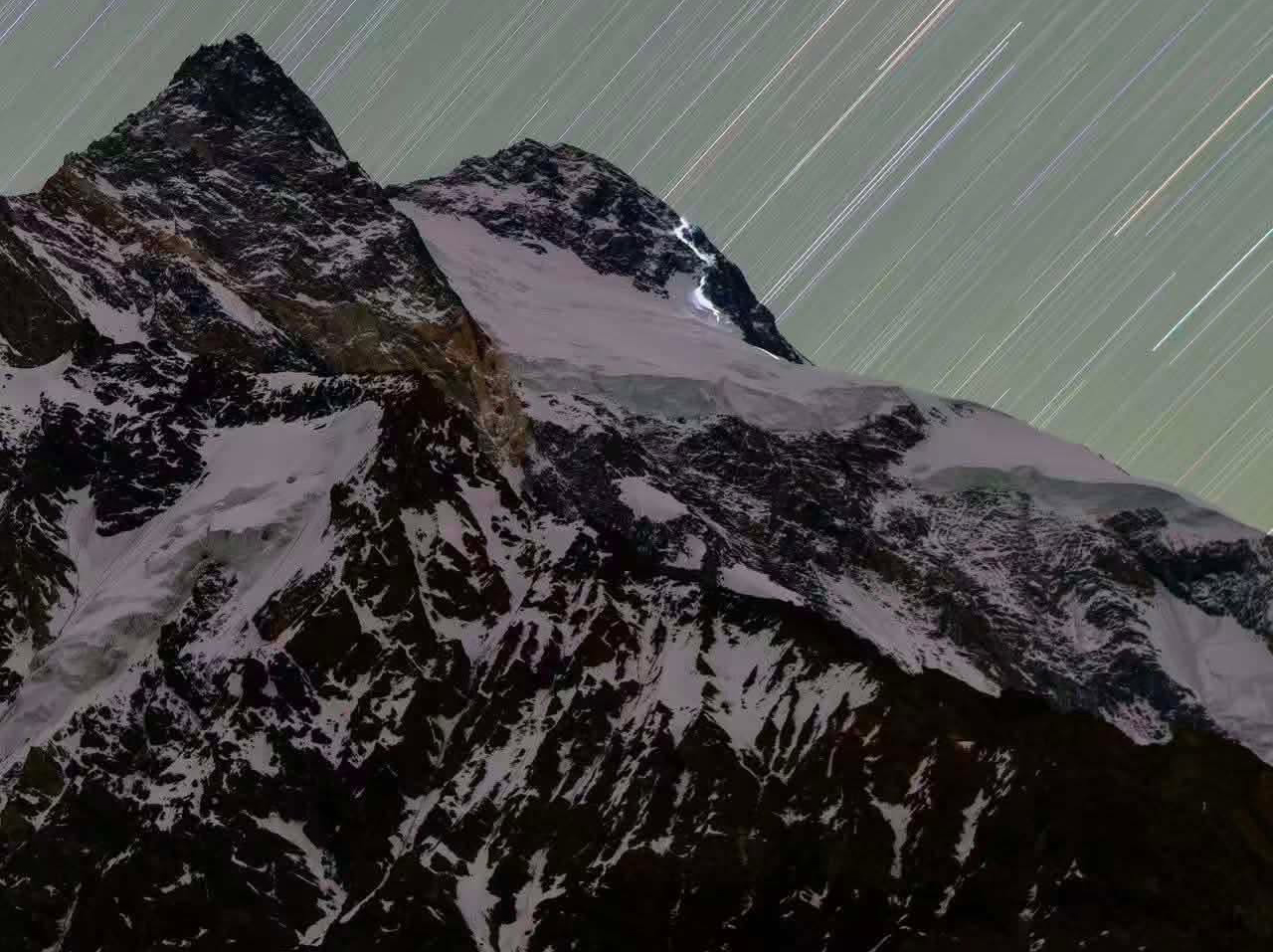
Broad Peak at night as Pakistani climbers head for the summit. Photo: Mingma G
To clarify, the ascent is not at stake, and a mountain face, including Broad Peak’s, can indeed be crossed by several separate lines. Any line of ascent that shortens the way to the main summit of an 8,000’er is a welcome advance and a valuable contribution to future expeditions. Climbers heading for the summit this week will have some say on whether the Karakorum Expeditions’ line becomes the standard in the future.
However, the debate is not whether their line of ascent works, but whether it is new. If it coincides with a previous line, then it wouldn’t be a new variation route. To find out, details from additional climbers will help, as will GPS tracks and a more detailed topo when the climbers return home. Right now, they only had time to share a sketched line before they head to K2, where they are currently on a summit push.
In the end, we need further details to decide on whether the variation route is new. But the fact that Carsolio describes his line as the most difficult of his career, and the Pakistanis’ goal was precisely to find a more suitable line for commercial teams, suggests that the lines are different. The Iranians’ difficulty with Carsolio’s line strengthens that conclusion.
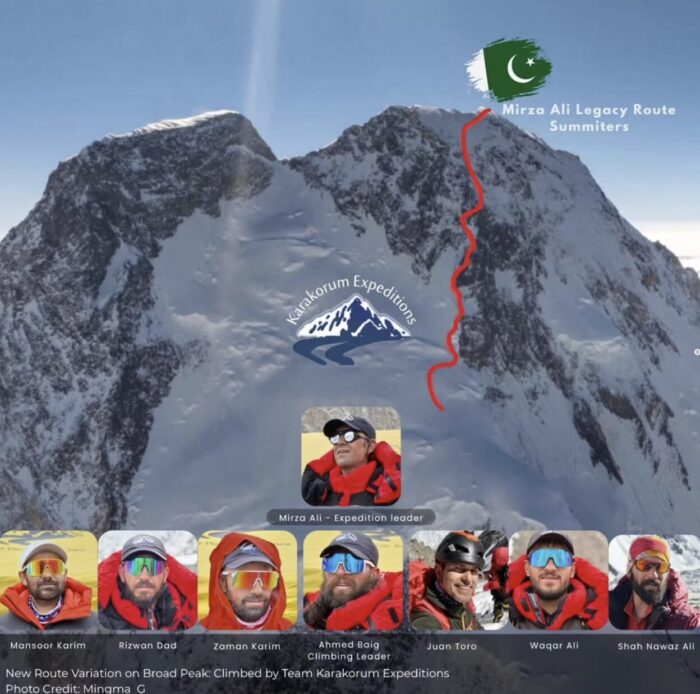
Mirza Ali Legacy Route topo, as shared by the Karakorum Expedition team.