In 1983, American entomologist Justin Schmidt created his pain index for insect stings. His four-level scale moves from the red fire ant, “sharp, sudden, mildly alarming… like walking across a shag carpet and reaching for the light switch,” to the northern warrior wasp, “torture…You are chained in the flow of an active volcano. Why did I start this list?”
Only three species made level four: the northern warrior wasp, the bullet ant, and the tarantula hawk. However, Schmidt’s scale only applies to stinging insects in the order Hymenoptera (ants, bees, and wasps). If he had branched out to include centipedes, I have no doubt he’d have needed a fifth level for his scale.
Giant venomous centipedes
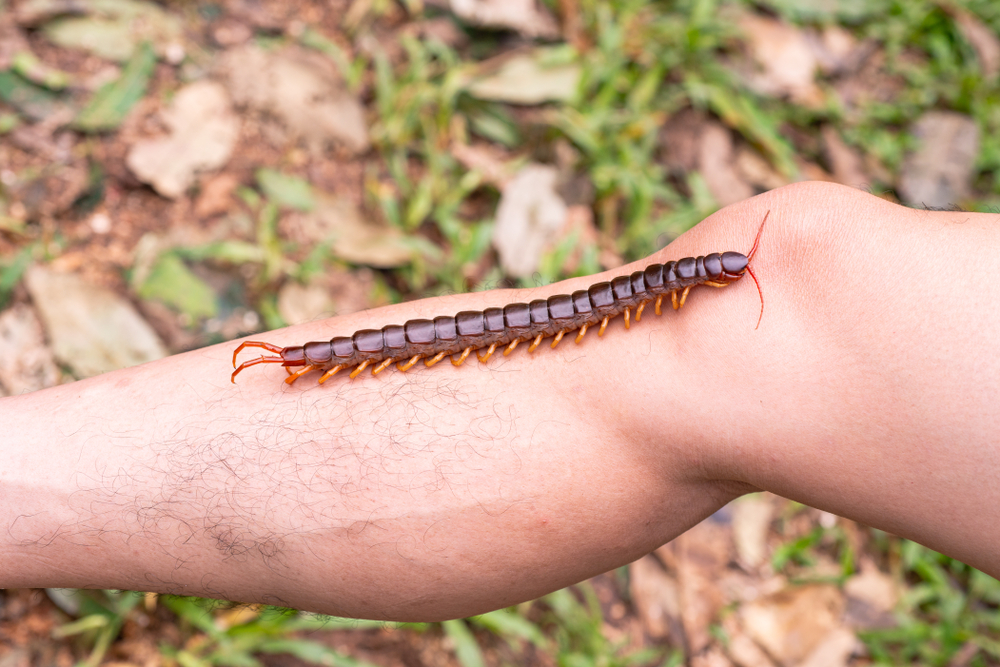
Asia has several species of giant venomous centipedes (Scolopendra), and all deliver excruciatingly painful stings. It’s a sting rather than a bite because of the delivery method. Giant centipedes inflict their sting through forcipules, appendages attached to the head that look like fangs. They pinch their prey (or — in a subtle piece of foreshadowing — innocent people’s feet) with these adapted front legs, piercing the skin and delivering a potent dose of venom. This toxic soup of cytotoxins, mycotoxins, and neurotoxins destroys cells, damages muscle tissue, and disrupts nerve signals. In prey species, the venom often paralyzes the animal. The larger the centipede, the more powerful the sting.
Giant centipedes will eat anything they can overpower, including tarantulas, scorpions, snakes, rats, lizards, and even birds.
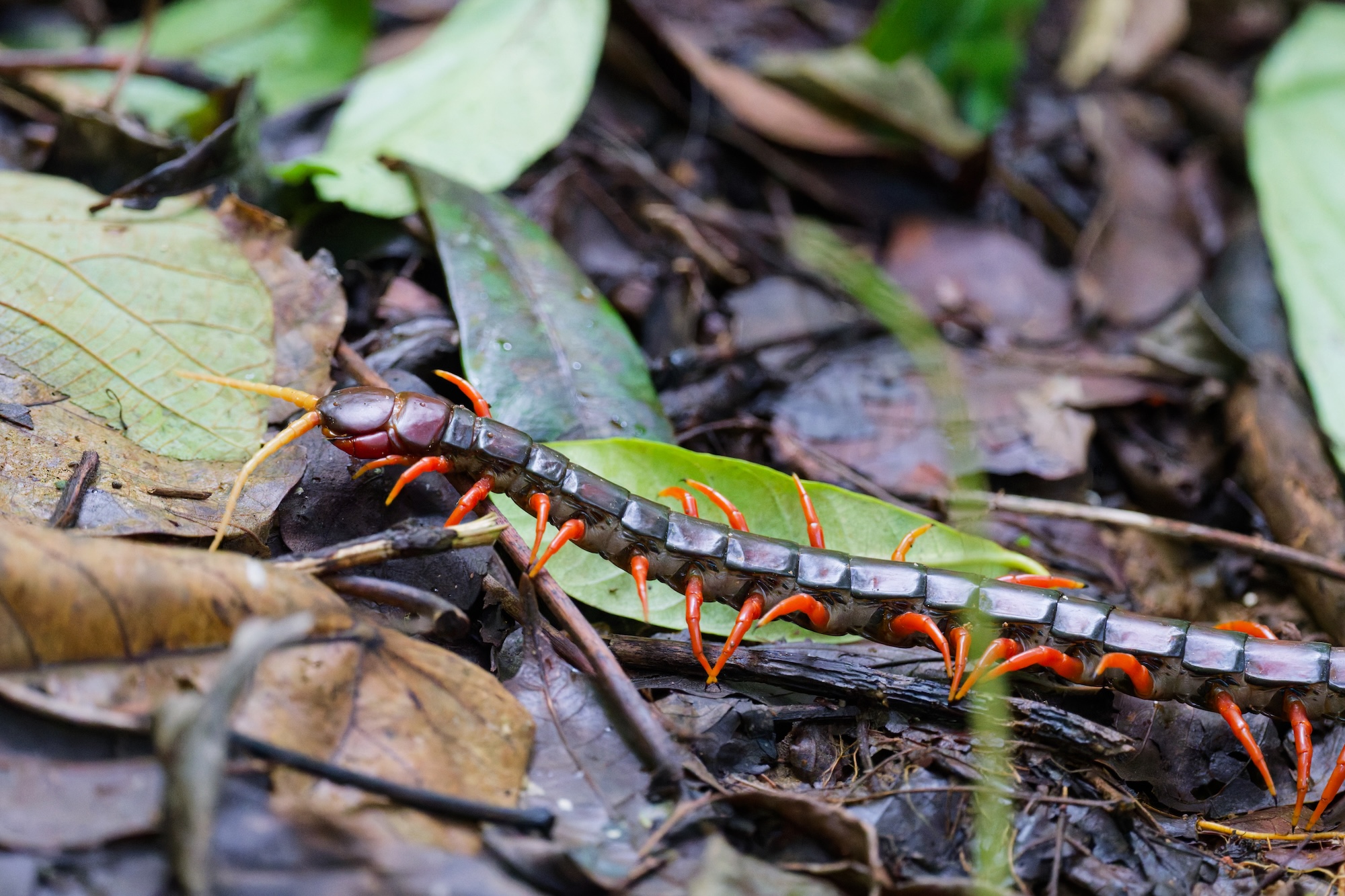
A Scolopendra species from Da Lat, Vietnam. Locally called “White Beard,” it was the length of my forearm and is so little studied that it likely has no species name. Photo: Martin Walsh
Human victims of centipede stings are very rare. Scolopendra species are huge, obvious, and disgusting (admittedly subjective). If you see one, you avoid it. However, they are also fast and aggressive. They will strike if threatened and are sensitive to vibrations. If you’re unlucky, you get to experience why one of their Thai names translates to “Seven Days of Crying.”
A centipede picks its way through the leaf litter in a Vietnamese forest.
Unlucky or stupid?
My experience began on Koh Rong, an island off Cambodia’s coast. I was staying in a little campsite between the beach and the jungle. On the day of the incident, I had hiked across the island before taking a dip in the ocean as night fell, splashing around in the bioluminescent plankton. It was idyllic.
Walking back to my tent, I followed a trail flanked on one side by the beach and on the other by the jungle. I was barefoot. Less than 20 meters from my tent, I felt a sudden, sharp pain in the top of my big toe. It was dark, but I saw what I assumed was a snake slither away from the path.
The pain was instantly terrible. Waves of searing heat radiated up my leg, and I screamed. My partner and two other campers supported me back to the tent and rushed off to find help. Miles from the nearest village, with no paved roads, I knew it might be a while before I got any medical treatment. If it was a cobra or a krait, I was probably going to die.
You’re going to wish it was a snake
On the top of my toe were two puncture wounds, which the campsite owner quickly covered with garlic and wrapped with a bandage. Garlic is said to help draw out venom, though there is no medical evidence for this. Still, without access to medical care, it was worth a try.
About an hour after the bite, someone from the village arrived. I was told that they were a snake expert. They took some of my blood to check that it was still clotting, and concluded that I hadn’t been bitten by a venomous snake. Considering the pain, they thought it was a giant centipede.
“You are going to wish it was a snake,” the man told me. Fantastic.
On the plus side, I would survive.
The locals agreed that I needed to get to the hospital as soon as possible, but it was a stormy night, and no boats would leave until the morning. With no strong painkillers available, the best anyone could do was some aspirin and sleeping pills.
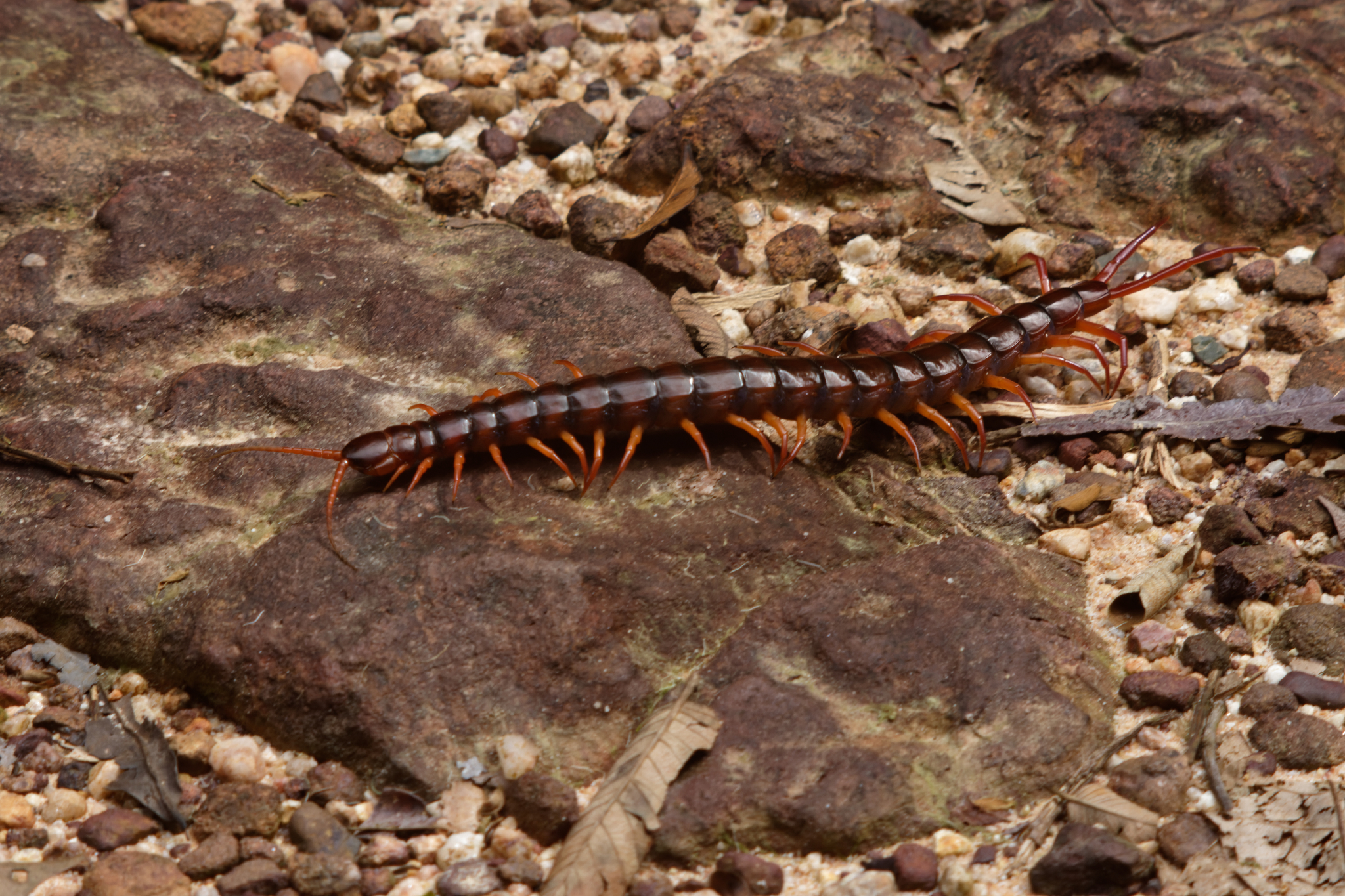
Scolopendra dehaani, the Vietnamese red centipede. This is probably the species that stung me. A few years later, I found this one on the Vietnamese island of Phu Quoc, not far from the Cambodian beach where it happened. Photo: Martin Walsh
The pain, which had started as the worst thing I had ever experienced, was increasing. All I could do was dig my fingernails into my leg, sweat, and swear. A few hours later, I couldn’t manage much beyond groaning. I was told one sleeping pill would knock me out for 12 hours. I took two, plus a handful of aspirin, and they did nothing.
The pain peaked six or seven hours after the sting. It felt like someone had smashed up all the bones in my foot with a hammer. The pulsing agony was so bad that I would happily have had my foot amputated to halt the pain.
A stormy crossing
After the longest night of my life, dawn finally arrived. I was loaded onto the back of a motorbike and driven to the nearest village. It was still stormy, and the ferry wasn’t running, but the locals had arranged for a fishing boat to take me.
The journey back to the town of Sihanoukville, only half an hour by ferry, took over two hours in quite extreme conditions. The few passengers were all soon nauseous, vomiting, and clinging to the sides of the boat as we tumbled over the waves. It was a dangerous crossing. Many Cambodians can’t swim, and I hoped we hadn’t risked it solely to get me to the hospital.
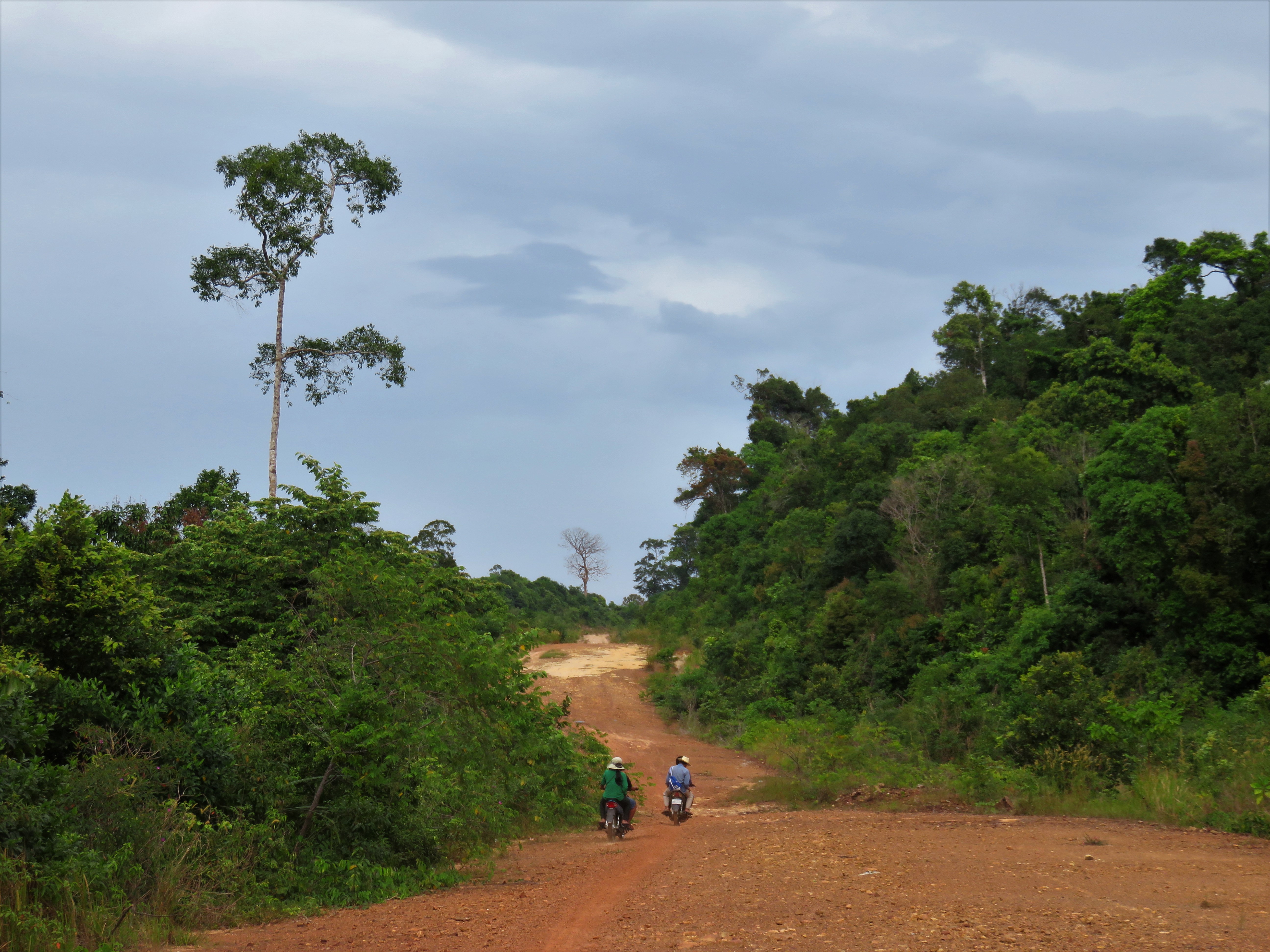
The road back to the village on Koh Rong. Photo: Martin Walsh
Safely back on the mainland, I was driven to a hospital. The pain had receded from its zenith, but was still terrible. I hadn’t seen the sting site since it was wrapped up, and didn’t know what to expect. Judging by the nurse who unwrapped it, the hospital staff didn’t either. She gasped. Soon, a collection of doctors and nurses were excitedly taking photos of my foot. At first, I thought there was a large clove of garlic on my toe. It was only when I noticed the hairs emerging from the top that I realized it was my swollen toe.
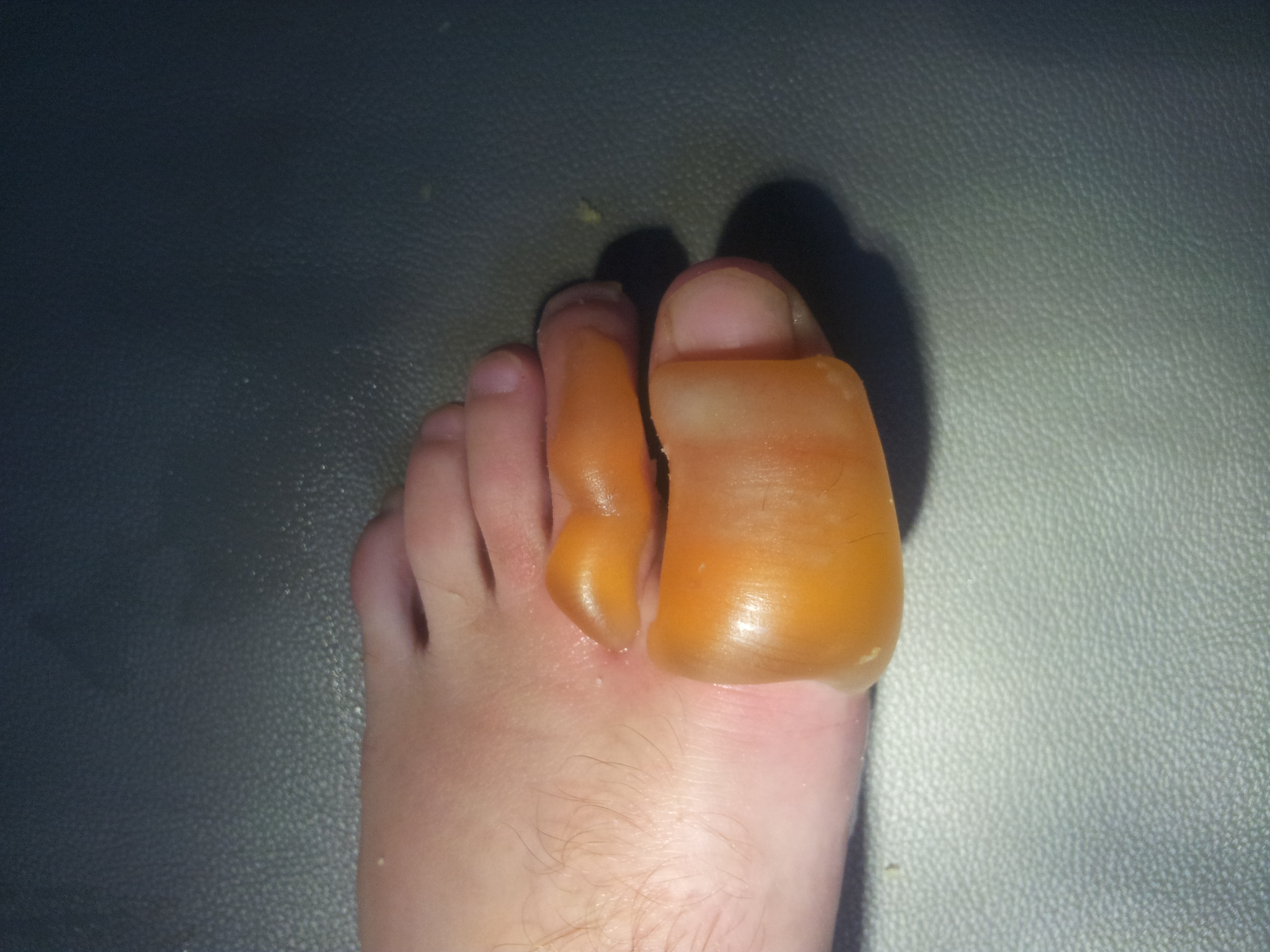
A grotesquely swollen toe at the site of the sting. Photo: Martin Walsh
Now that they could see I hadn’t just stubbed my toe, I was given morphine. This helped substantially, though it didn’t eliminate the pain. Soon after, they had to burst the blisters and clean up the wound.
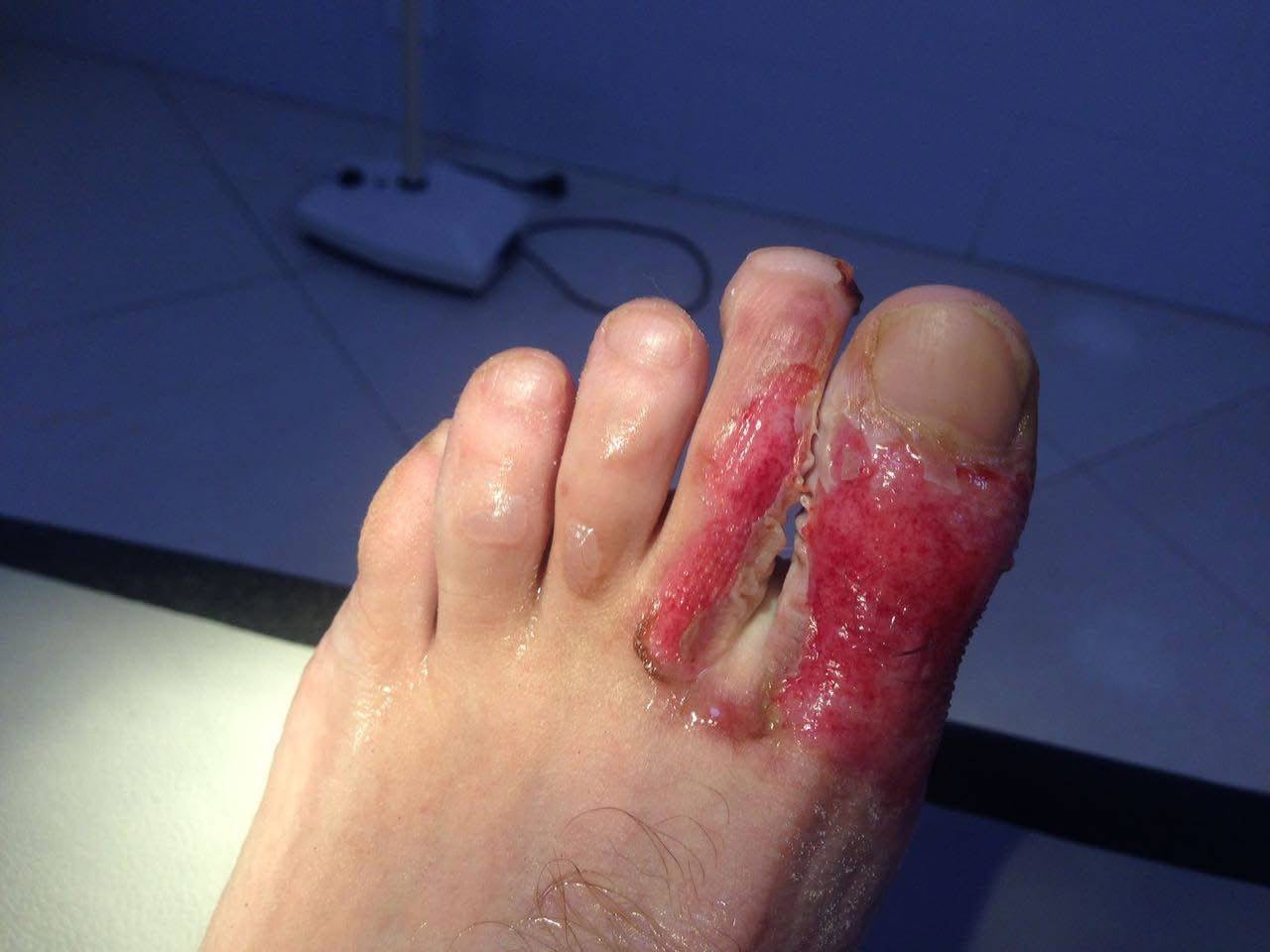
A doctor popped the blisters. Photo: Martin Walsh
Recovery
I stayed in the hospital for a few nights. The pain disappeared completely only five days later, but the wound eventually healed up nicely. Now, you’d never know I had been stung.
I’ve never met anyone else who has been stung, though I have spoken to a few people in Vietnam who say that centipedes have killed their dogs or cats. There are a couple of documented human deaths, but they are related to anaphylaxis or heart attacks, rather than the medical significance of the venom. I can certainly understand how a heart attack would be likely.
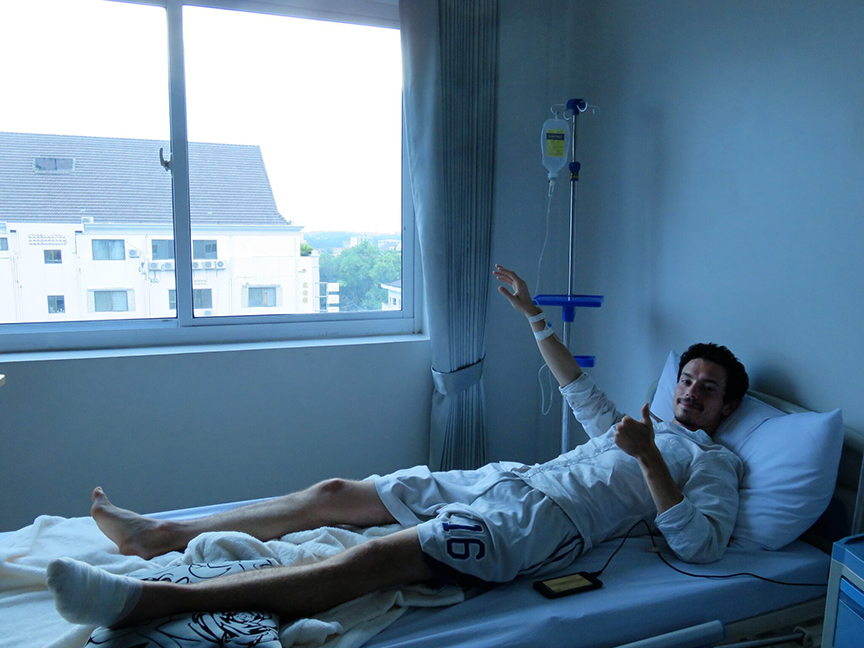
Looking very pleased to be on morphine at last. Photo: Martin Walsh
Annoying YouTube personality Coyote Peterson has a video where he intentionally lets a giant desert centipede sting him. Though this American species is said to have weaker venom than the various Asian species, it still put Peterson in the hospital, even after he used a venom extractor. According to Peterson, who has been stung or bitten by over 50 different species (including the three species at the top of Schmidt’s pain index), the giant centipede was the first critter to put him in urgent care.
I confess that this made me feel better about my experience.