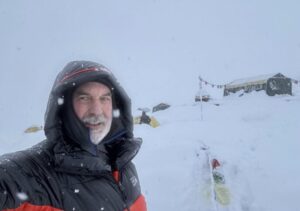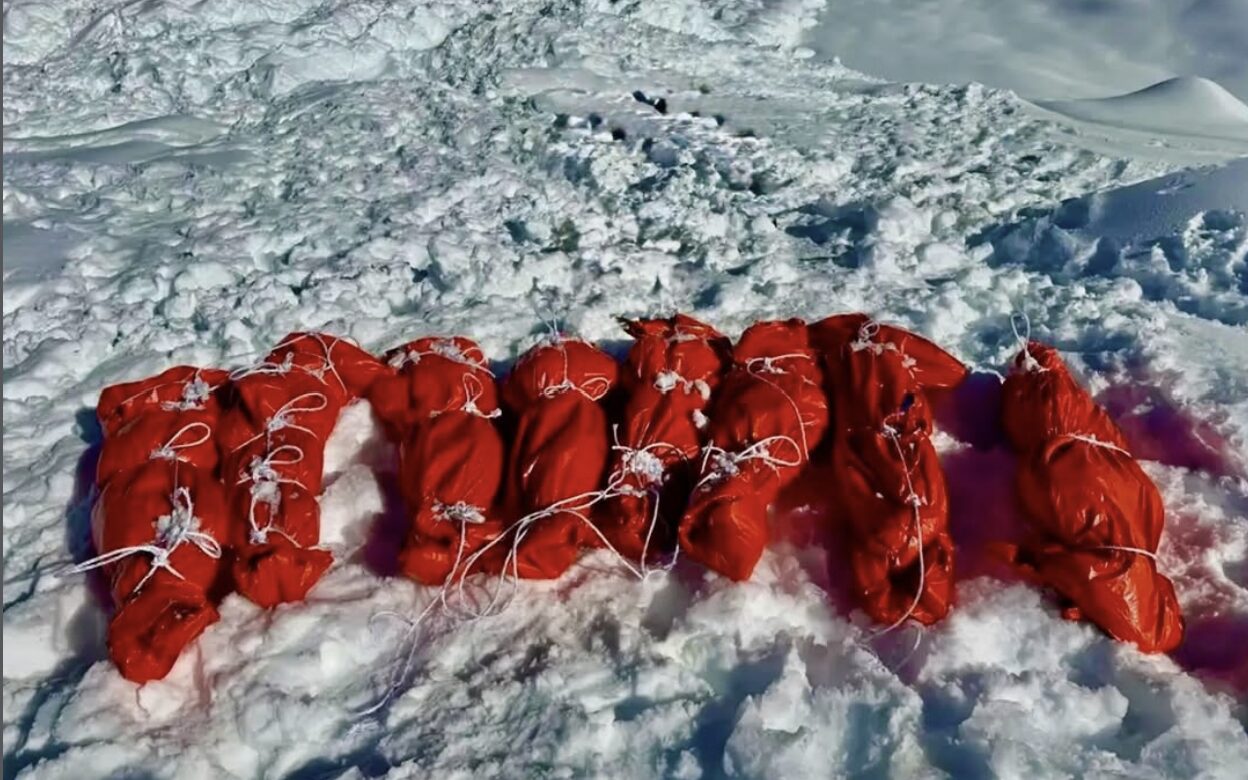
Days after an avalanche killed 16 people on Nepal’s 7,126m Himlung, outfitters have started filling the base camp with new staff and clients who want to climb the mountain.
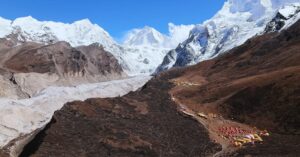
Over 30 foreign climbers, local staff, and guides will soon fill the same camp where 15 bodies were retrieved last week.
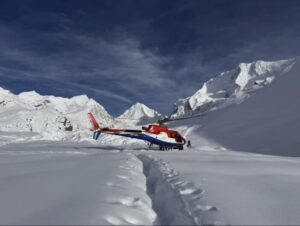
“Operators have mobilized additional climbers and route-opening and rope-fixing teams to ensure the trekking route from Koto to Himlung Himal Base Camp is safe and accessible following an avalanche that left one person missing,” The Tourism Times reported.
Indeed, only one person remains missing after a huge recovery team worked for days recovering the other 15 corpses.
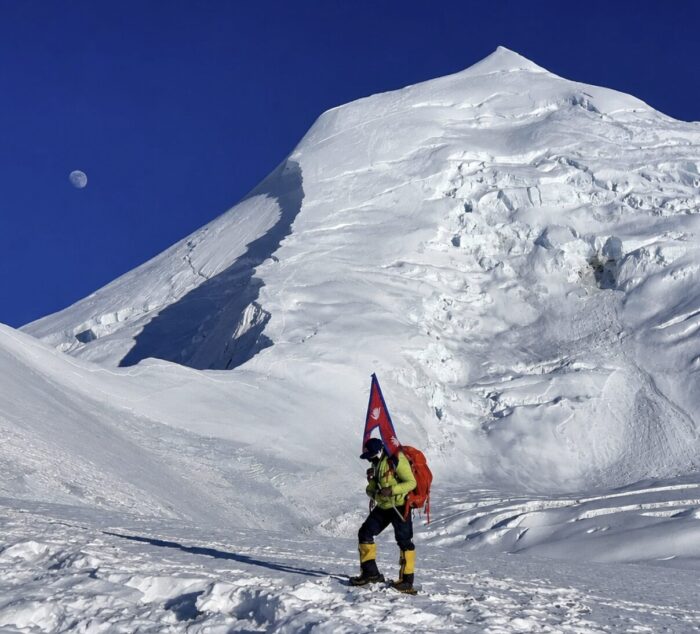
File Image of a Nepalese climber on Himlung. Photo: Adventure 14 Summits
Timeline
A massive avalanche hit Himlung’s base camp at around 3 am on September 27, burying 14 staff members and two Sherpa guides.
A rescue operation was immediately called. The Nepal National Mountain Guide Association put together a rescue team led by Mingma G, the owner of Imagine Nepal, who lost two staff members in the avalanche.
Four bodies were recovered in the following two days. Then, Mingma G decided to halt the recovery operation, explaining it made no sense to try to shovel through the four meters of fresh snow that had swept over the camp. A blizzard had forced trekkers and climbers back to town, but a crew of local workers remained at Himlung, ready for clients once the weather improved.
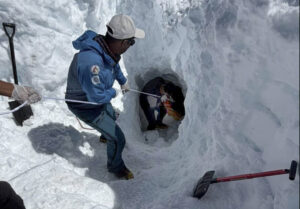
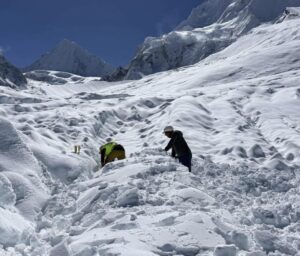
A new, bigger recovery team returned to the mountain two days later, reportedly at the request of the families of the deceased. This larger team dug tunnels in the snow and recovered 11 more bodies. Only one remains buried.
Serious questions
The tragic case sparked a heated debate about why, even after climbers had been urged to retreat to safer ground, a large local crew remained at Himlung.
The day the avalanche occurred, Mingma G noted on social media that it had been the workers’ decision to stay at the camp. “We tried our best to convince them to leave base camp since Friday and move to the lower valley, but they did not take our warnings seriously and ignored them,” he said.
However, the explanation was insufficient for many, according to the Nepal-based site Everest Today. The outlet asked some “serious questions” in an article about the tragedy.
If workers were told to remain at camp despite forecasts of bad weather, who made that decision, and on what safety assessment? Is the life of a worker who makes an expedition possible not just as valuable as that of a paying client?
“They went to the mountains to build a future for their families,” Everest Today noted. “They never returned.”
Everest Today demanded an independent investigation to establish whether commercial pressure influenced safety decisions. “If negligence is established, those responsible must be held accountable.”
So it is ironic that commercial climbs are continuing on Himlung.
Climbers on the way
Many of Nepal’s biggest outfitters had planned expeditions on Himlung. Now they have put together a joint team to repair several sections of trail from Koto village to base camp that had been damaged by the snowfall and landslides. According to the Expedition Outfitters Association of Nepal, these companies include Satori Adventures, Seven Summit Treks, 8K Expeditions, Pioneer Adventure, Himalayan Summit Club, and Snowy Horizon Treks and Expeditions.
According to yesterday’s update from Nepal’s Department of Tourism, 34 foreign climbers have applied for a permit to climb Himlung (28 male and 6 female).
Must the show go on?
This year, outfitters publicized Himlung as a perfect choice for climbers who need experience on a Nepalese 7,000m peak. This could soon become a legal prerequisite for those who want to climb Everest.
Those in favor of the expeditions may argue that deaths are common in the mountains, and expeditions continue regardless. Everest is a perfect example. However, this is one of the biggest tragedies that has ever occurred on Nepal’s mountains. It is comparable only to the 2015 earthquake that killed 19 in Everest Base Camp and the 2014 serac fall in the Khumbu Icefall that killed 16 Nepalese workers.
Those accidents shocked the mountaineering community, and the Sherpas on the mountain abandoned the climb as a tribute to their fallen comrades. They were also demanding higher insurance and improved working conditions, The Guardian reports. Climbing on the South Side of Everest was canceled for the season in both cases.