Scientists may have discovered one of the earliest land animals to eat plants. A small skull from Canada that dates back about 307 million years is the oldest land vertebrate ever found that was a herbivore.
Brian Hebert found the skull inside a fossilized tree trunk on Cape Breton Island in Nova Scotia. He quickly realized the specimen was unusual.
“The skull was wide and heart-shaped, really narrow at the snout but wide at the back. Within five seconds of looking at it, I was like, ‘Oh, that’s a Pantylid microsaur,’” said Hebert.
For tens of millions of years, the first vertebrates on land showed no sign of eating plants. They preyed on other animals. However, instead of the carnivore’s sharp, piercing teeth, Tyrannoroter heberti — named after its discoverer — had broader teeth more suited to grinding tough plant material.
Scientists removed the skull from the fossilized tree. The jaw of the skull was closed, making it impossible to see details inside the creature’s mouth. But from a CT scan, they built a 3D model of its head and teeth.
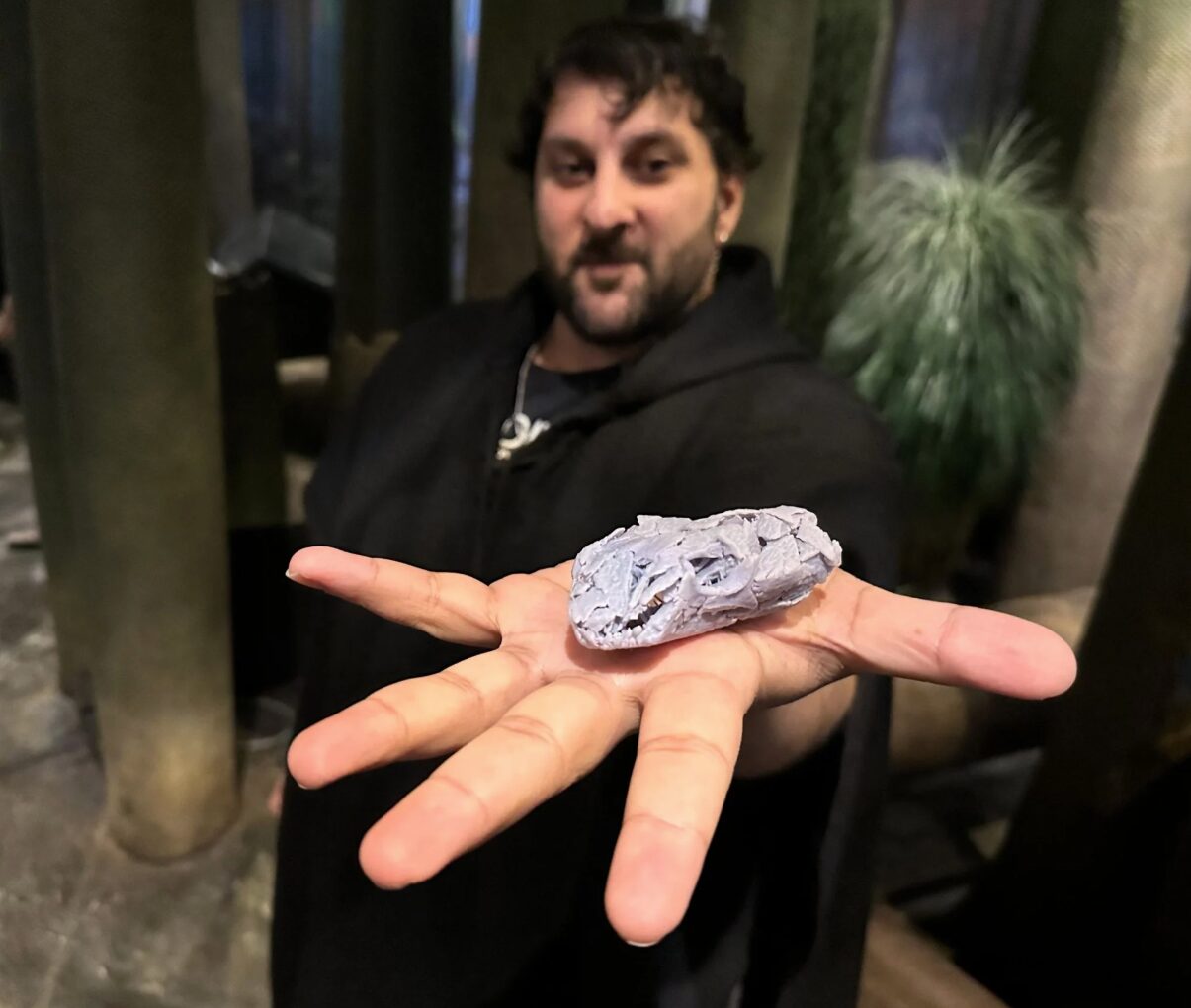
Arjan Mann holds a 3D-printed replica of Tyrannoroter’s skull. Photo: Field Museum
Teeth adapted for grinding
“[Its] mouth was jam-packed with a whole additional set of teeth for crushing and grinding food like plants,” said Hillary Maddin, co-author of the new study.
Herbivory represents a major evolutionary leap for land animals. Plants are harder to digest than meat and require specialized teeth, jaws, and gut adaptations. Scientists have long thought this dietary shift happened later, after ecosystems became more complex.
“This is highly important because it means that the essential components of the terrestrial ecosystems we recognize today — as herbivore-dominated — have been around and maintained since the Carboniferous Period,” explained lead author Arjan Mann.
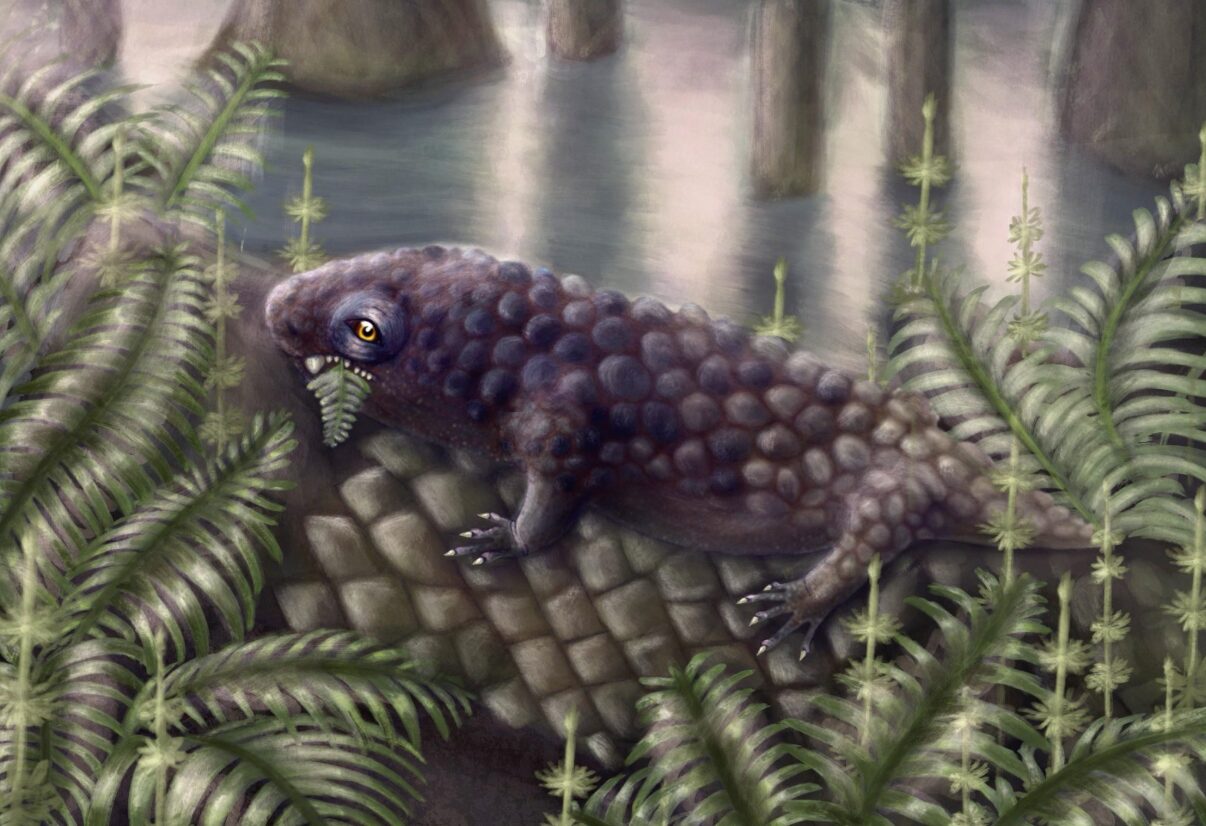
Herbert only found the creature’s skull, but our knowledge of similar animals from that era suggests the creature was about 30 centimeters long, roughly the shape of an American football, and resembled a lizard.
By modern standards, that makes it sound quite small. But at the time, it would have been one of the largest animals on land. It belonged to the Pantylid group, which later split into early reptiles and mammals, and lived at a time when animals were adapting to life out of water. It highlights how quickly vertebrates diversified after moving onto land.