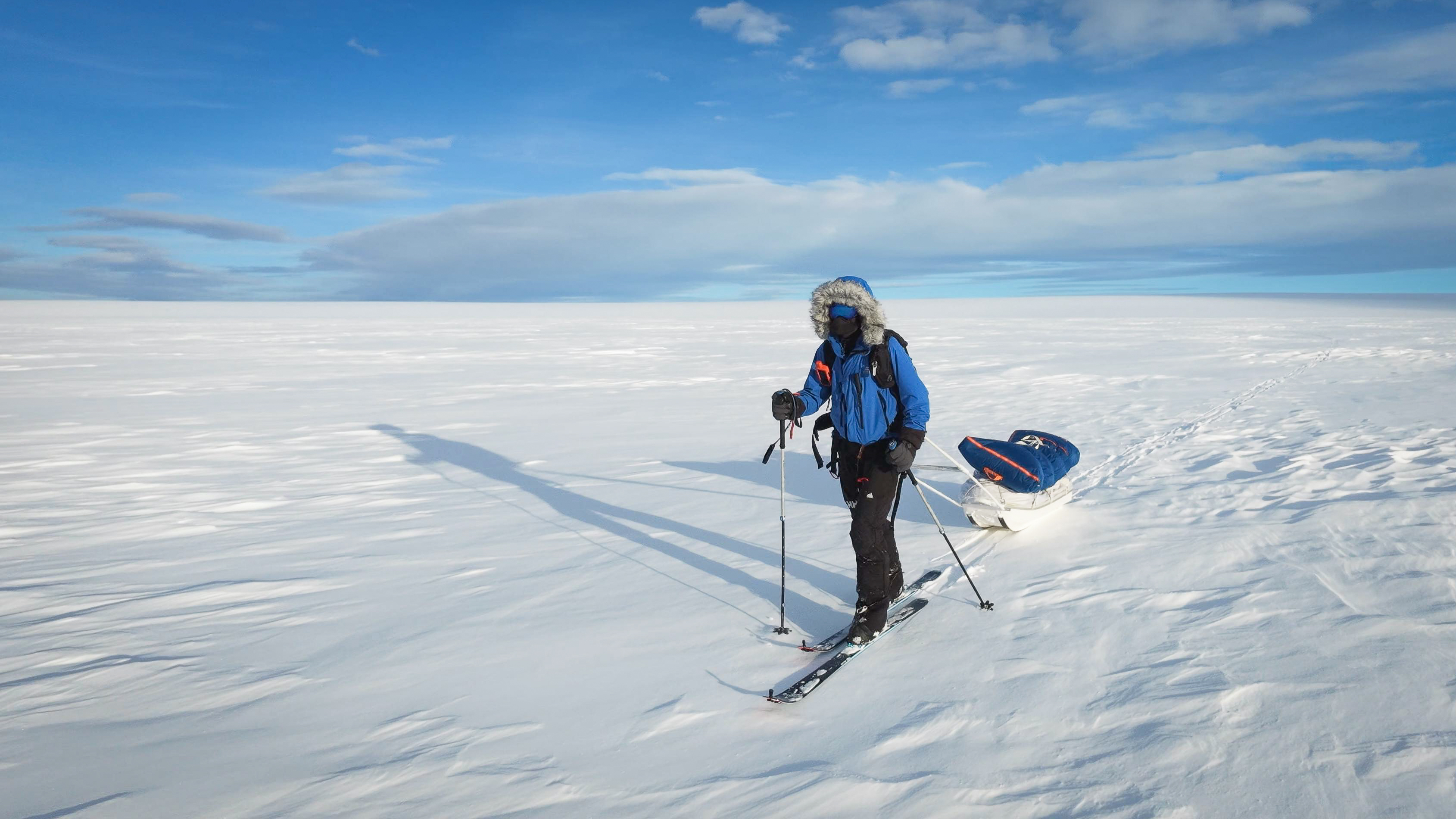
Swiss adventurer Stephane Weissbaum has completed a 20-day sled and snowkite traverse of Iceland’s three largest ice caps.
Setting out in eastern Iceland on February 2, the 30-year-old traveled 414km across Vatnajokull in the southeast, Hofsjokull in the central highlands, and Langjokull in the west, finishing on February 21.
Fierce winds forced him to remain tent-bound for two of the 20 days. Temperatures ranged between -10°C and -30°C.
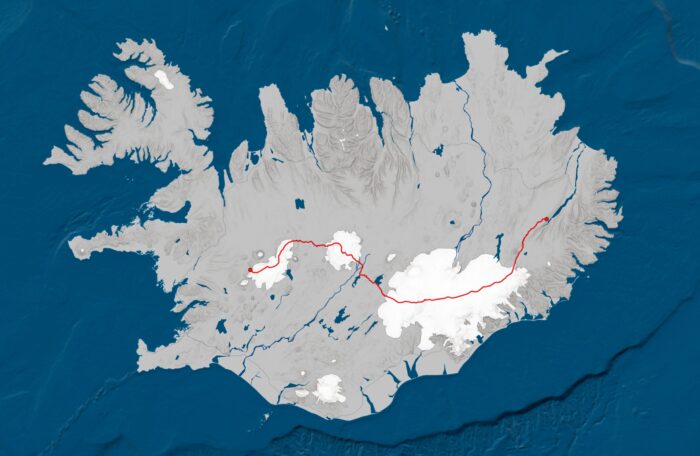
Weissbaum’s route with the three ice caps shaded white. Map: Stephane Weissbaum
Vatnajokull crossing
Weissbaum began near Lake Lagarfljot on Iceland’s east coast. From there, he kited about 70km over a day and a half to the foot of Eyjabakkajokull, a glacial outlet of the vast Vatnajokull ice cap.
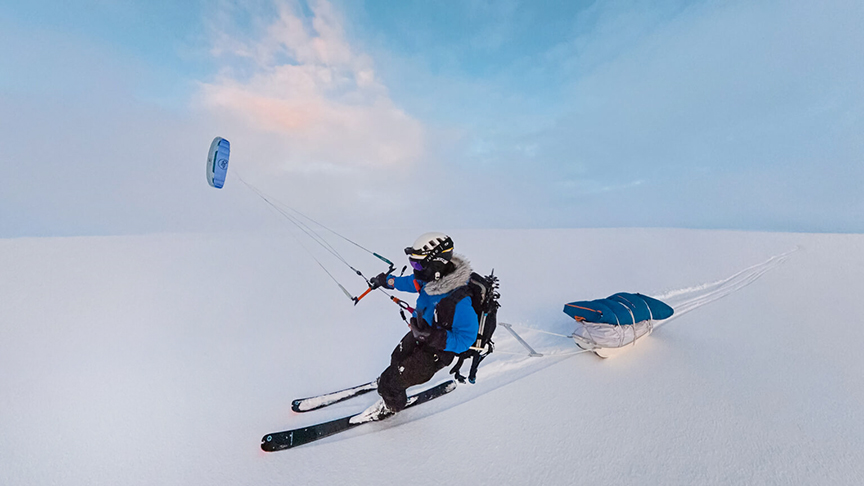
Kiting toward Vatnajokull. Photo: Stephane Weissbaum
Once on the plateau of Vatnajokull, Weissbaum continued in favorable winds for another 100km, arriving at the Grimsvotn volcano on February 5.
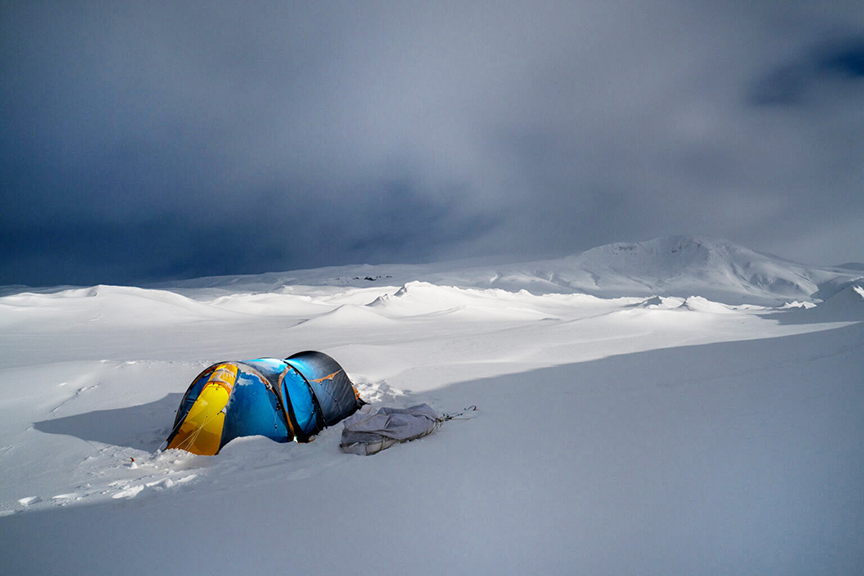
At the foot of Eyjabakkajokull. Photo: Stephane Weissbaum
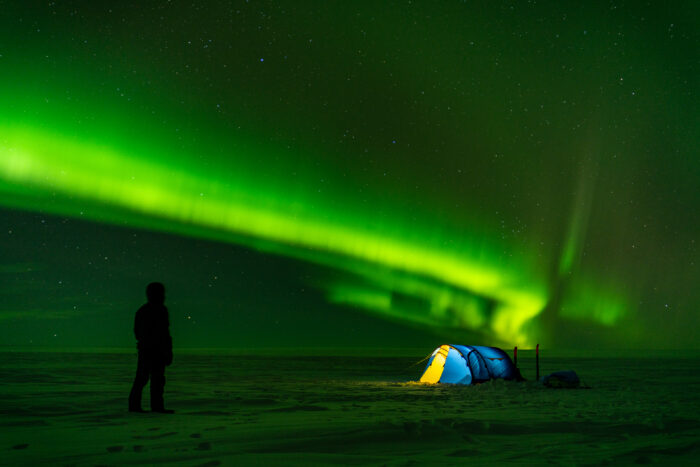
Strong northern lights on Vatnajokull. Photo: Stephane Weissbaum
“From that point onward, I didn’t use the kites for the rest of the expedition until Langjokull,” he told ExplorersWeb. “The terrain was just not appropriate, with a considerable lack of snow and constant micro-navigation between rocks.”
Into the Highlands
Snow cover in the Highlands between Vatnajokull and Hofsjokull was worse than Weissbaum had expected. For two days, he struggled across the Hagonguhraun lava field, dragging his sled over sharp rocks and patchy snow.
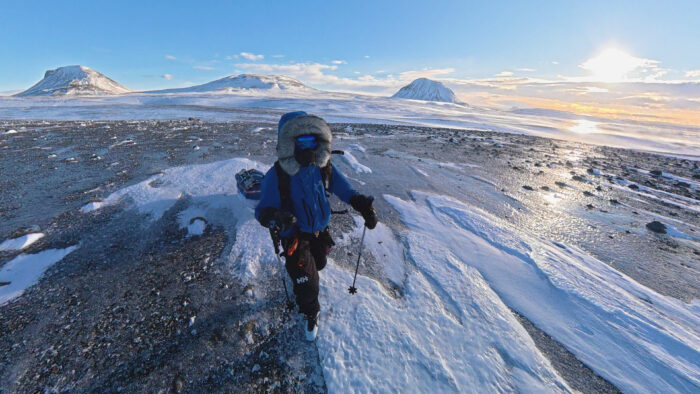
Trying to avoid the rocks by threading a route over lingering patches of snow. Photo: Stephane Weissbaum
To avoid destroying the sled, he repeatedly unloaded half his gear, carrying it on his back while lifting the pulk over rough sections of lava. Despite this, the rocks still damaged his sled runners, reducing glide for the rest of the trip.
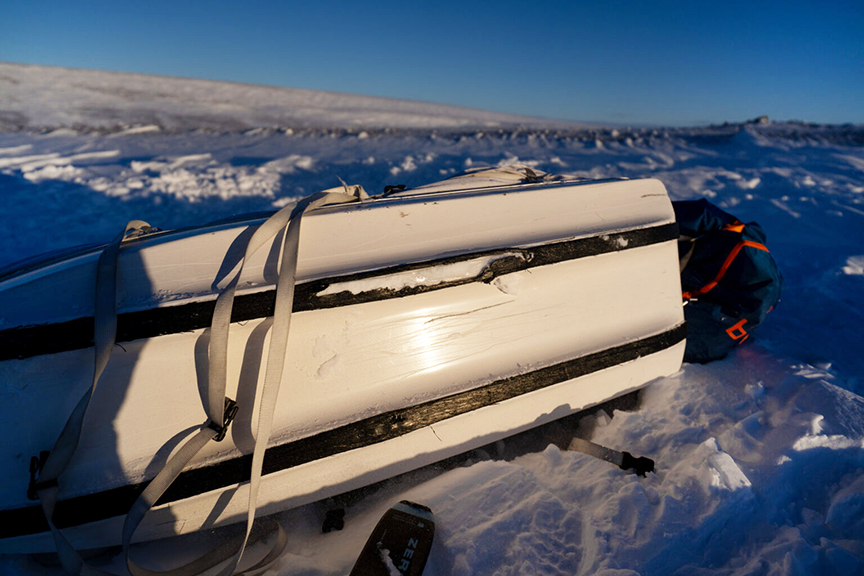
Sharp rocks have worn the black runners almost down to nothing. Photo: Stephane Weissbaum
Beyond the lava field, Weissbaum crossed two major rivers using a bridge and a dam, as well as several smaller streams on fragile snow bridges.
Strong winds swept the Highlands during this section of the journey. Weissbaum pushed through two stormy days before he eventually spent a day waiting out the weather.
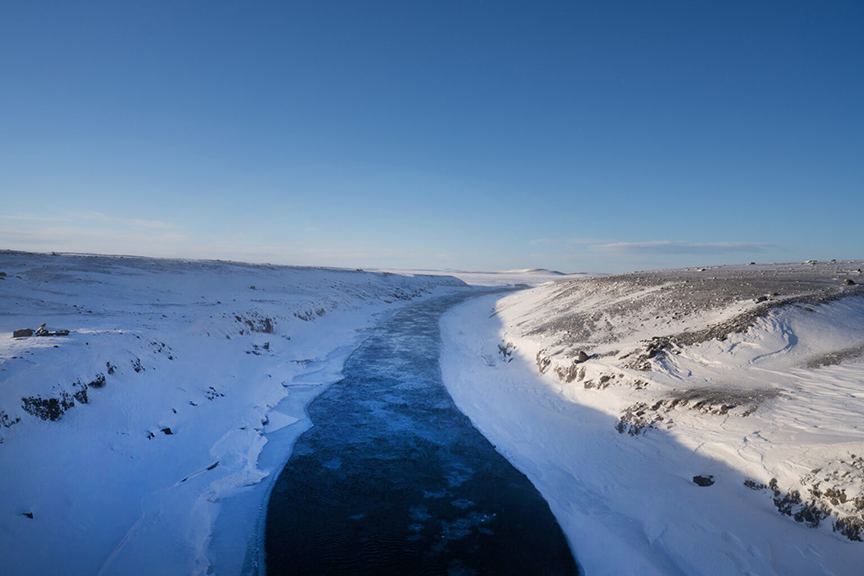
One of the smaller rivers Weissbaum had to cross. Photo: Stephane Weissbaum
“I had several consecutive days of very strong winds,” said Weissbaum. “I pushed through two of them, but was forced to stay in the tent for a third one.
“In the end, I did not care too much because there is no way I would’ve attacked Hofsjokull, at more than 1,700m, with these kinds of winds.”
It took the Swiss adventurer three days to cross the Highlands to the foot of Hofsjokull, which he reached on the ninth day of his journey.
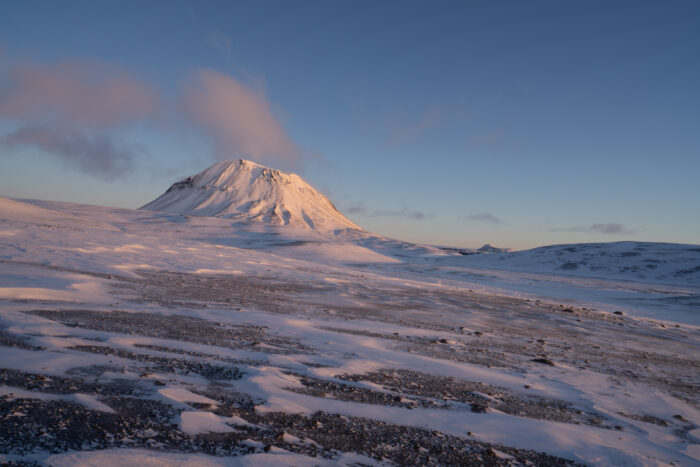
The Highlands. Photo: Stephane Weissbaum
Open crevasses and violent wind
Hofsjokull proved more technical than Vatnajokull. Its steeper slopes and heavy crevassing made progress tricky. On the lower glacier, the lack of snow exposed stretches of bare blue ice and open crevasse fields.
Picking a line through the hazards, he took three days to complete the crossing. After descending the glacier, Weissbaum encountered the most violent winds of the journey.
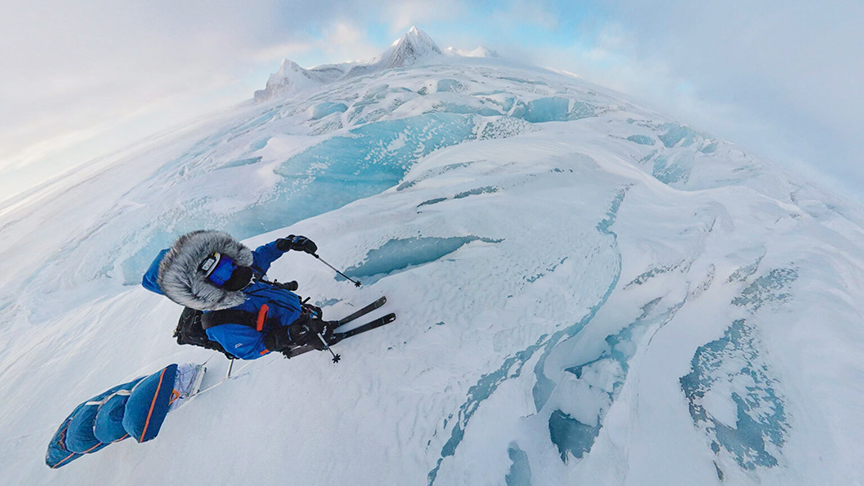
Exposed blue ice and open crevasses on Hofsjokull. Photo: Stephane Weissbaum
Katabatic winds pouring down the glacier funneled through a narrow valley, creating powerful Venturi-effect gusts. His pulk blew several meters over the ground, and one of his ski poles careened away.
The storm worsened when a tent pole snapped, tearing the fabric and leaving Weissbaum pinned inside the collapsed shelter as the wind raged outside. He had been unable to properly anchor the tent due to limited snow cover, or other suitable anchors.
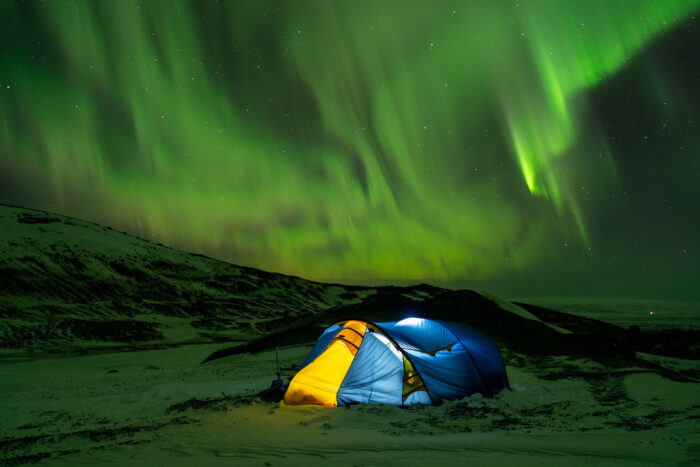
Weissbaum descended the glacier under ‘beautiful pulsating northern lights.’ Photo: Stephane Weissbaum
Weissbaum descended with crampons, then wound along the partly frozen Svartakvisl River to a plateau with some “tempting” hot springs.
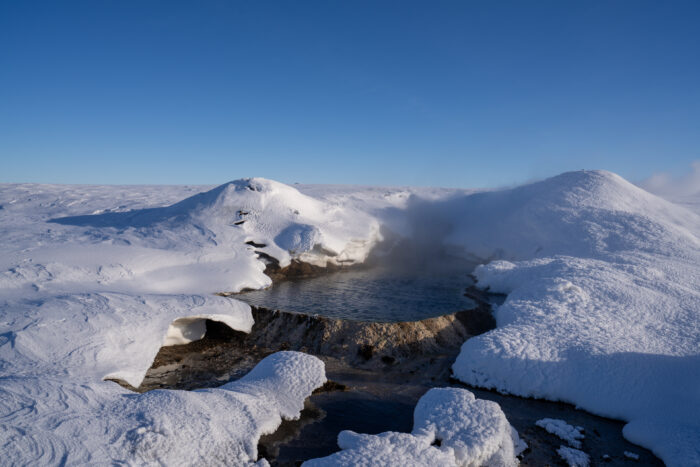
A tempting hot spring. Photo: Stephane Weissbaum
Langjokull and the finish
Weissbaum took three days to cross Hofsjokull and a further three days to reach Langjokull, the second largest ice cap in Iceland, after Vatnajokull. Progress on Langjokull was smooth and was assisted with some kite travel.
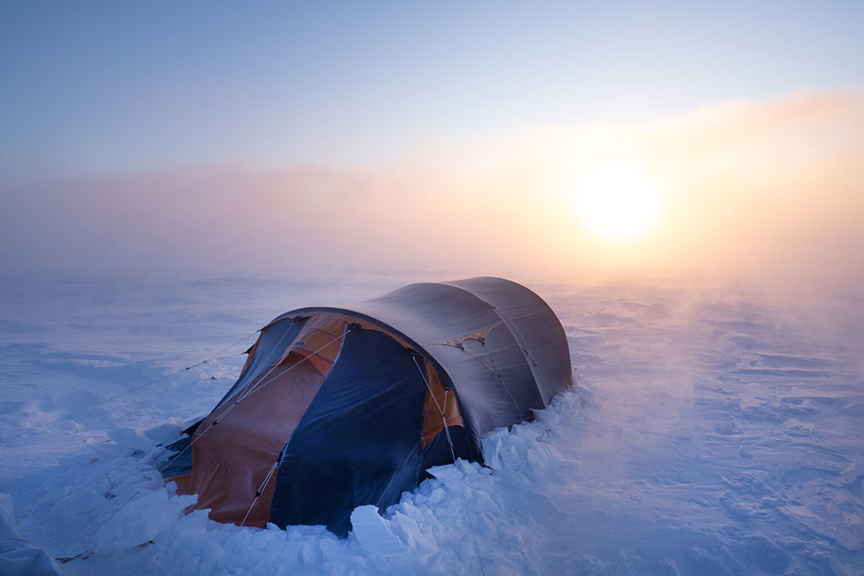
Camped in ethereal light on Langjokull. Photo: Stephane Weissbaum
After three days on the ice cap, followed by the descent, Weissbaum was unable to continue. Instead, he opted to hop aboard one of the huge eight-wheeler tourist trucks back to civilization.
“My initial plan was to continue further west, but from the bottom of Langjokull, there was simply no snow anymore,” Weissbaum said.
“I had achieved my goal: crossing Iceland by myself, in the hardest, purest, most remote, and beautiful way possible.”