When we’re not outdoors, we get our adventure fix by exploring social media and the web. Here are some of the best adventure links we’ve discovered this week.
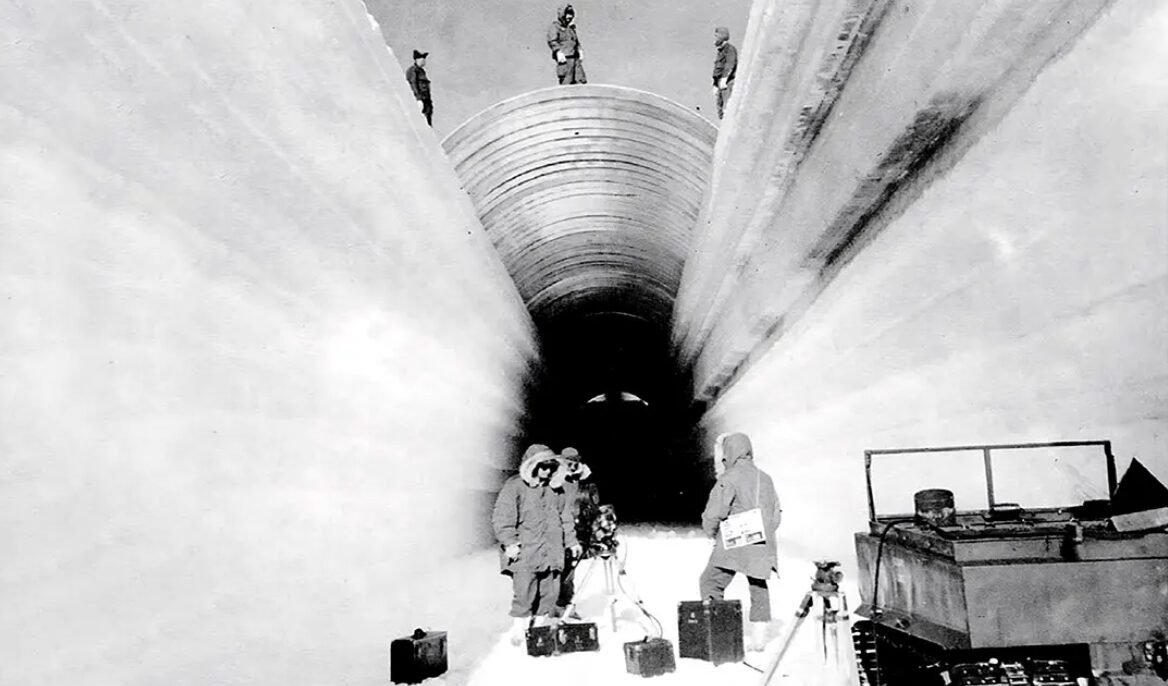
Camp Century: The so-called City Under the Ice was a Cold War experiment hidden deep within Greenland’s ice sheet. The U.S. Army started building a network of 26 underground tunnels in 1959 that served as a research station and a test ground for a much larger project.
Project Iceworm would have seen the tunnel system stretch for 4,000km and contain 600 nuclear missiles. The shifting, unstable ice made the project impossible, leading to the camp’s abandonment in 1967. Trapped under the ice, everyone assumed the waste products, fuel, and radioactive materials left behind would cause no issues. Now that the ice is melting, the Cold War project could have serious environmental consequences.
Four women succeed in Patagonia
All-Female Team Repeats Torres del Paine’s South African Route: Caro North, Amelie Kuhne, Julia Cassou, and Belen Prados Caro have made the first all-female summit of the South African Route on the Central Tower of Torres del Paine. Battling notoriously harsh Patagonian weather, from fierce winds to snow and ice-filled cracks, the team spent nearly two weeks on the wall in capsule style, seizing short windows of good conditions to make progress.
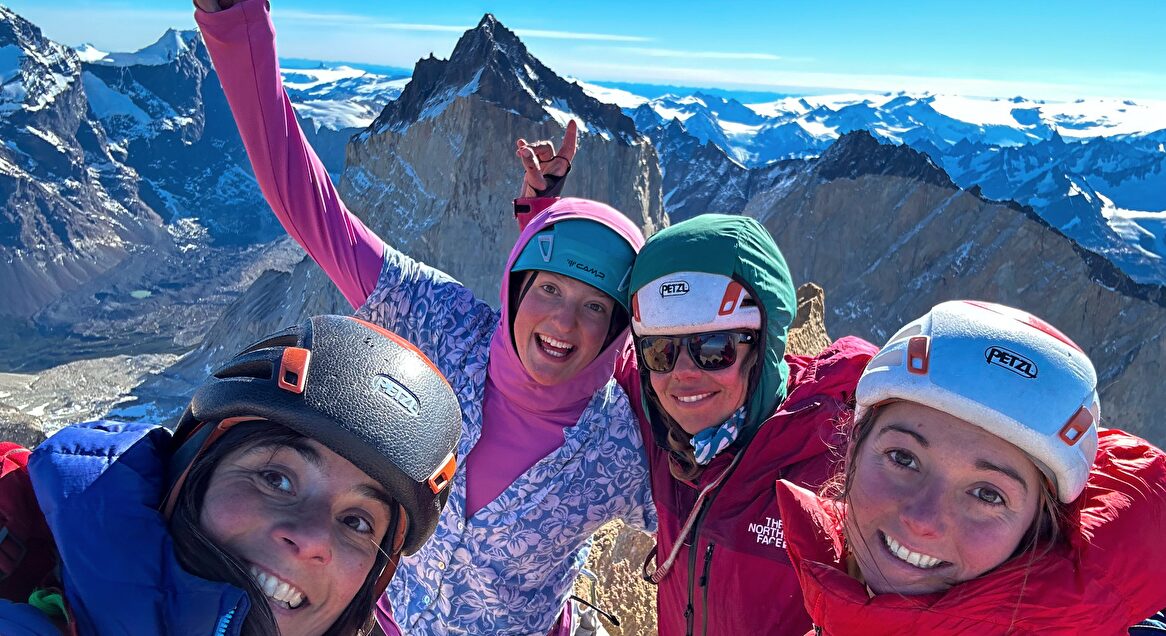
Belen Prados, Amelie Kuhne, Caro North, and Julia Cassou at the top of the ‘South African route’ on the Central Tower of Torres del Paine. Photo: Julia Cassou
Pure Patagonia Whitewater Kayaking: Steve Brooks recounts his kayaking expedition with Ute Heppke through one of the most remote regions of Chilean Patagonia. The pair paddles in Chile regularly, but this time, they sought a river they had never kayaked before. They settled on the Rio Figueroa.
Brookes describes the journey to the starting point and their three days on the river. Heavy rain forced them to tackle strong currents, difficult rapids, and three-hour portages that left them exhausted.
The Lure of the North: Jenny Tough writes about her journey across Finnish Lapland. Traveling by fat bike, she takes on the freshly opened winter Karhunkierros Wilderness Trail. After completing the first day with friends, she continued on alone, cycling between remote wilderness huts. The point of the trip was to experience the extreme cold and dark, and Tough discovered how doable that actually is if you embrace it and prepare properly.
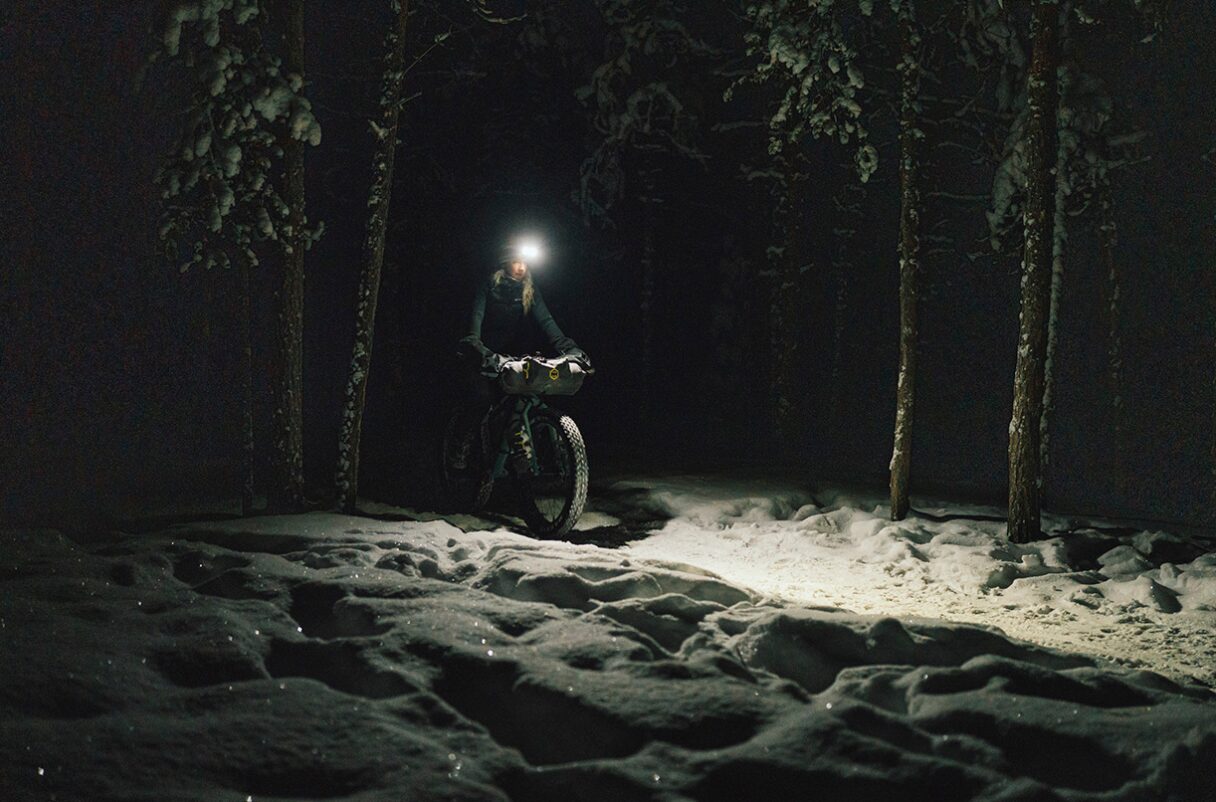
Fat biking through Finnish Lapland. Photo: John Summerton
Everest analysis
What Happens to Your Body When You Climb Everest: A clinical view of how every system in the body is pushed beyond normal limits as Everest climbers enter the death zone. Climbers have only one-third the oxygen available at sea level to draw from. This impairs brain function and increases the risk of life-threatening conditions such as high-altitude cerebral edema and pulmonary edema. The heart works harder to circulate oxygen, the blood thickens, and the lungs struggle to function. The conditions impact vision and can cause frostbite in extremities.
Attentional Focus and Mental Tools for Climbers: Sam Davies explores how focus affects climbing performance, breaking down the difference between internal focus (thinking about body position and movement) and external focus (directing attention to holds, movement outcomes, or the environment), and how moving between stages of focus often brings the best outcomes. He also highlights self-talk as a key mental tool.
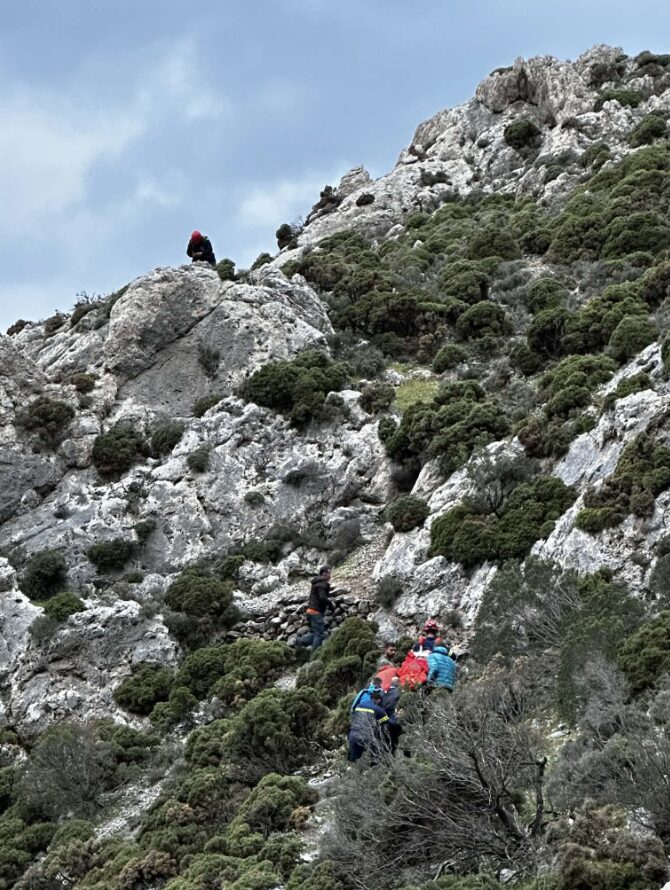
The rescue attempt. Photo: Kęstutis Skrupskelis
Rescuers respond
Fatal Kalymnos Fall Highlights Dangers of Aging Bolts and Limited Rescue Resources: Last week, a fatal climbing accident occurred on the Greek island of Kalymnos. Peter Hruban, 60, died after several bolts failed while he was rappelling down from a route.
The incident highlights the risk of deteriorating fixed equipment and the reality of emergency response in remote climbing destinations. A climber who witnessed the fall released a scathing statement about rescue services on the island, citing a delayed response, limited resources, unprepared rescuers, and communication issues. The all-volunteer team has responded to the criticism.
How to Walk on the Trail of Tears: The Trail of Tears National Historic Trail is a network of routes totaling over 8,000km across the U.S. It follows the forced removal of the Cherokee, Choctaw, Chickasaw, Creek, and Seminole peoples from their land in the 1830s.
Private land, modern roads, and waterways have made it impossible to walk the route as a single trail, but you can walk sections. One such section is the Cherokee Benge Route near Prairie Grove in Arkansas. Marked paths allow visitors to engage with the trail respectfully and reflect on its historical context and the human cost of the forced journey.