Just over a month ago, we reported on the doubts surrounding one of two local teams that claimed to have climbed the elusive Tirich Mir (7,708m). The Alpine Club of Pakistan (ACP) launched an investigation into the matter and determined that the disputed claim was false.
A special committee under the direction of the ACP Executive Board concluded that the supposed summit photo that Abdul Joshi and his team submitted as proof actually showed a false summit. “The [rest of the] evidence submitted was insufficient to conclusively establish that the true summit had been reached,” the committee decided.
The claim
Tirich Mir — the highest peak in the Hindu Kush — had been closed to climbers for years due to political sensitivities near the Afghan border. Recently, the mountain reopened, and climbing royalties were waived to celebrate the 75th anniversary of its first ascent by a Norwegian team. Two Pakistani teams went to the mountain late last summer. Allegedly, both summited on different dates.
The first summit (and the first ever for a local expedition) was claimed by Abdul Joshi of Shimshal, with teammates Hameed Ullah, Faryad Karim, Mansoor Karim, and Nisar Ahmed. On August 19, Sirbaz Khan and Abid Baig also reported success.
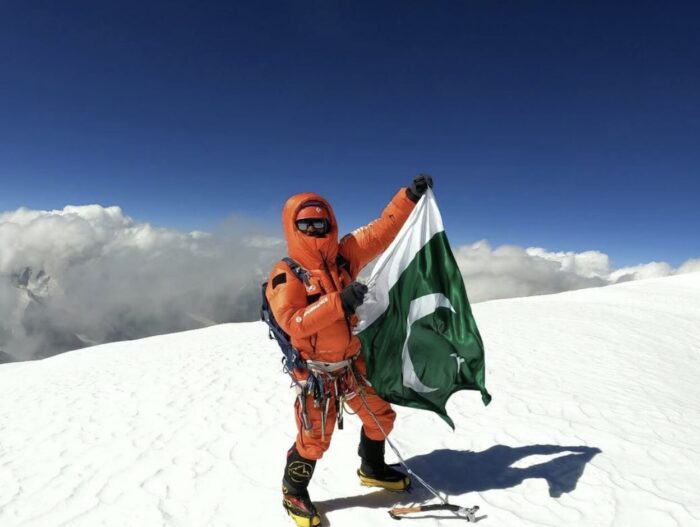
Sirbaz Khan on the summit of Tirich Mir, the roof of the Hindu Kush, on August 19, 2025. Photo: Abid Baig
Doubts raised
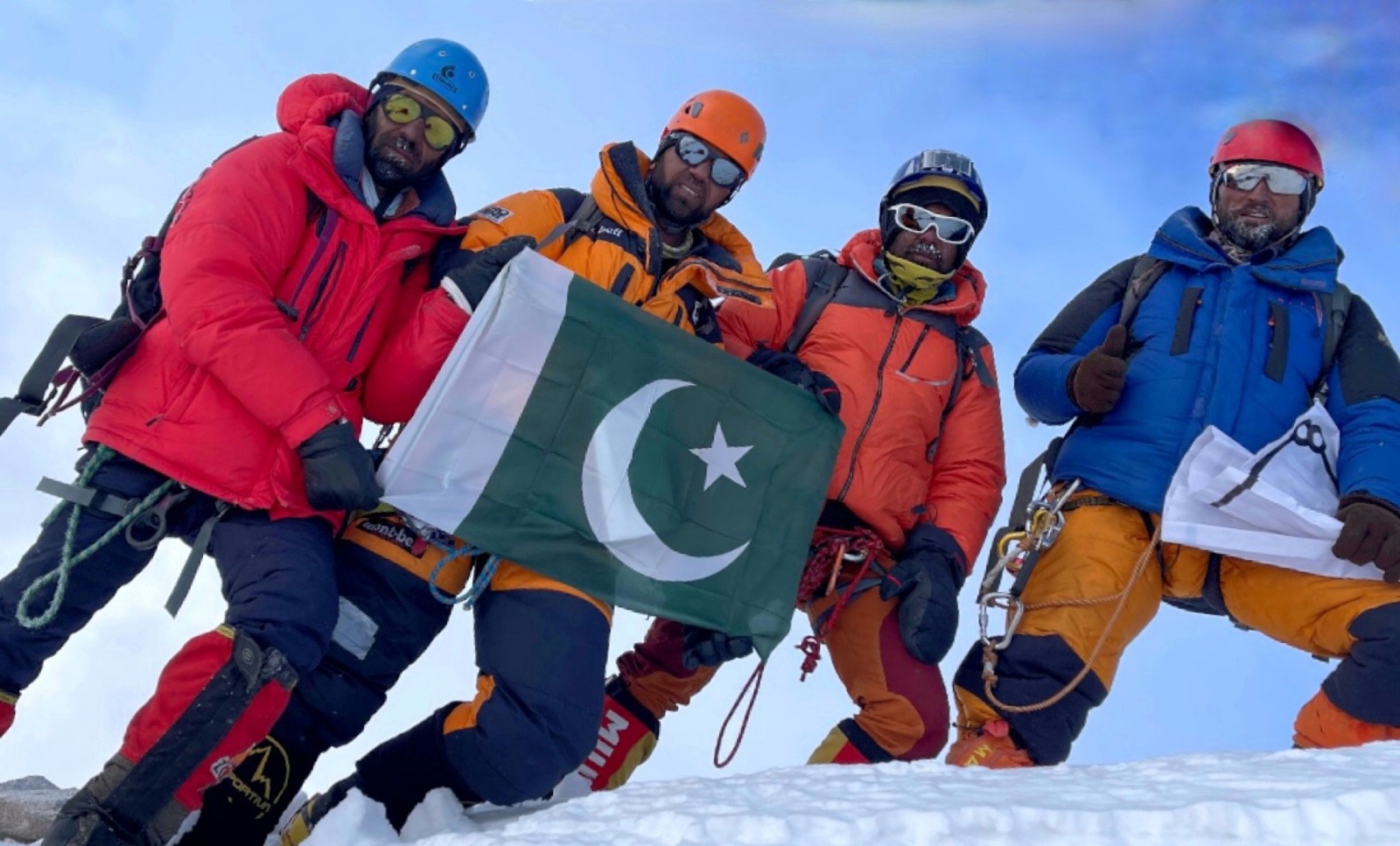
Months later, ExplorersWeb received a letter from an eyewitness who asked to keep his name anonymous, disputing Joshi’s claim. In particular, the source noted that the photo provided by Joshi as the summit picture (the lead image in this story) was taken lower down. Tirich Mir’s summit is wide and flat, while the mirrored glasses of the climbers in Joshi’s picture reflected a snow slope.
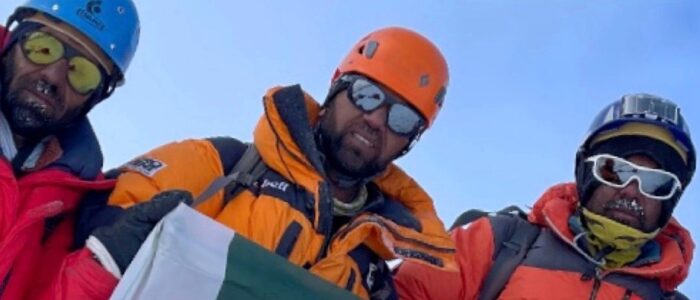
Summit picture of Tirich Mir provided by Pakistani Shimshal Guides.
ExplorersWeb published a feature story on the issue, including photos and the testimony of Abdul Joshi, who described the upper sections of the climb and other details. The members of a second Pakistani team that reached the top 18 days later provided plenty of summit proof.
Shortly afterward, the ACP opened its own investigation.
Conclusions
The committee included Retired Colonel Sher Khan (Chairman), Pakistani female climber Naila Kiani (Member), and Tayyab Syed (Member), a climber and member of Pakistan Association of Tour Operators (PATO). They examined summit photos, GPS data, official expedition reports, and statements from expedition leaders to conduct an “independent, impartial, and evidence-based review.”
The results confirmed that Sirbaz Khan and Abid Baig indeed summited on August 19, thereby becoming the first Pakistani climbers ever to summit Tirish Mir. At the same time, they invalidated Joshi’s August 1 claim. Diplomatically, the committee gave Joshi’s team the benefit of the doubt, noting that they were mistaken rather than purposely lying. The committee also highlighted the Joshi team’s work on the mountain. As the ACP explained:
The team reached a false summit, which was believed at the time to be the true summit due to severe weather conditions and the absence of a device to verify altitude. The committee found that the evidence submitted was insufficient to conclusively establish that the true summit had been reached. The report also noted that fixed ropes installed up to approximately 7,550 meters by this team significantly reduced the technical workload for subsequent climbers (Khan and Baig).
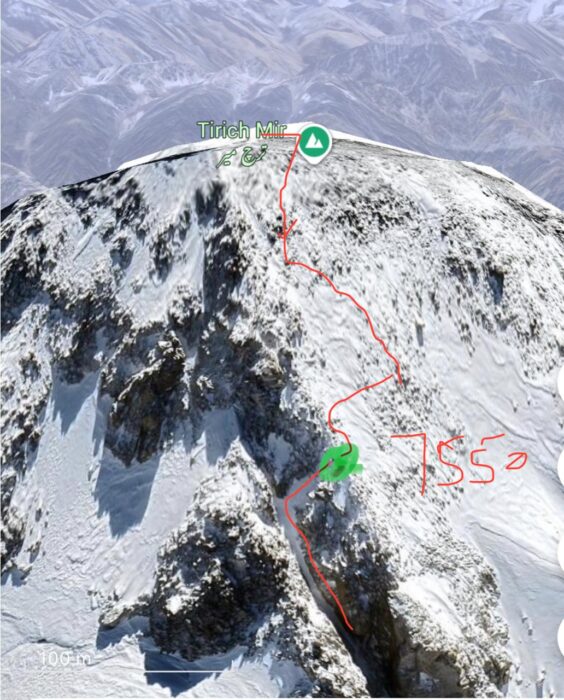
The point, green dot, where the fixed ropes ended, and red line, the route from there to the summit, as marked by Abid Baig.
The ACP remarked that the goal of the investigation was solely intended “to uphold accuracy, fairness, and the integrity of Pakistan’s mountaineering records.”
New guidelines
In a final statement, the ACP writes that it has adopted a series of standardized summit-verification guidelines for all future ACP-recognized expeditions. That implies all expeditions, since the ACP is responsible for issuing summit certificates.
The proof requires “clear summit photographs and videos showing identifiable features, the compulsory use of GPS-enabled tracking devices, and the submission of standardized post-expedition documentation.”
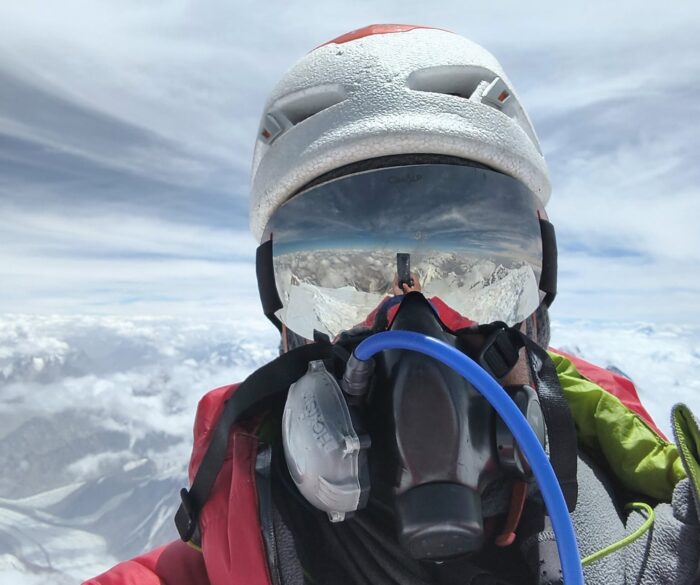
Serge Hardy of France takes a selfie on the summit of K2, which he reached alone, and the mountains around are reflected on his mirrored mask. Photo: Serge Hardy
This move by the ACP is a significant turning point toward transparency and a wake-up call for climbers to think twice before claiming mountaineering success.