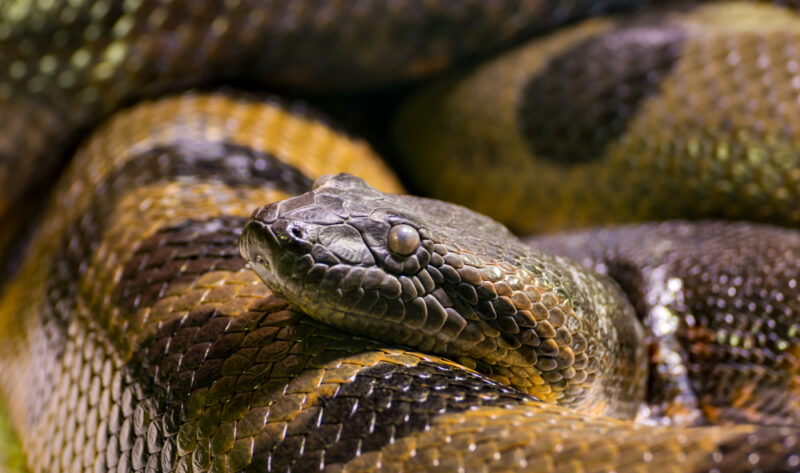
For as long as humans have known them, anacondas have been giants. The colossal snakes average four to five meters long, and some individuals exceed six meters. They rank among the largest predators in South America’s wetlands, and new research shows they have been this big for a long time. But as other species shrunk, they stayed huge.
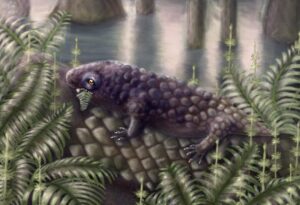
Anacondas first appeared in the fossil record 12.4 million years ago during the Miocene era. It was a time of giant creatures. Warm temperatures, vast wetlands, and abundant prey allowed reptiles and other animals to grow to extraordinary proportions. The freshwater turtle reached the size of a small car, and the caiman measured up to 12 meters, dwarfing today’s largest crocodiles. As the climate cooled and habitats shifted, almost all of these super-sized animals went extinct. Not the anaconda.
Paleontologists have assumed that, like many animals, ancient anacondas were larger than their modern-day descendants. A new study focused on 183 fossilized vertebrae from 32 snakes from northern Venezuela, dating back to the Middle and Upper Miocene eras. By looking at the size and shape of the individual vertebrae, researchers were able to estimate the length of each snake.
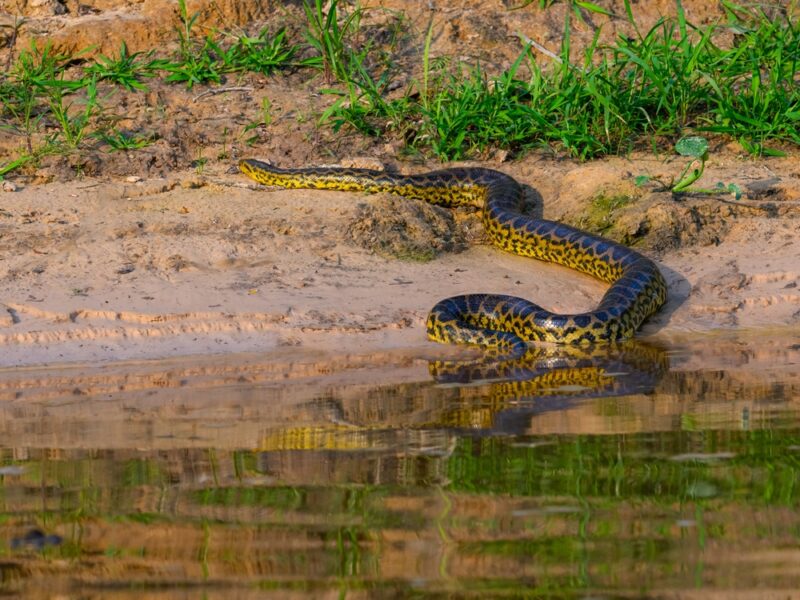
Photo: Shutterstock
Found their perfect size
The average Miocene anaconda measured 5.2 meters long, virtually the same size as today’s species.
“We expected to find the ancient anacondas were seven or eight meters long,” said study co-author Andres Alfonso-Rojas. “But we don’t have any evidence of a larger snake from the Miocene when global temperatures were warmer.”
The discovery surprised scientists because they had long assumed that, like most other species, anacondas would shrink as ecosystems changed and resources became more scarce.
Instead, the snakes seem to have found their perfect size early in their evolutionary history and held onto it.
“Species like giant crocodiles and giant turtles have gone extinct since the Miocene…but the giant anacondas have survived,” said Alfonso-Rojas. “They are super-resilient.”
Why they have not shrunk over time is a mystery. Some think it could be down to their lack of competition for food. Others believe the new findings challenge the long-held assumption that climate is a driving force in shaping the size of cold-blooded animals.