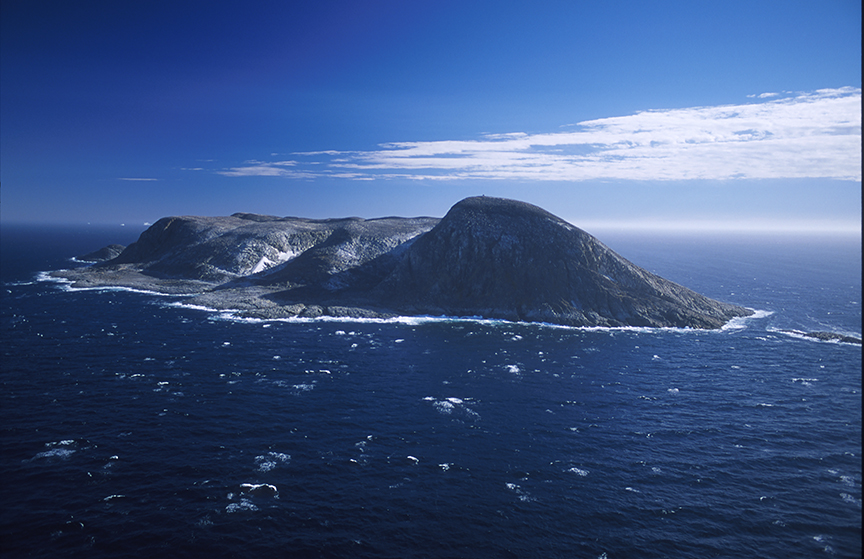
Some of the Arctic’s earliest inhabitants were far more capable seafarers than we realized. Items found on the remote Kitsissut Islands, better known as the Carey Islands, off northwestern Greenland show that humans traveled to them across at least 50 kilometers of open ocean 4,000 years ago.
Researchers from the University of Calgary surveyed three islands in the Kitsissut cluster: Isbjørne, Mellem, and Nordvest. They documented an astonishing 297 archaeological features across five separate sites. The finds included 15 circular tent rings with central hearth stones. Known as bilobate tents, they closely resemble those used by the Paleo-Inuit, the first people to settle in northern Canada. This suggests that the same people were the first to reach these isolated islands.
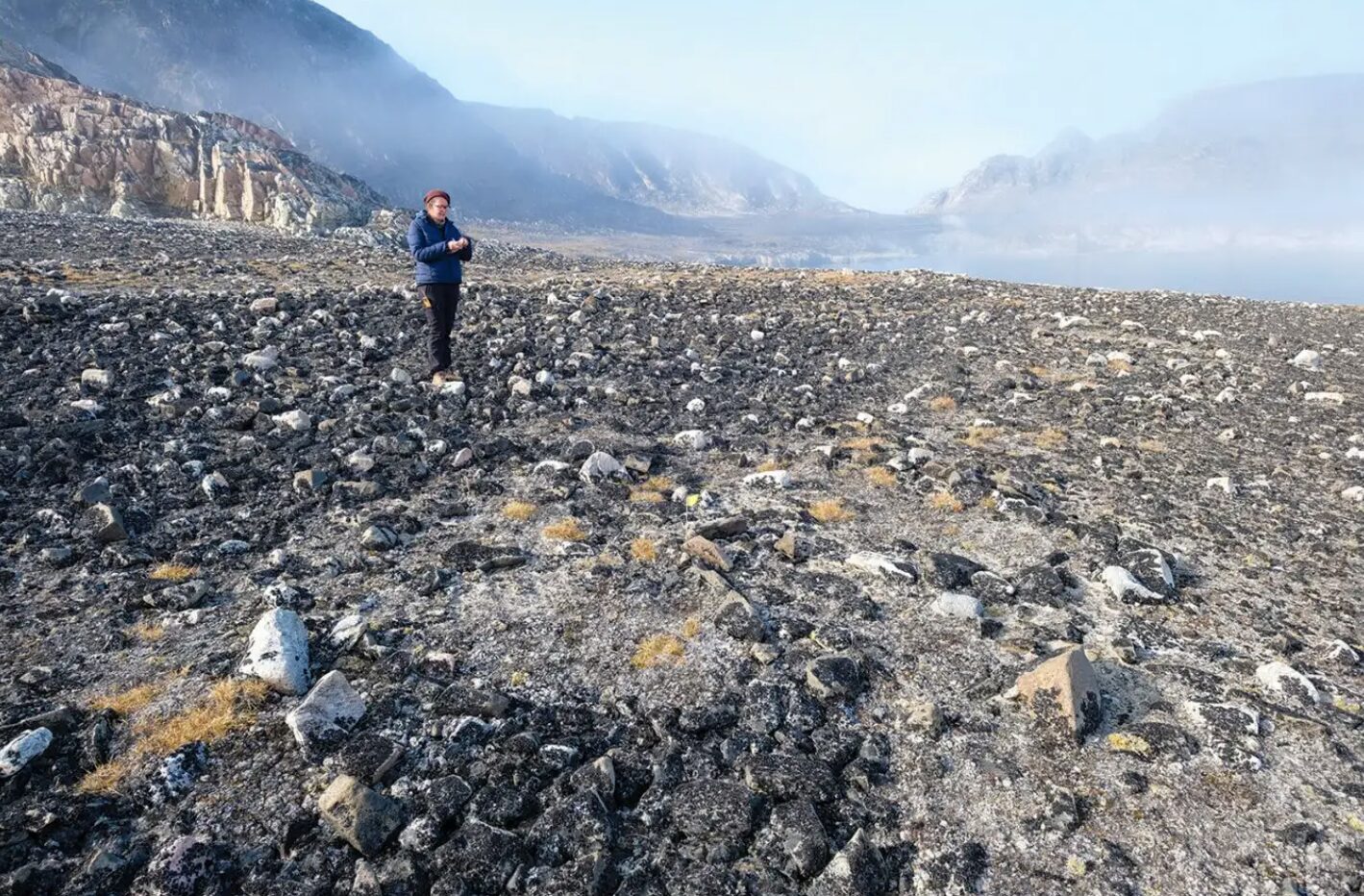
Study co-author Mari Kleist studies a Paleo-Inuit tent ring. Photo: Walls et al., 2026
To figure out the age of the sites, researchers examined the materials within the tent rings. Inside one of the rings, they found a small wing bone from a thick-billed murre, a common Arctic seabird. Radiocarbon dating reveals the bone is between 3,938 and 4,400 years old.
This timeline aligns closely with evidence that the special part of Baffin Bay that the islands sit in, the Pikialasorsuaq or North Water Polynya, formed around 4,500 years ago. It suggests that indigenous people landed on the islands almost as soon as they became accessible.
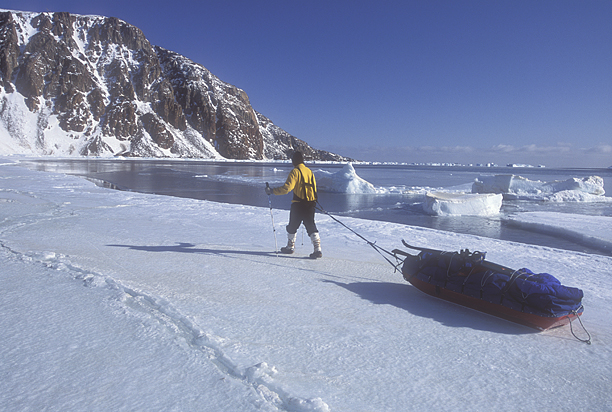
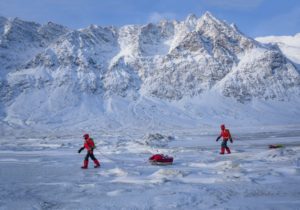
The North Water Polynya between Canada and Greenland is a large area of permanently open water. Photo: Jerry Kobalenko
A rich zone of open water
The polynya, a Switzerland-sized patch of open water within the sea ice between Canada and Greenland, is “a really important ecological hotspot,” according to Matthew Walls, lead author of the new study. Phytoplankton flourish in the area and support a rich food web, including large numbers of seals and dense colonies of seabirds along nearby cliffs. For ancient hunters, the area would have offered multiple opportunities for food and resources.
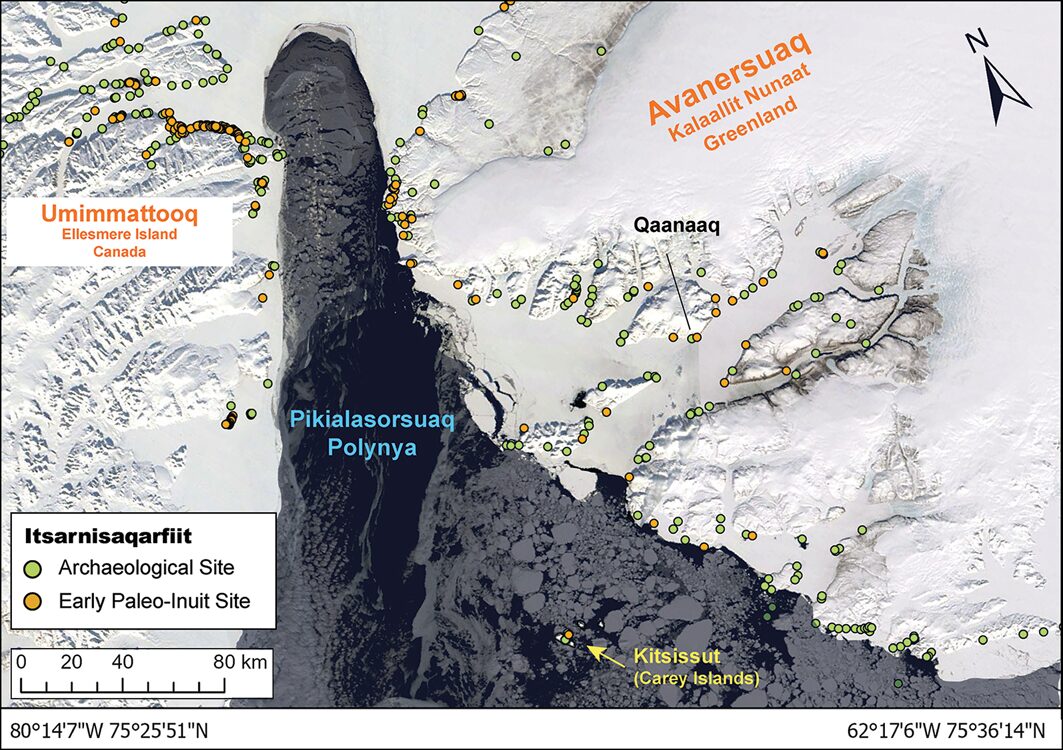
Map of the Pikialasorsuaq Polynya, showing the Kitsissut Islands and archaeological sites. Image: Walls et al., 2026
Archaeologists know that the Paleo-Inuit lived in Greenland at this time. Though reaching the Kitsissut Islands would have been possible, it would also have been a very challenging journey. The shortest crossing measures 52.7km, and strong winds and powerful currents make that route especially dangerous. Researchers believe those early travelers chose a longer, more northerly path that offered slightly safer conditions, even though it added distance.
No complete boats have been found on the islands, but fragments provide clues about their structure. Walls and his colleagues believe the Paleo-Inuit used skin-on-frame watercraft similar to those later used by Inuit communities. Even with these, the crossing would have taken between 12 and 15 hours, depending on sea state and weather.
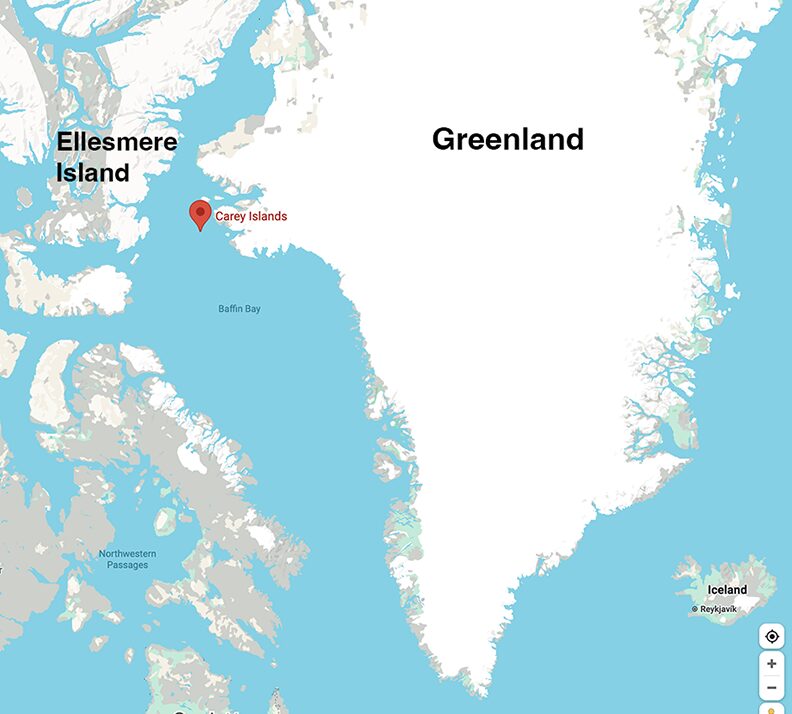
The Kitsissut/Carey Islands lie about 50km east of the U.S. Pituffik Space Base on Greenland. Image: Google Maps
Visited often
Evidence suggests the voyages were not one-off journeys. It seems that people returned to the islands often and stayed for extended periods. The research challenges long-held assumptions about the technological limits of early Arctic cultures, and reveals a community with advanced navigational skills and an ability to pursue seals and even whales in open water, which later Arctic people like the Dorset did not have.