Rothera on Adelaide Island is the UK’s largest Antarctic research station. Until recently, station support assistant Kirsten Shaw ran its mail service out of a handmade box. But only this month, the station received an actual Royal Mail postbox. The upgrade is primarily aesthetic, but highlights the logistical difficulty and surprising importance of snail mail in Antarctica.
Figuring that it was best to go straight to the top with these things, Shaw wrote to the British King last August. In the isolation of a research station, whose population varies seasonally from around 100 to 22, a simple letter is a physical connection to loved ones in the outside world.
“An actual tangible piece of paper with handwriting from friends and family is such a lift,” Shaw explained.
Her argument must have made an impact, because when polar research vessel RRS Sir David Attenborough arrived in Antarctica this month with a load of supplies, it also had a shiny new, official Royal Mail post box.
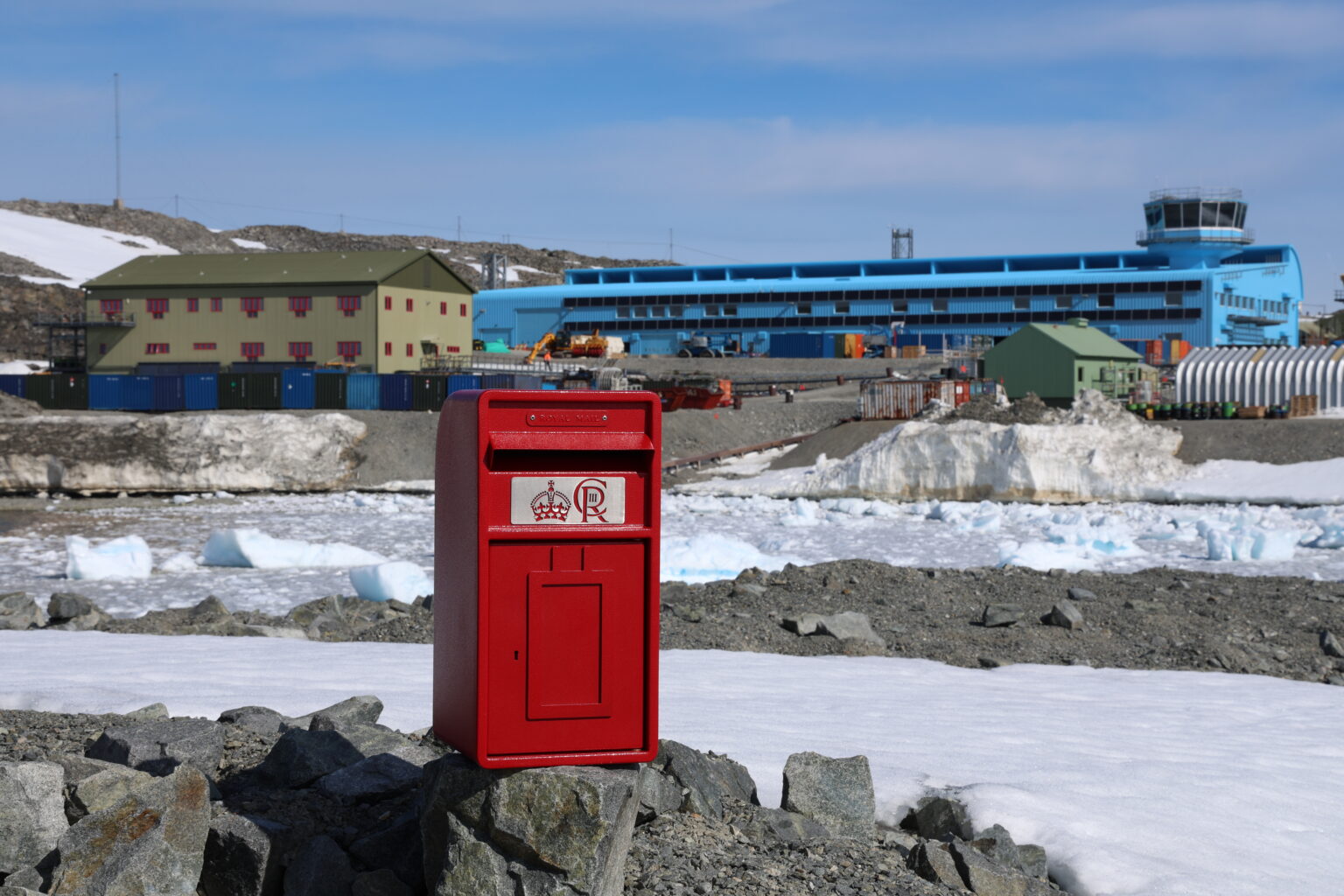
The postbox in front of its new home, the recently built Discovery Building. Photo: Jae Martin/British Antarctic Survey
For a letter to reach the new Rothera Royal Mail postbox, it must pass over many hundreds of kilometers. Likewise, outgoing mail has an arduous journey ahead of it. Outgoing mail is stamped and bagged by Shaw, then loaded onto a British Antarctic Survey plane or ship.
The bags are unloaded at a BAS office in the Falkland Islands and then flown to a Royal Air Force station in Oxfordshire. From there, they’re fed into the normal Royal Mail system for delivery.
There’s nothing quite like posting a letter as a penguin waddles past.