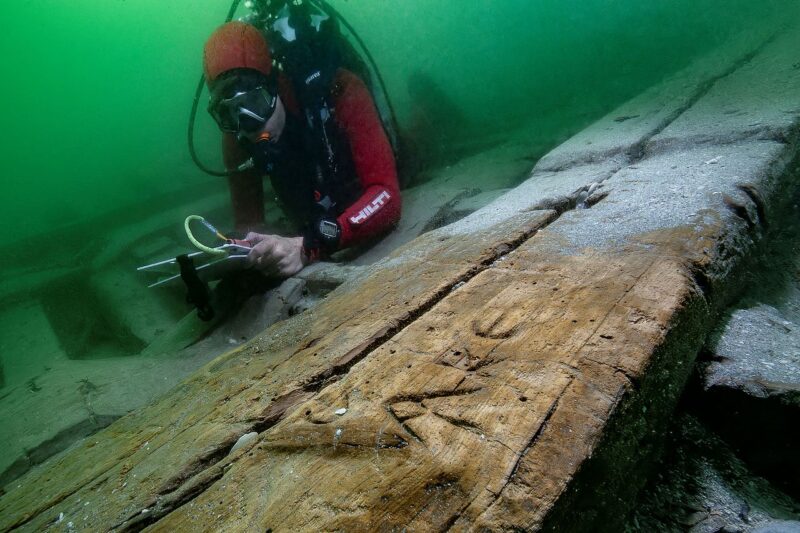
Divers have uncovered an ancient pleasure barge near the now-submerged island of Antirhodos, in Egypt.
The Greek philosopher Strabo wrote about these pleasure boats when he visited Antirhodos from 29 to 25 BCE:
“These vessels are luxuriously fitted out and are used by the royal court for excursions, and by crowds of revelers who set off from Alexandria across the canal to the public festivals,” he wrote. “Day and night, the boats are full of people playing the flute and dancing uninhibitedly and with great abandon.”
Several earthquakes and the rise in sea level over the centuries have since submerged Antirhodos. It is now roughly seven meters underwater, beneath a layer of sediment. There, divers from the European Institute of Underwater Archaeology spotted the remains of a well-preserved ship.
At first, they believed the timbers came from two separate ships. They soon realized it was just one vessel, and completely different from anything anyone had found before. These types of boats have been depicted in ancient writings and mosaics, but have never actually been seen before.
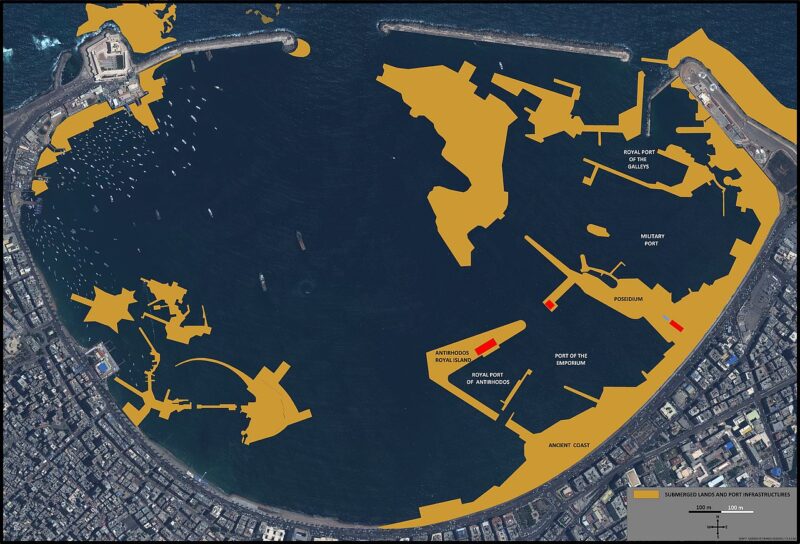
Map of the remains of the ship. Image: Franck Goddio/IEASM
Built for sheltered waters
“It’s extremely exciting because it’s the first time ever that such a boat has been discovered in Egypt,” study lead Franck Goddio told The Guardian.
At 28 meters long and 7 meters wide, with a rounded stern and flat bottom, researchers think it was built for sheltered waters, not the open ocean. Propelled by up to 20 rowers, its shape suggests the boat made leisurely voyages along canals and rivers. Its width would have allowed it to have a central pavilion or cabin for elite passengers. Greek inscriptions carved into the wood, likely by those who worked on or traveled aboard the barge, point to its Alexandrian origins. The craft is 2,000 years old.
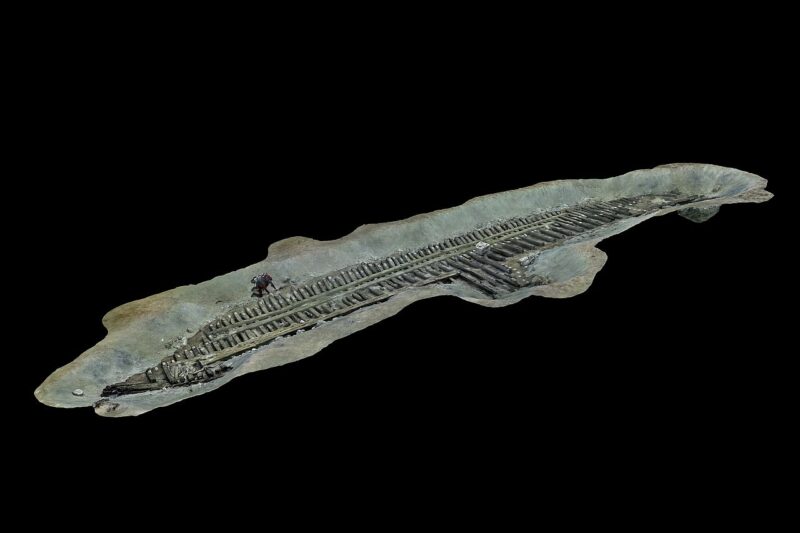
A 3D view of the barge. Image: Christoph Gerigk/Franck Goddio/Hilti Foundation.
Researchers have suggested one other use of the vessel, based on its location. The wreck is relatively close to the remains of the Temple of Isis. Goddio and his team think it might not have solely been a pleasure barge, but took part in religious festivals linked to the goddess.
The wreck will remain on the seabed under UNESCO preservation guidelines. From it, researchers hope to discover more about life, luxury, and religious practices during early Roman Egypt.