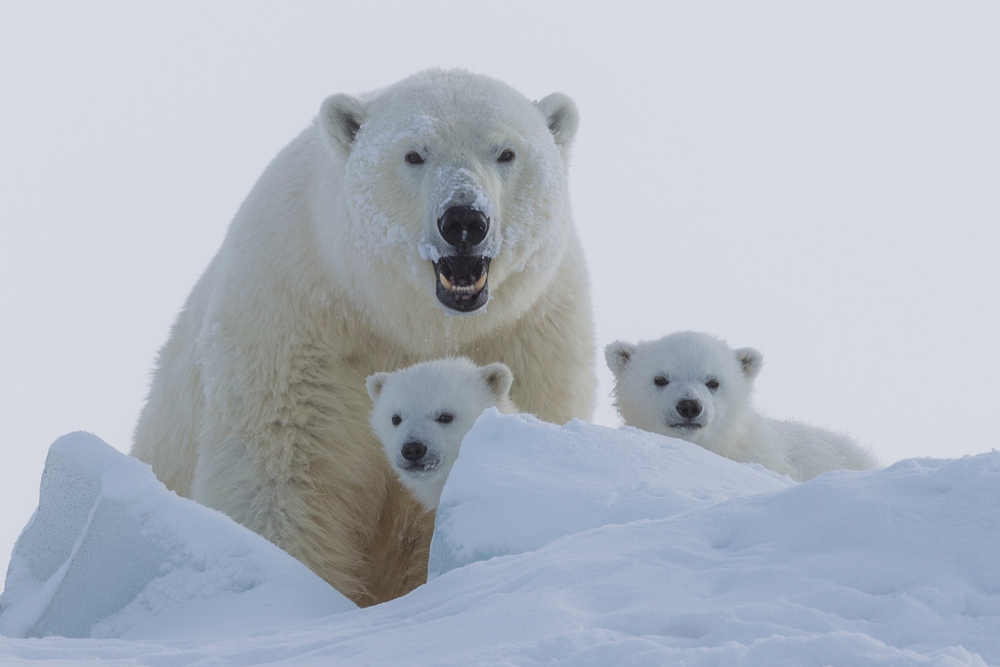
In the past, both Arctic explorers and local Inuit have occasionally fallen prey to polar bears. Even today, attacks and even deaths are not unknown. More often, though, polar bear-human interactions mean death for the bears.
Hoping to make the Arctic safer for bears and people, conservation non-profit Polar Bears International created “bear-dar” — a radar alert system that warns people if a polar bear is in the area. The system scans the area, noting anything that moves, and uses a trained AI to determine whether that thing is a polar bear.
Once it detects a polar bear, it could trigger a variety of responses. Geoff York, senior research and policy director at Polar Bear International, suggested that, in addition to text or email notifications, the system could respond with loud noises or flashing lights to scare it off.
In an interview with the CBC, York said the base package for this system costs about $45,000. That price would increase as the area under surveillance expanded.
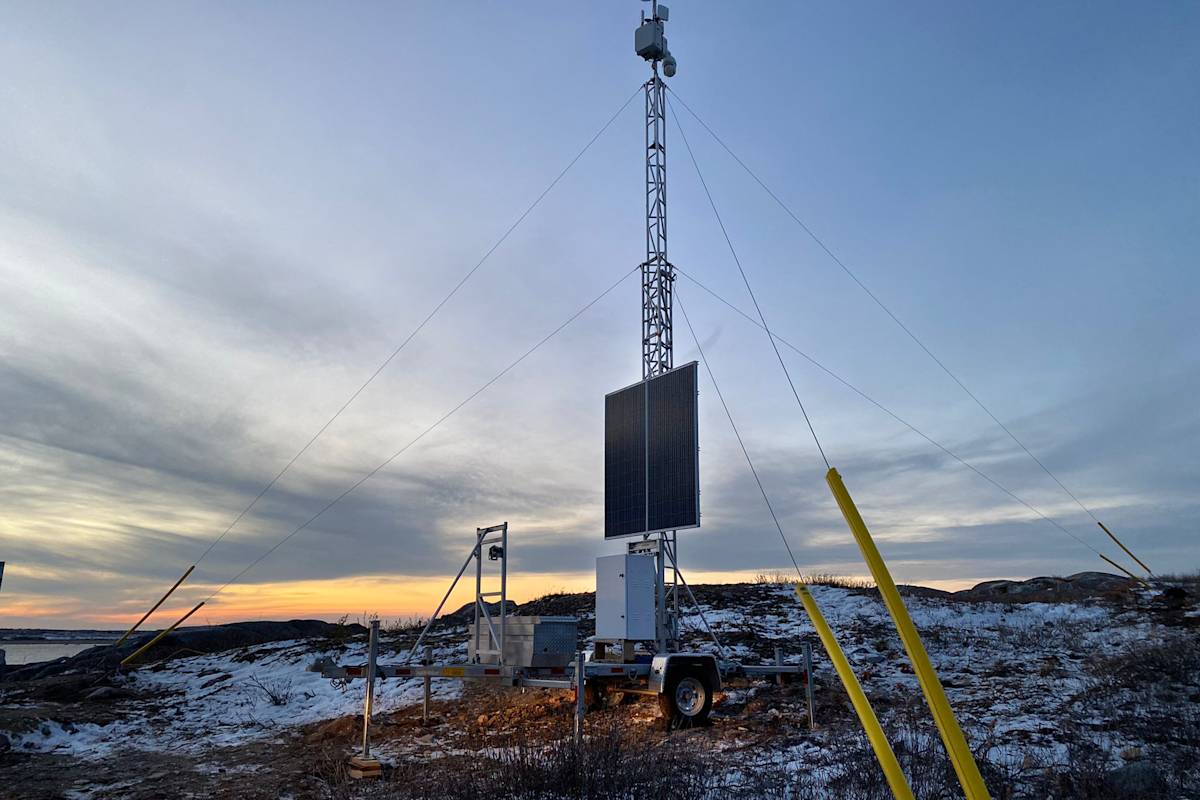
A radar tower detects nearby bear activity. Photo: Kt Miller / Polar Bears International
First tests
Developers first tested bear-dar in the town of Churchill, Manitoba. Every year in the fall, polar bears gather there to wait for the returning sea ice. In Churchill, the pilot detection system was a supplement to the existing bear-detection infrastructure. But Polar Bear International foresees even greater utility for bear-dar in places that don’t have the resources of Churchill.
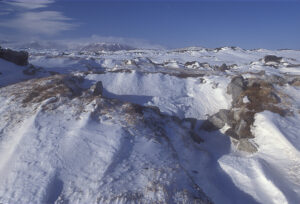
A remote research station like Eureka, therefore, was the perfect place for the first practical application. Located on Ellesmere Island, Nunavut, the Eureka weather station has experienced more polar bear visits in recent years. As the multiyear ice disappears, the polar bears are expanding their range north, into areas they previously avoided. This means they’re spending more time around people, like the Eureka researchers.
In August 2025, the bear-dar system arrived in Eureka. Over the next few years, it will gather data and serve as an example to other interested Arctic communities.
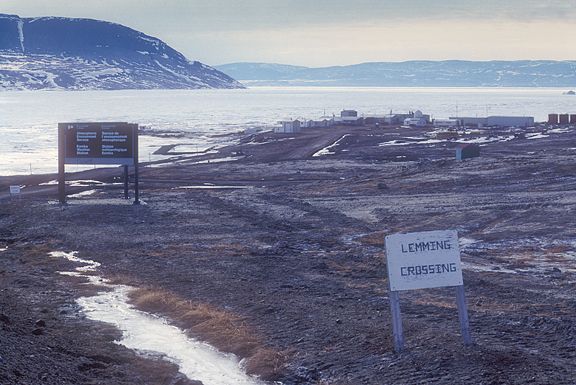
The Eureka weather station in Nunavut. Photo: Jerry Kobalenko
Bear-dar was developed in conjunction with Spotter Global, a company primarily focused on military contracting and the sale of surveillance systems to the U.S. government. Their website also lists yacht protection as an application for their services.