The Arctic expedition season continues to deliver a mix of progress, setbacks, and risk. Two teams have recently abandoned their expeditions in Greenland and Siberia, while several others are making steady progress across Svalbard. The past week has also brought more serious developments, including the death of a veteran polar guide in a crevasse fall in Svalbard and a close polar bear encounter involving the UK’s Preet Chandi.
Greenland
Australian adventurer Marcus Arnold has decided to abandon his expedition to circumnavigate Milne Island in Greenland. The Australian had planned a 400km solo, unsupported ski journey around the island, Greenland’s third largest.
The attempt had already encountered problems. Last week, Arnold reported ongoing difficulties traveling with a hired sled dog, as well as concerns about trekking in an area where polar bear activity proved higher than expected.
Instead of the circumnavigation, Arnold had turned to a backup plan of day trips from a remote hut. The decisive setback, however, came when Arnold lost his sleeping bag in severe winds, a calamitous mistake.
“I fell over in deep snow while carrying my bed bag in 80kph winds. My sleeping bag and mattress were blown away and lost miles downwind,” Arnold wrote on social media. Arnold is now waiting for a storm to pass before a helicopter can extract him.
Meanwhile, British chef-turned-adventurer Mike Keen is currently making his way to Greenland for a planned 320km sled expedition across Melville Bay starting in mid-April. Keen is returning to the region after a major journey in 2024, when he kayaked 3,200km along Greenland’s west coast.
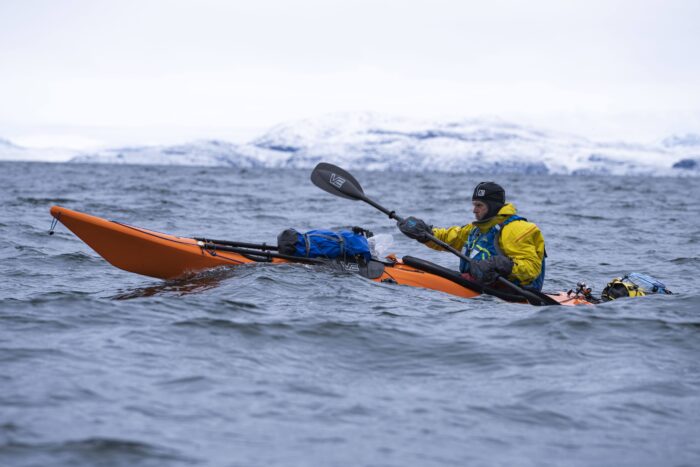
Mike Keen paddles the west coast of Greenland. Photo: Arina Kleist
This time, he plans to travel over sea ice rather than open water, hauling a sled from the settlement of Kullorsuaq in northern Greenland across Melville Bay to Savissivik, the next community along the northwest coast.
One snow kiting expedition across the Greenland Ice Sheet is set to begin in the coming days. On April 13, an international team of four plans to kite roughly 1,700km from Kangerlussuaq in southwest Greenland to Qaanaaq in the far northwest.
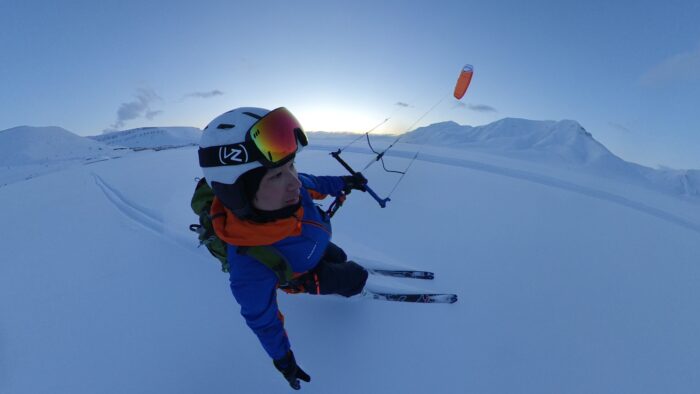
Glaciologist Wilson Cheung will kite in a team of four on the Greenland Ice Sheet. Photo: Wilson Cheung
The team is led by Belgian expedition leader Gilles Denis, 36. He is joined by Scottish Antarctic field guides Sasha Doyle, 35, and Ed Luke, 38, as well as Hong Kong–based glaciologist Wilson Cheung.
Svalbard
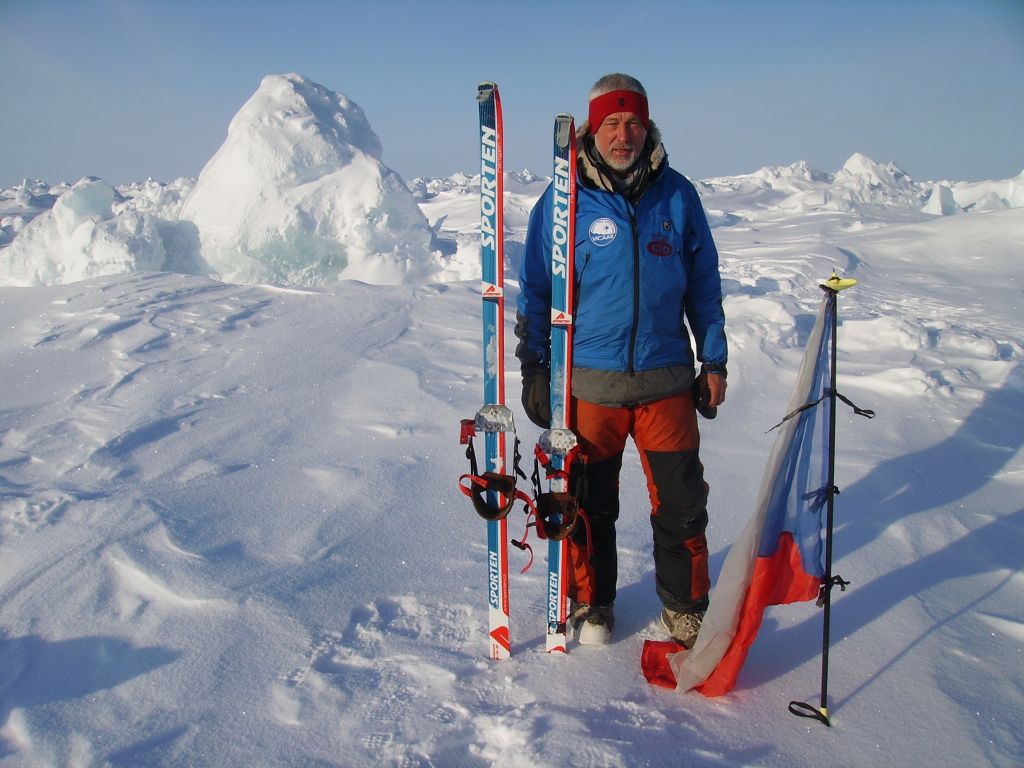
Seventy-five-year-old Czech polar guide Miroslav Jakes has died after falling into a crevasse on the Skilfonna Glacier in southern Spitsbergen. Jakes’ body was found 20m into the crevasse by rescue workers on Thursday, after the Czech skier was reported missing on Monday afternoon. Jakes was on a solo expedition.
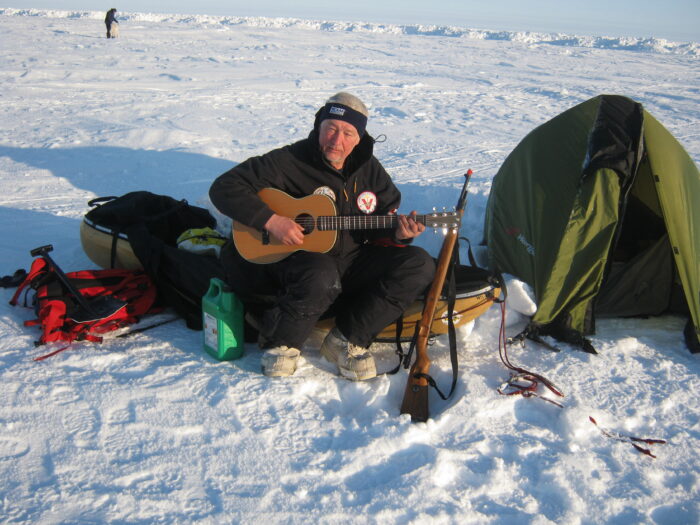
Miroslav Jakes. Photo: Miroslav Jakes
In 1984, Jakes crossed the Greenland ice sheet with fellow Czech Jaroslav Pavlicek, and in 1993, he skied to the North Pole as part of an international team. As a guide, he had also skied to the North Pole several times subsequently. The Czech had also summited Aconcagua nine times, as well as Pik Lenin, and reached a Czech winter high point on Cho Oyu in the early 1980s.
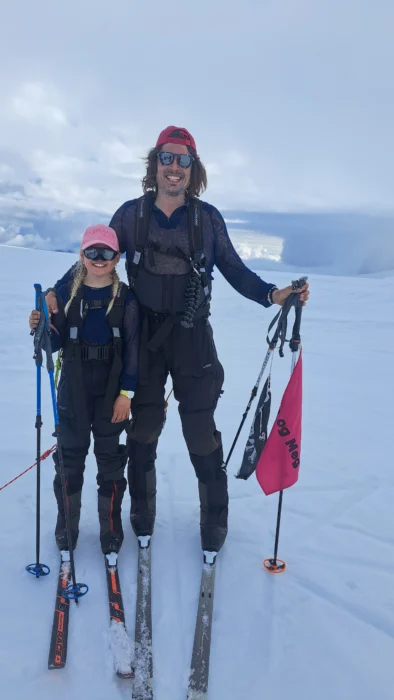
Mina and Alexander Read on a previous trip: Photo: minaogmeg.no
Norwegian Alexander Read and his 10-year-old daughter Mina are 16 days into their 600km sled journey from south to north across Spitsbergen, guided by Norwegian polar guide Are Johansen.
Their tracker shows they have covered only around 90km in the last week and 290km in total. They appear to be in South Spitsbergen National Park.
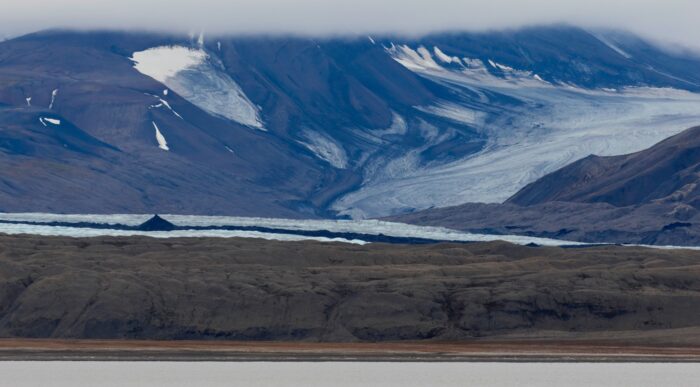
The Nathorstbreen Glacier in Svalbard. Photo: Shutterstock
After descending the Nathorstbreen Glacier and exiting South Spitsbergen National Park, located at the southern end of Spitsbergen, a six-woman Norwegian team has skied beyond the southernmost section of the island as they continue north.
The group consists of Karen Kylleso, Christine Fors, Veronica Fors, Cecilie Rydberg, Ellen Burchard, and Ingvild Feragen.
The women are on day 15 of a planned 35-day, 650km sled journey that began at the southern tip of Svalbard. Their route will take them north across the archipelago to Verlegenhuken.
A recent update indicates that the group briefly met with support, during which one team member received replacement ski boots along with a small delivery of food supplies for the whole team.
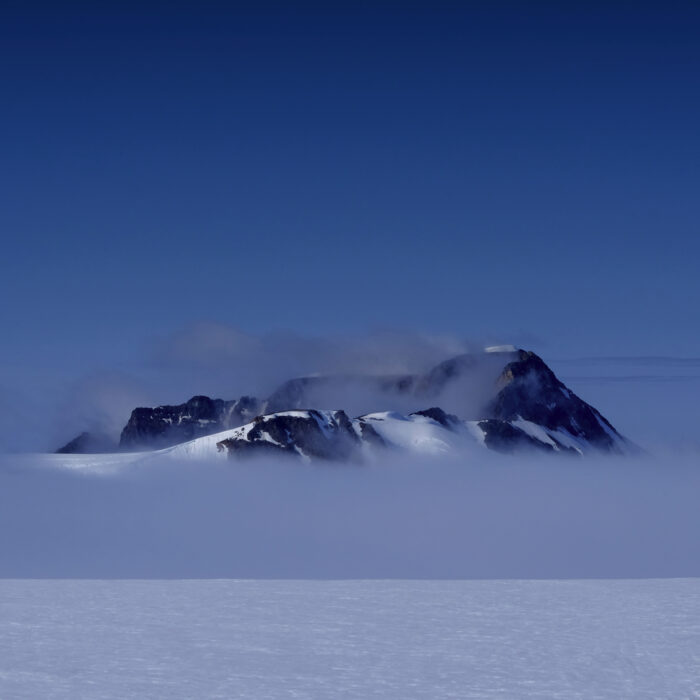
Newtontoppen, Svalbard. Photo: Shutterstock
A five-man team comprising Merlin Cerise, 29, Gael Loicq, 39, Jean-Simon Gerard, 37, French photographer Fabrice Yencko, 40, and Nicolas Sanchez, 35, set out on March 27 on a 35-day unsupported ski expedition across Spitsbergen.
The team left Longyearbyen to trek toward the northern tip of the island before returning to their start point. As of April 10, they are 14 days into the expedition.
No further public updates have been shared by the group. However, their tracker currently places them in northern Spitsbergen, just east of Newtontoppen, the highest mountain in Svalbard.
Nunavut, Canada
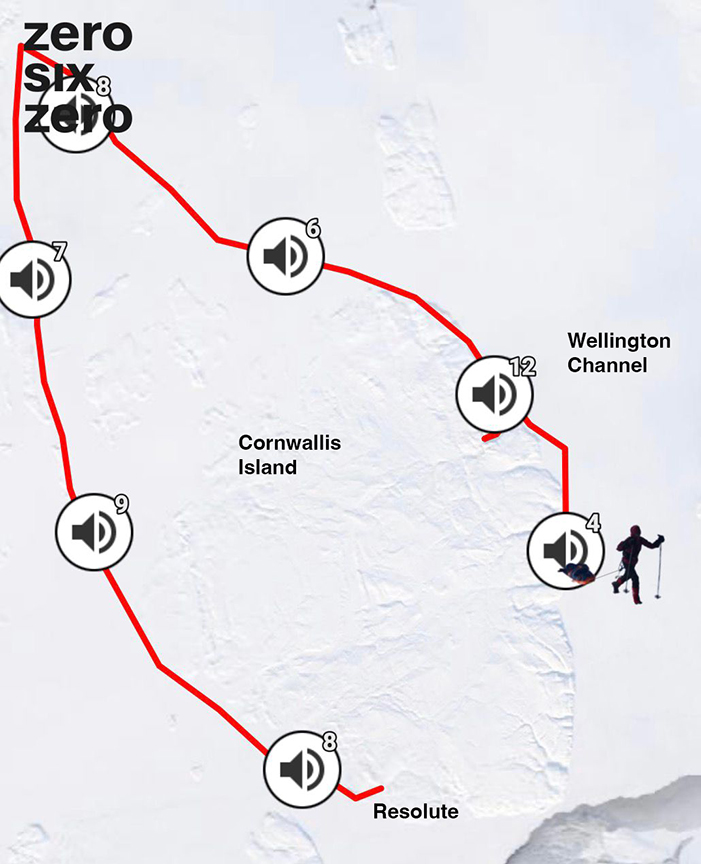
Chandi’s route.
British adventurer Preet Chandi survived a close encounter with a polar bear yesterday. “A polar bear approached her tent and ripped holes in the fabric while she was inside. She managed to deter the bear by firing two flares, but the encounter left her understandably shaken and unable to sleep for the rest of the night,” wrote her expedition manager on social media.
Chandi appears to have handled the encounter efficiently and sounds calm in her latest update.
The Briton is now 30 days into a sled journey in the Canadian High Arctic. She departed on March 12 from Resolute on Cornwallis Island, one of Canada’s northernmost communities.
Her initial plan was to go from the hamlet of Resolute, on southern Cornwallis Island, then travel northwest to the frozen east coast of Bathurst Island before crossing sea ice to Ellef Ringnes Island and eventually turning back, a journey of more than 1,000km.
It will end up being less than half that. After reaching Bathurst Island, she changed course, turning east instead. She is currently about three-quarters of the way along the eastern coast of Cornwallis Island as she returns to Resolute. Chandi’s tracker indicates she has covered 378km, averaging 12.6km per day.
Northwest Territories, Canada
Veteran polar traveler Will Steger, 81, is six days into a 1,300km solo expedition expected to take around 60 days. His route runs from the northeastern shore of Great Bear Lake in Canada’s Northwest Territories to the Arctic community of Paulatuk on the shores of the Arctic Ocean.
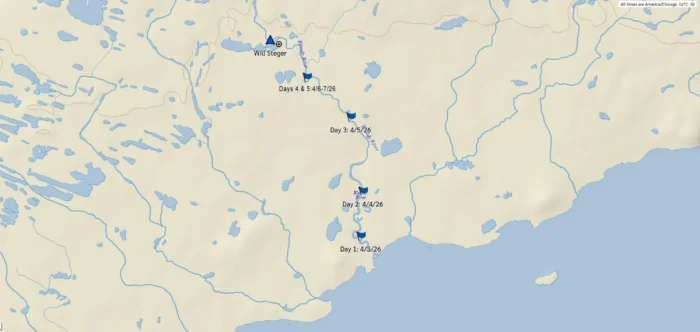
Steger’s location as of day 6.
So far, the American has faced deep snow and put in 12 hours on day four. Steger then took the next day off.
Lake Baikal
Irish adventurers Stafford Tyrrell, 31, and Mark McInerney, 32, have called off their effort to circumnavigate Lake Baikal.
“The ice was not kind to us this year at all. Firstly, both of us were stung with some bout of food poisoning after we started. We were then met with some deep snow drifts…for the first 12 days,” Tyrrell told ExplorersWeb.
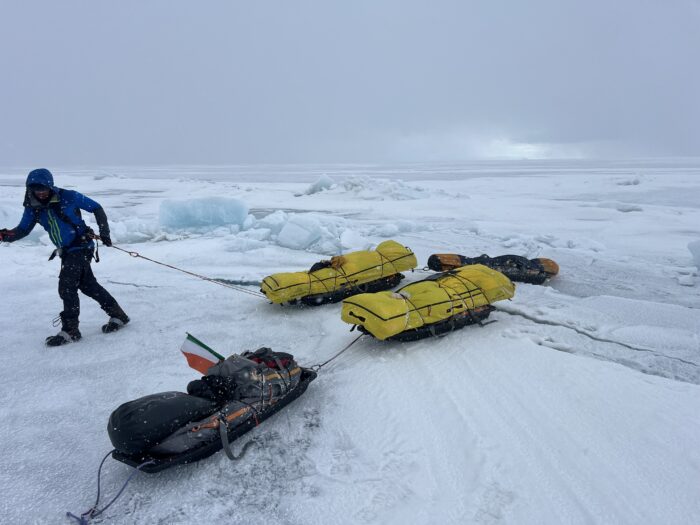
Photo: Stafford Tyrrell and Mark McInerney
The pair eventually reached sections of bare ice, but progress remained difficult. “We got some bare ice a few days after Listvyanka. But even then, it resembled a rubble field,” he added.
After spending around 30 days trekking on the frozen lake, warming spring temperatures began to weaken the ice.
“The last few days were never below freezing. So we bugged out to Ust-Barguzin. Not willing to punch in further north in such conditions, as we have no emergency lined up. It’s no man’s land further north of Olkhon Island,” said Tyrrell.
Tyrrell added that they made it out of Russia just as the internet crackdown began. “All the apps, etc., have been shut down. Can’t even use VPNs. Seems like they are about to go fully dark. WiFi is also down.”