Greenland
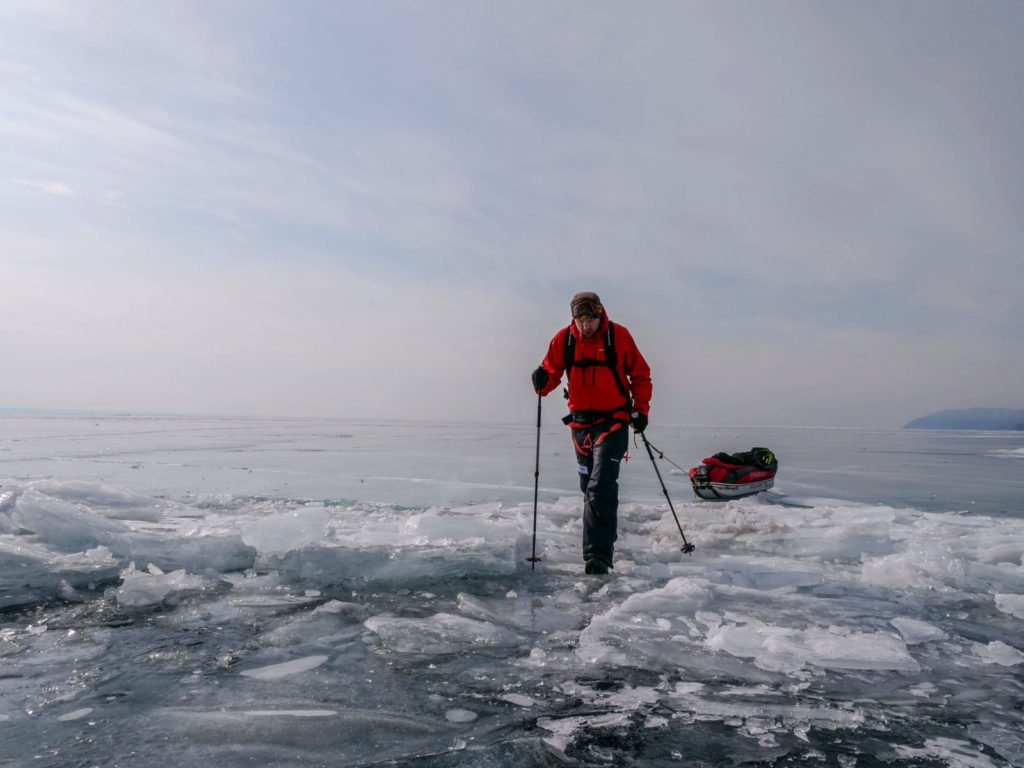
Marcus Arnold, an Australian geologist who had planned a 400km solo and unsupported ski circumnavigation of Milne Island, Greenland’s third-largest island, has abandoned his original objective after a series of setbacks.
Arnold reported ongoing difficulties with his sled dog, which he had intended to use as a polar bear early-warning system. Instead, the partnership proved counterproductive. He described the animal as “an absolute hindrance to me in every single way. Truly, I couldn’t have had a worse dog.”
More decisive, however, was his own lack of confidence about traveling safely through an area where polar bears were present. After encountering fresh tracks at a planned campsite, Arnold reconsidered.
“Worst night of my life. I arrived at where I intended to camp, and found many bear tracks,” he wrote on social media.
“I simply couldn’t put the tent up and sleep in it with no visibility. With a dog I don’t trust, and generally not being experienced enough myself, I was too scared to lie there in a tent. So I turned around again and skied through the night back to the hut, arriving at about 3 am.”
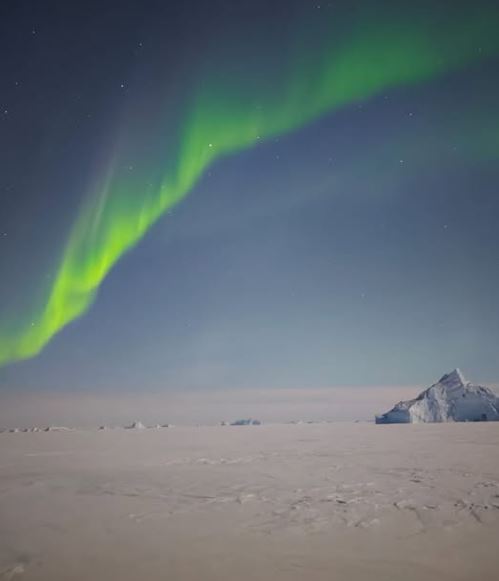
Photo: Marcus Arnold
Five days ago, Arnold confirmed that he is abandoning the circumnavigation. He is now shifting focus to shorter day trips from a nearby hut.
Elsewhere in Greenland, Mike Keen is crowdfunding ahead of his manhauling trek across Melville Bay, which begins in a few weeks. In addition, an international team of four will kite from Kangerlussuaq to Qaanaaq, starting April 13.
Svalbard
Norwegian and Danish snow-kite guides Thomas Sorensen and Morten Rejkjaer are now back in Longyearbyen after aborting their attempt at an unsupported snow-kite circumnavigation of Svalbard. The pair had faced poor weather, which damaged their kiting equipment. They also suffered frostbitten feet.
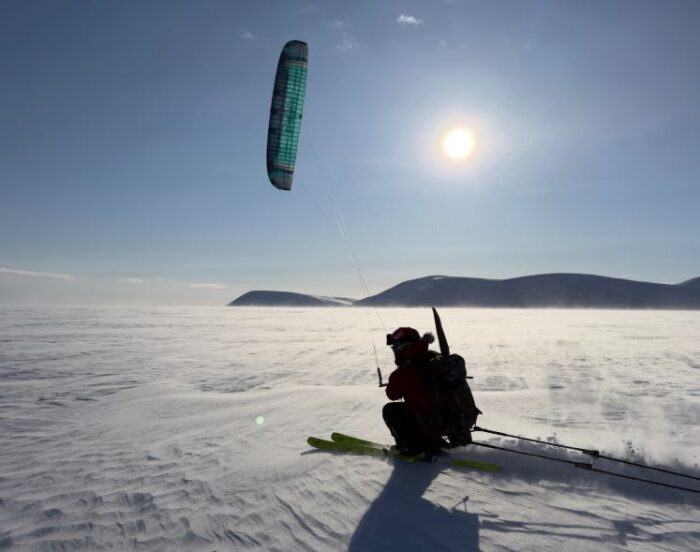
Photo: Thomas Sorensen
Writing a final update last week, Sorensen said, “We ripped a kite, and it was a challenge with frostbites that needed extensive observation.”
Norwegian Alexander Read and his 10-year-old daughter Mina are nine days into their 600km sled journey from south to north across Spitsbergen, guided by Norwegian polar guide Are Johansen. Their tracker shows they have covered 202km, though their exact location along the route is unclear.
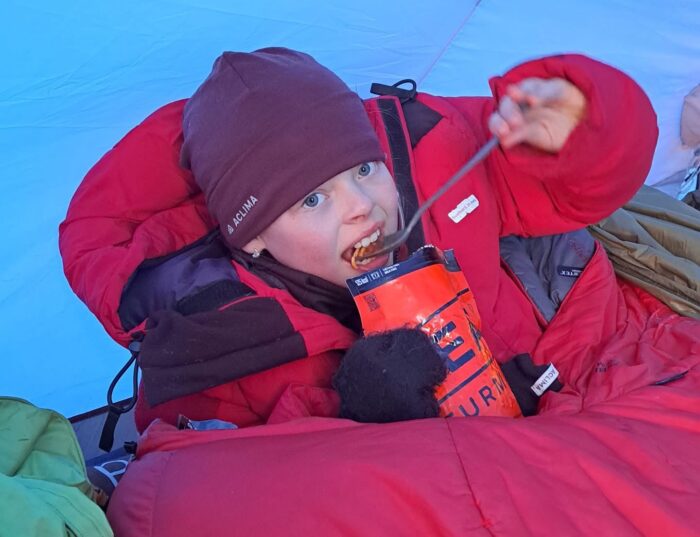
Ten-year-old Mina Read tucks into an expedition meal. Photo: Mina og meg
Eight days into a 35-day, 650km sled journey across Svalbard, a six-woman Norwegian team comprising Karen Kylleso, Christine and Veronica Fore, Cecilie Rydberg, Ellen Burchard, and Ingvild Ferangen is in southern Spitsbergen. The group is currently camped near a glacier, waiting for better visibility.
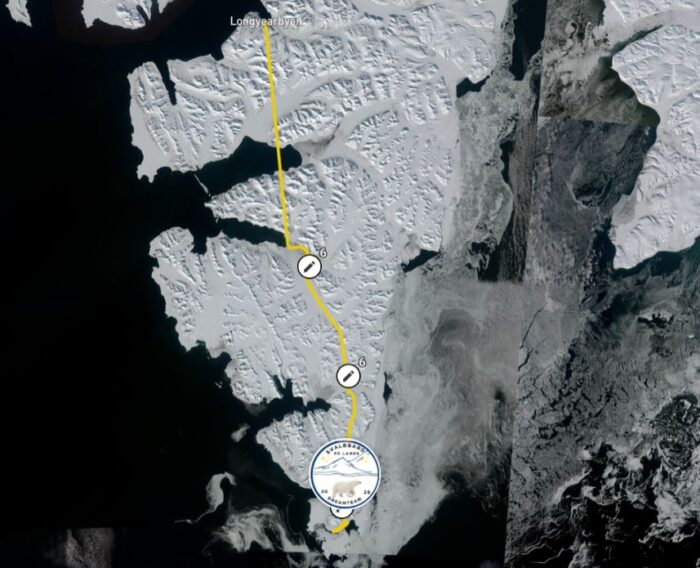
The large circle marks the location of Kylesso and company. Longyearbyen, the capital of Svalbard, is at the very top of the image.
Their tracking device offers no clear insight into mileage covered so far, as they continue their planned traverse from the southern tip of Svalbard to Verlegenhuken in the far north.
Belgian adventurer Merlin Cerise, 29, set out on March 27 with a five-man team on a 35-day, unsupported ski expedition from Longyearbyen toward the northern tip of Spitsbergen and back. The group includes fellow Belgians Gael Loicq, 39, and Jean-Simon Gerard, 37, as well as French photographer Fabrice Yencko, 40, and Nicolas Sanchez, 35.
By Day 3, they had covered 45km, already feeling the strain of hauling their 80kg sleds. Two days later, they pushed through a difficult stretch, climbing a glacier in strong headwinds and gaining 550m of elevation.
On Day 7, Cerise reported that they had damaged several pieces of equipment, including a mattress, spoons, a ski skin, Gore-Tex pants, and snow stakes. One team member, Jean-Simon Gerard, is finding the effort physically difficult.
Finland
Finnish adventurer Juho Karhu has reached Tornio after four weeks, completing his 700km journey along Finland’s west coast under unusually warm spring conditions.
Karhu set out on February 20 from Rauma, a coastal town on the Gulf of Bothnia in southwest Finland. He followed the frozen coastline north toward the Swedish border. But what began as a snow-kiting expedition evolved as conditions changed.
In the final stretch between Oulu and Tornio, he switched from skis and a kite to a kicksled, a decision that proved effective on the increasingly bare ice, where skiing would have been too fast and dangerous.
The journey unfolded against the backdrop of a historically warm spring, which followed what had initially been a strong ice season. The Finn noted on social media that, to his knowledge, a journey of this kind along the Finnish coastline has not been completed in modern times.
The presence of year-round shipping traffic and the maintained ice-free shipping lanes that come with it posed one of the most significant challenges of the journey.
Nunavut, Canada
A change in route suggests that Preet Chandi has abandoned her planned push to Ellef Ringnes Island and may now be returning toward Resolute.
The Briton is 23 days into a planned 1,000km-plus sled journey in the Canadian High Arctic, having set out on March 12 from Resolute on Cornwallis Island, one of Canada’s northernmost communities and the last stop for flights from the south.
Her original intention was to round Cornwallis Island, continue north along the frozen east coast of Bathurst Island, and cross sea ice to Ellef Ringnes Island before returning.
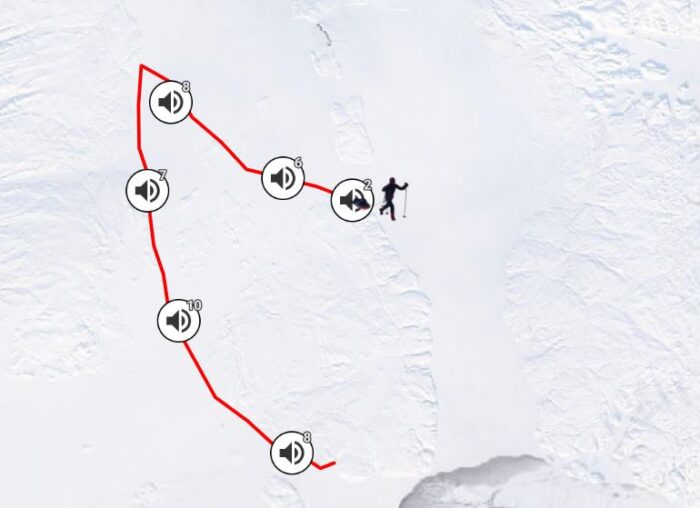
Chandi took a right turn on day 16.
However, tracking data shows that after reaching roughly three-quarters of the way along the northern tip of Bathurst Island, Chandi turned east and began traveling along the north coast of Cornwallis Island. The shift in direction indicates she is no longer attempting the full route to Ellef Ringnes Island. Instead, she may have decided to go around Cornwallis Island instead, which is considerably shorter.
Chandi has not posted distance updates since day eight, but she continues to share brief field reports.
In her most recent update on April 2, she wrote, “An hour into her trek, she realized the firearm had actually fallen off the sled. After a tense backtrack, she luckily recovered it not far behind her — it is now safely secured back inside the sled.”
Northwest Territories, Canada
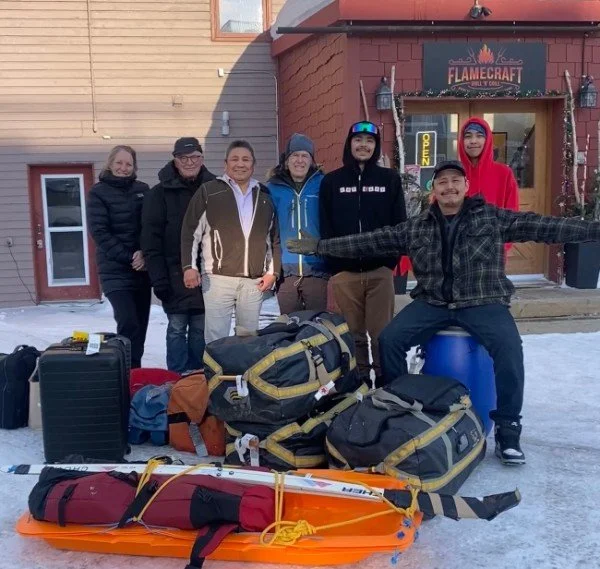
Will Steger (center, blue jacket) with friends in Yellowknife. Photo: Will Steger
Veteran polar traveler Will Steger, 81, is in Yellowknife, where he is preparing to fly to the northeastern shore of Great Bear Lake in Canada’s Northwest Territories. From there, he plans to begin a 1,300km solo journey, expected to take around 60 days, heading north to the Arctic hamlet of Paulatuk.
Canadian Samuel Lalande-Markon completed a solo ski crossing of Great Slave Lake in Canada’s Northwest Territories late last month, covering 225km in eight-and-a-half days from Yellowknife in the north to Hay River in the south.
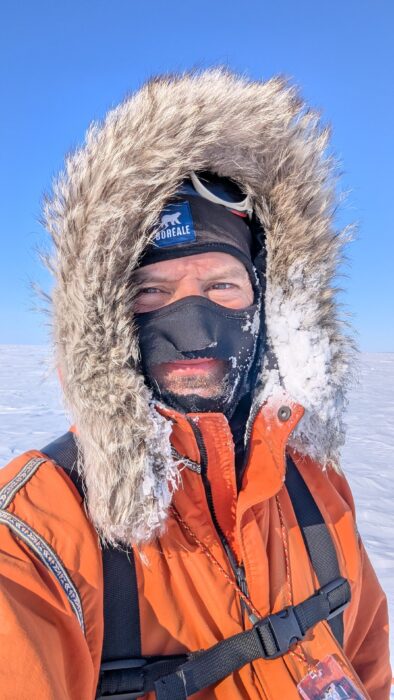
Samuel Lalande-Markon. Photo: Samuel Lalande-Markon
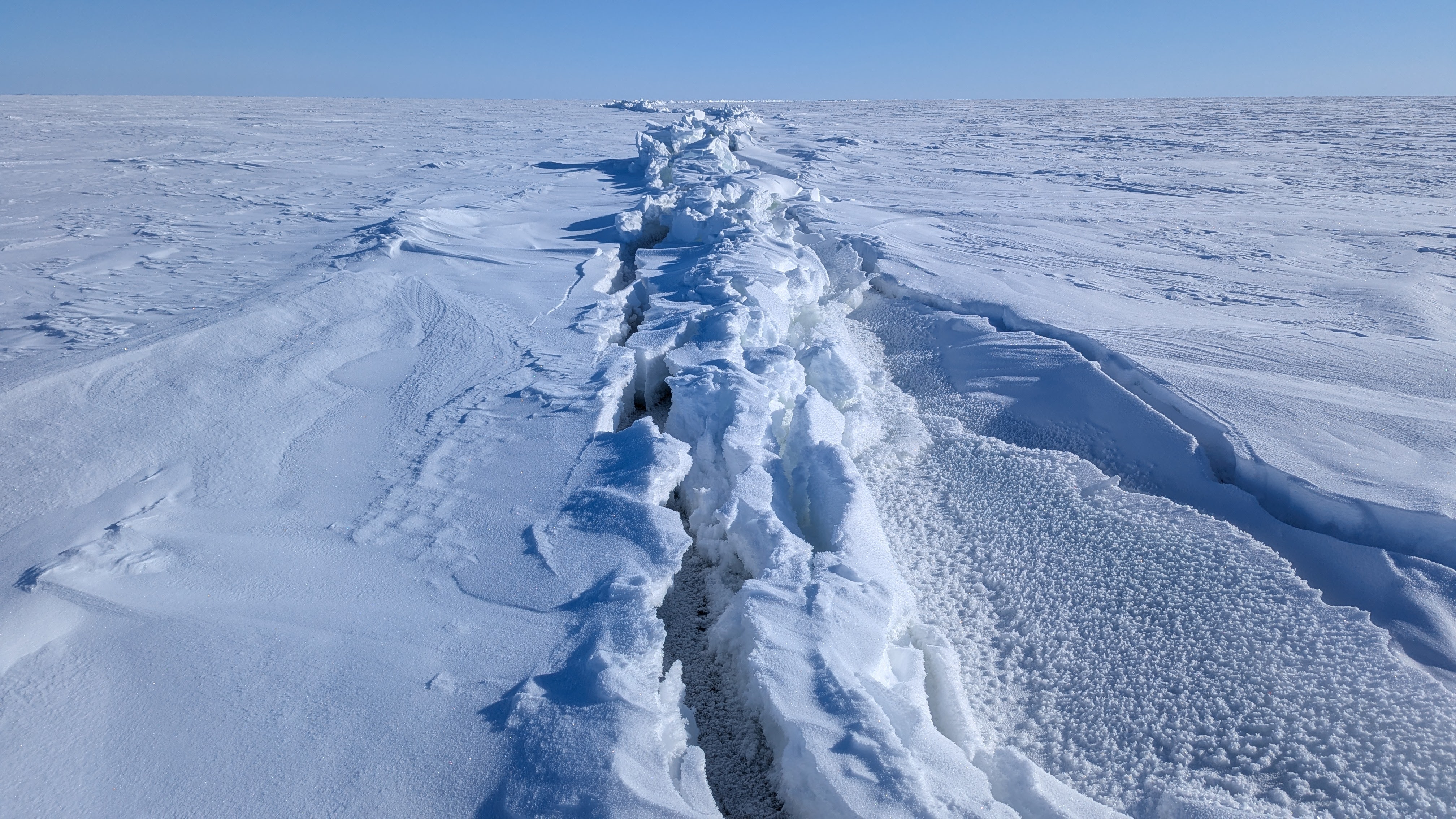
He encountered colder-than-usual March conditions, with temperatures often below -30°C. Winds were mostly light, though occasional gusts exceeding 75kph disrupted travel. Ice cover across the lake was solid and reliable, while snow cover remained thin, at times forcing him to ski directly on bare ice.
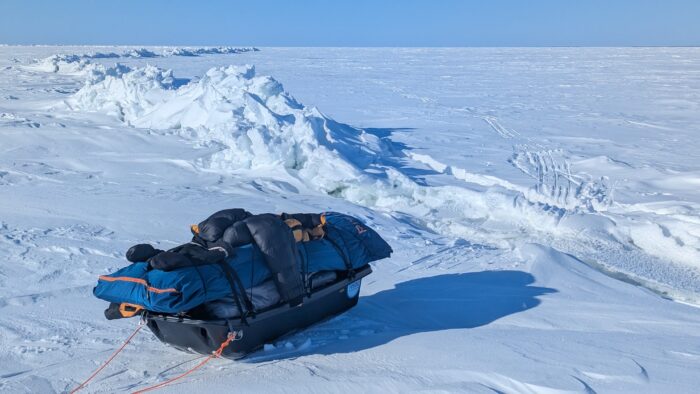
A freshwater pressure ridge on Great Slave Lake. Photo: Samuel Lalande-Markon