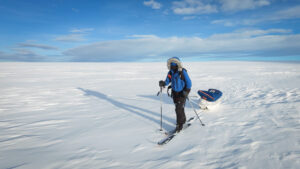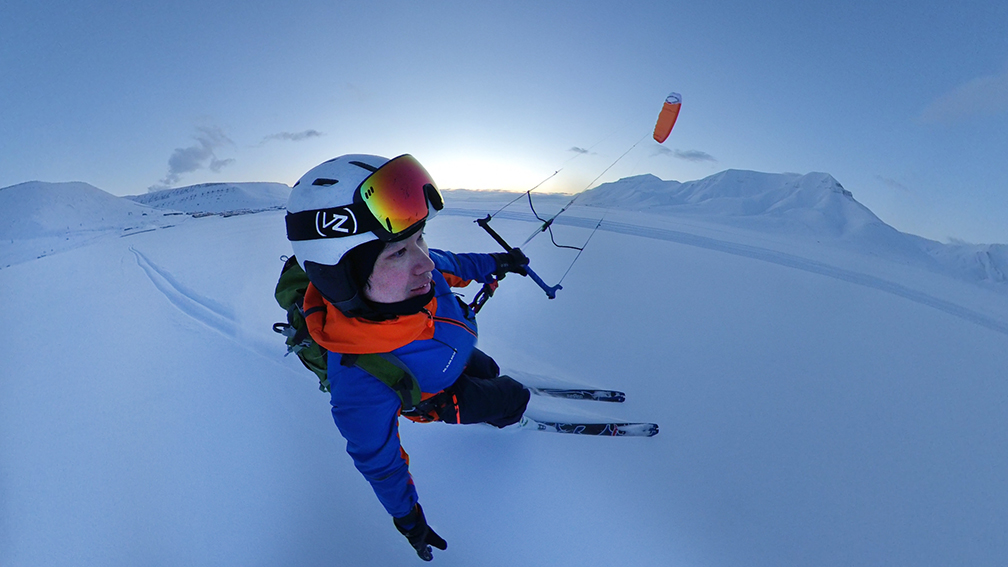
As light returns to the northern latitudes, the Arctic expedition season is about to begin. The spring of 2026 is particularly busy and geographically varied, with journeys in Greenland, Svalbard, Alaska, and even Siberia and Mongolia.
Greenland
There is one confirmed snow kiting journey on the Greenland Ice Sheet. On April 13, an international team of four will kite 1,700km from Kangerlussuaq in the southwest to Qaanaaq in the far northwest.
The foursome includes Belgian expedition leader Gilles Denis, 36, Antarctic field guide Sasha Doyle, 35, from Scotland, Antarctic field guide Ed Luke, 38, also from Scotland, and glaciologist Wilson Cheung from Hong Kong.
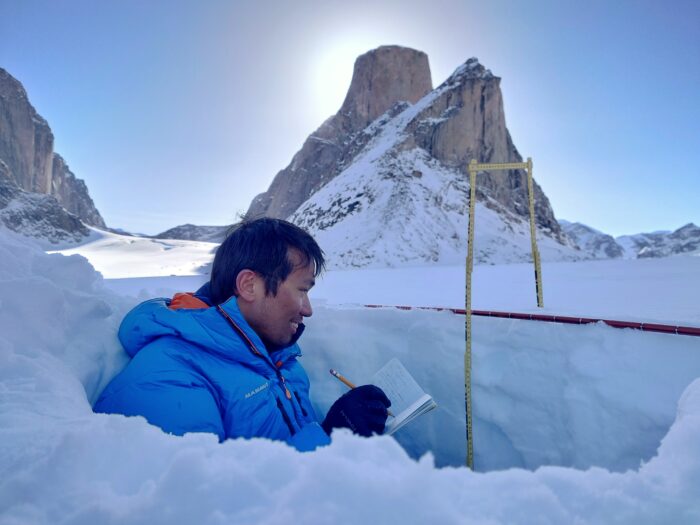
Cheung collects data in a snow pit. He has over a decade of field experience in the polar regions. Photo: Wilson Cheung
On the projected 35-day journey, Cheung will collect snow data and monitor a weather station on the Ice Sheet for the Japan Meteorological Agency.
Meanwhile, British chef-turned-adventurer Mike Keen is returning to Melville Bay for a 320km sled expedition in mid-April. In 2024, Keen kayaked 3,200km along the West Coast of Greenland.
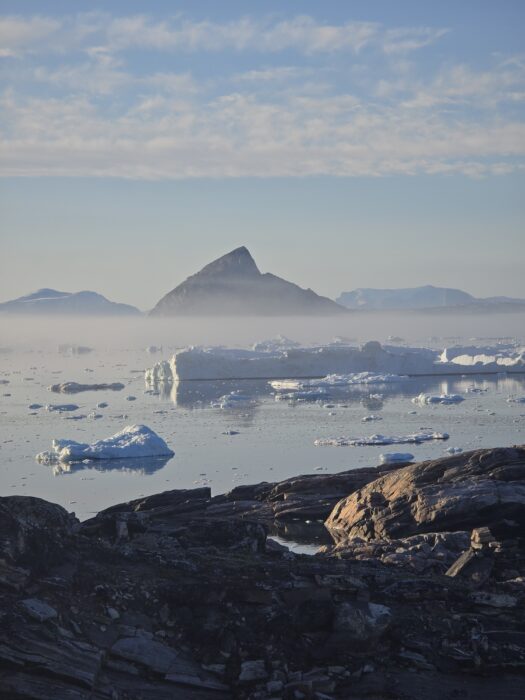
Melville Bay in summer, with a few of its thousands of icebergs. In winter, the sea will be frozen. Photo: Mike Keen
Ice looking good
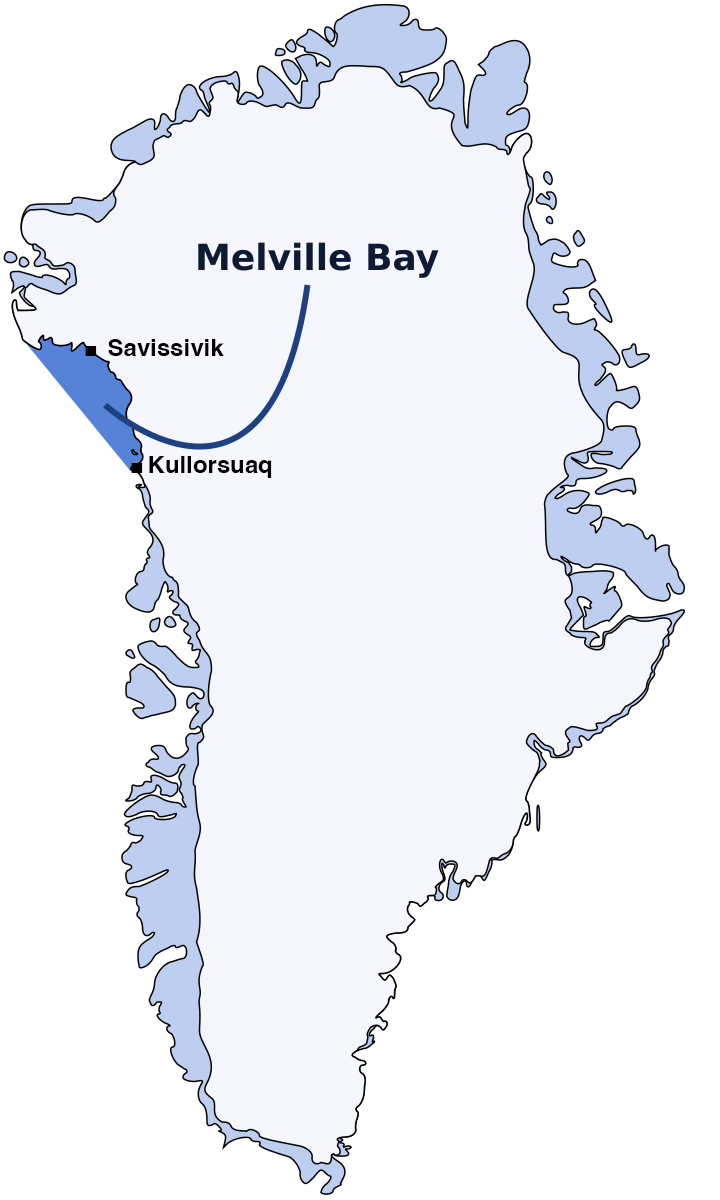
This time, Keen aims to haul a sled from Kullorsuaq in northern Greenland across the sea ice of Melville Bay to Savissivik, the next settlement on the North West coast.
Keen’s route just avoids the North Water Polynya (an area of permanently open water) at the far northwest end of Melville Bay.
“The sea ice looks good at the moment,” Keen told ExplorersWeb. “It was a super late start; they couldn’t go out onto the ice until four or five weeks ago. But it has been -20˚C or colder since then, and by all accounts, [it] is looking solid.”
A Greenland husky will accompany Keen as a polar bear warning system.
As an added twist to his journey, Keen will take a single seal as his sole source of food.
Should Keen reach Savissivik in good time, he will carry on to Cape York, 50km west of Savissivik, close to legendary Danish explorer Knud Rasmussen’s trading post, to spend time hunting with a Greenland Inuit friend.
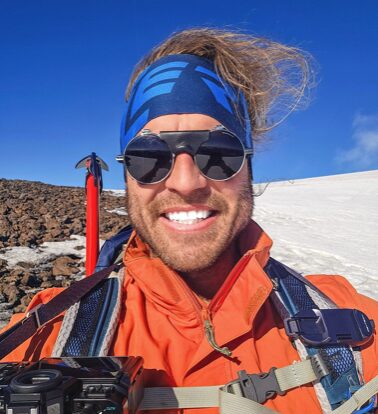
Marcus Arnold. Photo: Marcus Arnold
On the opposite coast of Greenland, Marcus Arnold, a 33-year-old glaciologist from Australia, plans to undertake a 400km solo and unsupported ski circumnavigation of Milne Island, the territory’s third largest island.
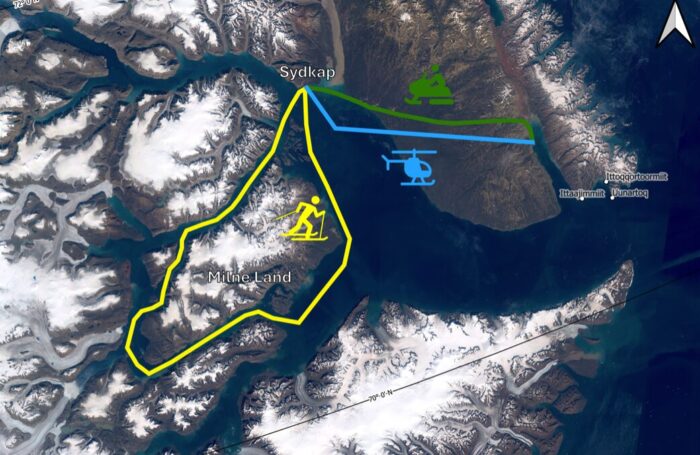
The yellow line depicts Arnold’s route. Map: Marcus Arnold
Arnold will travel across sea ice and, like Keen, will bring a sled dog to help warn of polar bears. The Australian expects the journey to take about 30 days. He is currently completing a shake-down trip in Svalbard and plans to begin his trek on March 17.
Svalbard
At least three teams are undertaking sled trips in Svalbard. Later this month, Norwegian expedition leader Alexander Read will guide his 10-year-old daughter Mina on a 600km sled journey across Spitsbergen from south to north. Read Senior estimates the journey will take around 45 days.
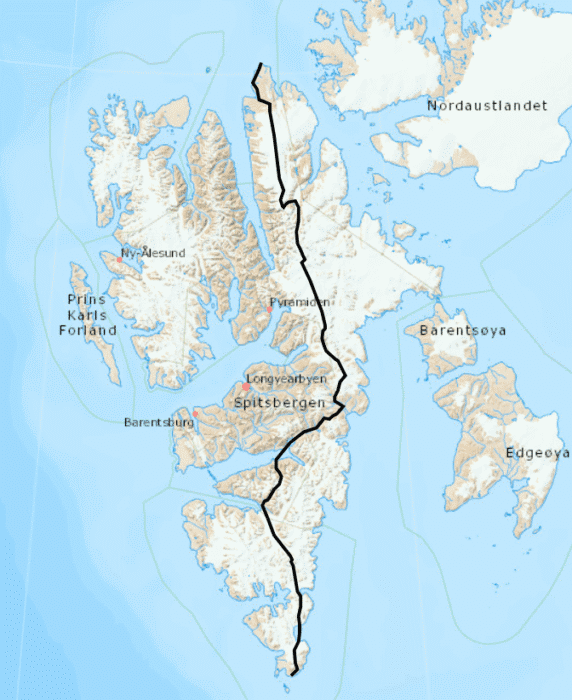
The Reads’ proposed route.
A separate team of six women, including Karen Kylleso of Norway, also aims to ski the same route. Details of their start date and team composition remain under wraps for now.
In northwestern Spitsbergen, an international team of five women known as “Girls Trip” will ski a 200km route across glaciated terrain from Ekmanfjorden to Magdalenefjorden in April. A boat will drop them off at their start point. Initially, they will ski on sea ice before crossing several glaciers.
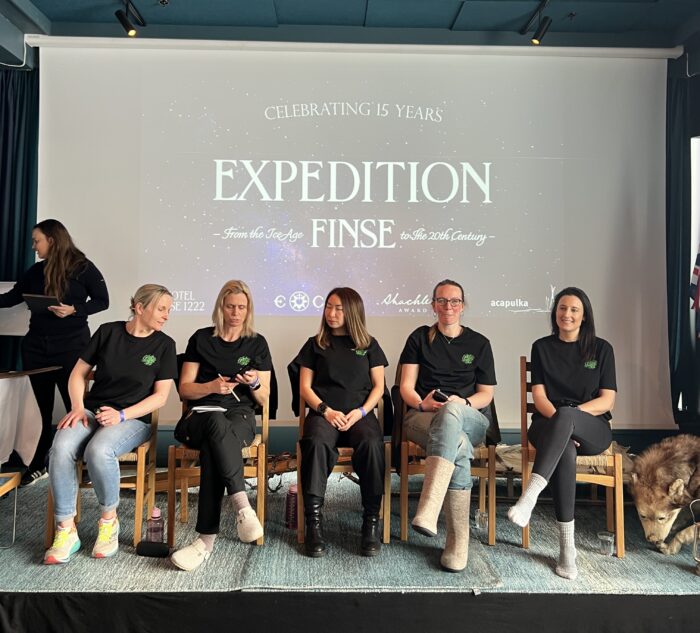
The ‘Girls Trip’ team in Finse, Norway, February 2026. Photo: Ash Routen
The team consists of Britons Cat Burford, Amelia Rudd, Emma Maher, and Jen McKeown, and Japanese-American Ayuka Kawakami. Among them, they have experience in Antarctica, Svalbard, and Greenland. Rudd and McKeown currently work as polar guides.
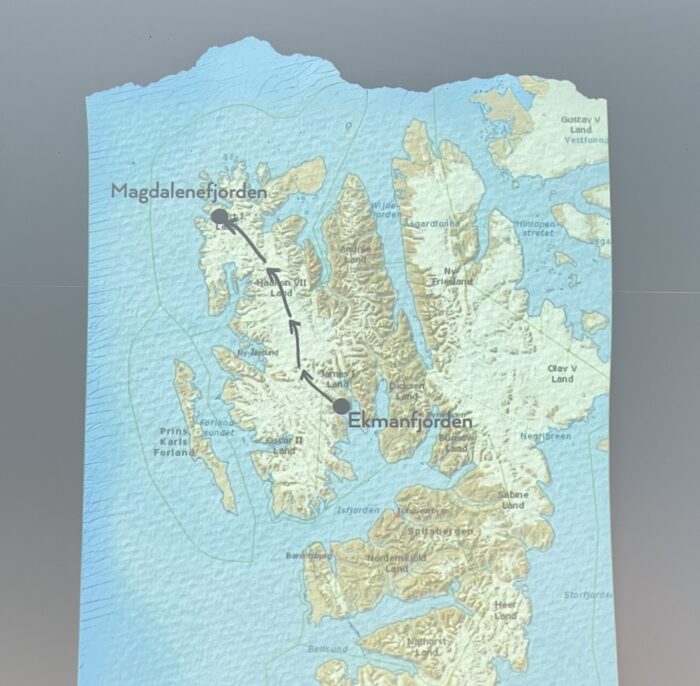
The ‘Girls Trip’ route. Photo: Ash Routen
North Pole
For the second year in a row, mainstream media has suggested that Briton Preet Chandi, 37, is shortly embarking on a solo and unsupported sled expedition from Ellesmere Island in northern Canada to the North Pole. Were Chandi to complete this major expedition, she would be the first woman to do so.
However, the expedition seems highly unlikely to go ahead. In recent days, Chandi has admitted on social media that she has less than a week to provide a $150,000 rescue deposit to the charter aircraft company (Kenn Borek Airlines in Resolute Bay) before they will fly her to her starting point on northern Ellesmere. Her GoFundMe has raised just $47,000 of the $450,000 she says is the expedition cost.
ExplorersWeb contacted Chandi for further information, but she did not reply.
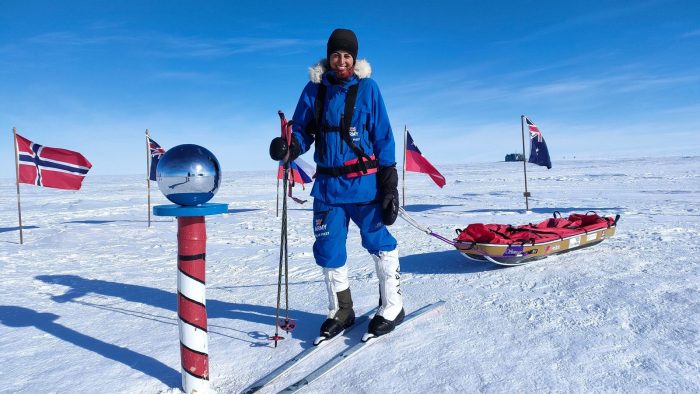
Preet Chandi. Photo: Preet Chandi
Experienced British polar guide Hannah McKeand commented on Chandi’s post: “Can you do a post describing your flight logistics, your drop off, your [search-and-rescue coverage], and your pickup plan from the NP. I think it would really help reassure possible funders if people can understand the validity of your planning.”
Chandi recently spent time training on the Arctic Ocean near Churchill, Manitoba, with Eric Larsen, the last person to trek to the North Pole from land (with Ryan Waters in 2014). Since then, she has gathered her equipment in Canada while simultaneously seeking the funds needed to reach the start line, in what appears to be an unusually last-minute scramble to launch an expedition that is as logistically complex as it is physically difficult.
Lake Baikal
Since Russia’s invasion of Ukraine, Western expeditions to frozen Lake Baikal in Siberia — previously, a yearly destination — have disappeared. This year, however, two expeditions have managed to get underway.
Irish adventurers and cousins Stafford Tyrrell, 31, and Mark McInerney, 32, are three days into an attempt to circumnavigate Lake Baikal.
Starting from the small town of Listvyanka on the southwestern shore, they plan to head south before looping around the northern side of the lake and returning to their start point. Traveling unsupported, the pair expects to spend around 50 days on the ice.

Mark McInerney, left, and Stafford Tyrrell. Photo: Stafford Tyrrell
Tyrrell and McInerney both have backgrounds in polar expeditions and mountaineering. Last year, Tyrrell sailed to Greenland from Bergen, Norway, aboard his small sailboat and then completed an independent crossing of the Greenland Ice Sheet with two companions.
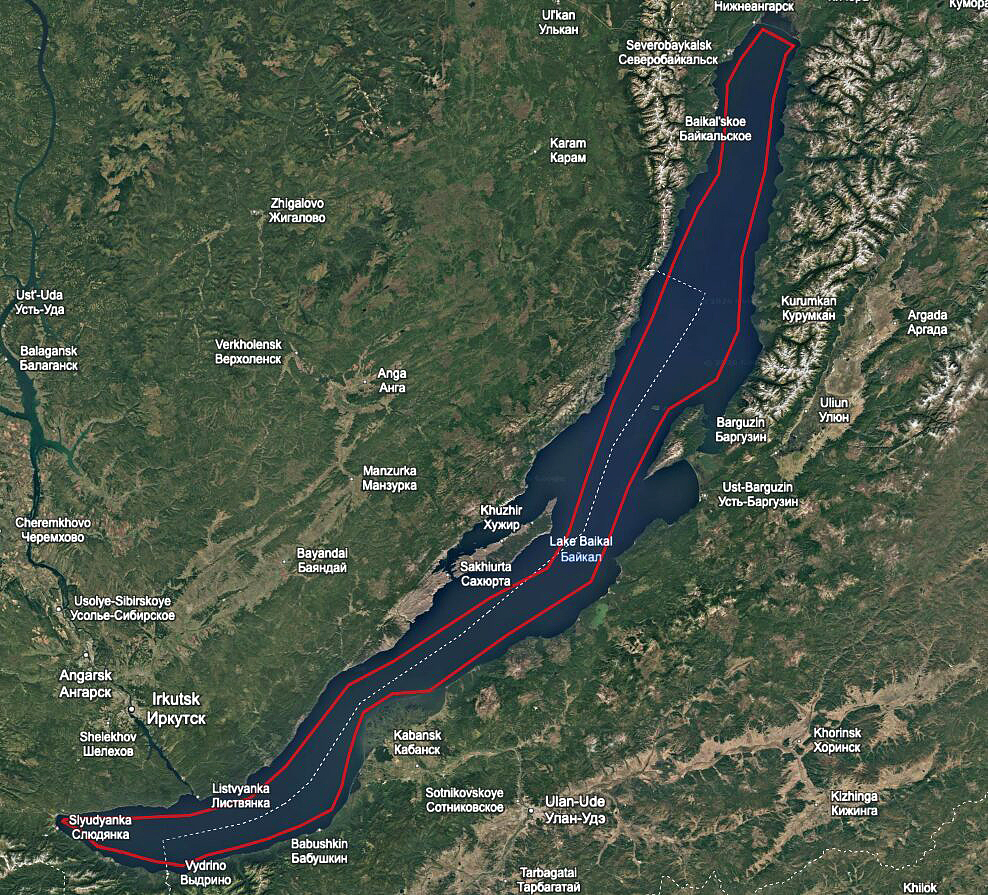
Tyrrell and McInerney’s planned route.
Their journey will be at least 1,400km. They will have to make swift progress to avoid the ice melt, which can start as early as late March in the south of the lake near Listvyanka.
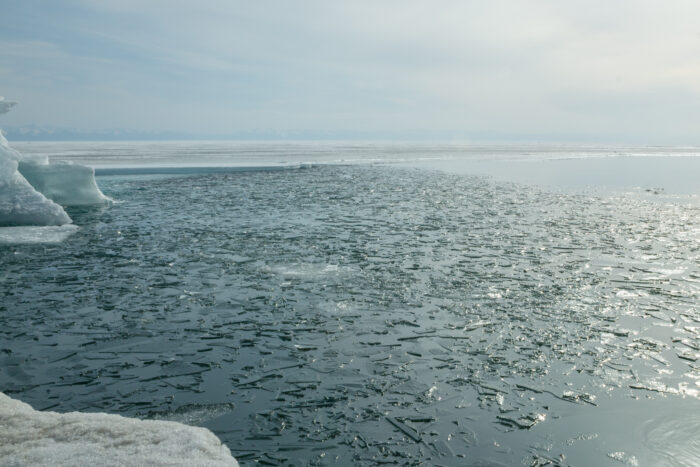
Open water near Listvyanka on March 24, 2018. Photo: Ash Routen
More Baikal
In 2007, Russia’s Alexander Semonov skied and skated completely around Baikal from Listvyanka to Listvyanka, a total of 1,850km in 36 days. He seemingly had some support along the way, but details of his journey are limited.

Lake Baikal. Photo: Ash Routen
Elsewhere on Baikal, Lukasz Rybicki of Poland had started on a solo south-to-north crossing of the lake, before local police stopped him on day seven and removed him from the lake, allegedly for safety reasons. Seven Chinese tourists died on Baikal last month when their bus plunged through the ice.
Lake Khovsgol
Further south, across the border in Mongolia, there are two sled journeys on Lake Khovsgol to report. German adventurer Anja Blacha — who has climbed 12 of the 8000’ers without oxygen — completed a partial circumnavigation of the lake last month, covering 250km in seven days.
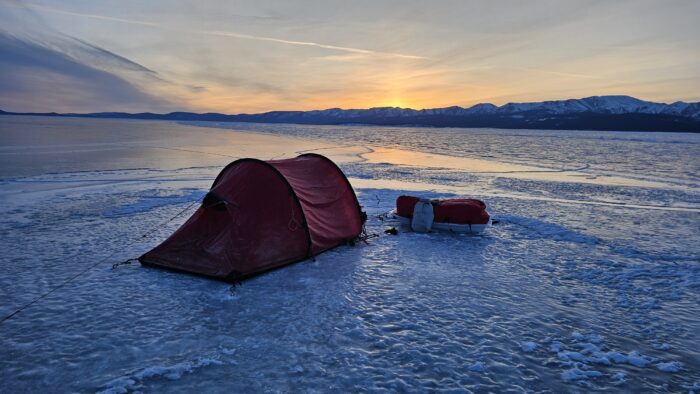
Blacha’s tent on the ice. Photo: Anja Blacha
Briton Oli France, who has previously trekked across Lake Baikal solo, returns to the region for a short 135km crossing of the lake from the most northern point to the most southerly point. France suggests his route may be longer, however, “as the ice conditions look really poor with lots of jumbled ice and snow.
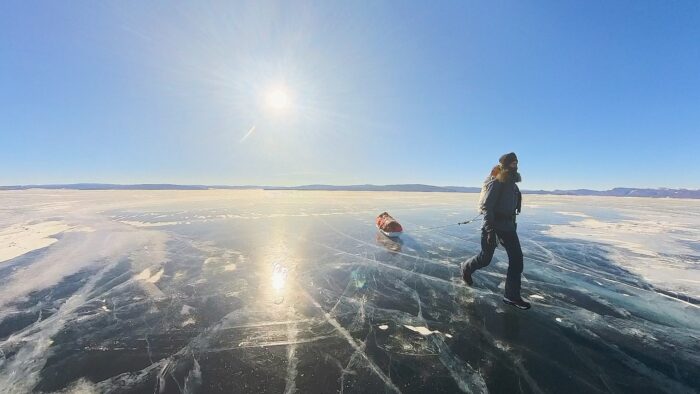
Blacha on Lake Khovsgol. Photo: Anja Blacha
Alaska
Kyle Sprenger of the U.S. is returning to Alaska after attempting to cross the world’s second-largest non-polar ice field last year. The 23-year-old plans to undertake a roughly 600km solo sled journey across a remote portion of northwest Alaska.
The first part of the trip, about 340km starting March 15, will follow the proposed Ambler Mining Road. This controversial project, which has not yet been built, would connect the Dalton Highway (a remote industrial road running north from central Alaska to the Arctic Ocean) with a mineral-rich mining district in the southern Brooks Range.
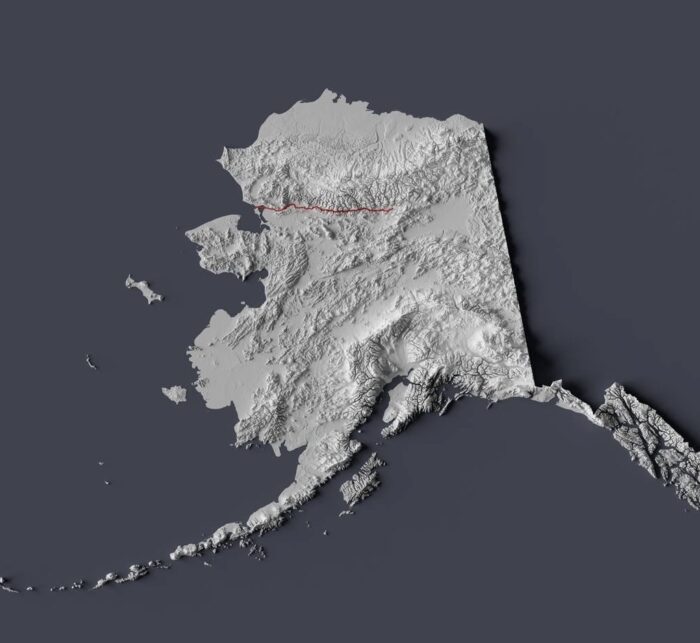
The red line indicates Sprenger’s proposed route in northwest Alaska.
“I plan to document what exists there now: the wildlife, the landscapes, and the people who depend on the health of the Alaskan Arctic, all of which would be permanently altered by the construction of this road,” Sprenger told ExplorersWeb.
After reaching the western end of the proposed road, Sprenger will continue west for about 270km, mostly traveling along the frozen Kobuk River. Where ice conditions allow, he will skate rather than ski.
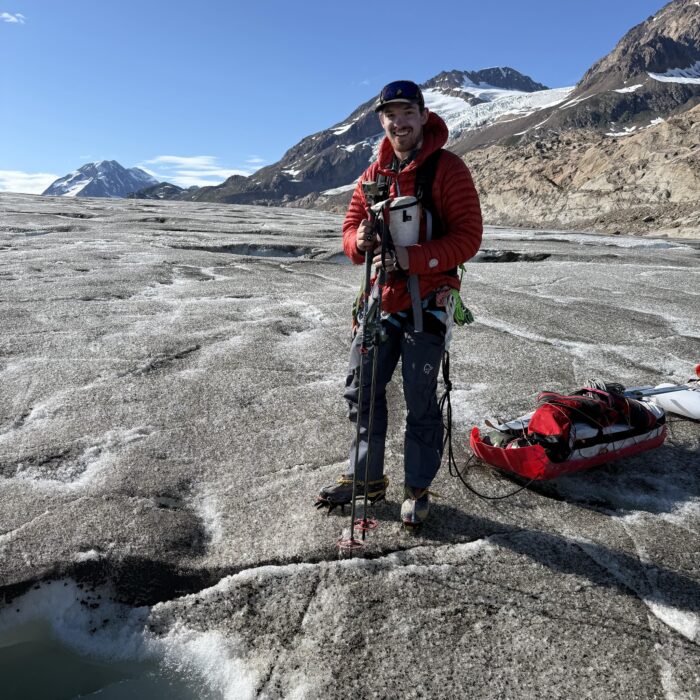
Kyle Sprenger in Alaska last year. Photo: Kyle Sprenger
Along the way, his route passes through several distinct Arctic landscapes found in this part of Alaska, including “drunken forest” (areas where permafrost thaw tilts the trees), krummholz (stunted, wind-shaped trees near the treeline), muskeg, the unusual sand dunes of the Kobuk Valley, and finally the sea ice along Alaska’s Arctic coast.