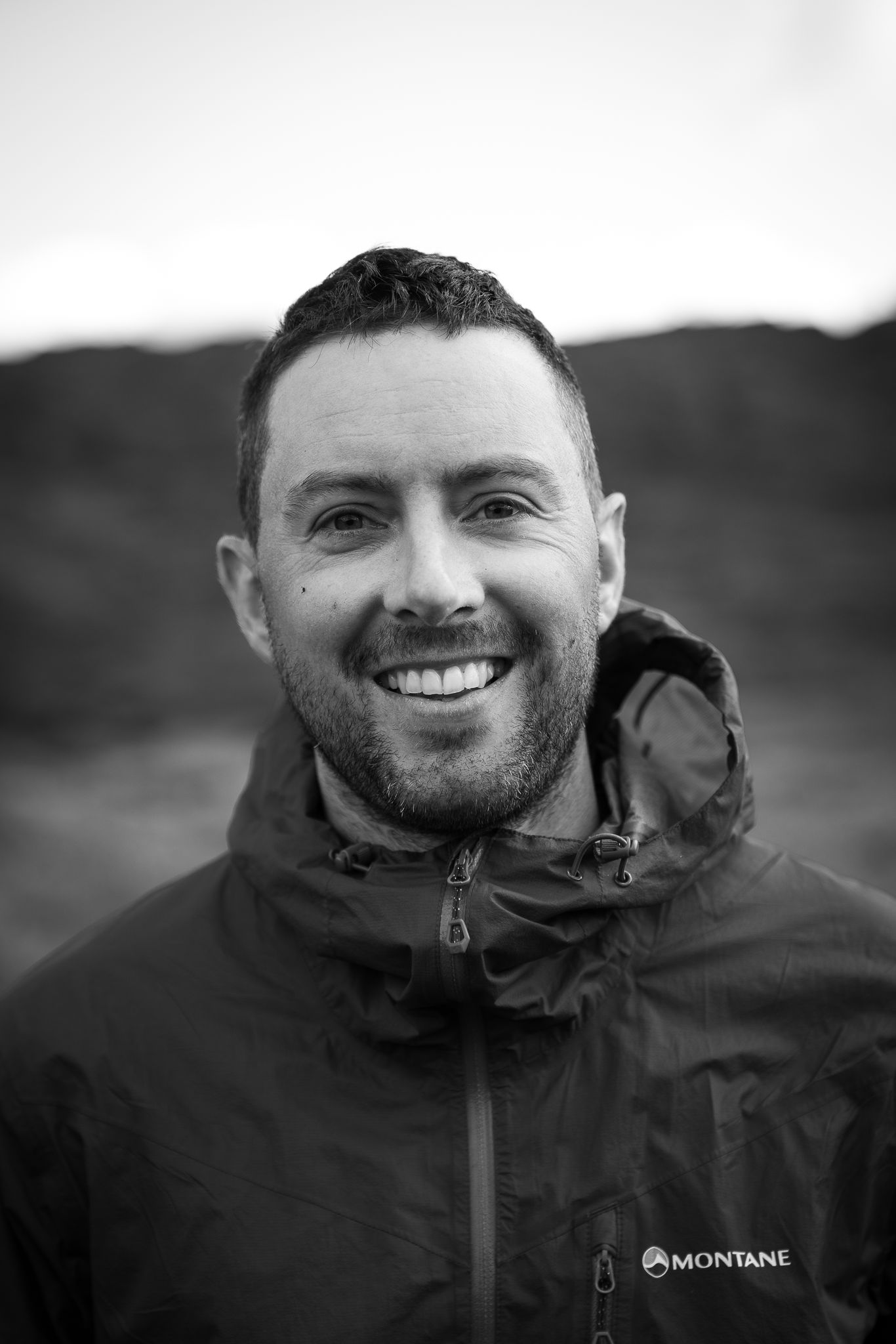
At a dinner party at Everest Base Camp in 2018, British traveler and entrepreneur Chris Brown first heard about the Seven Summits challenge. The idea intrigued him, but the familiar images of traffic jams high on Everest quickly dulled the appeal. Still, the idea lingered.
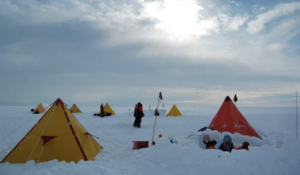
Brown remembered an earlier trip to Antarctica, where he had learned an obscure geographical fact: there isn’t just one South Pole, there are five. The Geographic, Magnetic, Geomagnetic, Ceremonial, and the Southern Pole of Inaccessibility.
That last one stayed with him. From that moment, a different objective began to take shape — not the highest points on Earth, but the most remote ones. Brown set out to reach all Poles of Inaccessibility across the planet, a little-known collection of the places farthest from water or land.
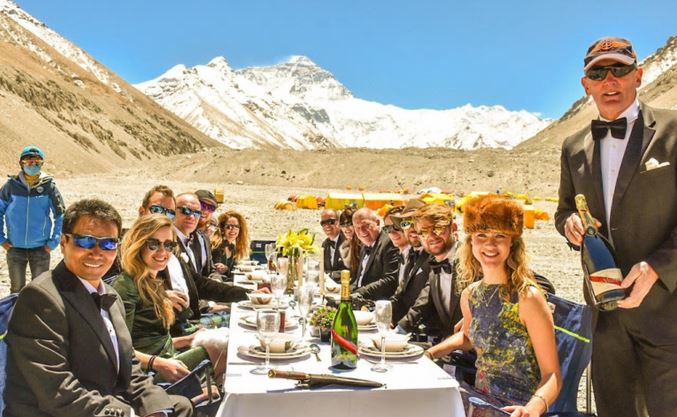
A typically British, slightly contrived and eccentric idea, the world’s highest-altitude dinner party, which became a Guinness World Record.
The 7 Poles of Inaccessibility
A Pole of Inaccessibility is simply the point farthest from a boundary, usually the sea or land, in any direction. There are usually considered to be seven of these poles, aligned with the largest landmasses on Earth: North America, South America, Eurasia, Africa, Australasia, Antarctica, and the Arctic.
The idea dates back to Arctic explorer Vilhjalmur Stefansson, who first described the Arctic Pole of Inaccessibility. Using 800km radius circles drawn from known routes, Stefansson identified a region he called a zone of “comparative inaccessibility” — an area which he suggested was the most difficult to access in the Arctic regions.
The term soon entered the language of exploration, particularly in Antarctica, where explorers used the same logic to identify the point on the continent farthest from the ocean — the Antarctic (or Southern) Pole of Inaccessibility.
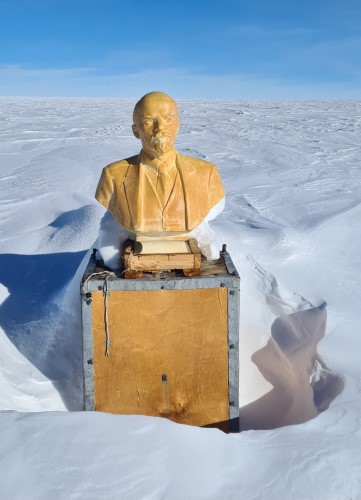
The bust of Lenin at the Antarctic Pole of Inaccessibility, placed there by a 1958 Soviet expedition that was the first to reach the location. A more accurate location has since been calculated by the British Antarctic Survey. Photo: Chris Brown
More recently, researchers have refined the idea using modern calculations. Their work precisely locates the Poles of Inaccessibility as those places farthest from any coastline or ocean. While they are defined in terms of distance, they don’t include the difficulty of access and terrain. Some are invariably easier to reach than others.
The 7 Pole quest
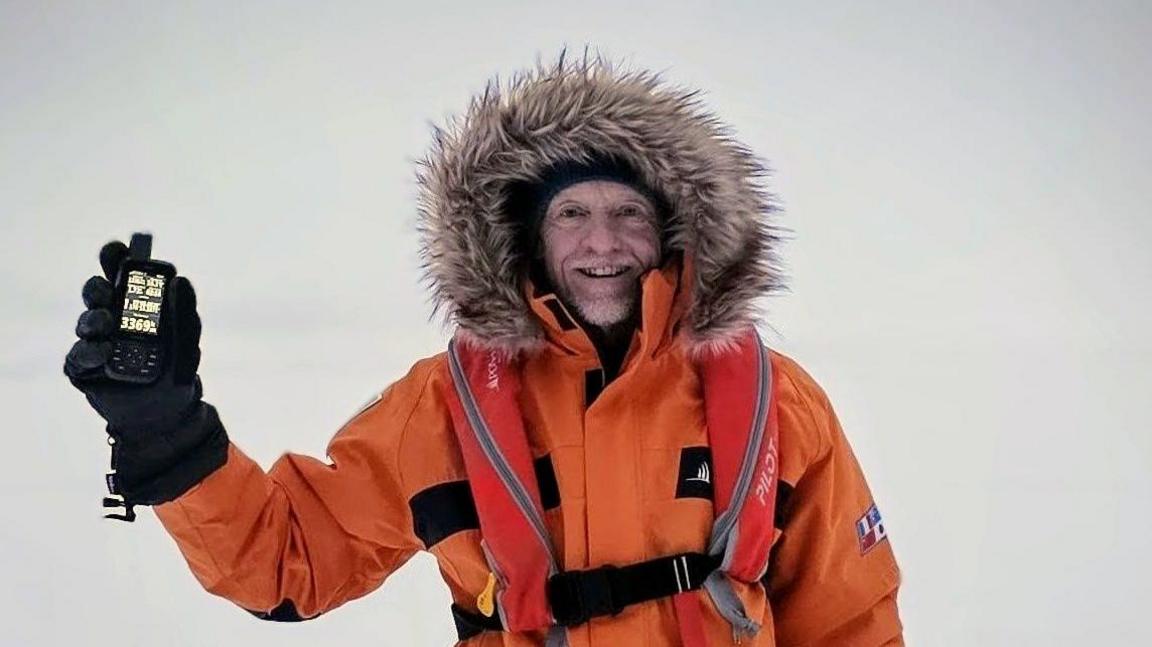
In September 2025, Brown reached his sixth Pole of Inaccessibility — the Northern Pole of Inaccessibility. It took two attempts to get there. His first effort, in 2019, was planned to fly out from Svalbard but was halted by tensions between Russia and Ukraine.
On his second attempt, the Briton traveled aboard an icebreaker, also reaching the Geographic North Pole and the Magnetic North Pole before continuing on to the Northern Pole of Inaccessibility. Brown was the second person to reach this Pole after Fredrick Paulsen, the current owner of the floating Arctic Ocean ice camp Barneo.
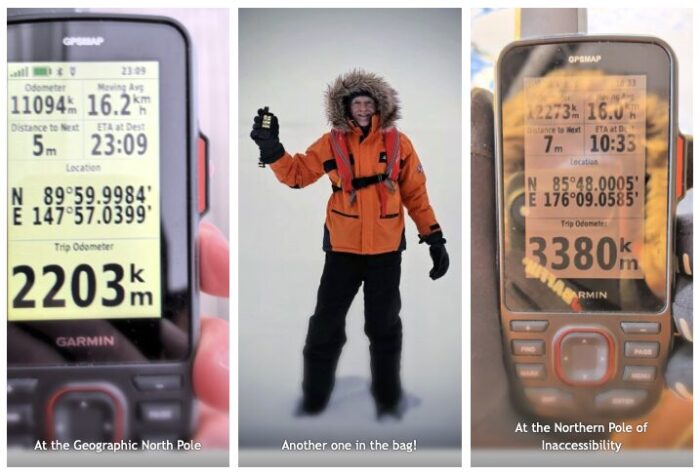
Chris Brown at the Northern Pole of Inaccessibility. Photo: Chris Brown
Between 2019 and 2023, Brown visited the North American, South American, African, Australasian, and Antarctic Poles of Inaccessibility. Some were relatively easy to reach. For example, the North American Pole involved flying to Rapid City, South Dakota, then driving a few hours into the countryside and walking across some fields.
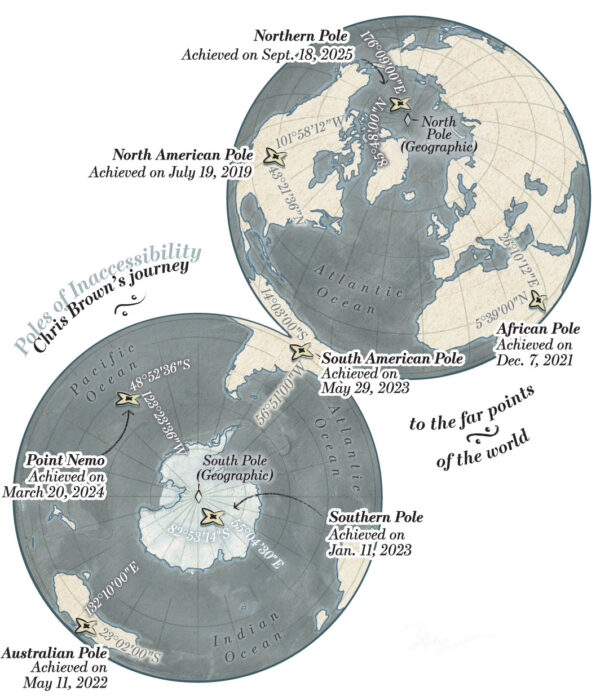
The location and dates of six Poles of Inaccessibility that Chris Brown reached. Illustration: Camille Bressange
Antarctica
The Antarctic Pole was logistically difficult and required two attempts and a charter flight from Wolf’s Fang ice runway in Queen Maud Land in northern Antarctica. For this, Brown first flew to the 1958 Russian-identified location of the Southern Pole, then continued to the more accurate location mapped by the British Antarctic Survey in 2005.
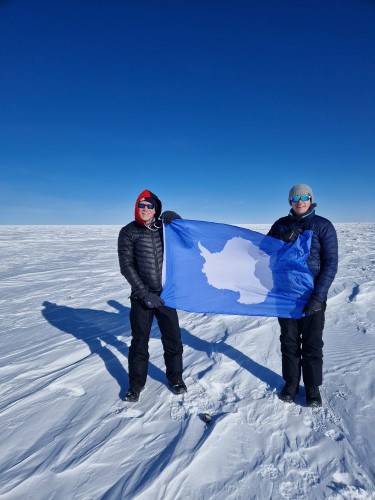
Chris Brown, left, at the more accurate 2005 location of the Southern Pole of Inaccessibility. Photo: Chris Brown
Remoteness wasn’t the only difficulty. Reaching the African Pole of Inaccessibility, deep in the jungles of the Central African Republic, required a swift helicopter trip into a region plagued by armed bandits and reports of violence, reprisal killings, looting, and human rights abuses.

Central African Republic Soldiers provided armed support to secure one of four designated landing spots. Photo: Chris Brown
The final pole, which Brown is yet to reach, is the Eurasian Pole, with two possible locations in northwestern China that he is scoping out for the coming years. Brown works with academics to help determine the most likely location of the poles.
Points of Inaccessibility
Brown notes that the term “pole of inaccessibility” is technically a misnomer. In geography, a pole usually refers to where a planet’s axis of rotation meets its surface, such as the North and South Poles.
The so-called Poles of Inaccessibility are unrelated to Earth’s rotation. They are simply the points farthest from a coastline or land. By that definition, “Points of Inaccessibility” is more accurate.
Still, “Pole” has long been the accepted term among explorers and geographers for the most remote continental locations. Brown therefore keeps that convention for the major landmasses, but uses “Points of Inaccessibility” for the equivalent locations in smaller regions such as countries, islands, and states.
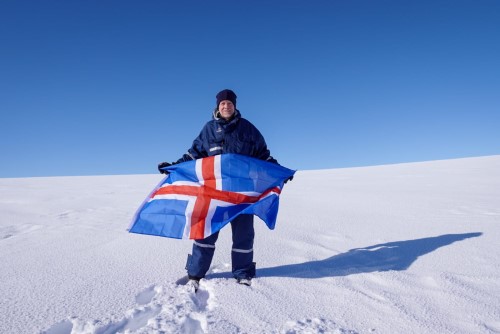
Brown at the Icelandic Point of Inaccessibility on the Hofsjökull Glacier in the Western highlands of Iceland. Photo: Chris Brown
In recent years, Brown has racked up visits to points of inaccessibility in 16 European countries, as well as seven in North America, and various others in the Middle East, Australasia, and Asia.
Point Nemo
Perhaps the most intriguing of these sites is Point Nemo, the location in the ocean farthest from any land. Located in the South Pacific, it takes its name from Captain Nemo in Jules Verne’s novel Twenty Thousand Leagues Under the Sea.
After searching for years for a way to reach Point Nemo, Brown found an opportunity in 2024 when an expedition vessel agreed to detour during a voyage from Chile to French Polynesia. The team departed on March 12 and spent several days navigating rough seas and changing weather in the remote South Pacific.
Ten days later, they reached the vicinity of this oceanic Pole of Inaccessibility. With the ship holding position nearby, Brown and his companions traveled by Zodiac to the coordinates before entering the water and swimming to Point Nemo.
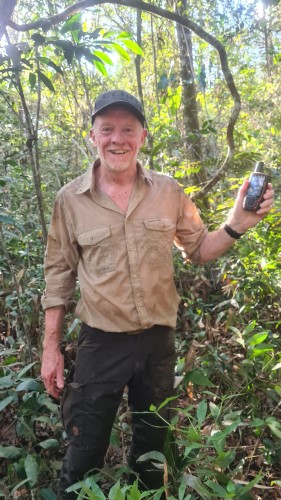
Brown at the South American Pole of Inaccessibility. Photo: Chris Brown
A geographic journey
Since that high-altitude dinner conversation eight years ago, Brown has doggedly pursued some of the most remote places on the planet. His approach differs from the human-powered expeditions more commonly featured on ExplorersWeb, but it is clearly an interesting journey from a geographical perspective.
In an adventure world dominated by Seven Summits and Explorers Grand Slam ambitions, the Briton’s quest to reach the planet’s most remote points offers a different exploration checklist. It is, of course, a futile pursuit, but also a quintessentially British form of eccentric endeavor.