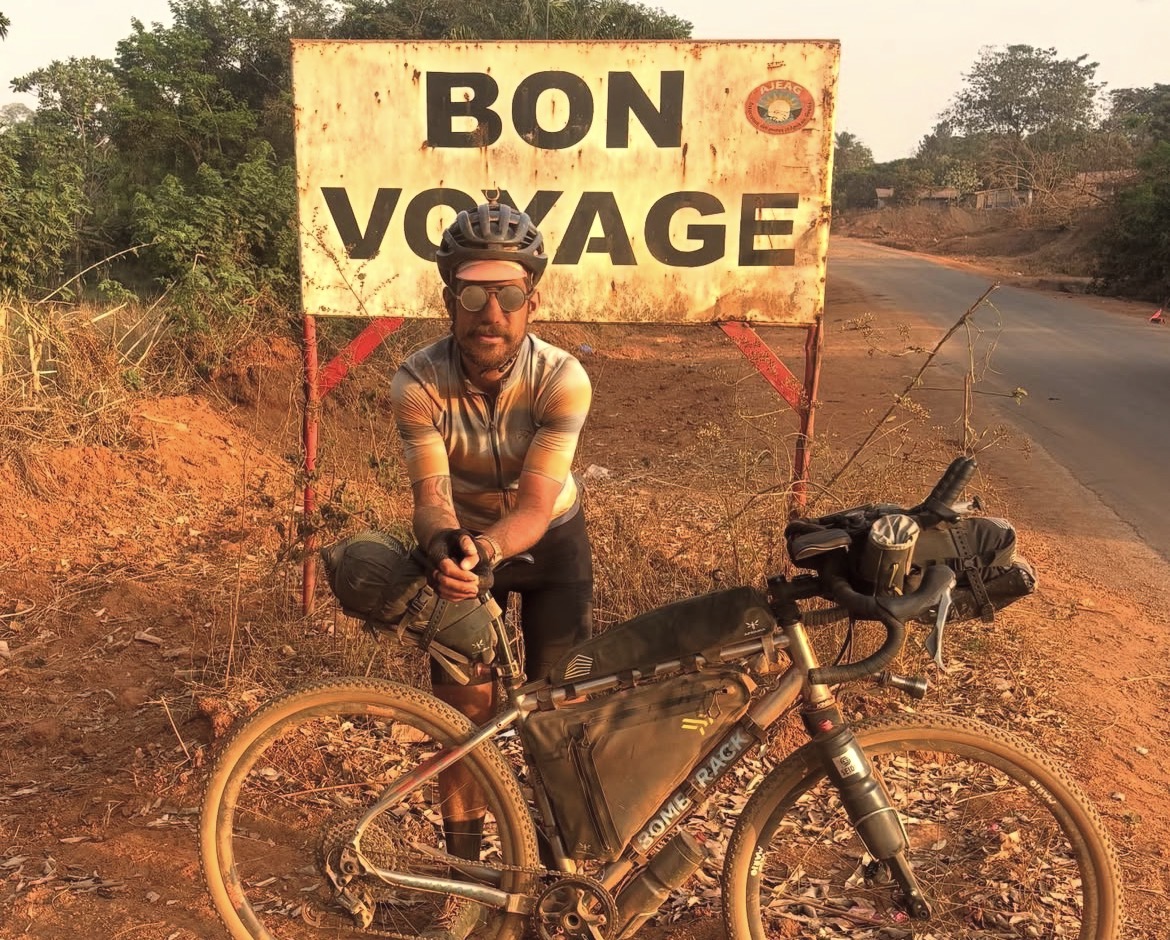
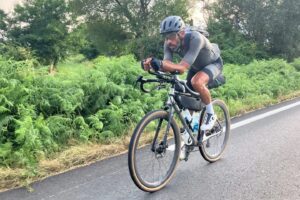
Swiss cyclist Adrien Liechti is attempting to cycle nearly 17,000km from Africa’s northernmost point to its southernmost. Unfortunately, a misunderstanding in Cameroon recently derailed his journey for two weeks. The country’s military detained him for filming a bridge in a restricted area.
The 40-year-old former bike messenger set off on January 3 from Cape Angela in Tunisia, Africa’s northernmost point. He aims to ride through 17 countries and climb more than 90,000m to Cape Agulhas in South Africa, the continent’s southernmost point. He estimated that it would take him 75 days.
Liechti’s tracker shows he has been on the road for 69 days, although it also records 34 days of “stopped time,” which likely includes the period in detention in Cameroon.
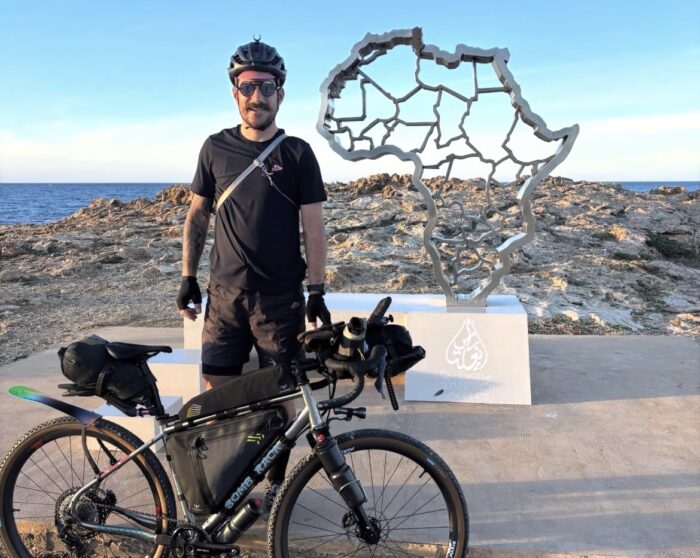
Adrien Liechti at Cape Angela in Tunisia. Photo: Adrien Liechti
Africa end-to-end
Liechti’s route runs between two of the continent’s geographical extremes, rather than the more common Cairo-to-Cape Town route that many cyclists attempt. While there is no documentation to confirm it, he could become the first person to cycle Africa end-to-end if he completes the journey successfully.
His social media updates suggest he is staying in roadside accommodation rather than camping.
Before setting off, Liechti told a cycling news site that “the route I’ll be following is, for now, the only one that’s truly possible.” However, he admitted that “everything can change depending on how the situation evolves in certain countries.”
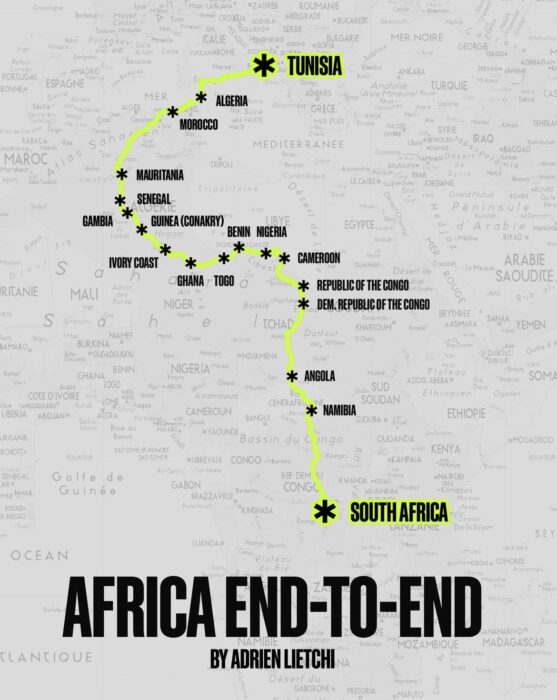
Liechti’s route. Map: Adrien Liechti
“The crossing of West Africa follows a classic itinerary for bicycle travelers,” he explained. He added that “passing through Algeria is rarer, but doable.”
Liechti also carefully planned his timing. “I’m leaving at the beginning of January to avoid extreme heat in the Sahara and to benefit from a shorter rainy season further on,” he said.
“I’ll also avoid certain areas, such as parts of southern and northern Nigeria, which are controlled by armed groups.”
The northwestern coast
Liechti made fast progress through Algeria, where he was even given a police escort along parts of the highway, covering 870km in the first 72 hours. By January 9, he had ridden more than 1,200km to the Algerian–Moroccan border.
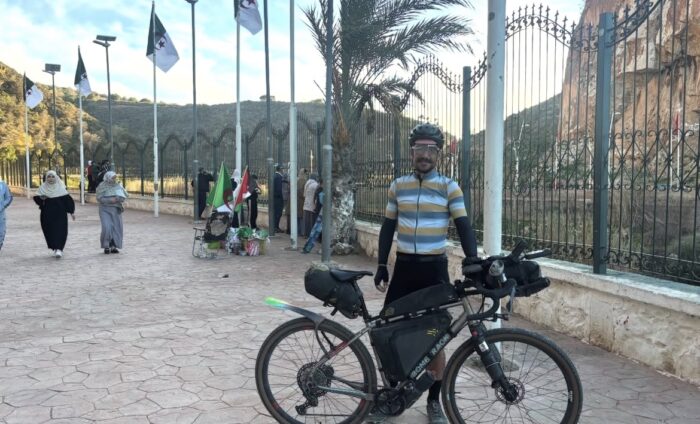
At the Algerian-Moroccan border. Photo: Adrien Liechti
However, he was unable to cross at that point because the land border between Algeria and Morocco has been closed for years due to political tensions between the two countries. As a result, Liechti had to take a boat to Spain and then return to Morocco to reconnect with his route.
By January 20, Liechti was riding the long desert roads through Western Sahara, helped by strong tailwinds and relatively moderate temperatures. He covered 1,000km in just 60 hours before crossing into Mauritania on January 22.
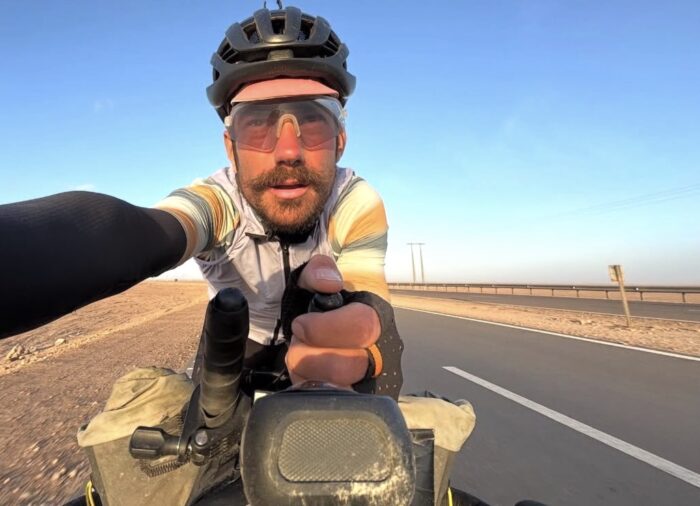
In the Western Sahara. Photo: Adrien Liechti
Detention in Cameroon
From there, the Swiss rider followed coastal roads, encountering strong winds and occasional sandstorms. He crossed into Senegal around January 24 and entered Guinea a few days later.
Liechti found the roads in Guinea particularly challenging. At times, he resorted to off-road tracks. By the first week of February, he had covered around 7,500km in 34 days and reached the Ivory Coast.
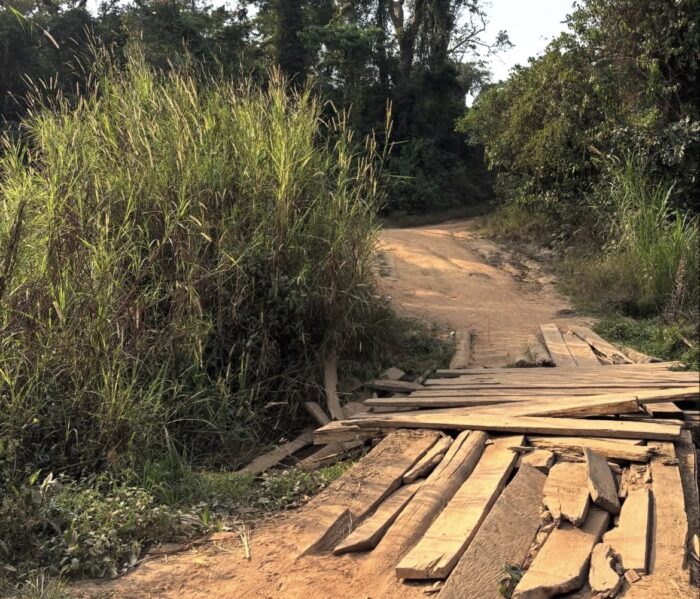
A dirt road in Guinea. Photo: Adrien Liechti
By day 38, Liechti arrived in Accra, Ghana, where he was forced to take a rest day while sorting out visa issues. He then continued into southern Nigeria and, on February 19, reached Cameroon. Shortly afterward, his tracker and social media accounts went silent in Yaounde, the capital.
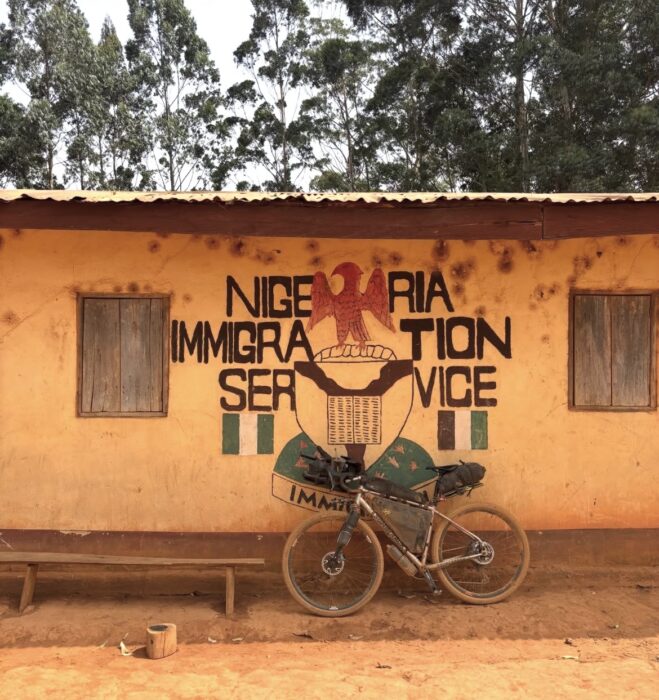
The Nigerian border. Photo: Adrien Liechti
A week ago, Liechti wrote on social media: “Here is what I can share for now. I was stopped by the military after filming a bridge considered a sensitive structure, without knowing it was a restricted area. I was then held in detention for about 15 days.”
The detention eventually ended, and as of March 13, Liechti is in the Congo. He recently managed a 260km day, which suggests he has lost little of his pace.