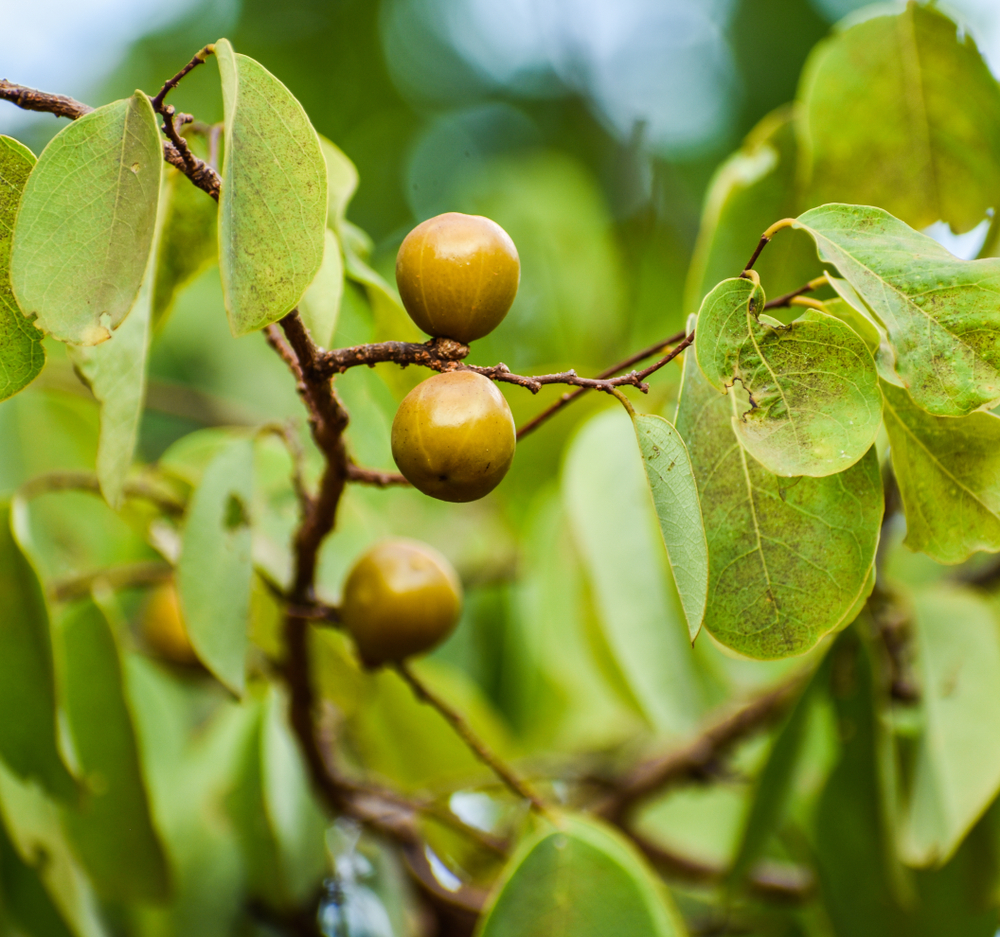
In the Caribbean, the term “forbidden fruit” is not a metaphor. Many good-looking berries and fruits in our tropical rainforests can give your stomach a hard time if you’re naive enough to ingest them without knowing the species. But there’s one particular fruit every Caribbean child is warned about. The manchineel tree looks innocent enough, with its bright green skin and smooth surface. But just being near it can land you in the hospital.
History
Long before the arrival of the Spanish, the indigenous tribes of the Caribbean knew about the deadly powers of the manchineel. They used its toxic sap to take down their enemies, either by poisoning their water or coating their own arrowheads. They used the same techniques to trouble the European newcomers. But sometimes, hungry or careless explorers would bite into the fruit with no idea of what was coming next.
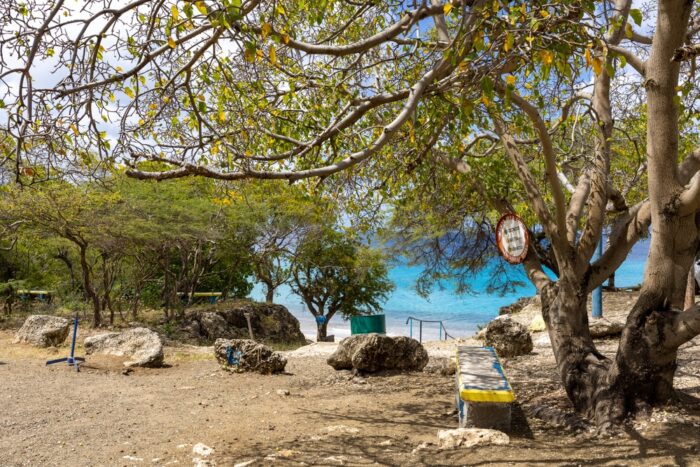
Just standing under the manchineel tree is dangerous. Photo: Shutterstock
In 1493, Christopher Columbus recorded how his men reacted to it. He said:
There were wild fruits of various kinds, some of which our men, not very prudently, tasted; and on only touching them with their tongues, their mouths and cheeks became swollen, and they suffered a great heat and pain.
He called it the “little apple of death” or “manzanilla de la muerte.” Years later, Juan Ponce de Leon was in the middle of a brutal skirmish with natives in Florida and sustained a fatal injury from an arrow. He was taken to Havana, where he succumbed to his wound. Legend has it that the arrowhead was dipped in manchineel sap.
Captain Cook himself encountered it during one of his voyages when he and his men were at the point of desperation. Seeing the fruit, his men did not hesitate to take a big chomp from the juicy flesh. Others cut down parts of the tree for firewood. Soon after, the men felt the ill effects. Some went blind for a short time after rubbing their eyes. The vomiting, blistering, and blindness eventually wore off.
Background
The manchineel (Hippomane macinella) resembles a small, green apple and carries the nickname “beach apple.” It is usually found along the coastlines of the southern United States, Central America, the Caribbean, and South America. However, it also lives in swampy or mangrove areas. The tree can grow up to 15m tall, its bark is greyish-red, and its broad green leaves look like any other tropical tree you might want to seek shade under. However, many manchineel trees come with an ominous warning sign nailed to the bark or even red stripes painted on them.
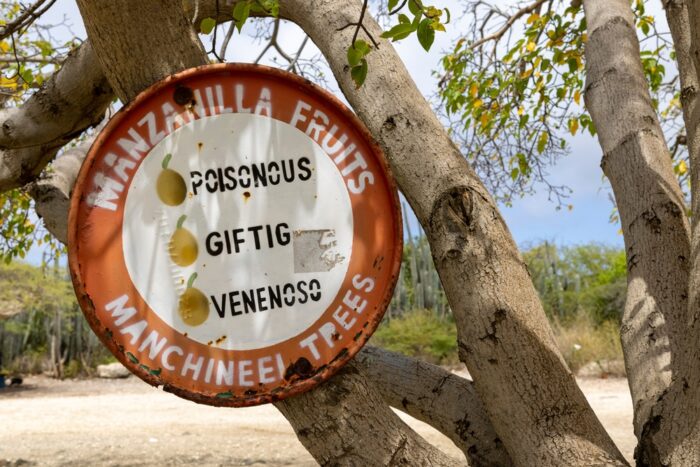
A warning on the manchineel tree in Curaçao. Photo: Shutterstock
You cannot touch any part of it or shelter underneath it. Its leaves, fruits, bark, and even the air surrounding it can cause severe reactions, including painful blistering, conjunctivitis, and temporary blindness if it comes into contact with the eyes. It is also important that you do not stand under the tree when it rains, as the drops become contaminated with the sap.
If consumed, you’d spend a few agonizing days vomiting with diarrhea, low blood pressure, dehydration, and searing pain in the throat. In severe cases, you can also experience abdominal bleeding and lung issues. All animals except the black-spined iguana and the Galapagos tortoise steer very clear of this tree. Both seem able to eat and shelter under the tree with no ill effects.
What makes it so dangerous
What makes this tree so dangerous is the milky sap that coats every part of the tree and harbors some of the world’s most menacing toxins. These include phorbol esters, furocoumarins, sapogenines, hippomanins, and mancinellin. Phorbol esters, in particular, are responsible for blistering and inflammation of the skin. Furocoumarins have the same effect, but only when activated by UV rays. If the fruit is ingested, hippomanins can cause intense pain and damage to the stomach.
Among the notable cases of manchineel poisoning: In 2000, British radiologist Nicola Strickland and her friend were vacationing in Tobago when they came across the fruit. They took a bite of the manchineel but didn’t swallow. Sadly, just tasting it was enough to ruin their holiday. She wrote later:
I rashly took a bit from this fruit and found it pleasantly sweet…Moments later, we noticed a strange peppery feeling in our mouths which gradually progressed to a burning, tearing sensation and tightness of the throat. The symptoms worsened over a couple of hours until we could barely swallow solid food because of the excruciating pain and the feeling of a huge obstructing pharyngeal lump.
The symptoms subsided in eight hours, and she noted that milk helped the burning sensation considerably.
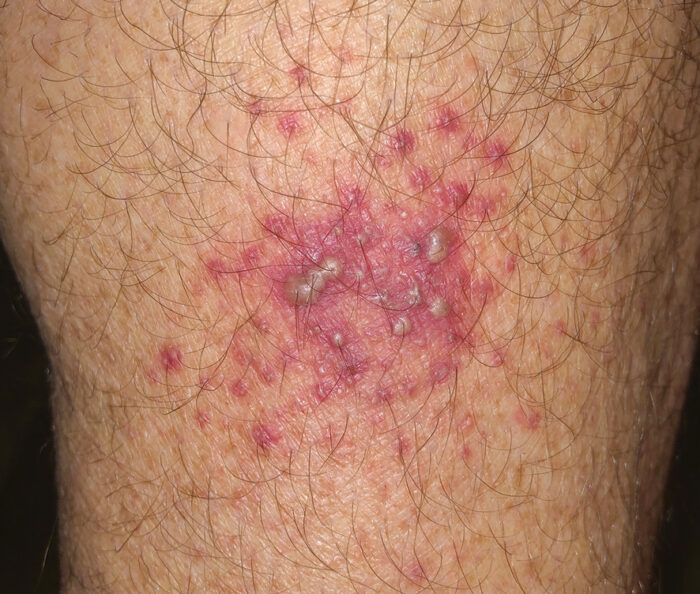
Blistering on the skin after exposure. Photo: Maria Munoz, Scott Whitecar, and Scott A. Norton
Another victim
American botanist Richard A. Howard also had a run-in with the manchineel during a trip to Montserrat in 1979. He stated that, though he came into close contact with the manchineel several times in the past without any effects, this time something was different. Sap dripped onto his forehead without him realizing it. He soon felt burning in his eyes and blurred vision. Said Howard:
My eyes were bloodshot and the lids swollen for four or five days…without medical treatment, I might have suffered the fate of blindness.
He sought immediate medical intervention, and his symptoms eased.
Are there any uses at all?
If handled correctly and processed with even greater care, the manchineel serves several purposes. Throughout the West Indies, carpenters dry the wood out for several days so the sap dries. Then, they can use the wood to make furniture. Also, if the gum from the tree is processed, it can be used to treat edema and other ailments.
Leave it be
As far as we know, no one has died from the manchineel. You might be wondering, why don’t we just get rid of it? It’s easier said than done. The manchineel is a double-edged sword. First of all, it’s an endangered species. If we get rid of it, the mangroves and beaches lose a vital source of protection from erosion, since the trees act like windbreakers. The manchineel-proof iguana and tortoise would also lose a food source.
You can’t touch it. So why not burn it? If you burn the tree, the smoke will burn your eyes and skin and inhibit breathing. There’s no safe way to dispose of it.
When you see it, just leave it alone.