A new study links ancient lakes drying up in southern Tibet with earthquakes in the region. It demonstrates an unexpected connection between climate and geology.
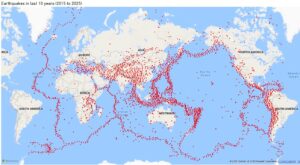
Tibet sits on the border between the Indian and Eurasian tectonic plates and so is geologically active. The new research suggests that losing massive amounts of lake water set off earthquakes.
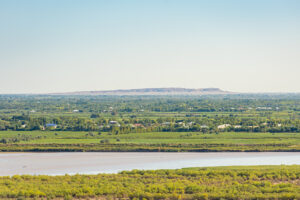
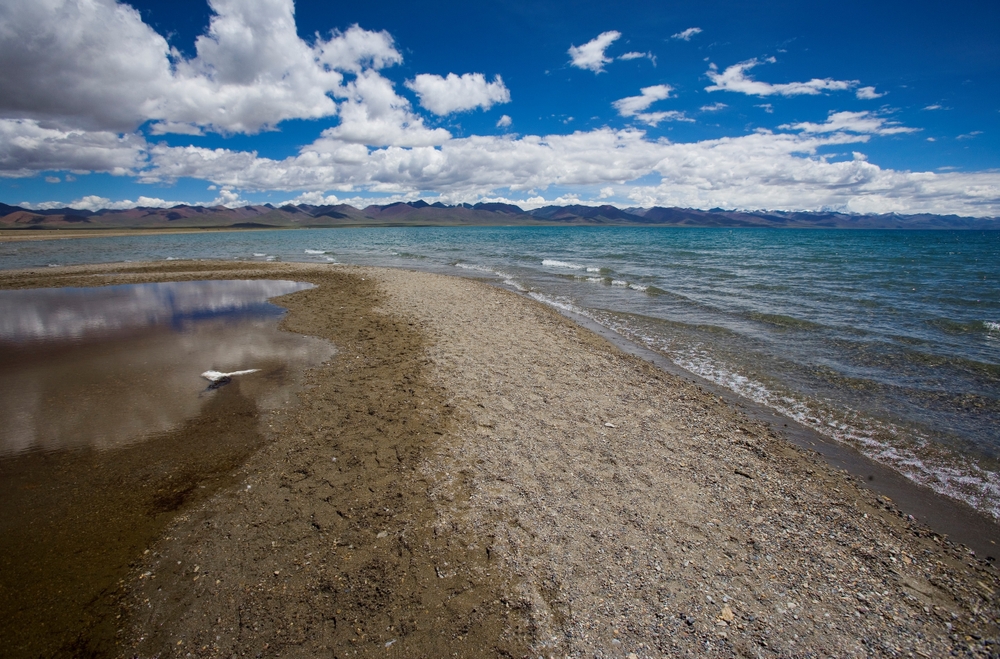
Over 100,000 years ago, Tibet had numerous vast lakes. The ancient versions of lakes, such as Nam Co Lake, were over 200km long and held enormous volumes of water that exerted immense pressure on the Earth’s crust. Over tens of thousands of years, climate change caused these lakes to shrink dramatically, often to less than half their original size. As the tremendous weight pressing down on the crust lifted, the ground began to rebound upward, much like glacial rebound.
Awakened long-dormant faults
Chunrui Li and his research team used geological mapping and stress modeling to show the significance of this decrease in water. Over 85,000 years (from 115,000 to 30,000 years ago), the fault near Nam Co Lake moved 15 meters as the amount of water pressing down on it decreased. Water loss from the more southerly lakes, Yamzho Yumco and Puma Yumco, led to 70 meters of movement. That shift in stress was enough to reactivate long-dormant faults, making them more likely to slip and generate earthquakes.
This doesn’t mean that drying lakes suddenly caused big earthquakes. These processes unfolded over tens of thousands of years, so the associated earthquakes would have been relatively modest compared with those at major tectonic boundaries.
Despite this, the research makes an important point: that surface changes caused by climate can influence deep geological processes. The loss of water altered pressures within a crust already loaded with tectonic strain.
Similar mechanisms have been discussed in other parts of the world where lake levels have changed significantly over time, such as East Africa’s Rift Valley. Scientists are exploring how climate and tectonics interact in places like Iceland and Yellowstone.