A significant number of climbers are planning to attempt Everest without oxygen this season. These include the two runners trying for a Fastest Known Time (FKT) and some alpinists willing to climb on their own and carry their own gear up the mountain.
American trail runner Tyler Andrews has just landed in Nepal, feeling “stronger than ever” and ready to achieve the fastest no-O2 Everest climb ever. His rival, Karl Egloff of Ecuador, will follow next week with the same objective.
The two athletes have trained intensively, combining hypoxic training and running at different altitudes, both at their homes and in South America’s Andes. They’ve also followed a strict nutritional regimen, and after their failed attempts in 2025, are familiar with the challenges and mentally prepared. This time feels like now or never for both of them.
Harder and smarter
The American has focused on his physical preparation, training harder and smarter based on what he learned from his previous attempts.
“Whatever happens, I know with 100% certainty that I have done everything I can every day,” he said. As he has previously done on Everest and Manaslu, Andrews uses Asian Trekking for logistics. Andrews had originally planned to climb from the North Side but had to change plans when China decided to keep the mountain closed this spring.
Egloff flies to Nepal next week. He will count on Furtenbach Adventures for logistics. Long-time friend and climbing partner, Nico Miranda, with whom he set a FKT on Makalu, will be at his side during the attempt.
Competition, like it or not
Both carefully avoid mentioning anything related to “rivalry” or competition. They insist that the Everest FKT is a strictly personal challenge:
“This is not about a speed record, it’s about being my best version, doing the work, showing up ready…and remembering that the real summit is coming back home to my family,” Egloff stressed on Instagram.
“No distractions, no excuses, just me and The Hill,” wrote Andrews.
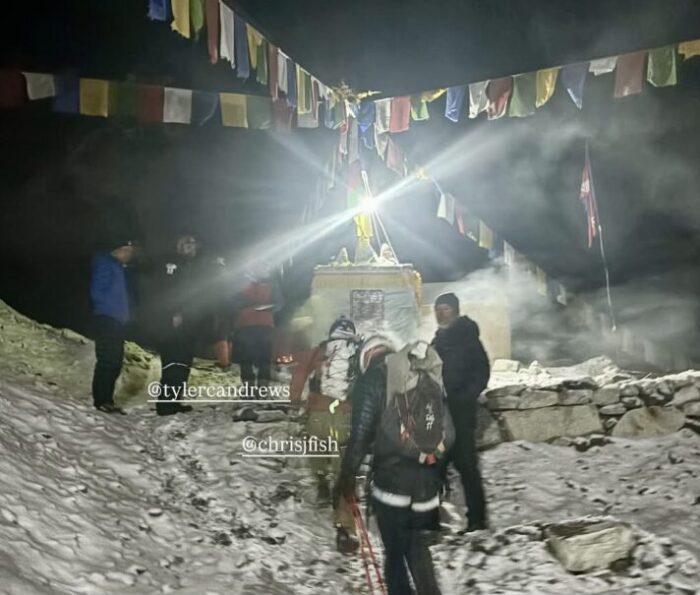
Tyler Andrews and Chris Fisher as they left Everest Base Camp on the first attempt to achieve the Everest FKT last year. Photo: Tyler Andrews/Instagram
The fact is, however, that both climbers are pursuing a speed record at the same place and at the same time, after making their first attempts in 2025. So the temptation to view this as a race at the top of the world is obvious.
Moreover, in an interview he gave some weeks ago to Switzerland’s NZZ, the Ecuadorian admitted there was a sense of competition, including a Netflix film crew documenting both runners, which put a lot of stress on him.
“It was the first time on a mountain with a competitor in sight. I thought I could control it better…Now I am better prepared,” Egloff told NZZ.
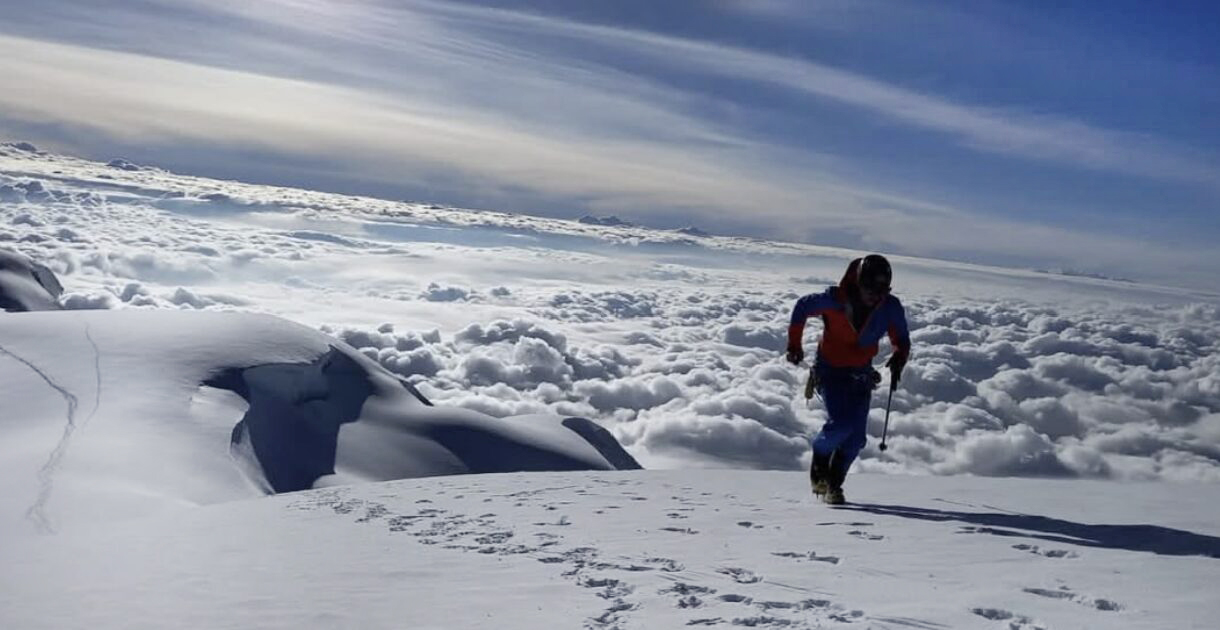
Karl Egloff training in Ecuador some weeks ago. Photo: Instagram
No-O2, no Sherpas
Two more Everest climbers, both strong and experienced, are also determined to summit without supplementary oxygen or Sherpa support. Carrying your own gear and going without bottled oxygen is, nowadays, the purest way to climb Everest via the normal route, where all climbers pay for and use the fixed ropes and the broken trails.
After nine expeditions and six 8,000m summits without supplementary oxygen or personal Sherpa support, Saulius Damulevicius of Lithuania is taking a big leap this year by trying Everest in his usual self-sufficient style.
Damulevicius will first climb Mera Peak (6,475m) and Baruntse (7,162m) in the Khumbu with a small group of friends. He will then hike to Everest Base Camp across the 5,800m Amu Laptsa Pass. This way, he will reach Everest with much of the acclimatization already done.
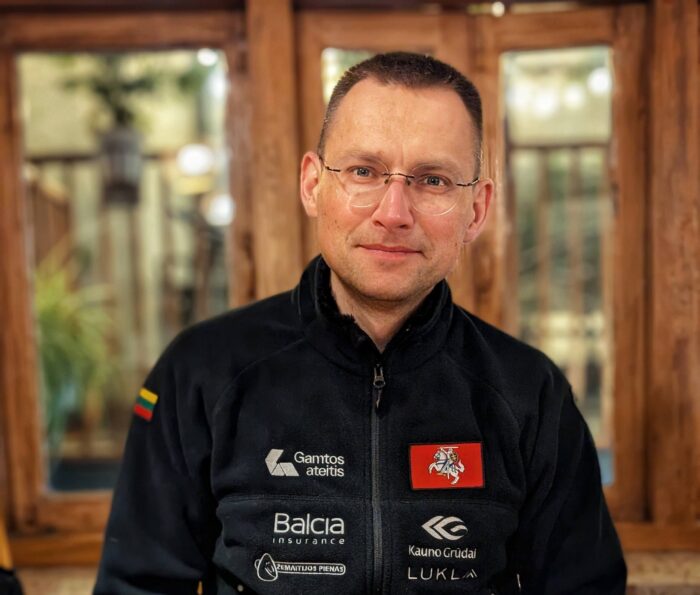
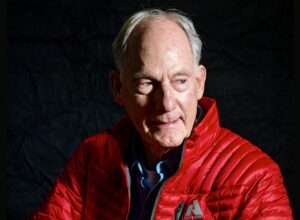
Saulius Damulevicius of Lithuania. Photo: Facebook
“Once on Everest, I have a detailed plan which involves one rotation to Camp 4 before my attempt,” Damulevicius told ExplorersWeb today. “Nevertheless, I will have to let the crowds go first, so the plan might change based on the actual situation.”
Avoiding crowds
Damulevicius explains that crowds and traffic jams on the upper sections of the mountain may completely thwart his summit push. “I cannot stop for more than 15 minutes while on the summit ridge,” he said.
He is also more vulnerable to weather changes. “The probability of reaching the summit is not high,” he admitted. “However, if you don’t try, the chances are zero.”
In fact, he and his team are currently facing their first challenge: Their flight to Lukla was diverted to Ramechhap, where they have been stuck for two days.
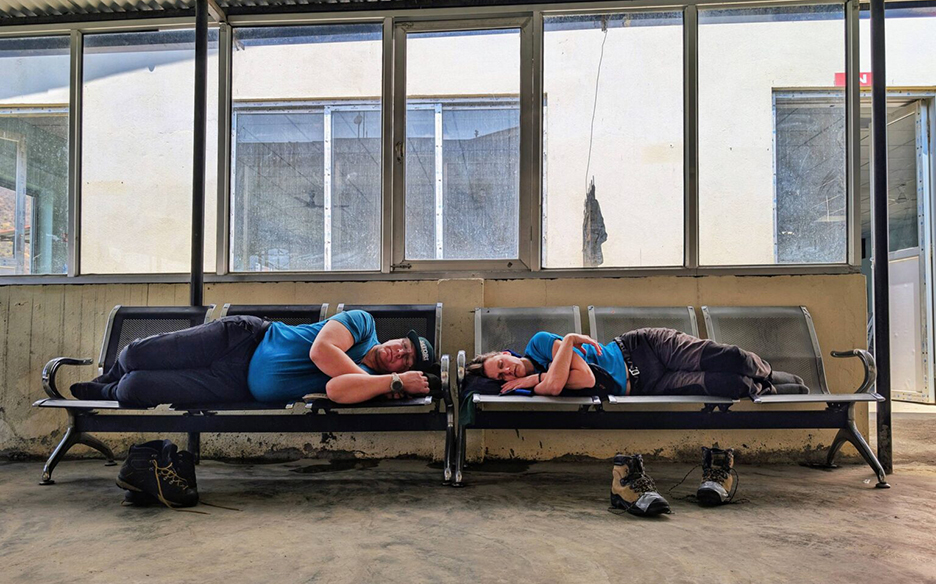
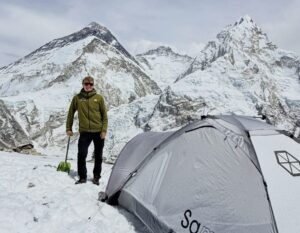
The Lithuanian climbers await their delayed flight to Lukla. Photo: Saulius Damulevicius
From the Andes to Everest
Marcelo Segovia of Ecuador is also in the list of no-O2 Everest climbers. It is the second attempt for Segovia, a policeman, mountain guide, and rescuer in his home mountains, where he has acquired great training even before setting foot in Nepal.
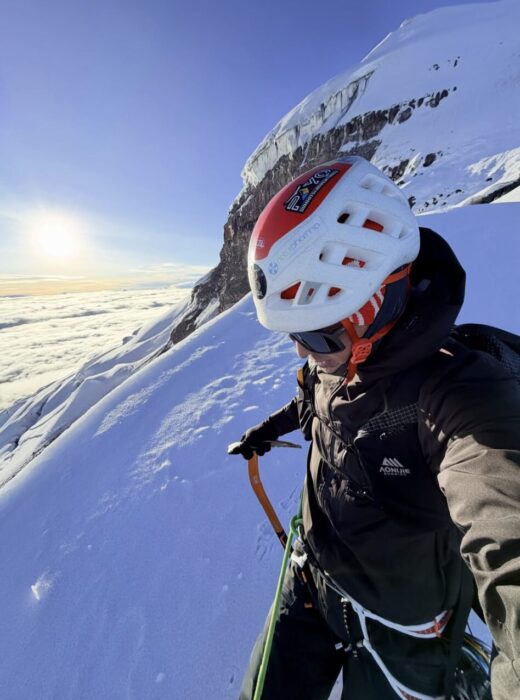
Marcelo Segovia on the summit of Cotopaxi at home in Ecuador — a mountain he has climbed over 450 times! Photo: Marcelo Segovia/Instagram
Segovia proved his strength last year when he had to wait for two consecutive nights at Camp 4 (7,900m) without oxygen, waiting for the right conditions for his summit bid. He finally had to give up and descend, again without Sherpa support or supplementary oxygen.
The last no-O2 climbers?
Overall, more climbers than usual are going without oxygen or Sherpa support this year. It is worth mentioning the uncertainty about future climbing regulations. Previous reports hinted that no-O2 climbs might be banned in Nepal this year. Then it became clear this wouldn’t be the case.
At the moment, Nepal’s Parliament is considering a future Tourism Law that could include a prohibition on climbing without support. This may have encouraged some to go for it before any new rules kick in.