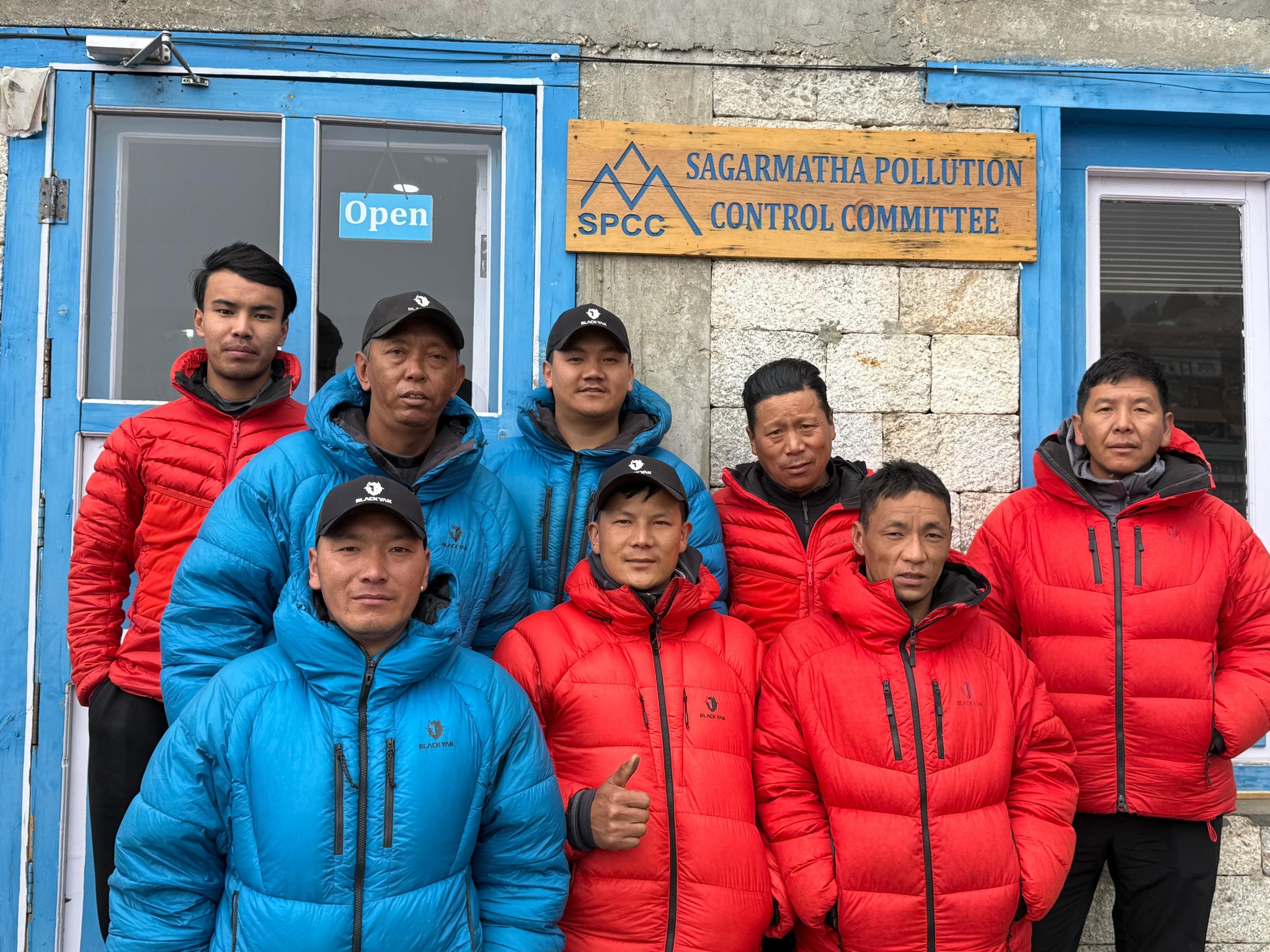
The Icefall Doctors have begun their trek to Everest Base Camp, marking the beginning of a new climbing season in Nepal. But political realities are already affecting the highest peak on Earth.
As we wrote last week, the Tibetan side of Everest will be closed to climbers this season, forcing companies to hurriedly offer alternatives. Furthermore, those heading for Nepal should check whether the current conflict in the Middle East may affect their flight plans.
Everest definitely closed
14 Peaks Expedition has posted the official announcement of Tibet’s closure today. It notes that they still have some places left on South Side expeditions.
“We are shifting our entire operational focus to the Everest South Col Route,” the company wrote.
Ice docs on the way
Climbers have not yet arrived at Everest, but locals are busy supplying their base camps at the foot of the mountain. They will start working on the route in a couple of weeks.
The Sagarmatha Pollution Control Committee (SPCC) launched its 2026 team of Icefall Doctors yesterday from Namche Bazaar. The eight Sherpas will complete a training program at Everest Base Camp from March 5 and 10. They will then hold a puja ceremony on or around March 16 before setting a safe route up the treacherous Khumbu Icefall to Camp 1 for mountaineers attempting Everest, Lhotse, and Nuptse.
Over the next three months, the Icefall Doctors will base themselves at the SPCC’s Everest Base Camp office to maintain the Khumbu Icefall route.
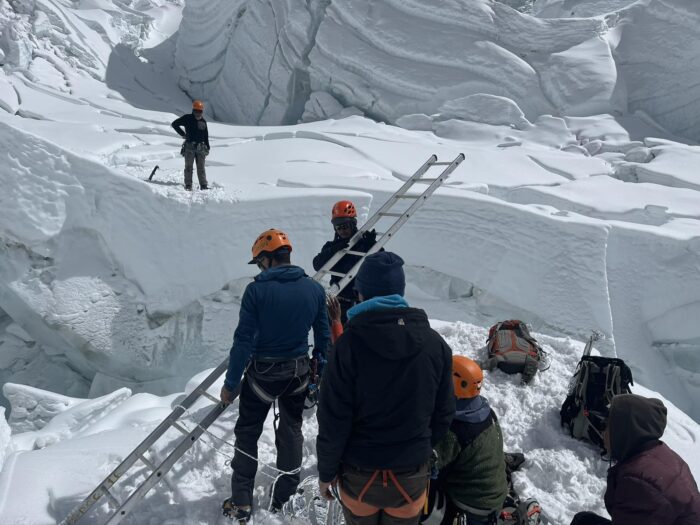
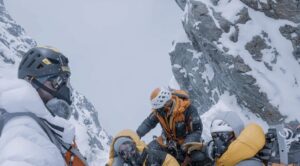
Icefall Doctors at work. Photo: Sagarmatha Pollution Control Committee
The 2026 Icefall Doctors are Ang Sarki Sherpa (Chief leader), Dawa Jangbu Sherpa (Team Leader), Tendu Sherpa, Ngima Tenji Sherpa, Phura Chheten Sherpa, Dawa Chhirri Sherpa, Sonam Geljen Sherpa, and Mingma Gyaljen Sherpa. They also have a five-member Base Camp crew.
Poo bags to stay
Among other tasks, the SCPP is responsible for ensuring that climbers use and return a poo bag from their time on the mountain. This measure, first applied last year, will be enforced even more strictly in 2026, The Tourism Times reported.
“We are consulting with the expedition operators and concerned officials on how the mandatory poop bag provision should be implemented to make Everest clean in the spring climbing season,” SPCC’s head, Tshering Sherpa, said.
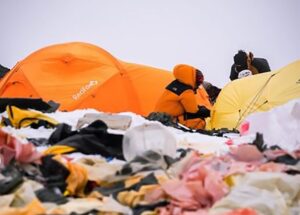
Nepal authorities have stressed their intent to improve the Everest environment, including the human waste above Base Camp. They also require that equipment and ropes be brought off the mountain as expeditions end. Finally, there remains loads of debris, especially at Camp 4 on the South Col, which has persisted despite several clean-ups in recent years.

Solid waste at Everest Base Camp. Photo: Sagarmatha Pollution Control Committee
Middle East
Everest climbers typically fly to Nepal in April, but the high-altitude climbing season starts much sooner, with expeditions on Annapurna and Dhaulagiri beginning in the last week of March. Some other climbers may go to Nepal early to trek or climb a lesser peak before heading to their main goals. All of them are surely monitoring the current situation in the Middle East.
While Nepal is far from the conflict zone and travel in the country is easy and safe, the problem is getting there, especially for visitors from the thriving Gulf markets. Those coming from Continental Europe, the UK, and Africa usually change planes in the Middle East, especially the Emirates.
Caution and planning are required as flights may face last-minute disruptions. Dubai’s airport, for instance, suspended all flights today, and UAE authorities likewise temporarily halted commercial flights to protect passengers, crew, and airport operations, according to The Guardian. It is uncertain how the situation may evolve in the coming weeks.
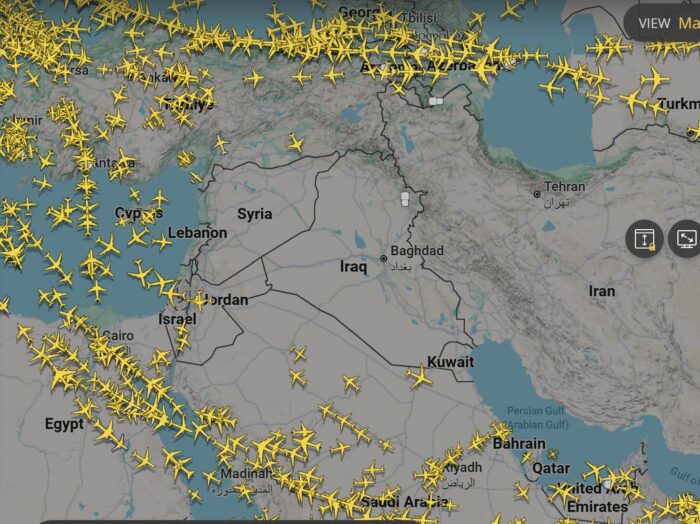
Flights are diverting from the Middle East and completely avoiding Iran today. Graph captured at 7 pm Nepal time today from Flightradar24.