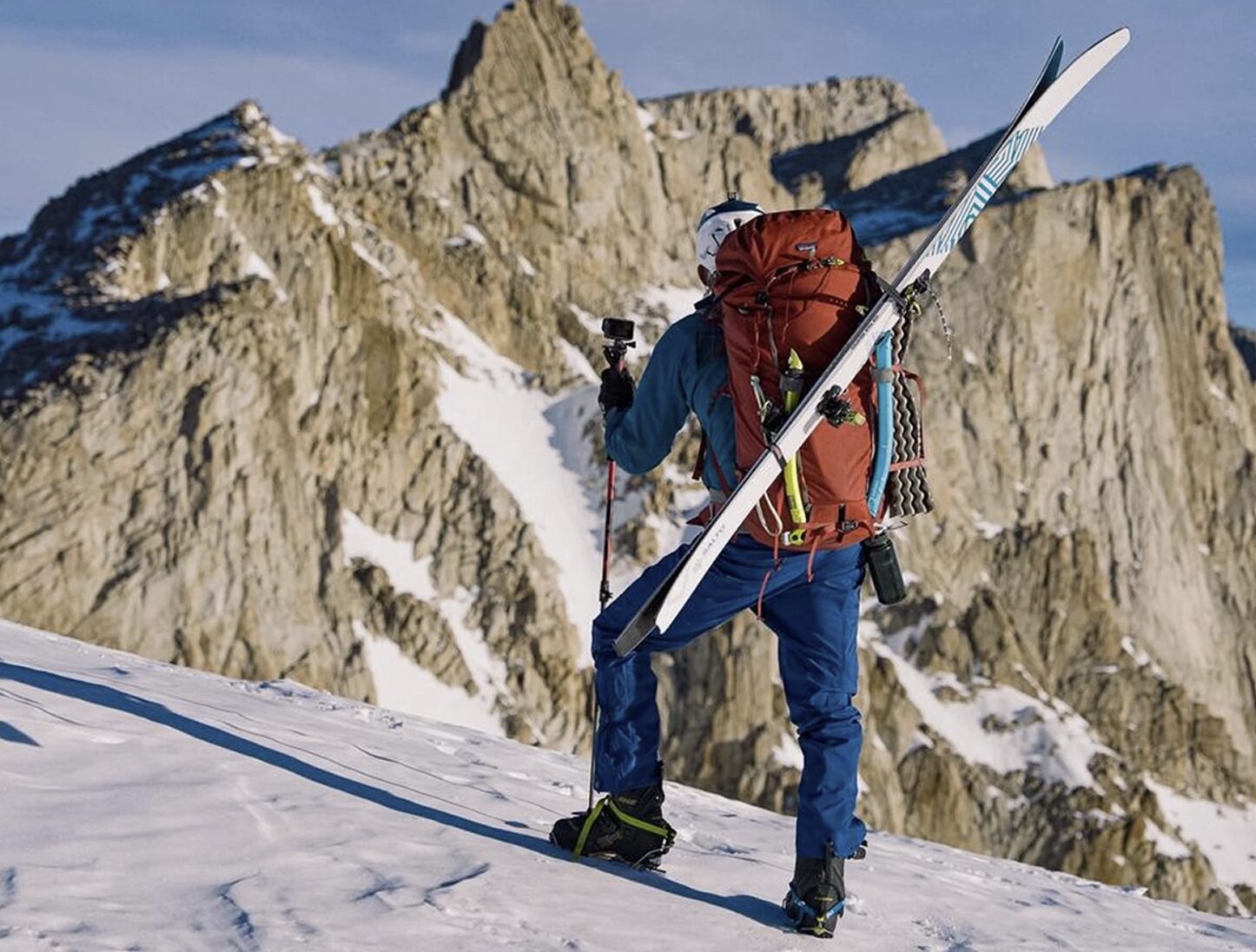
The Norman’s 13 is a traverse of all 13 of the 14,000-foot peaks of California’s Sierra Nevada. Long a major challenge for trekkers and trail runners, it is now also a winter ski tour for those wanting to repeat last month’s feat by Cody Townsend, Tommy Caldwell, and Bjarne Salen.
The traverse covers roughly 100 miles (161km) and 50,000 feet (15,240m) of elevation gain. But it also includes many technical sections, which are even more exposed in winter. Townsend started planning it last summer, inspired by Kilian Jornet’s States of Elevation project. In September-October last year, the Spanish runner completed a non-motorized link-up of the 72 14,000’ers in the Lower 48.
Skiing, suffering, and great climbing
“I realized the summer route connected a ton of great ski lines, and with the right conditions, it would not just be a peak-bagging trip but a journey filled with skiing, suffering, and great climbing…three aspects that make for epic adventures,” Townsend told his sponsor, Coros.
Bjarne Salen, who considers the east side of the Sierra one of the most beautiful ranges in the world, was all in the moment he heard about the idea.
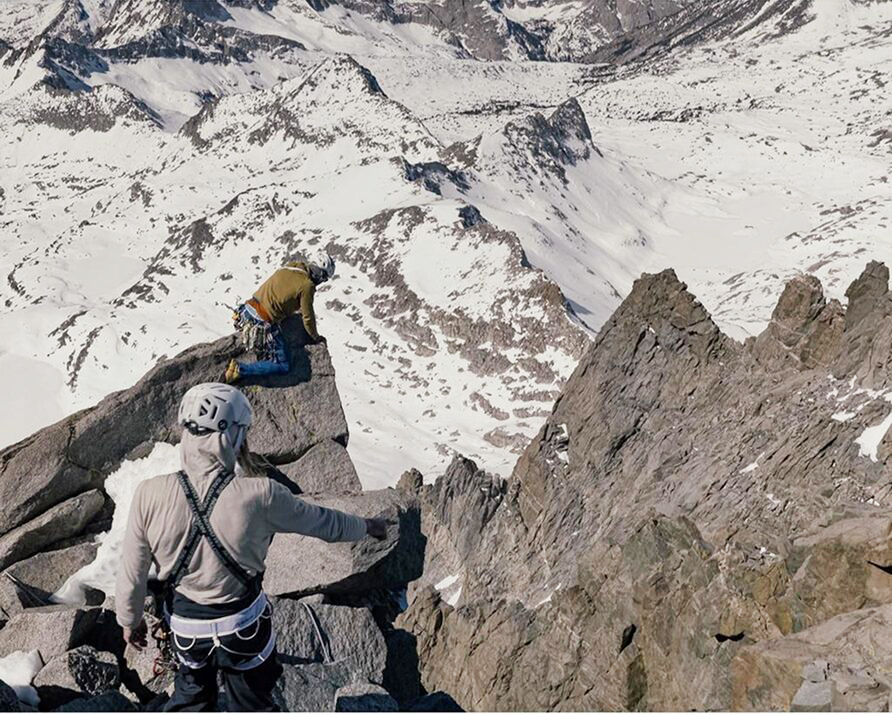
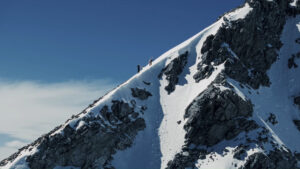
A ridge scramble. Photo: Coros
They then added Tommy Caldwell, better known as a climber than a skier. “It seems people call me when they want to do painful things…which I love,” Caldwell joked. Climbing was, in fact, an important part of the traverse, which includes large, technical mixed sections, rocky ridges, and icy couloirs.
Eight long days
The team completed the traverse in eight grueling days. Each day had its ups and downs, but the trio never considered aborting.
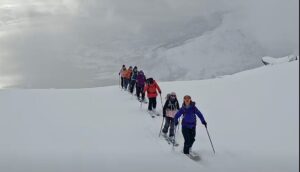
“As the days unfolded, long stretches along the John Muir Trail became unexpectedly brutal: heavy packs, inconsistent snow, endless transitions between walking, skinning, and skiing,” they explained in a report shared by Coros.
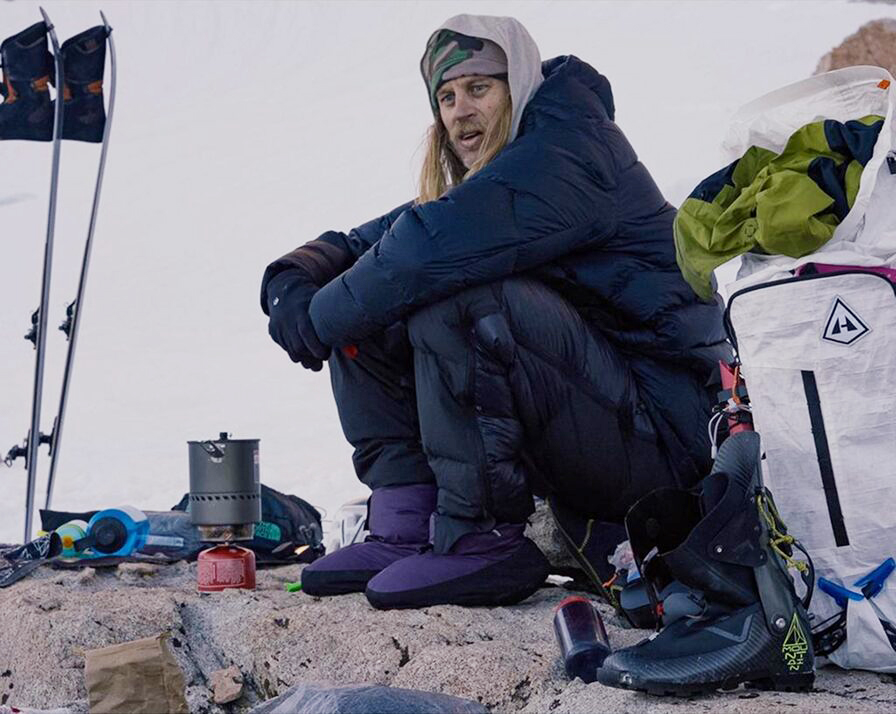
Cody Townsend had a difficult start because of health problems. Photo: Coros
The weather was good, which became a problem. The skiers tackled an isothermal snowpack, meaning the snow had a uniform temperature of 0ºC. Under the sun, this turned heavy and avalanche-prone.
They had to grab a little sleep, wake up at 2 am, start skiing before dawn, and finish by afternoon, when the snow was too slushy to proceed safely. The drawback was that skiing in very hard snow on steep, exposed sections was like “free-soloing on skis,” said Caldwell.

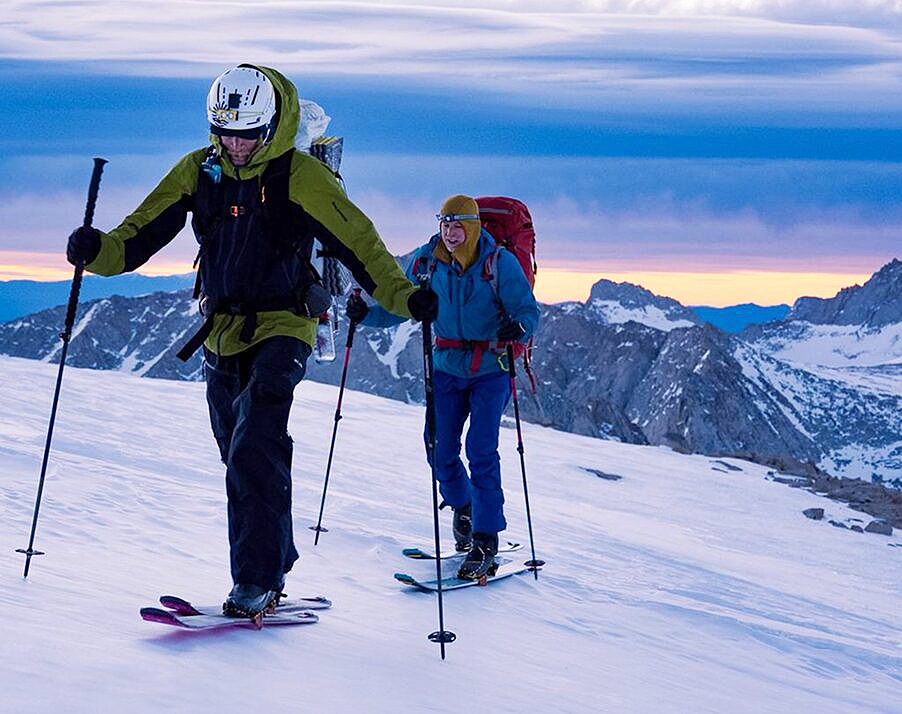
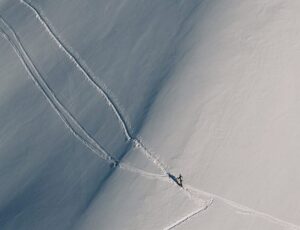
Two skiers at dawn. Photo: Coros
A new benchmark
Coros concluded: “Their effort expands what’s been done in the Sierra during winter, setting a new benchmark for future teams drawn to big, technical traverses…across one of the most committing mountain environments in North America.”
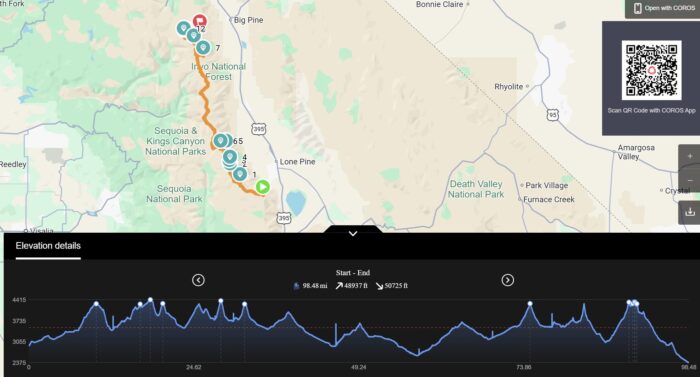
Downloadable map with the traverse’s stages and altitude details. Map: Coros